- Category
- Opinion
“Born in Ice Water”: How Ukraine Forges the Entrepreneurs Modern Markets Forgot

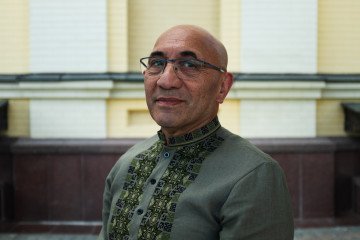
Ukrainian entrepreneur Andriy Fedoriv believes the country’s greatest competitive advantage is its business culture: resilient, fast-moving, and shaped by constant uncertainty.
 Prefer U24 Media on Google
- Authors

-4258f90da45ed571f27851d158610665.jpeg "Photo of Valeriya Ionan")
When Apple presented the Apple Card, people on social media reacted with excitement. Monobank, one of Ukraine's leading digital banks, had been offering those features significantly more for three years. Andriy Fedoriv, founder and CEO of Fedoriv Group , shared this story when I spoke with him for my podcast FORWARD. Ukraine has a habit of building things that surprise people who assume they have already understood the market. His argument for why that habit matters to investors runs deeper than any single product.
Why investors are looking at Ukraine differently
Fedoriv has spent three decades building brands for Ukrainian companies and working with governments across Europe. When he describes what makes Ukrainian business culture distinctive, he starts in the 1990s, when markets were empty, banks did not lend to entrepreneurs, and government support programs did not exist. The companies that reached genuine scale in that environment did so entirely on their own cash flow, reinvesting almost everything they earned year after year with no external safety net.
"When you are born in ice water," Fedoriv says, "you are used to being resilient, and you are used to going through crises." An entire generation of businesses was formed this way, through financial crises, revolutions, a pandemic, and now a full-scale war, and what survived is a culture that treats fast decision-making under pressure as the normal operating mode.
That formation produces something specific and hard to replicate elsewhere. Fedoriv says Ukraine needs approximately five times more entrepreneurs than it currently has—around 2 million, compared with 4-5 hundred thousand today—which means the space for investors who bring both capital and structure is genuinely unusual.
"We cannot teach you structure," Fedoriv says, "but change management, fast change management, change management under pressure, any startup is a form of crisis management. I think we are the best at this."
Four years ago, Western partners arrived in Ukraine expecting to transfer proven models and offer advice. Now they come hoping to acquire knowledge and technology.
One of Fedoriv's clients framed the market opportunity this way: Ukraine should present itself as real America in the center of Europe, specifically the America of the late 19th century, when the risk-reward equation looked like adventure rather than asset allocation, incumbents were few, and a person with an idea could still define an entire sector from scratch. Fedoriv agrees and extends the point. Ukraine is the last true frontier of freedom in Europe, structurally resistant to imposed vertical power, as two revolutions and an ongoing war have made clear, and that openness shapes how the market actually behaves: fast, competitive, and with far fewer entrenched players than in Western Europe. Payback periods of 2 years are common, and 3 to 5 years are considered long by local standards.
1980 New York
The depth of what Ukraine has already built tends to surprise the people who engage with it directly. Ukraine now ranks fifth globally in digital public services, having climbed from 102nd place in six years, anchored by Diia, the state super app with twenty-three million users that reduced private entrepreneur registration from fifty-four bureaucratic steps to a few minutes online. The Ministry of Digital Transformation that produced it was built from scratch as an IT company, with a startup culture, sprint rhythms, and a founding team that treated citizens as users who could walk away rather than as captives with no alternative. That founding condition is what made the product possible, Fedoriv argues, and it is the same condition that shaped Ukraine's most competitive private companies, where features can be copied by competitors but the culture that generates them cannot.
The people who come to Ukraine and engage with it directly tend to arrive at conclusions that look nothing like what they expected. A Stanford professor Fedoriv met in a hotel bar in Lviv after midnight had traveled there prepared to see destruction and exhausted people, and what he found instead were conversations about hope, new projects, and innovation. A man from Finland Fedoriv had breakfast with, who had come to Kyiv in the first days of January, made the same observation: in Finland, he said, January is asleep because of the cold, while in Ukraine, there is full life from day one. Fedoriv noted that Kyiv in January is exactly as cold as Helsinki, and the Finn said that was precisely the point. Western artists and creatives who visit say that Kyiv today feels like New York in the late 1980s or East Berlin just after the Wall fell, charged with an energy that more cities have long since lost.
"Ukraine makes you feel young," Fedoriv says, and the people who keep coming back, from American universities, from Scandinavia, from Western Europe, tend to say the same thing in different words.

Venture capital
The word “venture” comes from “adventure,” and Fedoriv is deliberate about that etymology. Institutional investment goes into tested models and known quantities, while venture is an investment in the unknown, and the people who make it well are the ones willing to engage with an environment before it becomes obvious to everyone. Most investors have forgotten what that original impulse feels like, the decision made before the outcome is guaranteed, the bet placed before the consensus forms. Ukraine is one of the few places in the world right now where that impulse still has somewhere real to go, where the market is open enough, the talent deep enough, and the pace fast enough that early engagement still produces a genuine advantage. A German investor already active in Ukraine described the logic plainly: "When the war is over, it will be too late to start. You should start right now, not to be late."
Ukraine is being built at speed, by people who have spent thirty years learning to build under pressure, and the results are already visible to anyone who looks directly. "I will not say that Ukraine will make your life easier or more relaxed or comfortable," Fedoriv says. "But it will make your life vivid, interesting, and fulfilled with meaning." Everything is already here, and what happens next depends on who decides to show up.
This piece draws on a conversation recorded for FORWARD with Valeriya Ionan, a podcast on how international partnerships with Ukraine are actually built in practice.
Discuss this article:
-4a56a6b482ec132402c16ef6fcabf9a2.png)



-f3430f0449615e9897dff835086ac204.jpg "Ukraine Broke With a Soviet-Era Military System and Rebuilt It Around the Soldier")
-e126c16a85d580738cf2d57e760b80a3.jpeg "Photo of Vladyslav Greziev")