- Category
- War in Ukraine
Ukraine’s Defense Industry Is Booming—First $1B Unicorn Emerges From Wartime Innovation
Between 2025 and 2026, Ukraine’s miltech sector made a significant leap forward: dozens of companies are now producing advanced weapons tested in real combat against the Russian army. In just a few years, the industry has grown fiftyfold in monetary terms alone.
 Prefer U24 Media on Google
- Authors

-29a1a43aba23f9bb779a1ac8b98d2121.jpeg "Photo of Illia Kabachynskyi")
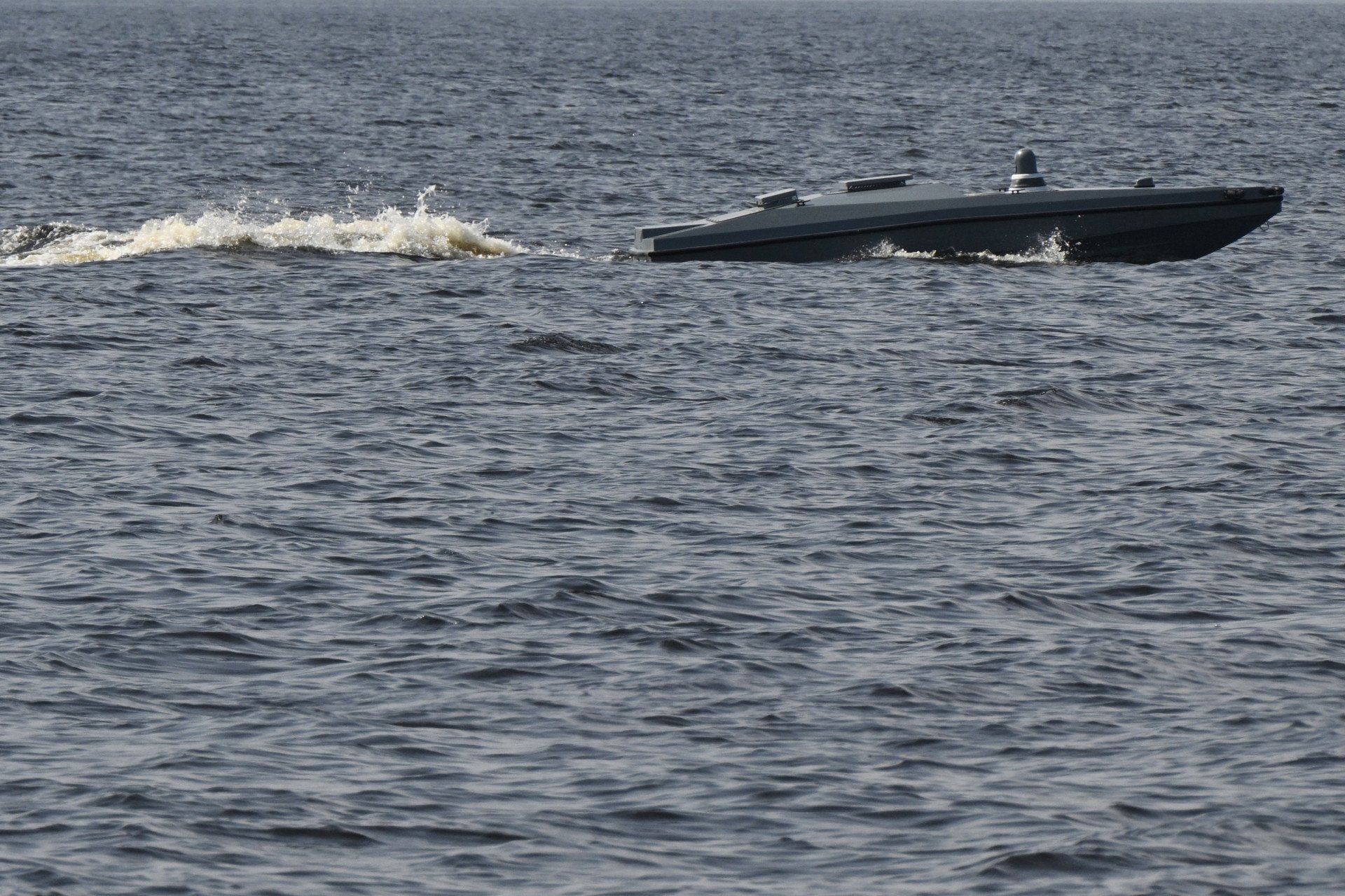
In early March 2026, Ukraine officially gained its first unicorn: the company UForce raised $50 million in investment and reached a valuation exceeding $1 billion. The company is known for its Magura maritime drones, which destroyed part of Russia’s Black Sea Fleet.
We bring you stories from the ground. Your support keeps our team in the field.
For Ukraine, this is a landmark story—the first DefenceTech company to achieve unicorn status in just a few years of existence. Never before has a Ukrainian business increased in value so rapidly, nor has a startup grown at such an intense pace. UForce is a confirmed case; at the same time, Ukraine’s defense industry is aware of about a dozen companies that generate hundreds of millions of dollars in annual sales and could potentially command similar valuations.
In comparison with the global market, however, valuations of Ukrainian defense companies are not particularly striking. For example, the American company Anduril is valued at $60 billion, while European defense startups are valued in the billions of euros. But Ukrainian defense firms have a key advantage: their technologies are used in live combat rather than tested solely on training grounds.
Weapons that work
A vivid example came during the war against the dictatorial regime in Iran. After retaliatory strikes involving Shahed drones began, countries in the Middle East and the United States turned to Ukraine to learn from its experience using interceptor drones.
Today, Ukrainian forces are among the world’s leading experts in countering this type of UAV. Over the winter alone, Russia launched 19,000 Shahed drones at Ukraine—no other country has faced strike forces on such a scale.
Several experienced teams have already traveled to partner countries to help them build their own air defense systems, said Ukrainian President Volodymyr Zelenskyy.
Ukrainian defense companies immediately joined these efforts. One example is SkyFall, a company founded after Russia’s full-scale invasion, which is prepared to supply its domestically produced P1-Sun interceptor drones.
Interceptor drones shot down 70% of all attacking Russian drones over Kyiv in February 2026, Ukraine’s Commander-in-Chief Oleksandr Syrskyi reported.
Now this weapon could be deployed to Middle Eastern countries to protect energy infrastructure—refineries, LNG plants, and other facilities that have been suffering from Iranian missile strikes.
Growing fiftyfold
Before Russia’s full-scale invasion, Ukraine still appeared on the global map as a country that sold weapons, but on a very small scale and with little advanced technology. Russia’s aggression changed that.
As of early 2026, Ukraine’s domestic defense industry is capable of producing $50 billion worth of weapons annually. However, Ukraine’s own budget and partner assistance cover only about one-third of that capacity. The rest Ukrainian businesses are ready to export to partner countries, including through joint production facilities in Europe.
Ukraine now possesses the world’s best interceptor drones — essentially a one-of-a-kind capability — long-range drones with proven strike distances exceeding 1,800 kilometers, and autonomous maritime drones that have successfully struck enemy naval forces.
The key factor is that this technology has been tested in real combat and has proven value—a confirmed record of destroying Russian forces or equipment.
The world’s leading military R&D
Fighting a war of such intensity, Ukrainian weapons developers are not only adopting technologies created elsewhere—they are designing their own systems from scratch and continuously improving them.
For example, the Ukrainian company Swarmer, which has already raised around $20 million and filed for an IPO, is developing a system for managing drone swarms.
Another firm, Odd Systems, signed a strategic partnership with the Danish company Terma, while The Fourth Law secured investment from the American company Axon, a global leader in security technology.
Meanwhile, the Ukrainian company Frontline has received investment from Germany’s Quantum Systems and has already launched a joint venture called Quantum Frontline Industries.
Foreign companies are entering Ukraine with investments, seeking access to technologies and expertise for deploying equipment in the conditions of modern 21st-century warfare.
Today, Ukraine has effectively become the cradle of new approaches to waging defensive wars on this scale.
Why? Russia has significantly greater resources, both in manpower and weaponry. In such circumstances, victory can only be achieved through technology.
Discuss this article:
-4a56a6b482ec132402c16ef6fcabf9a2.png)


-c439b7bd9030ecf9d5a4287dc361ba31.jpg "Photo of Katherina Popilnichenko")