- Category
- War in Ukraine
The Ultimate Drone Guide: Everything You Need to Know About UAVs
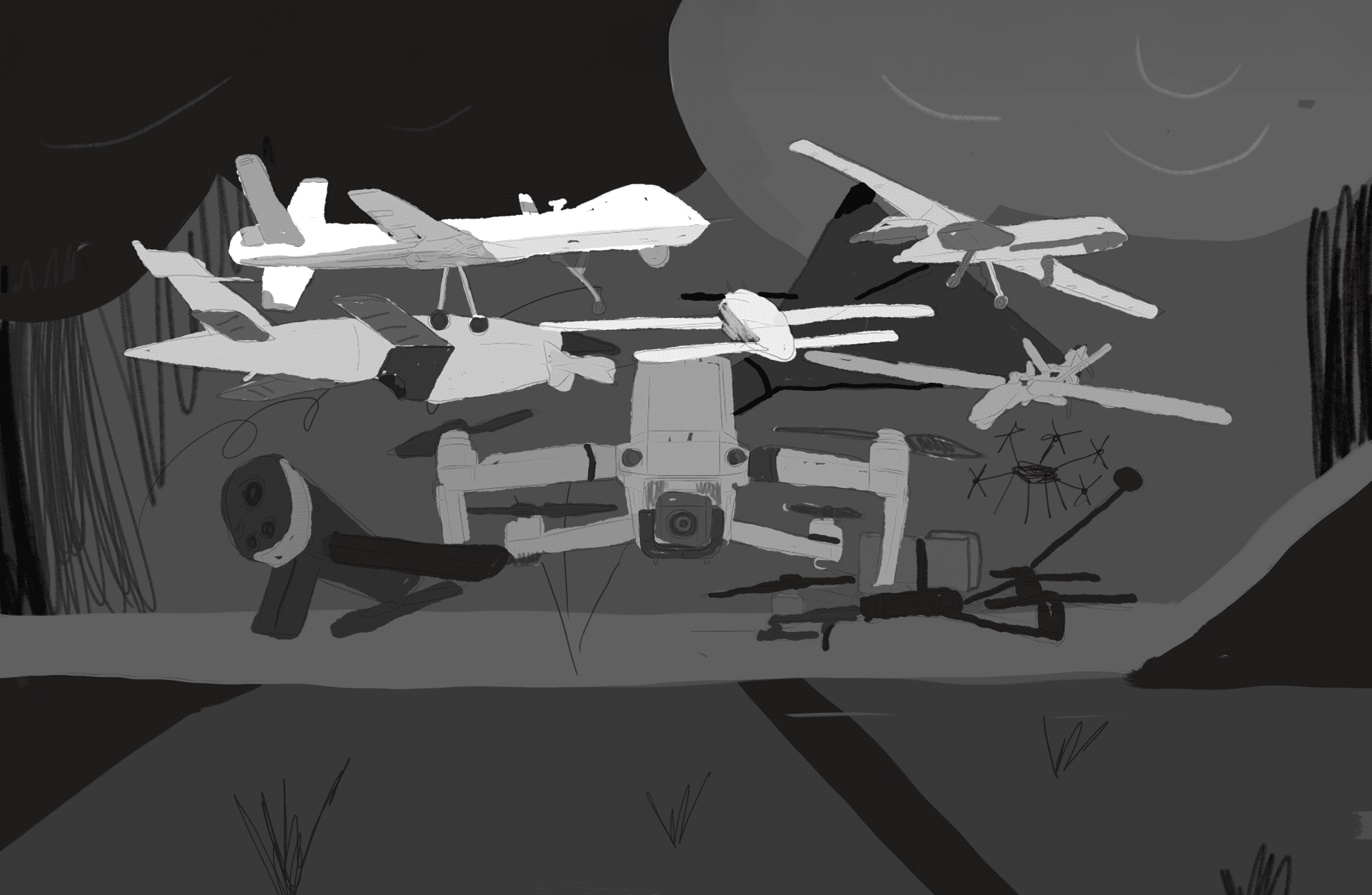
Between the two world wars, the British military began experimenting with radio-controlled aircraft for live gunnery practice, deploying a De Havilland biplane known as the Queen Bee. Its nickname “the drone” stuck, and what began as a disposable target has since evolved into the defining weapon of war in the twenty-first century.
 Prefer U24 Media on Google
- Authors


This guide covers all major types of military drones—from tactical FPVs to long-range unmanned aerial vehicles—explaining how each category is reshaping modern warfare. To do this, we combine manufacturer specifications, frontline combat reports, and verified OSINT data to map out how these systems operate in practice. But first, let’s break down the fundamentals.
What Is an Unmanned Aerial Vehicle (UAV)?
Definition of UAV, UAS, and Drone
An unmanned aerial vehicle (UAV) is an aircraft without a human operator on board, flown remotely from the ground, along pre-programmed flight paths, or autonomously. We use the term Unmanned Aerial System (UAS) to mean the vehicle and its support infrastructure.
Key Components: How UAVs Work
Typical components include the airframe with wings or rotors and control systems that link the aircraft to ground operators. Propulsion is provided by battery-electric motors or combustion engines. The craft are fitted with cameras, infrared (IR) imagers, radar, and electronic sensors for signals intelligence (SIGINT). Payloads encompass surveillance gear, electronic-warfare (EW) systems, and munitions.
UAVs range from backpack-portable quadcopters—used for frontline reconnaissance and precision targeting—to one-way loitering munitions deployed in massed strike waves, and up to multi-tonne, High-Altitude Long-Endurance (HALE) platforms capable of remaining airborne for 30+ hours and covering thousands of kilometres.
UAV vs Drone: What's the Difference?
“Unmanned aerial vehicle” is the technical term, dominant in military and commercial-grade industries like agriculture and logistics, while “drone” is the popular shorthand used by media and the public. The terms are frequently used interchangeably. Remotely Piloted Vehicle (RPV) was another designation, but it lost accuracy once drones began flying pre-programmed missions.
UAV vs Missile: Key Distinctions
A trickier distinction is between UAVs and missiles. The latter are single-use strike weapons that destroy themselves on impact, while UAVs can fill that role but also be reused—configured for surveillance missions or armed for combat, and then flown again. The rise of loitering munitions further blurs the line.
Cruise missiles are associated in the public’s mind with jet propulsion, while propeller-driven vehicles are considered as ‘UAVs’. This misses the point: any expendable uncrewed aerial vehicle that flies in one direction to hit a predetermined target is a cruise missile, regardless of its propulsion mode.
Dr Uzi Rubin
Founder of the Israel Missile Defense Organization in the Israel Ministry of Defense
The rise of drone technology in modern warfare
In the 1990s, the US began demonstrating how drones could reshape modern warfare. The Gnat-750 introduced real-time video feeds, giving commanders unprecedented situational awareness over enemy positions and movements. Later, armed with a Hellfire missile, the Gnat’s successor became the MQ-1 Predator—the first UAV to combine surveillance with strike capability.
The next breakthrough was the integration of satellite communications (SATCOM) links, allowing live video to be monitored from anywhere in the world. These aircraft proved cheaper and safer than fighter jets—eliminating the need to send a pilot into danger, while allowing a remote operator to direct the mission from afar.
Other militaries soon followed. Turkey’s Bayraktar became prominent in conflicts across the Middle East and in Nagorno-Karabakh, while Iran mass-produced its Shahed series, providing them for Russia’s full-scale invasion of Ukraine in 2022. UAVs became indispensable to Ukraine’s defense effort, with innovation that has now extended to long-range strikes targeting oil refineries deep inside Russian territory—part of a wider strategy against Russia’s war machine.
The Evolution of Military Drone Technology
Early Experiments and Prototypes (Queen Bee, TDR-1)
After the Queen Bee of the 1930s, drone development moved from target practice to combat applications. In late 1944, the US Navy carried out one of the first offensive uses of drones in wartime, employing the TDR-1 assault aircraft, which was guided by a television camera in its nose and controlled from an accompanying plane as it struck Japanese targets in the Pacific. In the 1950s, early jet-powered target drones such as the Ryan Firebee entered service, laying the groundwork for later intelligence gathering roles.
From 1964 to the mid-1970s, the US Air Force conducted more than 3,400 reconnaissance missions with the Lightning Bug in Vietnam, marking the first large-scale combat use of drones. In the 1970s, Israel advanced the concept with the Scout, used in the 1982 Lebanon War as decoys and spotters to draw fire and expose radar and missile batteries. At the turn of the century, the US Predator ushered in a new era, combining surveillance cameras with Hellfire missiles so drones could both spot and engage.
To those who know anything about honeybees, the significance of the term will be clear. The drone has one happy flight and then dies.
Albert Hoyt Taylor
US Naval Research Laboratory, 1923-1948
Key Milestones in UAV Development
1917 – Aerial Target (UK): Early pilotless radio-controlled aircraft tested during WWI; never deployed.
1918 – Kettering Bug (US): A preset-course “aerial torpedo”; engine cut off and wings detached to hit target; never combat-ready.
1930s – Queen Bee (UK): Radio-controlled biplane for gunnery practice; origin of the term “drone.”
1944 – V-1 (Germany): Pilotless aircraft with gyroscopic guidance; generally cited as the first operational cruise missile rather than a UAV.
1944 – TDR-1 (US): Television-guided aircraft; among the first offensive uses of drones in wartime, striking Japanese targets in the Pacific.
1960s – Lightning Bug (US): Ryan Firebee conversions flew over 3,400 reconnaissance missions in Vietnam; first large-scale combat use of UAVs.
1982 – Scout (Israel): Marked the first successful combat use of UAVs to suppress surface-to-air missile defenses, employed against Syrian forces in the Lebanon War.
1990s – Harpy (Israel): Regarded as the first operational loitering munition, autonomously homing on enemy radars.
1990s – MQ-1 Predator (US): Widely deployed as the first UAV to pair sustained surveillance with precision strike using Hellfire missiles.
2001 – RQ-4 Global Hawk (US): A pioneering HALE platform, cruising at 18,000 m for 30 hours and delivering intelligence once reserved for manned spy planes.
2009 – RQ-170 Sentinel (US): First publicly acknowledged operational stealth reconnaissance UAV, used for deep-penetration surveillance.
2010s – Bayraktar TB2 (Turkey): The first UAV of its class to achieve global proliferation, with combat use in Syria, Libya, Nagorno-Karabakh, and Ukraine.
2020s – Shahid-136 (Iran): Exported to Russia in 2022 and used against Ukraine, showing how loitering munitions could be employed en masse for long-range strikes.
2023 – Geran-2 (Russia): Locally mass-produced Shahed type; per-unit costs fell from hundreds of thousands to tens of thousands, sometimes a fraction of interceptor costs.
2024 – RAM-2X & Shark (Ukraine): A spotter-and-strike pairing demonstrating encrypted, networked loitering-munition warfare and improved EW resilience.
Modern Innovations: AI, Autonomy, and Fiber-Optic Control
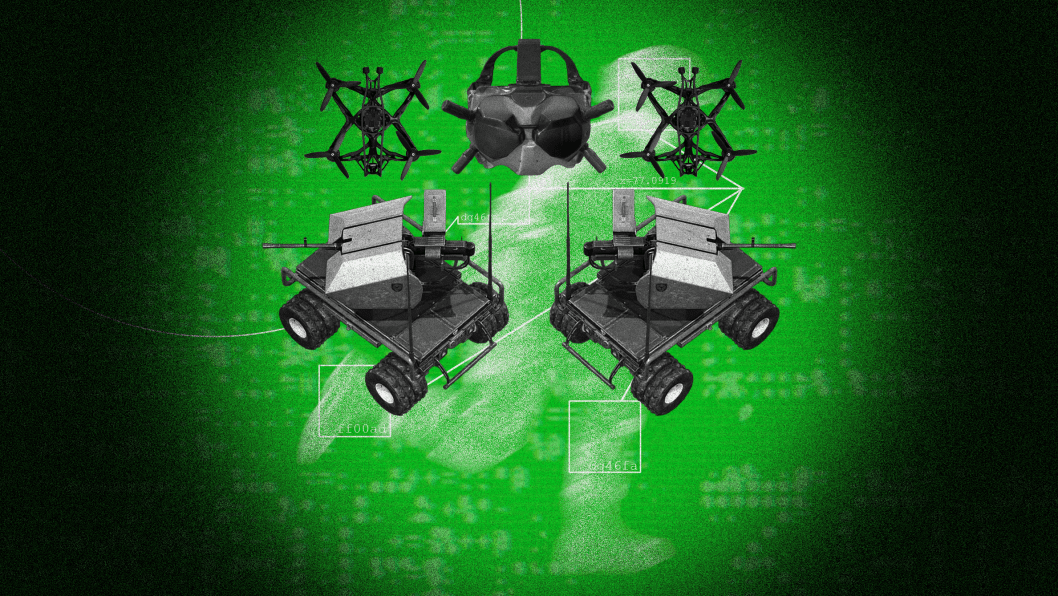
Advances in onboard processing now enable autonomous navigation even without satellite guidance, while AI is beginning to interpret camera feeds—identifying objects and potential targets with growing accuracy. Fiber-optic control links have emerged as a counter to EW, ensuring operators can retain command even under heavy jamming.
Consumer quadcopters and racing drones, explored in the next chapter, show how mass-produced commercial technology can be scaled for combat. Cost innovations also shape capability: Russia’s Geran-2 shows that loitering munitions can be produced cheaply in bulk, while Ukraine’s rapid prototyping of domestic strike UAVs, such as the UJ-26 “Beaver,” demonstrates how homegrown systems are extending Ukraine’s reach deep into Russian territory.
Types of Drones and Their Military Applications
Military drones fall into six main categories, each designed for specific battlefield roles. The table below compares the key types of unmanned aerial vehicles by range, endurance, and primary function.
Drone Type | Range | Endurance | Example | Primary Role |
|---|---|---|---|---|
FPV | 5-15 km | 15-30 min | Vyriy-10 | Strike |
UCAV | 1,850+ km | 27+ hours | MQ-9 Reaper | Strike/ISR |
ISR | 50-100 km | 2-2.5 hours | Leleka-100 | Reconnaissance |
Loitering | 1,500-2,000 km | Up to 12 hours | Shahed-136 | Strike |
VTOL | 130-180 km | 12+ hours | V-BAT | ISR |
Cargo | 10-30 km | 15-30 min | GRIFF 60 | Logistics |
FPV Drones: First-Person View Technology
FPV drones are piloted through goggles that stream live video from the aircraft’s onboard camera, giving operators a pilot’s-eye perspective. Initially built for sport and racing, FPVs quickly moved beyond hobbyist use and were repurposed by militaries—modified to carry small explosive payloads or to conduct one-way strike missions on the frontline.
Civilian FPV Drones
DJI, the Chinese manufacturer that dominates the global drone market, introduced its first dedicated FPV drone in 2021. Unlike earlier camera drones built mainly for aerial photography, this model offered high speeds, acrobatic flight modes, and immersive goggle-based control, popularizing FPV racing. The demands of competitive FPV racing drove advances in low-latency links and battery technology that militaries now exploit.
Military FPV Drones
In April 2023, Ukraine launched the government-backed Brave1 initiative to coordinate and accelerate domestic drone development. Output of FPV drones scaled rapidly—from only a few thousand in 2022 to a planned 4.5 million in 2025—spanning multiple roles.
Examples include the lightweight Vyriy-10—over 80% Ukrainian-made—fielded as a one-way attack (OWA) drone that detonates on impact; the heavier Vampire, a recoverable multirotor carrying up to 15 kg of explosives for night precision drops; and air-to-air interceptors like ODIN’s Win_Hit, which reach 300 km/h to counter Russia’s Shahed-type drones.
Analysts estimate tactical UAVs account for almost 70% of Russian equipment losses. Commander-in-Chief Oleksandr Syrskyi calls FPV drones “among the most effective strike tools on the front,” and announced in September that Ukraine’s Air Force is creating a dedicated drone-air-defense branch: “We are forming and expanding units equipped with these interceptors, as well as a command to oversee them.”
Unmanned Combat Aerial Vehicles (UCAVs)
UCAVs are designed to conduct sustained surveillance while carrying munitions for precision strikes. The US MQ-9 Reaper has become the benchmark for this class, while Turkey’s Bayraktar Akıncı and China’s Wing Loong series demonstrate how UCAV technology has spread globally. Most systems of this type are categorized as Medium-Altitude, Long-Endurance (MALE), typically flying between 3 and 9 kilometers for 24 hours or more.
These aircraft extend the reach of militaries while removing the risk to a pilot, but their reliance on satellite links makes them vulnerable against advanced air defenses—and in some cases, even simpler threats. Russia’s Orion UCAV was intercepted and destroyed by a Ukrainian FPV drone in July 2025, highlighting how large, high-value systems can be threatened by low-cost, tactical threats.
ISR Drones: Intelligence, Surveillance, and Reconnaissance
ISR drones are built to observe rather than attack, equipped with electro-optical and infra-red (EO/IR) cameras, radar, and SIGINT payloads, and they are increasingly hardened against sophisticated EW. By extending vision beyond the line of sight, they protect troops and give commanders the intelligence needed to direct operations in real time.
At the smallest scale, handheld quadcopters give infantry a live view of the battlefield, hovering to capture steady imagery. At the other end, MALE and HALE platforms such as the US Global Hawk can remain aloft for over 24 hours, mapping border regions and tracking hostile movements far behind the frontline.
Systems including Ukraine’s Leleka-100 and Furia provide short-range reconnaissance and artillery fire adjustment in support of combat units. Russia deploys models like the Superkam, Zala, Orlan, and the more advanced Merlin-VR, valued at about $300,000—once famously undone by a Ukrainian $500 FPV drone.
Recognizing their battlefield importance, international partners are investing more in their development. The Drone Coalition’s latest tender allocated €20 million with a focus on ISR platforms that were “essential for effective combat operations,” said Deputy Defense Minister of Ukraine, Kateryna Chernohorenko.
VTOL Drones: Vertical Take-Off and Landing
Unlike the quadcopters and FPVs discussed earlier—which also use vertical take-off and landing (VTOL)—here we focus on hybrid platforms that use rotors or ducted fans for lift and hovering, then wings for forward flight once airborne. This dual capability allows them to be launched from confined spaces such as forest clearings and rooftops, from boats or vehicles, and recovered by various methods, including hand-catchable models. Together, these features make them entirely independent of runways before transitioning to extended flight.
Beyond the range of small quadcopters, these drones excel at ISR—hovering for inspection, feeding targeting data to artillery units, and recovering vertically. The US is fielding Shield AI’s V-BAT in Ukraine, while Germany’s Quantum Systems has supplied the Vector AI, equipped with an acoustic detection system (WASP) whose onboard AI pinpoints firing locations. Oleksandr Berezhnyi, head of Quantum Systems’ Ukrainian office, says Ukraine now has the technology and battlefield experience to define the future of UAVs—and, he says, the company’s motto is “adapt or die.”
Catapult-Launched UAVs
Catapult-launched UAVs, like VTOL platforms, bypass runways. But instead of relying on lift rotors, they use portable launchers such as elastic bands or pneumatic catapults to hurl the aircraft into the air. Recovery is typically handled by parachute, net, or a controlled belly landing. They occupy a middle ground: flying farther and faster than quadcopters, while demanding far less infrastructure than MALE UAVs.
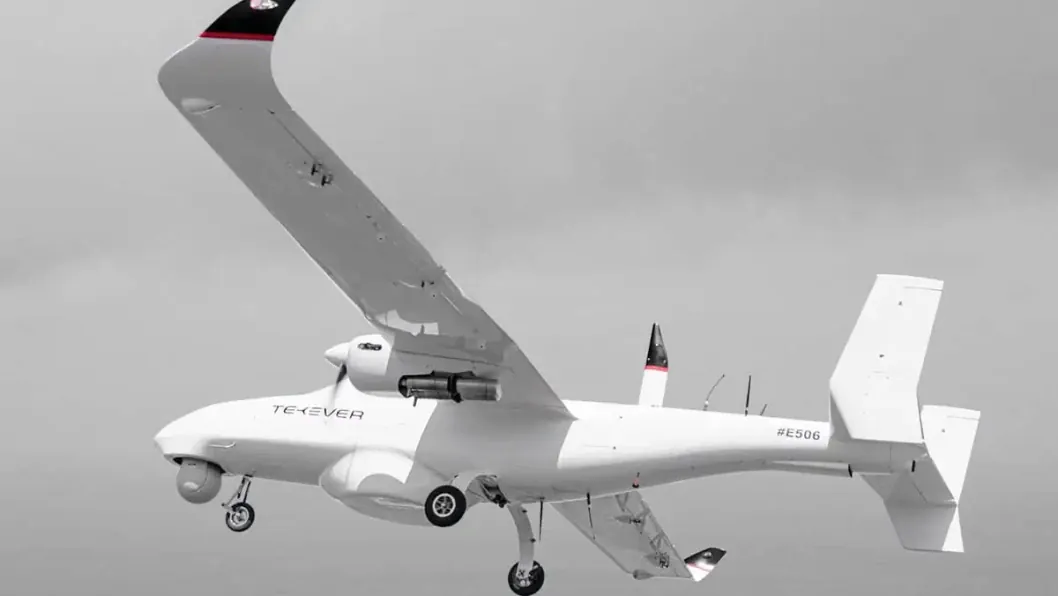
Platforms such as Portugal’s Tekever AR3 have been heavily used in Ukraine, logging more than 10,000 operational flight hours in ISR roles. The company’s CEO, Ricardo Mendes, described this milestone as “proof of the trust that [Ukrainian] armed forces place in our technology” and stressed that the drone delivers “real-time intelligence when lives are on the line.” Continuous battlefield feedback has already driven more than 100 design iterations, showing how quickly combat conditions are evolving.
Loitering Munitions
Also known as kamikaze, suicide, or simply attack drones, loitering munitions are strike UAVs that carry a warhead—the munition—detonating on impact after patrolling an area in search of a target: loitering. Early examples from the 1990s include Israel’s Harpy, an anti-radiation drone designed for suppression of enemy air defenses (SEAD), which helped define the class.
Beyond Harpy and its successor Harop—both launched from truck-mounted canisters—these systems can be fired from land, sea and air. The compact US-made Switchblade, which emerged in the 2010s, deploys from man-portable canisters, while the Altius-600M, which entered service in the 2020s, can be launched from helicopters among other methods. Iran’s Shahed family is commonly ground-launched from boosted rails or rack systems, often mounted on trucks or ship-based launchers.
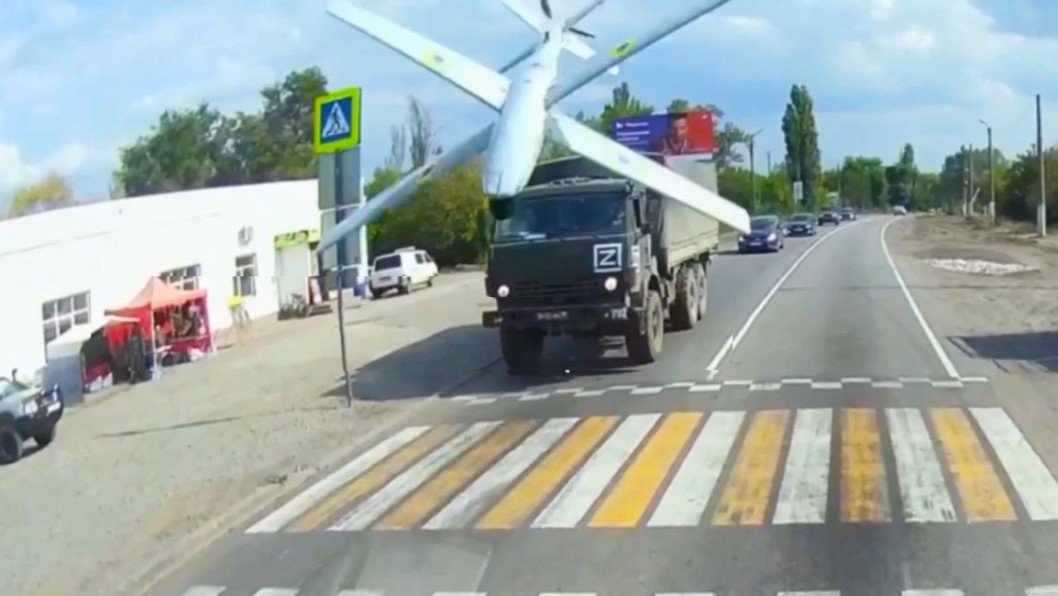
Ukraine systems like RAM-2X and Bulava, and Russia’s ZALA Lancet—are genuine loiterers, fitted with EO/IR seekers, secure datalinks and satellite navigation to enable precision strikes. In practice, however, loitering is the exception: the battlefield is dominated by pre-programmed OWA drones launched in large waves to exhaust air-defense systems, driven by sharply falling unit costs.
One stark example came the night of September 6-7, when Russia launched 810 Shahed-type drones and decoys against Ukraine—an “anti-record” of terror, as Ukrainian Foreign Minister Andrii Sybiha noted. Together, the mass deployment of the Geran-2—Russia’s domestically built Shahed—and their single-use, point-to-point trajectories show how expendable UAVs blur the line between missile and drone.
Logistics and Cargo Drones
Early humanitarian relief trials after the earthquake in Haiti in 2010 showed that small uncrewed aircraft could move critical supplies to remote or cut-off areas when roads were impassable. The idea then scaled in 2016, when Rwanda partnered with Zipline to launch the world’s first national medical drone-delivery service. Around the same time, Germany’s DHL tested Parcelcopter, and later commercial programs followed—including Wing in the US, the first US drone-delivery company certified as an air carrier.
In military logistics where areas are impassable or enemy-held, UAVs move ammo, rations, water, and medical kits, and have even delivered lifesaving blood under fire. Typical loads reach upward from a few kilograms, including one case where a heavy multirotor drone airlifted a 40 kg e-bike to a wounded Ukrainian soldier trapped behind enemy lines.
At the upper end, the Norwegian GRIFF 60 cargo drone—produced for the Ukrainian military—uses eight motors, carries up to 60 kg, flies over 30 minutes, and is priced at $180,000. “The most important thing we can do from Norway is to give Ukrainians the ability to defend themselves,” said volunteers from Fritt Ukraina, who helped deliver the drone, adding that it will “save the lives of Ukrainian soldiers.”
Drone Classification by Size
Military organizations classify UAVs by weight and capability:
Micro/Mini UAVs: Under 2 kg (e.g., Black Hornet)
Small UAVs: 2-25 kg (e.g., FPV drones, Leleka-100)
Medium UAVs: 25-150 kg (e.g., Bayraktar TB2)
Large UAVs: Over 150 kg (e.g., MQ-9 Reaper, Global Hawk)
Limitations and vulnerabilities of UAVs
While drones have transformed modern combat, they face several critical limitations:
Extreme Cold: Freezing temperatures drain power fast. To prevent sudden voltage drops and preserve flight range, soldiers wrap drone batteries in heated shoe insoles before takeoff.
Fiber-Optic Snags: Fiber cables bypass electronic jamming but introduce physical risks. The unspooling wire can easily get snagged on trees or snap over rough terrain, cutting the connection instantly.
Pilot Vulnerability: FPV pilots require months of specialized training, making them high-priority targets. Frontline electronic warfare teams actively track drone radio frequencies to locate control stations and execute targeted campaigns to eliminate enemy drone operators.
Component Bottlenecks: Manufacturing lines remain highly vulnerable to physical infrastructure hits. For instance, a single strike on Russia's only fiber-optic factory completely paralyzed its domestic production line, creating instant shortages
The economics of drone warfare
Modern air defense faces a massive financial disparity, forcing sophisticated interceptor networks to deplete multi-million dollar missile stockpiles against low-cost swarms. For example, global defense operations have seen expensive Patriot interceptor missiles deployed in massive salvos to down basic Shahed drones valued at just 70,000 dollars.
Key Global Players in UAV Technology
United States Military Drones
The US shaped the modern template for UAV warfare with the MQ-1 Predator pairing live video with precision strike, followed by the MQ-9 Reaper, which has seen sustained counterterrorism service worldwide and is widely fielded by NATO and allied forces. The RQ-4 Global Hawk established HALE ISR, while the RQ-170 Sentinel pushed survivability and deep-penetration reconnaissance. Together, those capabilities set a benchmark for the field.
Israeli Drone Technology
Israel is a long-standing leader in UAV design, with combat experience dating to the 1982 Lebanon War. It pioneered modern loitering munitions with Harpy and Harop for SEAD and built a world-leading MALE lineup, the Heron and Hermes, adapted for ISR and precision strike. Israeli platforms are widely exported, combat-proven, and continue to shape UAV doctrine worldwide.
Ukrainian Combat Drones
Ukraine has fielded drones since Russia’s invasion in 2014, when volunteer units like Aerorozvidka began flying modified commercial multirotors for reconnaissance in Donbas. After 2022, hundreds of Ukrainian firms scaled production — from reconnaissance airframes such as Leleka-100 and Furia to long-range one-way strike platforms like the UJ-26 “Beaver” and the An-196 Liutyi “Fury,” plus loitering munitions such as RAM-2X and Bulava.
The government-backed Brave1 initiative coordinates funding, testing, and battlefield feedback, shortening iteration cycles from months to weeks and influencing how militaries and manufacturers approach UAV development.
-247bc22825d7468b67da66687ee4eb48.webp)
Chinese UAV Programs
China built an export-focused MALE UCAV portfolio led by the Wing Loong and CH series, supplying customers across the Middle East, Africa, and Asia. Domestically, it fields long-range ISR platforms and invests in autonomy, EW, and drone-swarming concepts for potential operations against Taiwan’s defenses. On the consumer side, DJI’s Mavic-series quadcopters are ubiquitous on the frontline for ISR and improvised strikes, while the company remains a market leader in commercial photography drones.
Iranian Drone Production
Iran has positioned itself as a leading supplier of cost-driven loitering munitions engineered for mass production. Families like the Shahed and Mohajer-6 emphasize simple airframes and long range and are in service with customers in the Middle East and Russia. Despite sanctions, production continues by relying on foreign-made, dual-use electronics funneled through smuggling networks; inspections have documented dozens of Western components inside Shahed-131/136 airframes. Tehran’s exports have accelerated the spread of one-way attack systems and shifted the economics of air defense.
Russian Military UAVs
Russia fields a layered UAV force built around ISR mainstays such as Orlan-10, Zala, and Superkam for artillery spotting and targeting. For strikes, it leans on ZALA Lancet loitering munitions at the tactical level and mass one-way attack Shahed-type Geran-2 drones, with decoys mixed in to saturate defenses and force expensive intercepts. Newer systems like Merlin-VR and Orion point to higher-end ISR and UCAV ambitions, but routine operations are dominated by one-way attack drones as unit costs keep declining.
Turkish Drone Industry
Türkiye turned UAVs into a major export, with the Bayraktar TB2 proving its value in Syria, Libya, Nagorno-Karabakh, and Ukraine. Its manufacturer, Baykar, has advanced its lineup with Akıncı for higher payloads and endurance, and is developing next-gen systems such as Kızılelma and the carrier-capable Bayraktar TB3. Speed of production and a competitive price point have made these UAVs central to 35 partner countries. To sustain that pace, Baykar is continuing construction of a drone factory in Ukraine despite repeated Russian strikes.
Case Study: Drone Warfare in Ukraine
Widely described as the world’s first drone war, Russia’s full-scale invasion forced a military-wide shift in Ukraine, culminating in the creation of the Unmanned Systems Forces in 2024—the world’s first branch dedicated to remotely piloted and autonomous systems—uniting UAVs, ground robots, and naval drones under one command.
Ukraine's Drone Innovation Ecosystem (Brave1)
Ukraine’s wartime drone ecosystem—with Brave1 at the center—connects defense-tech firms and frontline units in a tight feedback loop under fire. As Minister of Digital Transformation, Mykhailo Fedorov notes: “Ukraine has built a unique infrastructure for the rapid development of defense innovation,” cutting the design-to-production cycle from months down to weeks. On the supply side, DOT Chain streamlines procurement and logistics, speeding deliveries to combat units.
Notable Battlefield Tactics and Shifts
Through ISR missions, Ukrainian drones have exposed Russian positions, guided artillery, and enabled real-time target strikes.
May 13, 2025 - The 3rd SOF Regiment’s “Mediiv” tactical unit conducted aerial reconnaissance that spotted a Russian Uragan-1 multiple-rocket launcher (MLRS) deployed under the cover of a Buk-M3 medium-range air-defense system, worth $45 million. Using the ISR feed to fix and identify the targets, operators destroyed both assets.
May 29, 2025 - On a reconnaissance mission, a Shark ISR drone crew from the Shadow unit of the 59th Assault Brigade located a cluster of Russian air defenses—two Buk systems and one Tor, a short-range surface-to-air missile (SAM) for point defense—enabling follow-on strikes that destroyed assets worth $50 million.
FPV units deliver low-cost hits on Russian positions and equipment and engage in drone-on-drone combat, hunting enemy UAVs and even helicopters in mid-air.
Oct 13, 2022 - A widely shared clip on X captured a duel between Ukrainian and Russian drones—both DJI Mavics—in what Forbes billed as the first drone-vs-drone dogfight in history. What was once touted as a novelty is now commonplace on the front.
Mar 27, 2025 - Ukraine’s air-defense forces shot down a Russian ZALA KUB loitering munition along the front line—the first confirmed kill of this model in combat. Footage of the downing shows a camouflaged airframe with a black nose-mounted device, likely a camera, suggesting an upgraded variant with added surveillance capability.
Sep 7, 2024 - Ukrainian border guards detected an Orlan-10, a Russian reconnaissance drone that can fly up to 5,000 m, over Kharkiv and relayed its course and altitude; the 3rd Tank Brigade’s air-defense “Voron” hunter team rapidly deployed and achieved a record 3,620 m shootdown—a few-hundred-dollar FPV versus a six-figure reconnaissance UAV.
Apr 23, 2025 - A $500 FPV from Ukraine’s 63rd Separate Mechanized Brigade downed an experimental Russian surveillance drone, Merlin-VR, capable of staying airborne for over 10 hours and valued at over $300,000, in Lyman, Donetsk region.
Jun 1, 2025 - Ukraine’s SBU ran Operation “Spider Web,” a synchronized strike using 117 modified Osa FPV drones that, after 18 months of preparation, were smuggled into Russia in special wooden containers with false roofs and launched in coordinated waves across multiple airfields—inflicting an estimated $7 billion in damage to Russia’s long-range bomber assets.
Sep 14, 2025 - Ukraine’s 414th Separate Brigade, “Birds of Madyar,” intercepted and destroyed a Russian Orion MALE UCAV air-to-air FPV interceptor near Tyotkino, Kursk Region. Also known as Inokhodets, “Ambler”, the combat drone has up to 30 hours of endurance, a 250 kg weapons payload and is valued at over $5 million.
Sep 29, 2025 - A $500 FPV drone downed a Russian helicopter in the Pokrovsk direction, Donetsk region, in a strike credited to Ukraine’s 59th Separate Assault Brigade. The aircraft was later identified as a Mi-8 military transport, valued at approximately $10 million, which carries about 24 personnel and is the world’s most-produced helicopter.
From Rostov to Tatarstan and Siberia, long-range one-way drones and loitering munitions have pushed strike ranges past 1,800 km deep inside Russia, and driven outages that left roughly 40% of refining capacity offline by late September 2025.
Jun 22, 2022 - A Ukrainian fixed-wing OWA hit the Novoshakhtinsk refinery’s crude unit; workers filmed flames rising from the distillation tower in the first public sign that Ukrainian UAVs could reach across the border and light up the Russian rear.
Dec 5, 2022 - Twin explosions rocked the Engels and Dyagilevo air bases—home to Russia’s long-range bombers—reportedly delivered by modified Tu-141 Strizh drones from the 1970s. Kyiv stayed silent while Defense Minister Oleksii Reznikov quipped, “Very often Russians smoke in places where it’s forbidden to smoke.”
Aug 29-30, 2023 - Four Il-76 military transport planes burned after OWAs drones slipped through in Russia’s Pskov region, where the governor posted a video of Kresty air base that captured a huge fire, sirens, and an explosion—even as Moscow insisted it had thwarted all the attacks. Ukraine’s Defense Intelligence chief Kyrylo Budanov said the drones were launched from inside Russia.
Apr 2, 2024 - Russia’s largest Shahed-type factory, the Alabuga plant in Tatarstan, was hit by long-range Ukrainian drones—among the deepest strikes inside Russia to that point, at a site reportedly producing tens of thousands of units in 2025. The same morning, the nearby Taneco oil refinery, one of Russia’s biggest, was also targeted, with footage showing wreckage consistent with a UJ-22 Airborne.
May 27, 2024 - A one-way strike UAV flew over 1,800 km to knock out a Voronezh-M early-warning radar near Orsk in Russia’s Orenburg region—the longest one-way combat drone strike recorded to that point. Satellite images published the next day showed fresh damage at the site, and the hit effectively disabled half of Russia’s over-the-horizon radar coverage on the south–southeast axis.
Jul 1, 2025 - Ukraine’s UJ-26 “Beaver” propeller-driven attack drone tore through Russian air defenses in Crimea, destroying a Pantsir-S1, multiple radar units, and a Su-30 fighter parked on the tarmac. The Defense Intelligence of Ukraine released cockpit-view footage of the strikes, with a wink in the captions that the Beavers were “gnawing through” expensive Russian air defenses.
Aug–Oct 2025 - A sustained Ukrainian precision-strike campaign on oil refineries and fuel infrastructure feeding Russia’s war machine stretching from Kirishi near St. Petersburg to Ryazan, Novokubyshevsk, Astrakhan, Volgograd, and Ufa, all the way to the Antipinsky refinery deep in Siberia, nearly 2,000 km away—has forced nearly 38% of refining capacity offline across Russia.
Fiber-optic-guided FPV drones, controlled via an unwinding fiber reel rather than a wireless link, are effectively immune to enemy EW — letting crews scout and strike through heavy jamming—and, since May 2025, have been mass-produced in Ukraine.
May 27, 2025 - A fiber-optic-guided FPV from the 414th Separate Brigade “Magyar’s Birds” penetrated a hangar 42 km behind the front line, surveyed four vehicles, and selected the highest-value target—a tank—hitting the driver’s hatch. Operators then launched a second drone to confirm the strike.
Russian Drone Strategies and Impact
The Kremlin’s drone campaign is designed to overwhelm and terrorize. In September 2025, a month with at least 31 attacks on energy infrastructure, the UN Human Rights Monitoring Mission in Ukraine reported 214 civilians killed and almost 1,000 injured. Nearly one-third of casualties near the frontline were caused by Russian FPV drones, while Shahed-type drones and other munitions accounted for a similar share nationwide.
Attacks on the power grid are not new: in the winter of 2022–23, Human Rights Watch said Russia’s repeated strikes on Ukraine’s energy infrastructure violate the laws of war and aim to terrorize civilians—to “make life unsustainable,” said senior researcher Yulia Gorbunova. Millions faced blackouts.
From mid-2022, Russia began importing and later assembling its own Geran-2, cutting unit costs from hundreds of thousands down to tens of thousands of dollars—often cheaper than interceptors. By July 2025, Ukraine reported shooting down its 30,000th Shahed, indicating total launches well above that figure; many were used as decoys to saturate Ukrainian air defenses.
Moscow is now copying Ukraine’s drone-killer tactics, unveiling look-alike VTOL interceptor designs, and forming “agricultural drone” detachments that repurpose heavy civilian multirotors for combat. About 20–30 percent of Russian launches today are fiber-optic drones, which are effectively unjammable. This pressure, however, has accelerated Ukraine’s own innovation cycle, driving jamming-resistant navigation and longer-range strikes that weaken Russia’s position.
Counter-Drone Measures and Defense Strategies
As drone warfare intensifies, Ukraine has built layered defenses that stretch from the ground up. Infantry employ specialized anti-drone ammunition in standard rifles; above them, helicopter hunters work in pairs — lightweight spotters with advanced sensors pick up targets in complete darkness, and armed Mi-8/24s move in to intercept. Stretches of highway are covered by net tunnels to block FPV dive paths, some with Swedish fishing nets, evidence of evolving countermeasures.
Electronic Warfare and Jamming Systems
Electronic warfare denies an adversary use of the airwaves by jamming GPS and control links, and spoofing positions to force drones off course. Portable emitters, vehicle-mounted stations, and airborne jammers combine to disrupt guidance and ISR feeds.
Russia invests heavily in EW and treats it as central to its war plans; Ukraine counters with innovation—fiber-optic control links and modular field kits, including plug-and-play drone-jamming systems. Former Commander-in-Chief Valerii Zaluzhnyi calls EW decisions “perhaps the most important.”
Kinetic Defenses: Lasers, Guns, and Interceptor Drones
When jamming fails, Ukraine puts every tool to work to protect its skies—it fires US Browning machine guns and German Gepard and Skynex cannons, and fields the domestic SlimBeam laser. It also flies air-to-air interceptors such as VGI-9 and Win_Hit, and even reusable platforms like Besoram-3210 and Mongoose, systems now achieving a 68% success rate against Russian Shahed drones.
In some cases, surface-to-air missiles are also used to down UAVs. A Stinger MANPADS, priced at roughly $150,000 per round, was filmed shooting down a Russian Shahed in early October. At the higher end, scarce IRIS-T, NASAMS, SAMP/T, and Patriot are reserved for the most urgent threats and run in the low-to-mid millions per engagement.
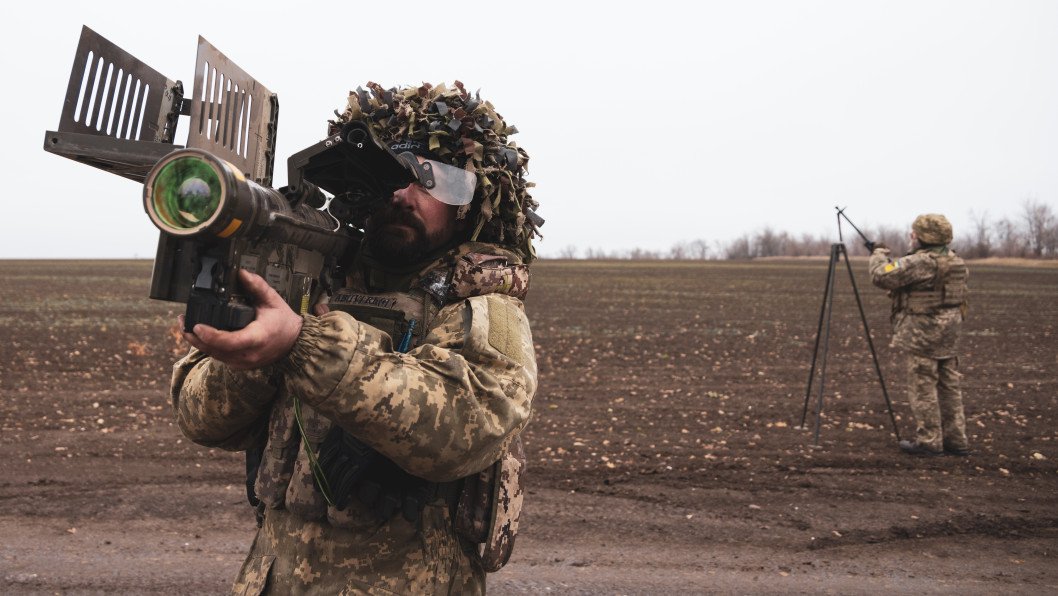
AI-Driven Counter-Drone Systems
Autonomy is now embedded in drone defense, where Artificial Intelligence fuses radar with EO/IR, filters out birds and background noise, then identifies targets and trajectories. Depending on the system, it either waits for a human supervisor to authorize the shot or engages autonomously. The US Bullfrog—a vehicle-mounted turret that turns machine guns into counter-UAV platforms—handles detection and aiming while the operator can issue the fire command.
Sky Sentinel is Ukraine’s homegrown answer: an AI-guided, 360° turret that can track targets up to 800 km/h and fire without human intervention. In field use, it has downed Russian drones, earning the nickname “Shahed Catcher.” Thanks to our patrons, UNITED24 Media has funded 17 units at $150,000 apiece — our fundraiser for peaceful nights in Ukraine.
The Future of Drone Warfare
Emerging Trends: Autonomy, Swarming, and AI
The next generation of UAVs will operate with rising autonomy and intelligence, shifting from piloted craft to software-guided systems. Ukraine’s Delta battlefield network includes AI target-detection that can identify about 70% of unique enemy equipment in a matter of seconds. “Because no one has ever fought a war this technologically advanced,” said Lt. Col. Yelyzaveta Boiko—developer of Delta—“we’ve created modules never seen before in NATO.”
Swarm tactics are fast becoming the new norm, where hundreds of autonomous drones coordinate as scouts, jammers, and strikers, while sharing data in real time. China calls swarming “the strategic commanding height of intelligent warfare.”
Artificial intelligence now spans offense and defense: Artemis, a long-range AI-powered strike drone, is entering mass production, while Ukraine and European partners are trialing AI-powered interceptors against Russian guided bombs.
This year, Ukrainian President Zelenskyy said long-range one-way drones can strike over 3,000 km—a far cry from June 2022, when he noted, “We have enough weapons. What we don’t have enough of are the weapons that really hit the range that we need.”
Naval and Ground-Based Drones
At sea, Magura and Sea Baby naval drones, also called unmanned surface vessels (USVs), have forced back Russia’s Black Sea Fleet, sinking or damaging multiple warships, even downing jets and helicopters. On land, unmanned ground vehicles (UGVs) haul supplies, clear mines, and evacuate wounded; some are now weaponized—including one credited with downing a Russian helicopter.
As Russia continues to wage a hybrid war across Europe’s airspace, multiple drones have been detected in Polish skies, over airports across Germany and Scandinavia, and above military facilities in Belgium, triggering NATO Article 4 consultations and the launch of Operation Eastern Sentry, a joint air-defense mission to safeguard Allied skies.
Legal and Ethical Considerations
As these technologies converge, the line between soldier and machine blurs and sharpens the question of accountability when autonomous systems make lethal mistakes. Public perception will shape outcomes as much as the law—recent US polling reflects widespread concern about AI-enabled weapons, and the International Red Cross says “existing IHL rules do not hold all the answers,” that new rules are urgently needed.
Since the full-scale invasion, Russia has launched close to 50,000 Shahed-type drones against Ukraine—even the Queen Bee that first took flight in the 1930s could never have imagined her hive would one day hum so fiercely, haunting the same skies she once helped to open.
Discuss this article:
-9bd5e1532102621f8fb1c4ba871a3171.png)

2026 Update: The Next Phase of Unmanned Warfare
As Russia’s war progresses through 2026, drone tactics have matured rapidly to counter absolute electronic saturation on the front lines:
Algorithmic Autonomy: To bypass heavy electronic warfare (EW) jamming, modern drones utilize onboard machine-learning chips for terminal guidance. Once an operator locks onto a target, the drone drops its radio link and strikes autonomously, rendering traditional frequency jammers useless in the final phase of flight.
Airborne FPV Interceptors: High-speed drone-vs-drone dogfights have become institutionalized. Forces now routinely deploy specialized interceptors capable of reaching speeds up to 300 km/h to hunt down and ram expensive reconnaissance UAVs and helicopters at a fraction of the cost of conventional air defense.
Decentralized EW Networks: Heavy, stationary jamming stations have largely been replaced by automated arrays of small, trench-level electronic warfare systems. These platforms communicate dynamically, activating only when automated sensors detect a specific incoming drone signature to maximize tactical surprise.
FAQ
What is the purpose of a UAV drone?
As outlined in the article, the purpose of a UAV is to carry out missions—everything from artillery adjustment and strike operations, to mapping, reconnaissance and long-endurance surveillance—all without exposing a pilot to danger. This enables risk-reduced operations in both civilian and military environments, and allows aircraft to function in high-volume scenarios, such as when Russia launched more than 800 Shaheds in a single night against Ukraine.
What is the difference between a drone and a UAV?
"Unmanned aerial vehicle" is the technical term used in military, industrial, and commercial fields, while "drone" is the broader, popular shorthand used by the public and media. In practice, the two terms are often used interchangeably, but UAV refers specifically to aircraft, whereas "drone" can also describe unmanned ground or naval systems.
What are the main types of military drones?
Military drones fall into six main categories: FPV drones for tactical strikes, UCAVs for sustained surveillance and precision attacks, ISR drones for reconnaissance, VTOL platforms for runway-independent operations, loitering munitions (kamikaze drones) for one-way strikes, and cargo drones for logistics.
Can a UAV fly without GPS?
Yes. While fiber-optic drones perform precision strikes through a physical tether rather than satellite links, some UAVs are built to operate even when GPS is jammed or unavailable. Ukraine’s FLYCAT is part of a new generation of GPS-independent loitering munitions engineered to autonomously loiter, identify, and engage targets without satellite navigation, using onboard intelligent navigation and secure communication modules to stay effective in jammed environments.
Is every drone also a UAV?
Not exactly. While the terms are often used interchangeably, UAV refers specifically to aircraft. "Drone" is a broader term that can also describe unmanned ground vehicles (UGVs) and naval systems (USVs). So all UAVs are drones, but not all drones are UAVs.
How high can military drones fly?
On the frontline, small quadcopters operate anywhere from below the tree line to within a few hundred meters for reconnaissance and targeting. HALE platforms such as the RQ-4 Global Hawk can reach altitudes higher than 18,000 meters, while experimental systems like the UK’s PHASA-35 have already exceeded 20,000 meters in testing. Civilian regulations in Ukraine limit flights of unmanned aircraft to a maximum altitude of 120 meters above the ground or the surface of water outside restricted airspace.
How far can a UAV fly?
Handheld quadcopters typically operate within just a few kilometres—though advanced consumer models like the DJI Mavic 4 Pro can reach up to around 41 km under ideal conditions. Russia’s Shahed-type drones have ranges often estimated at 1,000–2,000 km, while at the top end of the spectrum, HALE platforms can cover thousands of kilometres, enough to cross continents.
How fast can a UAV fly?
FPV racing drones are among the fastest small UAVs, with custom-built models commonly reaching 140–200 km/h in level flight. One-way attack drones such as Russia’s Shahed-136 cruise at roughly 180 km/h, while some loitering munitions can accelerate sharply to around 300 km/h during their terminal dive. UCAVs like the Bayraktar Akıncı can reach about 360 km/h, and at the top end, HALE systems such as the MQ-4C Triton can fly at roughly 570 km/h.
For how long can a UAV stay airborne?
Small quadcopters typically remain airborne for 20–45 minutes, with consumer models like the Mavic series sitting at the upper end of that range. Battery-powered UAVs are limited by pack capacity, while fuel-burning or hybrid drones can stay airborne for several hours, depending on tank size. HALE platforms — true to their ‘long-endurance’ namesake — can remain aloft for 30 hours or more, while experimental solar-powered systems like the aforementioned PHASA-35 are designed for extreme endurance, potentially up to 12 months of uninterrupted flight.
How much does a UAV typically cost?
As outlined in earlier battlefield cases, many small quadcopters used for reconnaissance or targeting cost around $500—or even less, making them ideal for expendable missions. Larger fixed-wing drones, one-way attack systems, and long-range strike or surveillance platforms range from tens of thousands to several million dollars, comparable to small crewed aircraft.
What drones does the US military use?
The US military operates MQ-1 Predator, MQ-9 Reaper, RQ-4 Global Hawk, and RQ-170 Sentinel among others—ranging from armed strike platforms to high-altitude surveillance systems.
What is the most effective military drone?
Effectiveness depends on mission type. For tactical strikes, Ukraine's FPV drones have destroyed an estimated 70% of Russian equipment losses at costs under $500 per unit. For long-range precision strikes, platforms like the MQ-9 Reaper and Bayraktar TB2 have proven highly effective in multiple conflicts.

-72b63a4e0c8c475ad81fe3eed3f63729.jpeg "Photo of Cyril Barabaltchouk")



-111f0e5095e02c02446ffed57bfb0ab1.jpeg "Photo of Roman Kohanets")