- Category
- War in Ukraine
Why Russia’s Shahed Drones Are Now Deadlier and Harder Than Ever to Stop
Since Russia’s full-scale invasion, Ukraine’s skies have never been safe. In 2025, drone warfare has entered a deadlier phase, with Moscow launching thousands of faster, cheaper, and more destructive Shaheds each month—pushing civilian casualties to a three-year high and forcing Ukraine to rethink its defenses.
 Prefer U24 Media on Google
- Authors

-f88628fa403b11af0b72ec7b062ce954.jpeg "Photo of Amira Barkhush")
Since 2022, Russian forces have relentlessly targeted Ukraine’s civilian areas with waves of drones and missiles.
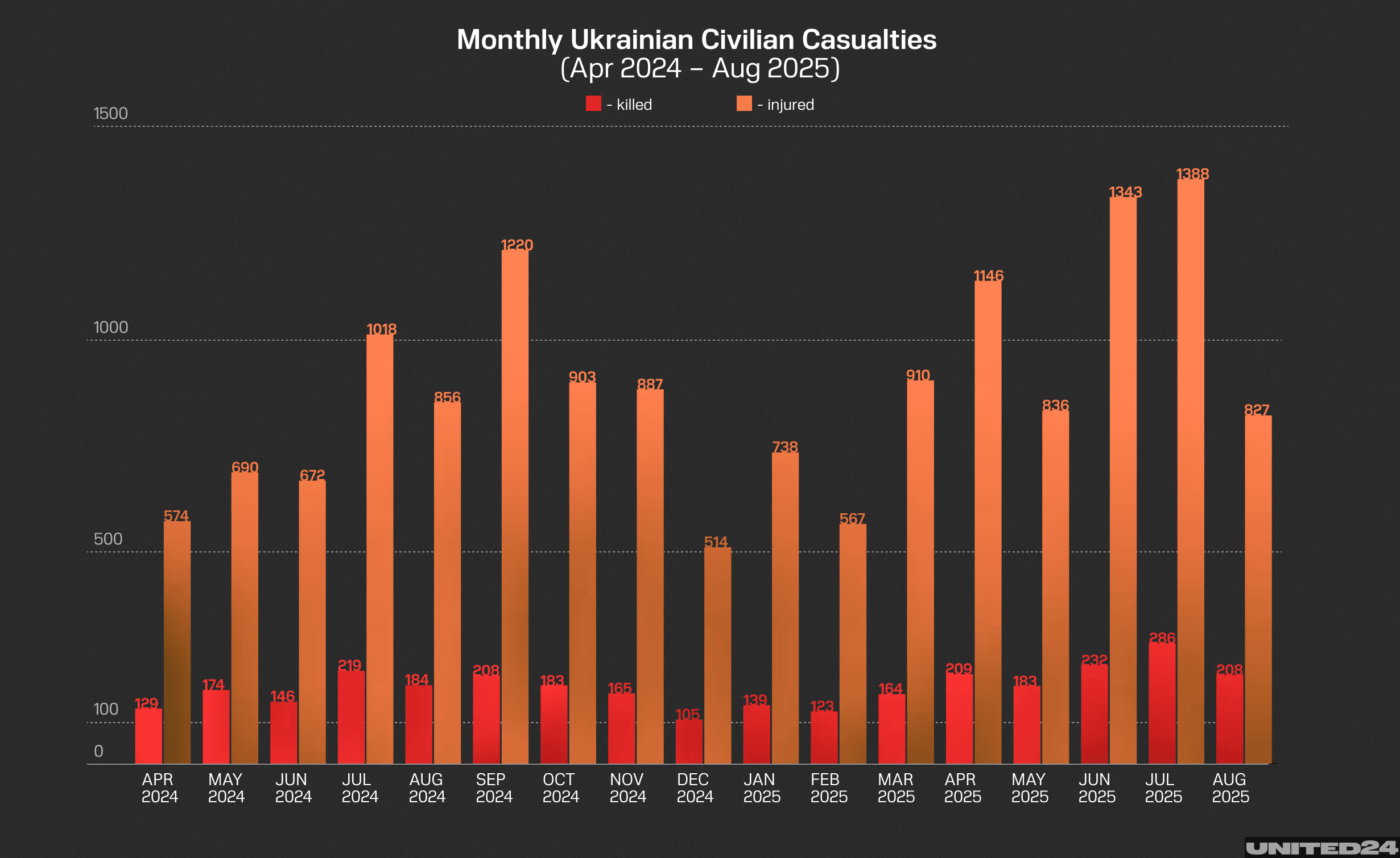
The toll is mounting: UN monitors reported that July was the deadliest month for civilians in three years, with 286 killed and 1,388 wounded. In just the first seven months of 2025, civilian casualties have surged by 48 percent compared to the same period last year.
Driving this spike is Russia’s escalating use of Iranian-designed Shahed 136 drones, or Russia’s rebranded version, Geran-2, and now fielded in upgraded, deadlier Shahed-238/Geran-3 versions.
On September 10, Russia launched an unprecedented 19 drones into the Polish airspace, where only three or four of them were confirmed to have been downed. This incursion prompted Poland to invoke NATO’s Article 4 and launch a new mission under the name Eastern Sentry to reinforce its eastern flank.
Why are these drones so difficult to stop, and what will it take for Ukraine to better protect its cities from the threat above?
What are Shaheds?
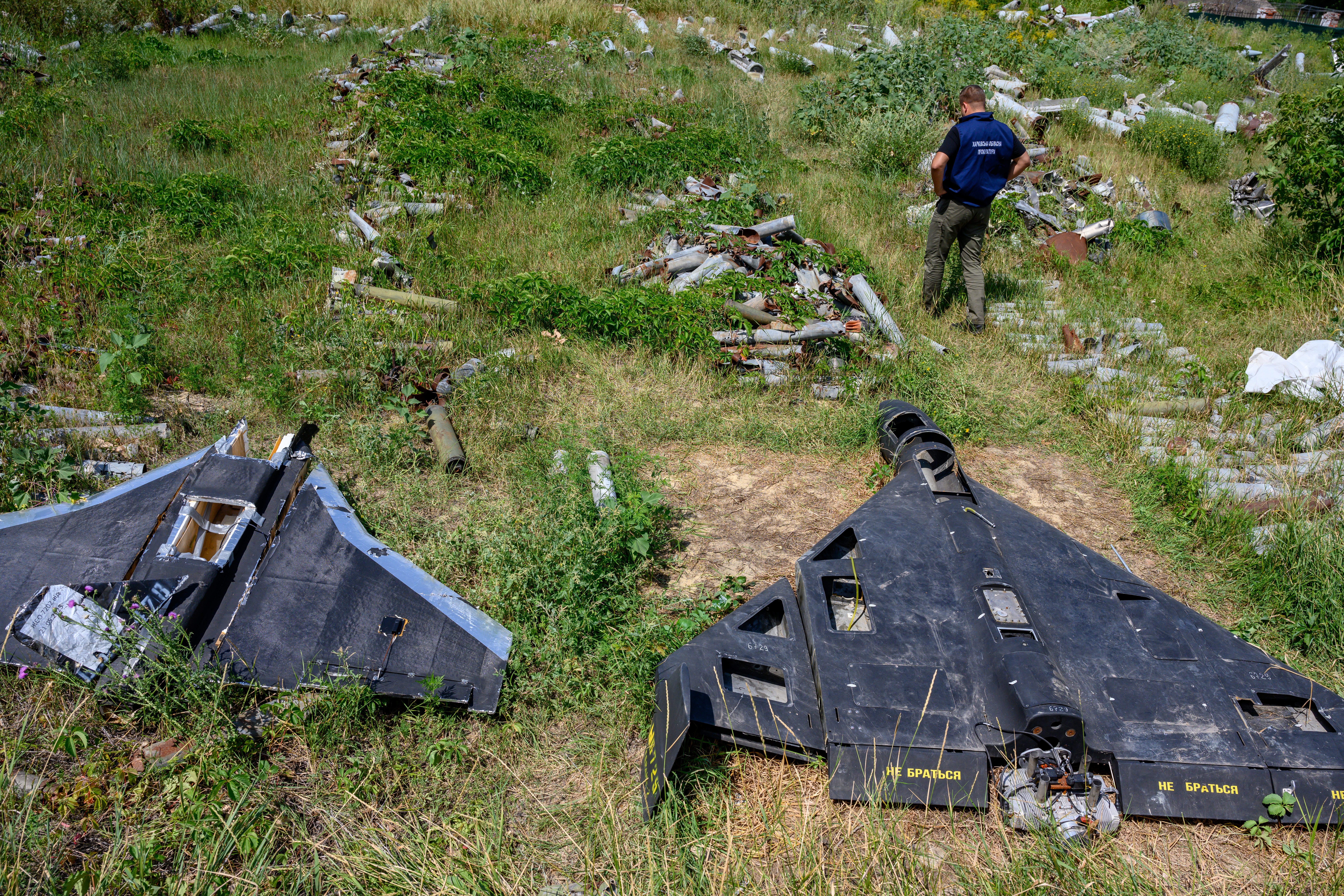
To understand the challenges facing Ukraine’s air defense, it’s important to examine the drones Russia is deploying. While many associate the term “drone” with small, consumer-grade models like DJI FPVs, the Shahed UAV is a vastly different weapon, designed for far more destructive purposes. Recognizing the unique characteristics of these drones is key to grasping the difficulties Ukraine faces in defending its cities against them.
Shahed-136 weighs up to 200 kg, has a total length of 3.5 m, and a 2.5-meter wingspan. Its warhead weighs 40-50 kilograms. The UAV’s maximum flight altitude is 4000 m, and its cruising speed is 180 km/h.
In February 2025, Ukraine’s Military Intelligence warned that Russia was developing its own version of the Shahed-238 rocket-powered drone, the Geran-3, fitted with a small turbojet engine. This upgrade boosts its speed to 550–600 km/h, nearly three times faster than the previous Geran-2, and up to 9 kilometers in altitude. Militarnyi noted that these characteristics make these loitering munitions impossible to intercept both for mobile fire groups equipped with small arms and anti-aircraft guns and for interceptor drones with electric engines.
Russia’s intensifying drone attacks
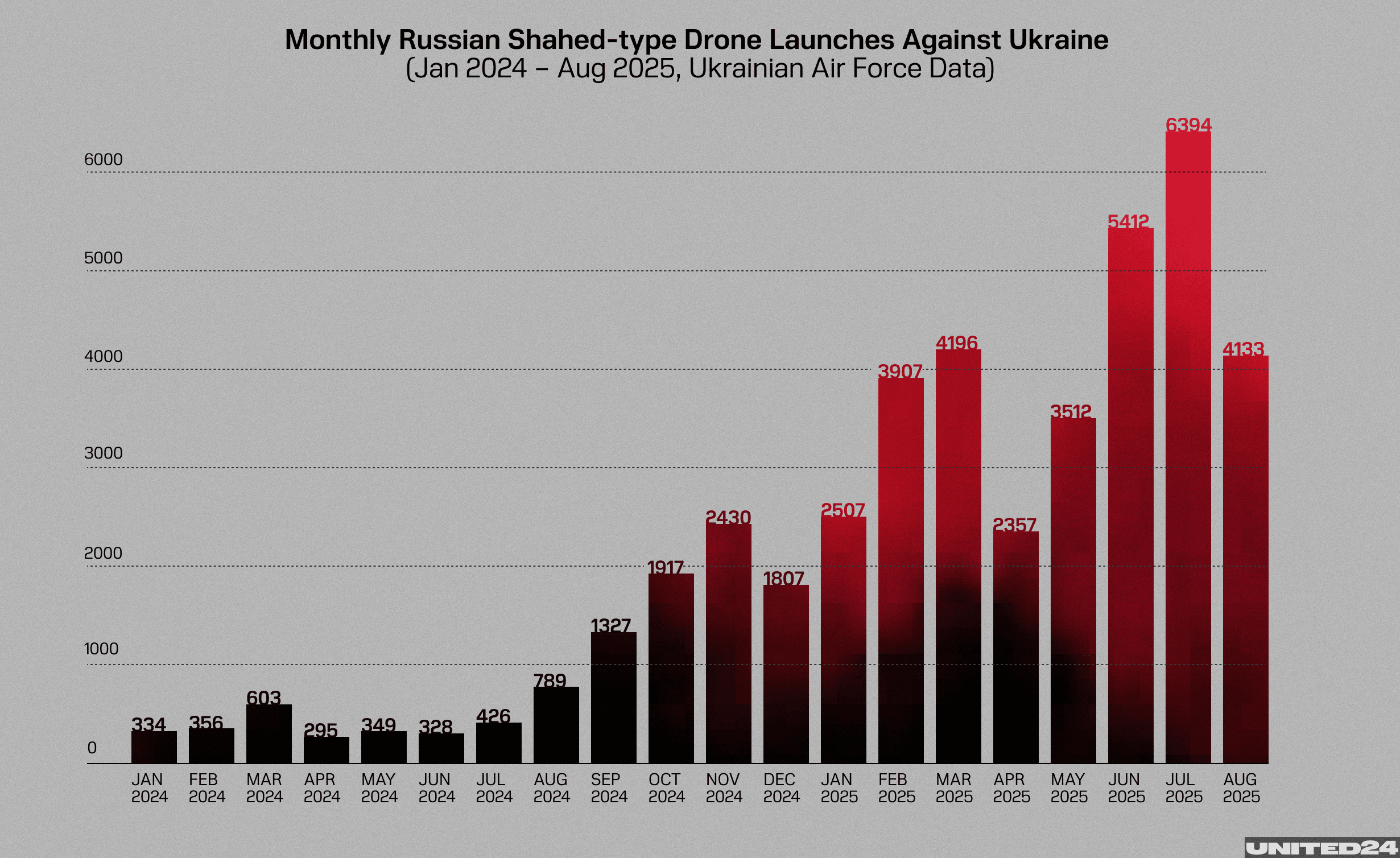
Throughout the summer of 2025, Russia has increased its large-scale attacks, using the Shahed drones. The number of drones Russian forces have launched on Ukraine has increased drastically in the past year.
In August 2024, Russia launched 789 Shahed-type drones; by the same month in 2025, that number had surged to 4,133 drones, meaning Russian forces are now sending hundreds of suicide drones daily, often alongside missiles—leaving Ukraine to fend off these overwhelming assaults on its own.
For comparison, on April 13-14, 2024, Iran, in collaboration with allies, launched 170 drones, 120 ballistic missiles, and 30 cruise missiles against Israel. To deter this attack, the Israel Defense Forces were supported by air forces from the US, UK, France, and Jordan to shoot down some of the weapons.
Russia’s intensified attacks were achieved through multiple tactics.
Increased production
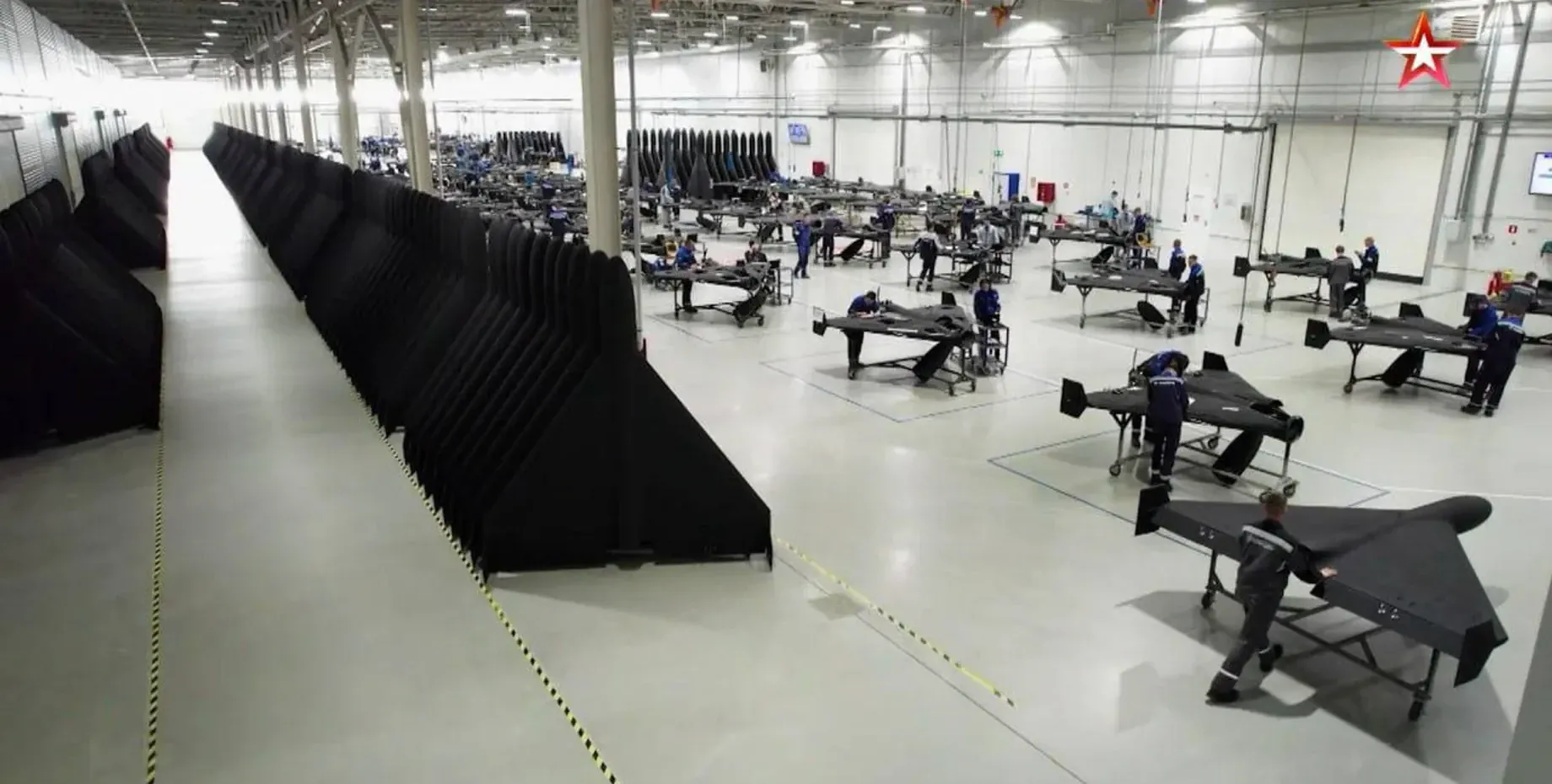
As of the end of May 2025, Russia’s production rate of Shahed-136/Geran-2 drones reached approximately 2,700 units per month, according to a statement from the press service of Ukraine’s Military Intelligence Directorate (HUR), provided to Forbes Ukraine. At the same time, the production of decoy strike UAVs, such as the Gerbera models, is around 2,500 units per month.
The publication noted further that the production rates of Shahed-type drones indicate a fivefold increase compared to the summer of 2024. Back then, a source within Ukraine’s intelligence service said that the production rate of Shahed-type drones was around 500 drones per month.
Decoy drones
Two of the most infamous dummy drones are the Gerbera and Parodiya models. Built from plywood, foam, and basic electronics, they mimic Shaheds but cost a fraction to produce. Many are unarmed, but some carry small warheads or reconnaissance gear. Their purpose: to overwhelm Ukraine’s air defenses and burn through precious ammunition.
Deadlier designs
Russia has steadily upgraded Shaheds to make them harder to stop. Reports this year indicate new variants carry warheads weighing up to 90 kilograms, nearly double the original payload. The explosive charge itself has increased from 28 to 62 kilograms, significantly boosting destructive power.
Other upgrades include:
Jet engines for higher speeds, making interception more difficult.
Armored engine compartments to resist machine-gun fire.
Fuel tanks relocated from the wings to the main body, making them less vulnerable.
These changes have turned Shaheds into tougher, more resilient, and deadlier weapons.
Cutting costs
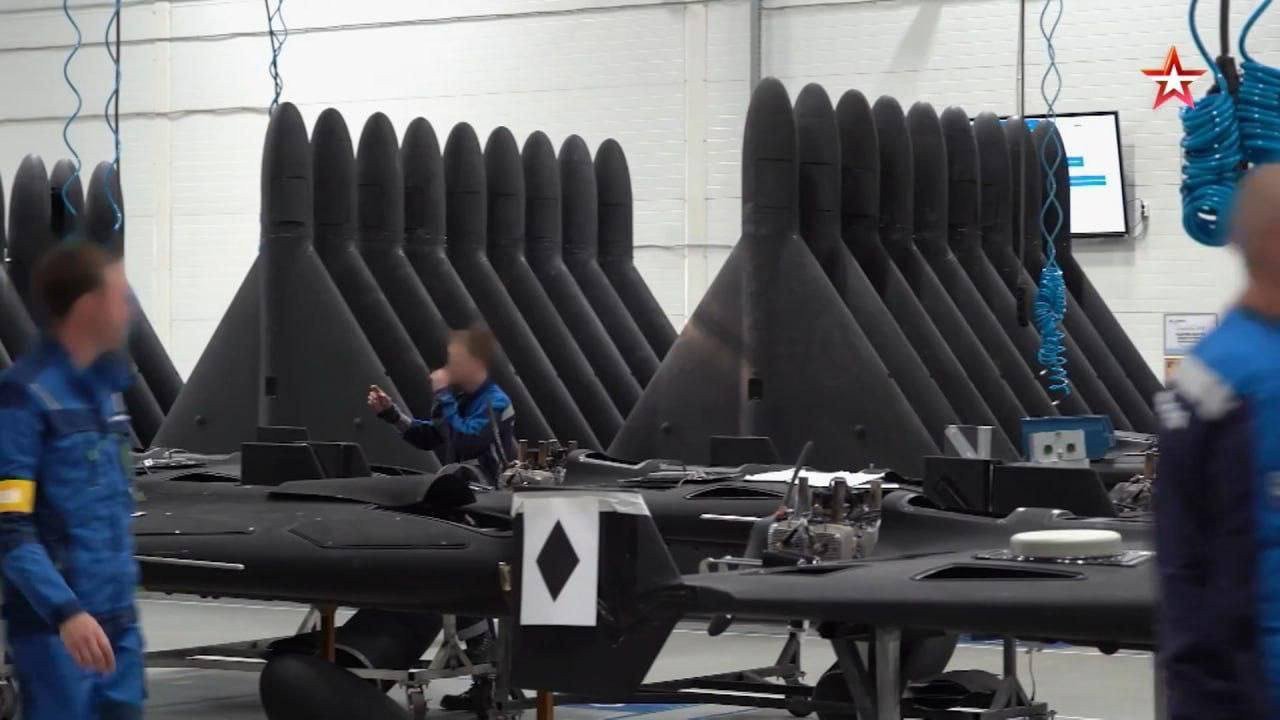
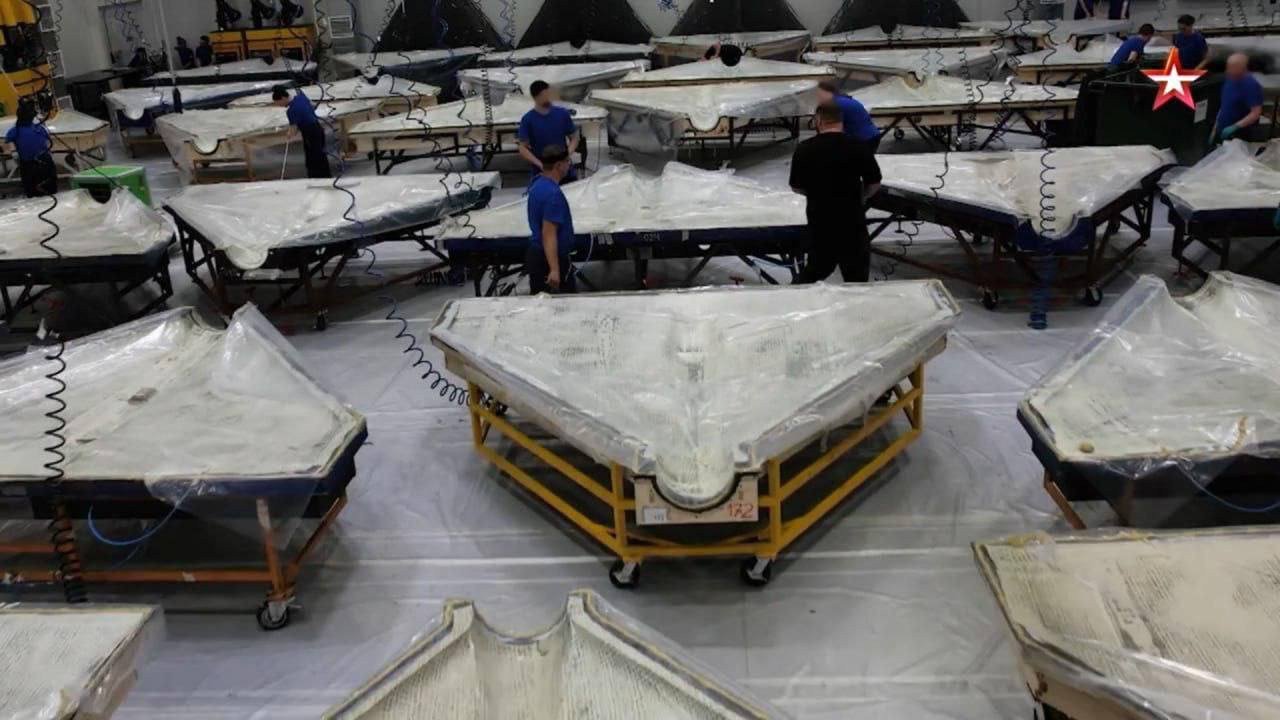
After acquiring Iranian designs for Shahed drones, Russia established its own factory capable of producing thousands of these weapons.
“In 2022, Russia paid an average of $200,000 for one such drone,” a Ukrainian Defense Intelligence source told CNN. “In 2025, that number came down to approximately $70,000,” due to the production at the Alabuga drone factory in Russia’s Tatarstan region.
The Center for Strategic and International Studies reported in February 2025 that a Shahed drone costs around $35,000, but by May, it had revised its assessment to a broader range of $20,000 to $50,000 per unit.
Defense Express, in turn, wrote that these figures are difficult to verify independently, noting that the lower end of $20,000 seems unlikely, with $50,000 to $70,000 appearing more plausible.
Either way, the production cost per unit has significantly dropped since the beginning of Russia’s full-scale invasion in 2022, potentially decreasing by as much as three to four times.
Intercepting Shahed-type drones
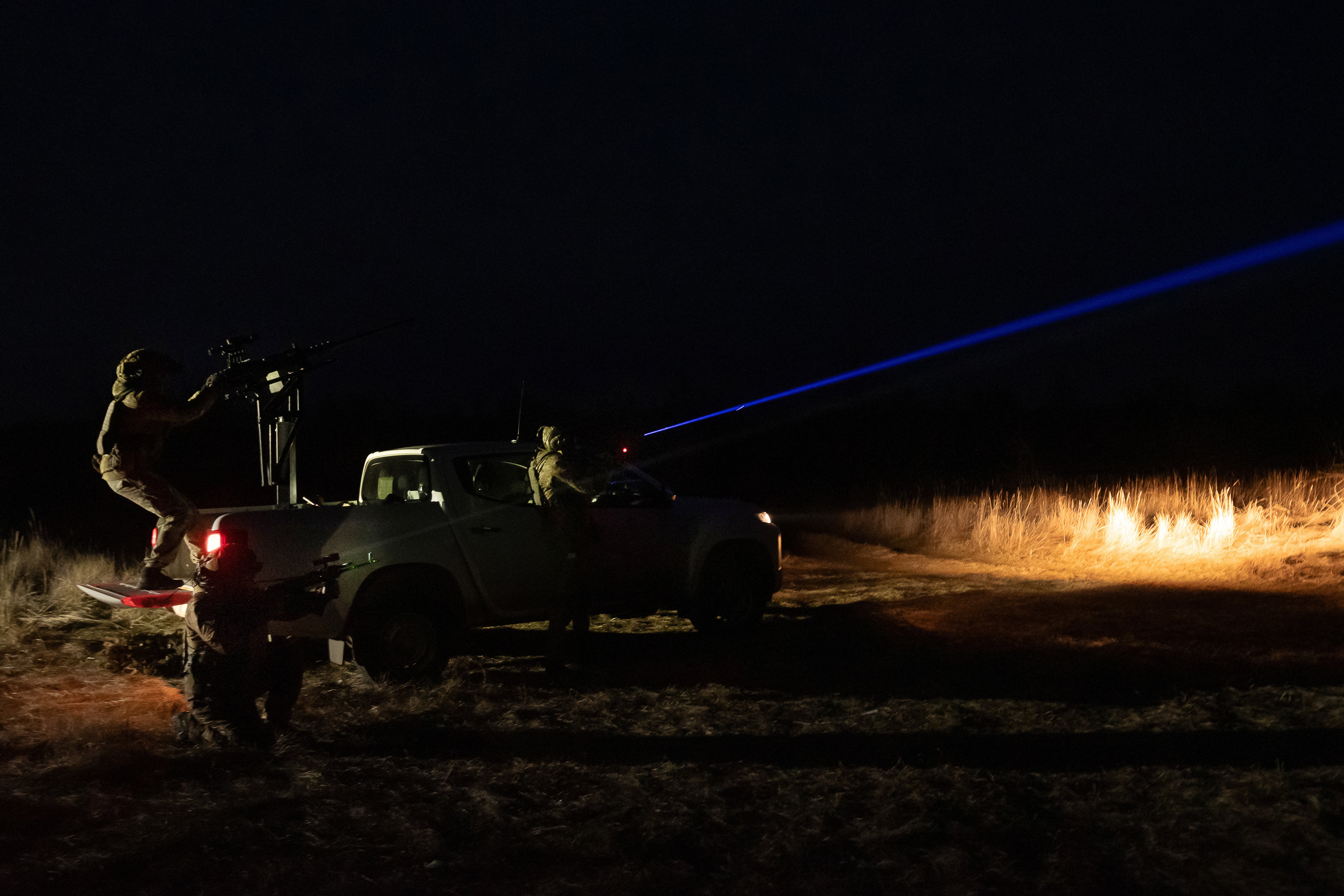
Ukraine faces a challenge no other country has ever encountered: defending against a vast number of drones in mixed formations, says Military expert Andrii Kramarov. “The same UAVs come in different types—internal combustion and jet engines,” he explained. “Each requires different countermeasures.”
“For instance, if it’s a UAV with an internal combustion engine, it is inefficient to use an expensive surface-to-air missile. In this case, a mobile fire group or an anti-air drone might be employed. However, if it’s a jet-powered Shahed, the range of countermeasures narrows. It becomes a more expensive target, similar to a cruise missile, so it is more appropriate to use a surface-to-air missile against it.”
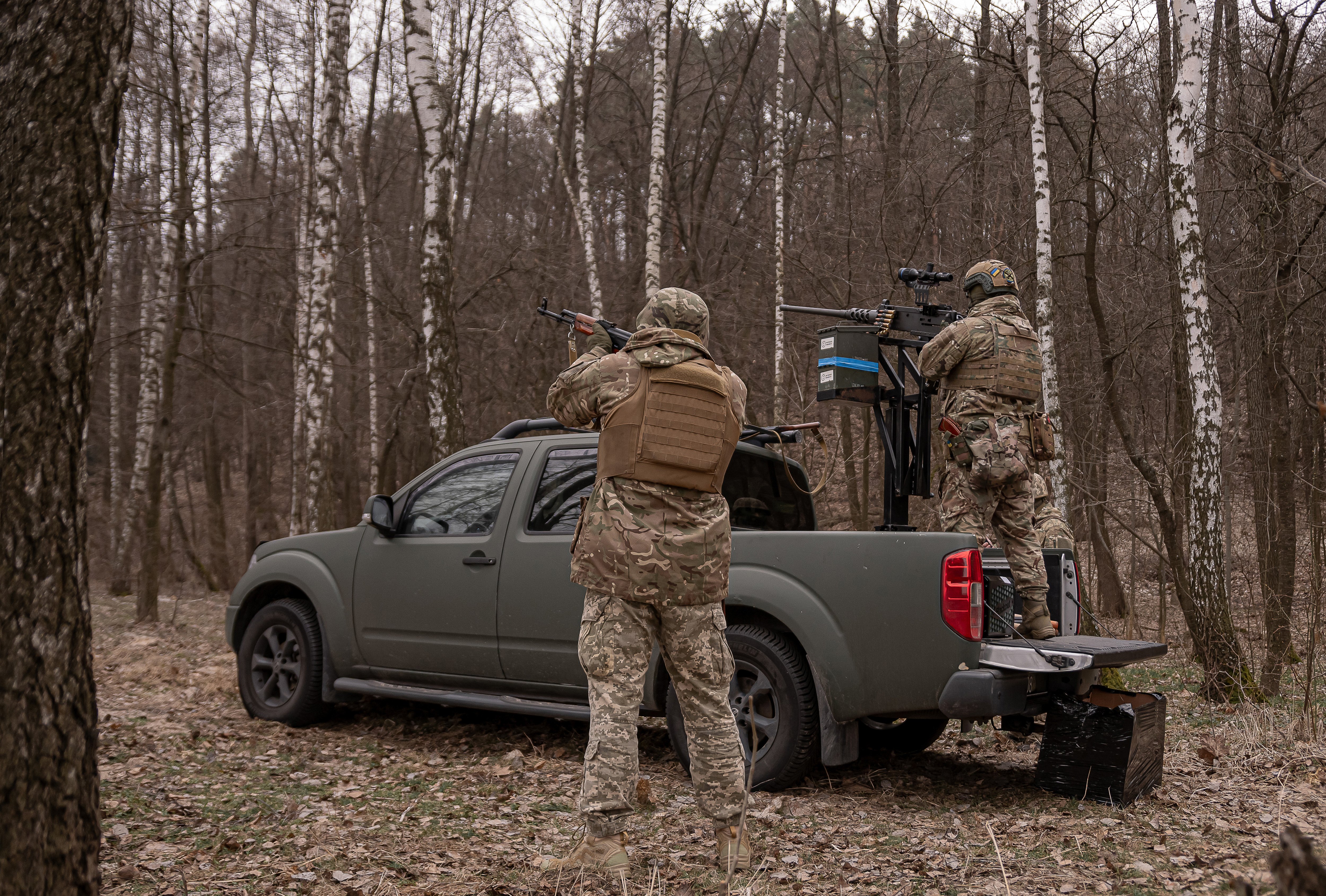
Ukraine relies on a layered mix of defenses to counter Shahed drones. Long-range interception is carried out with systems like Patriots, NASAMS, and S-300s, while MANPADS and small arms are used in close combat. Electronic warfare systems jam control links, and anti-aircraft guns such as the Shilka target low-flying drones. Mobile fire groups armed with machine guns offer a cost-effective solution, while advanced systems like the AI-controlled Ukrainian Sky Sentinel, equipped with a heavy machine gun further bolster defense. Additionally, interceptor drones are becoming an increasingly vital component of this defensive network.
The role of interceptor drones
Interceptor drones have become one of the most talked-about solutions. Cheap and relatively quick to deploy, they have already proven effective. During Russia’s record September 7 assault with 810 drones, President Volodymyr Zelenskyy announced that interceptors brought down more than 150 targets overnight.
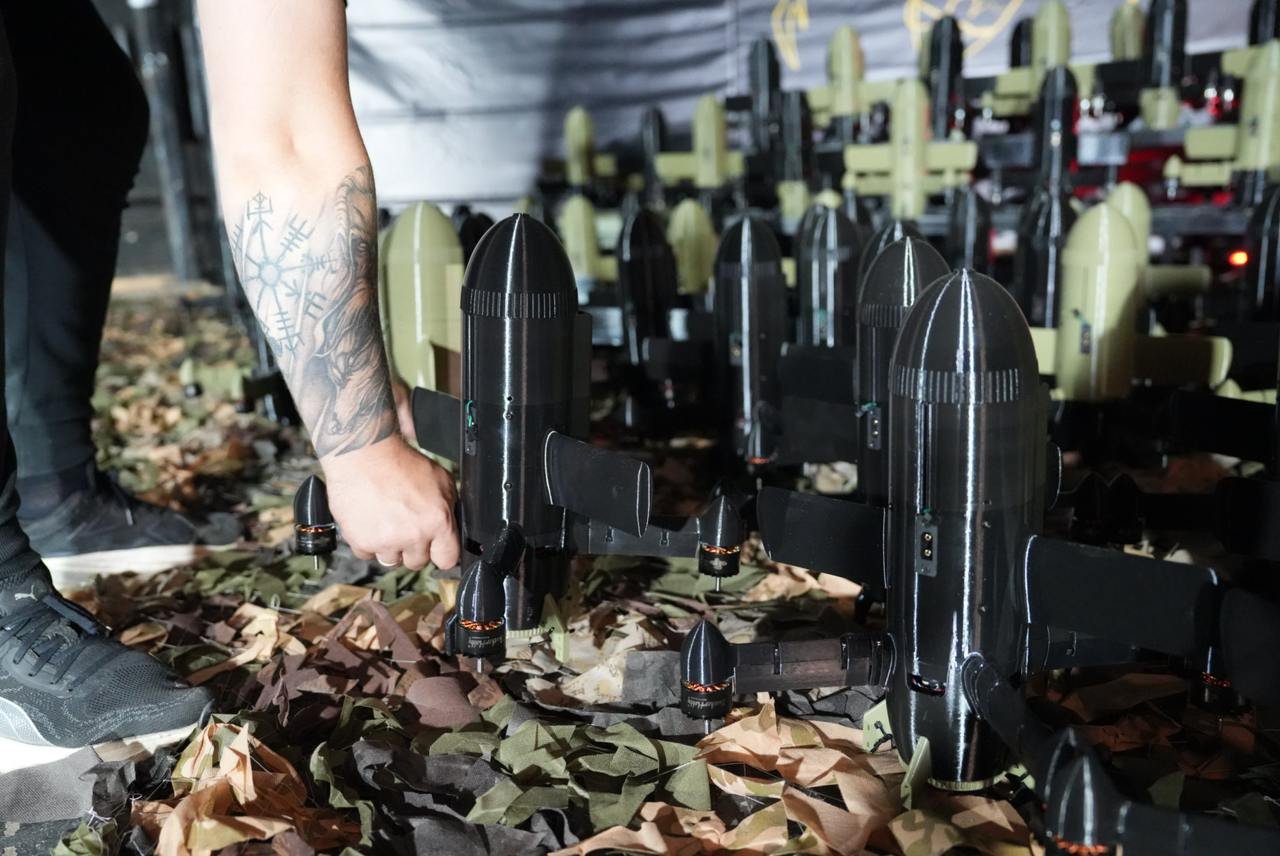
“The Russians keep the number of Shaheds in massive strikes at the level of 300–400 per strike, and our interceptors must reach a matching level. This is realistic—production capacity is there, financing and contracts are secured, and what is needed now is to scale up the relevant units,” Zelenskyy said in his evening address.
Still, their limits are clear: weather affects performance, and they depend on sophisticated radar networks costing at least €700,000 per unit.
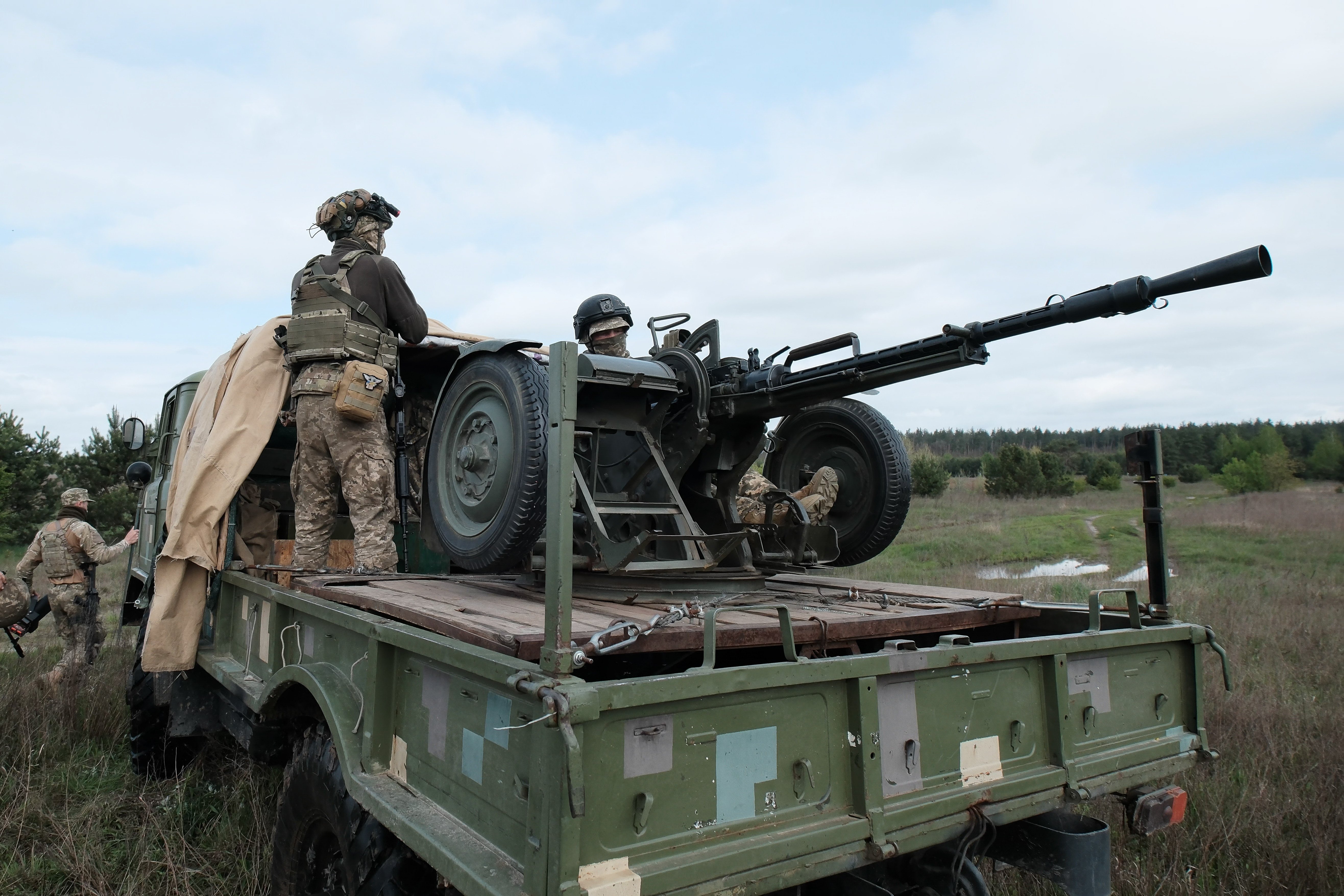
Ukraine is building a modern, multi-layered defense system, a Brave1 spokesperson told UNITED24 Media.
“Interceptor drones play a key role in this architecture, working alongside early-warning systems, electronic warfare, and long-range strike platforms,” the spokesperson wrote. “Dozens of Ukrainian teams are already developing such technologies.”
“The defense cluster Brave1 supports this work with grants, testing, and assistance in scaling production. Within Ukraine’s air defense network, interceptor drones are emerging as an accessible and scalable tool to neutralize threats that slip past other defensive layers.”
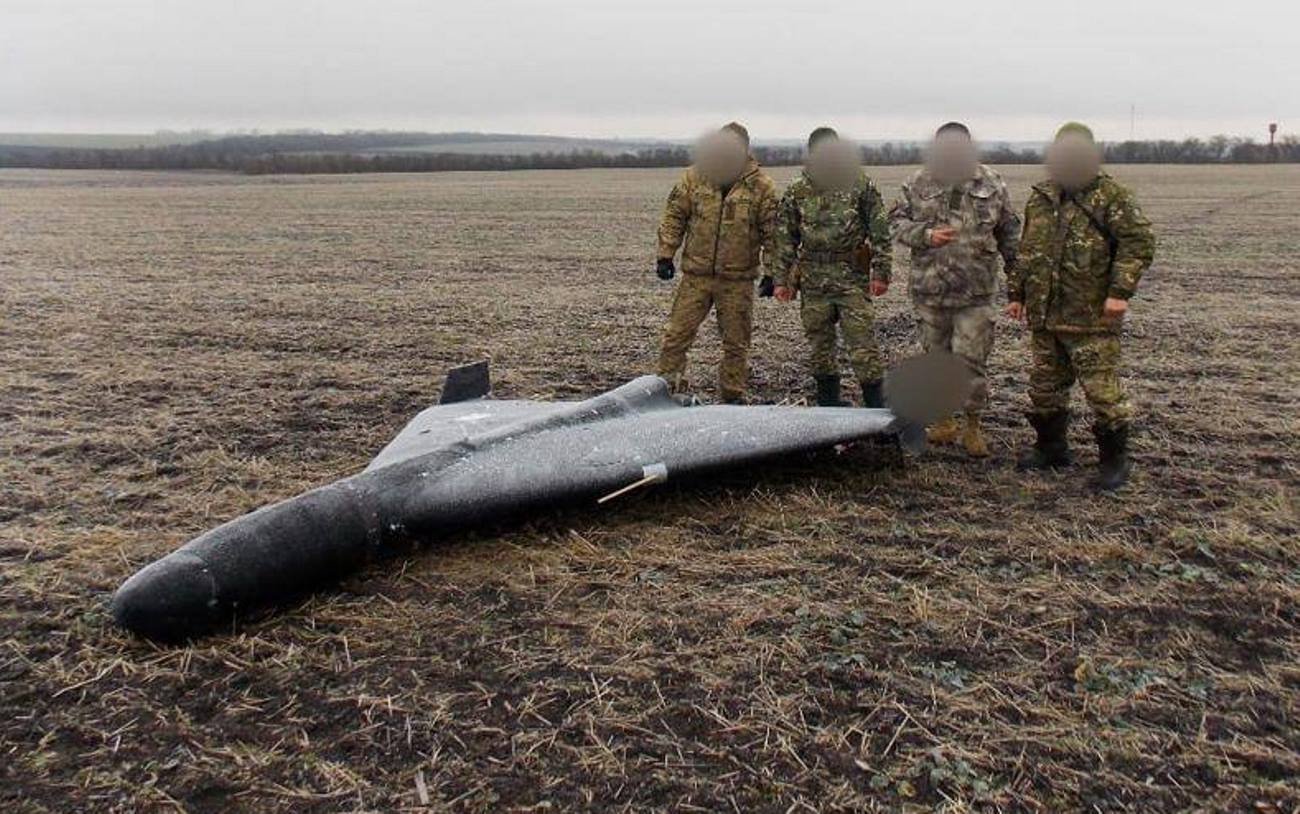
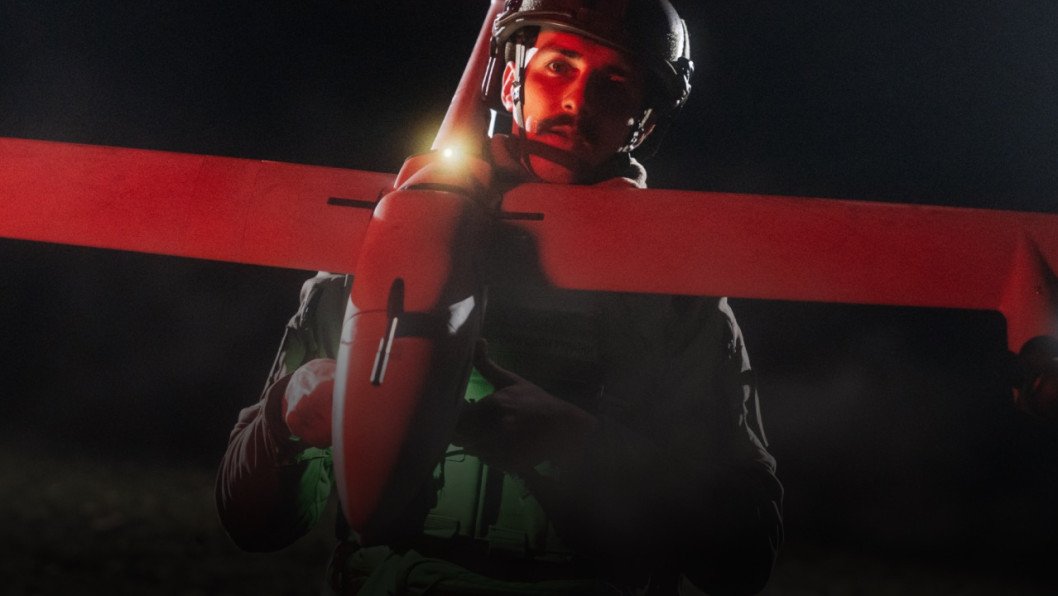
To effectively counter drone attacks, it is important to expand Ukraine’s fleet of interceptor drone operators and destroy Russia’s supply chains for Shahed components and its production facilities, Skarlat Oleksandr, Executive Director of the Charitable Foundation “Sternenko Community ,” told UNITED24 Media.
“We need to systematically develop the methodology and organization for how different Defense Force units destroy Shaheds,” he said. “In short, it’s about creating a coordinated system of interaction that minimizes overlap and ensures each unit can use its available resources as effectively as possible.”
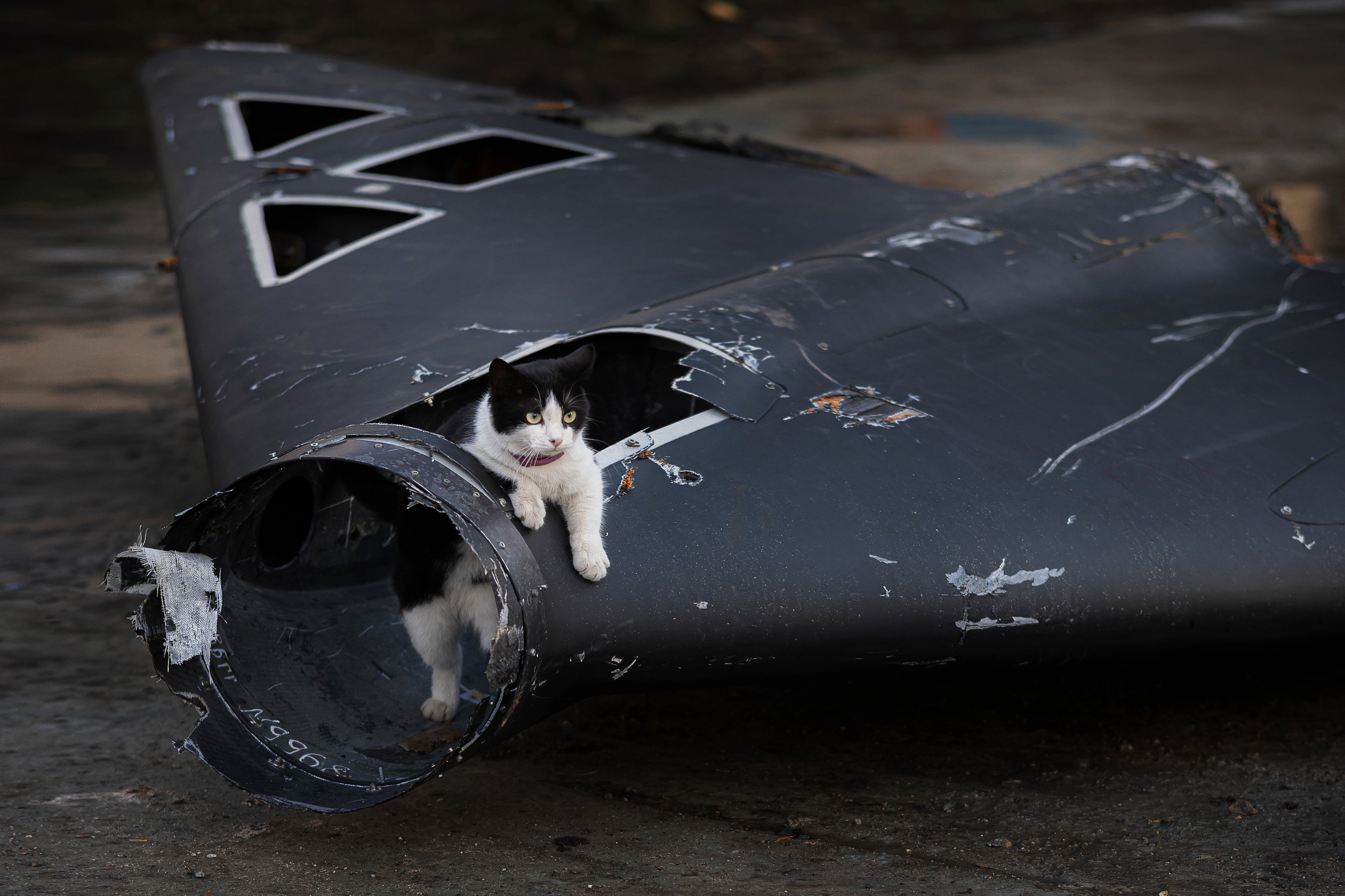
As Russia floods Ukraine’s skies with deadlier, faster, and cheaper drones, Ukraine is racing to adapt. The outcome depends not only on interceptors and radar but also on the speed of innovation, the scale of production, and continued international support. For now, the battle over the skies remains one of the defining struggles of the war.
Discuss this article:


-72b63a4e0c8c475ad81fe3eed3f63729.jpeg "Photo of Cyril Barabaltchouk")

-111f0e5095e02c02446ffed57bfb0ab1.jpeg "Photo of Roman Kohanets")
-e88c01988249cd60b6f04f79d29156b7.jpeg "Damage to “Cosmogony,” the largest painting in Ukraine, following a Russian drone attack on Lutsk on October 13, 2026. (Source: @sashyyna/Instagram)")
