Category
War in Ukraine

200 Forensic Experts Against a Mountain of Grief: Ukraine’s Race to Name the Thousands Fallen
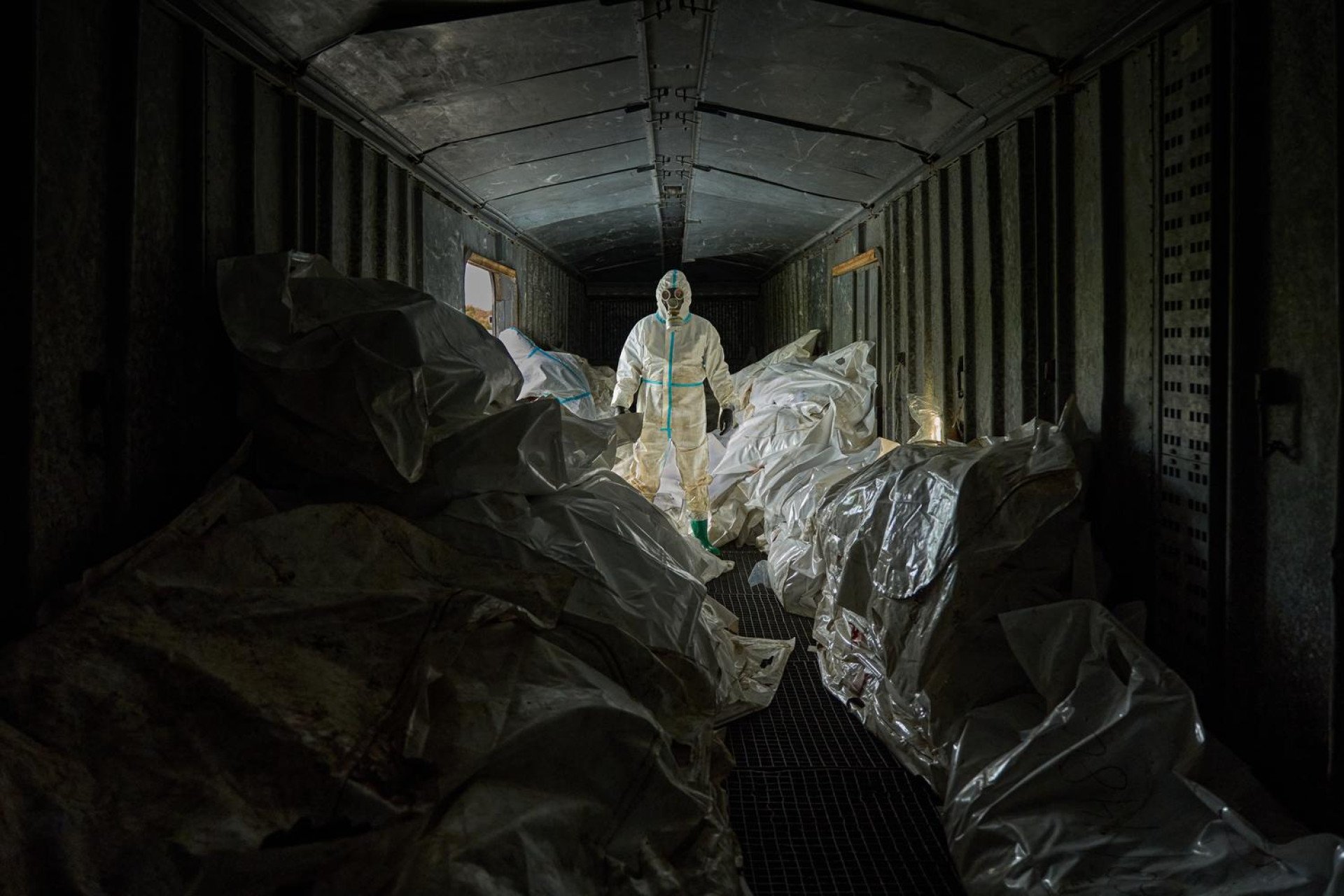
A Ukrainian forensic expert in a white hazmat suit and gas mask stands inside a dark, crowded railway car filled with white body bags of returned dead.

“Through our work, want every single living member of the Armed Forces of Ukraine to know firstly, no matter who you are or how you were killed, we will get you home. And secondly, we want every enemy soldier to know: we will find you, and we will make you pay for every single body you see here strewn across the ground. There is no escape, and there will be no mercy.”

13 min read
Google logo Prefer U24 Media on Google
Authors
Photo of Jamal Marcelin
Senior Editor (Spanish language)
Photo of Mykyta Shandyba
Photojournalist

These were the measured words uttered to us with clear deliberation and and sincerity by Iryna—a Ukrainian representative of the RT Weatherman Foundation—as air raid sirens denoting an imminent missile threat screamed across the open field in which we stood, surrounded by the rotting remains of thousands of Ukraine’s fallen servicemembers.

We stood in front of the corpse-gray refrigerated freight car that had brought Ukraine’s fallen servicemembers in from the frontline territories. A putrid metallic serpent stretching into the distance, it spilled forth countless body parts we could no longer name, given their various states of decay. We were assailed by the ever-present feeling of falling into a pit: a dignity not even spared to the souls laid bare in front of us.

Content warning: This report contains graphic descriptions and photographs of deceased servicemembers and forensic examination procedures.
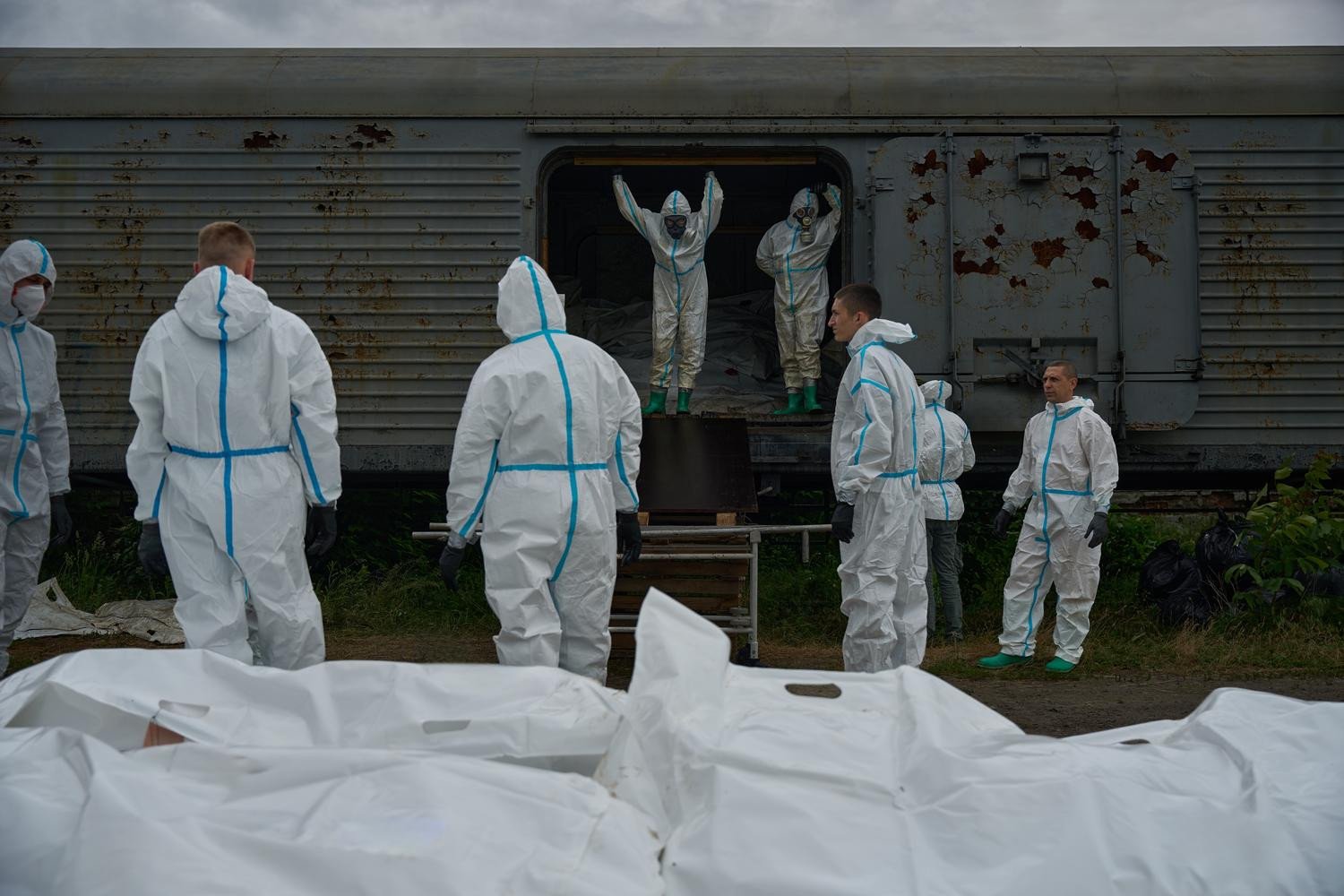
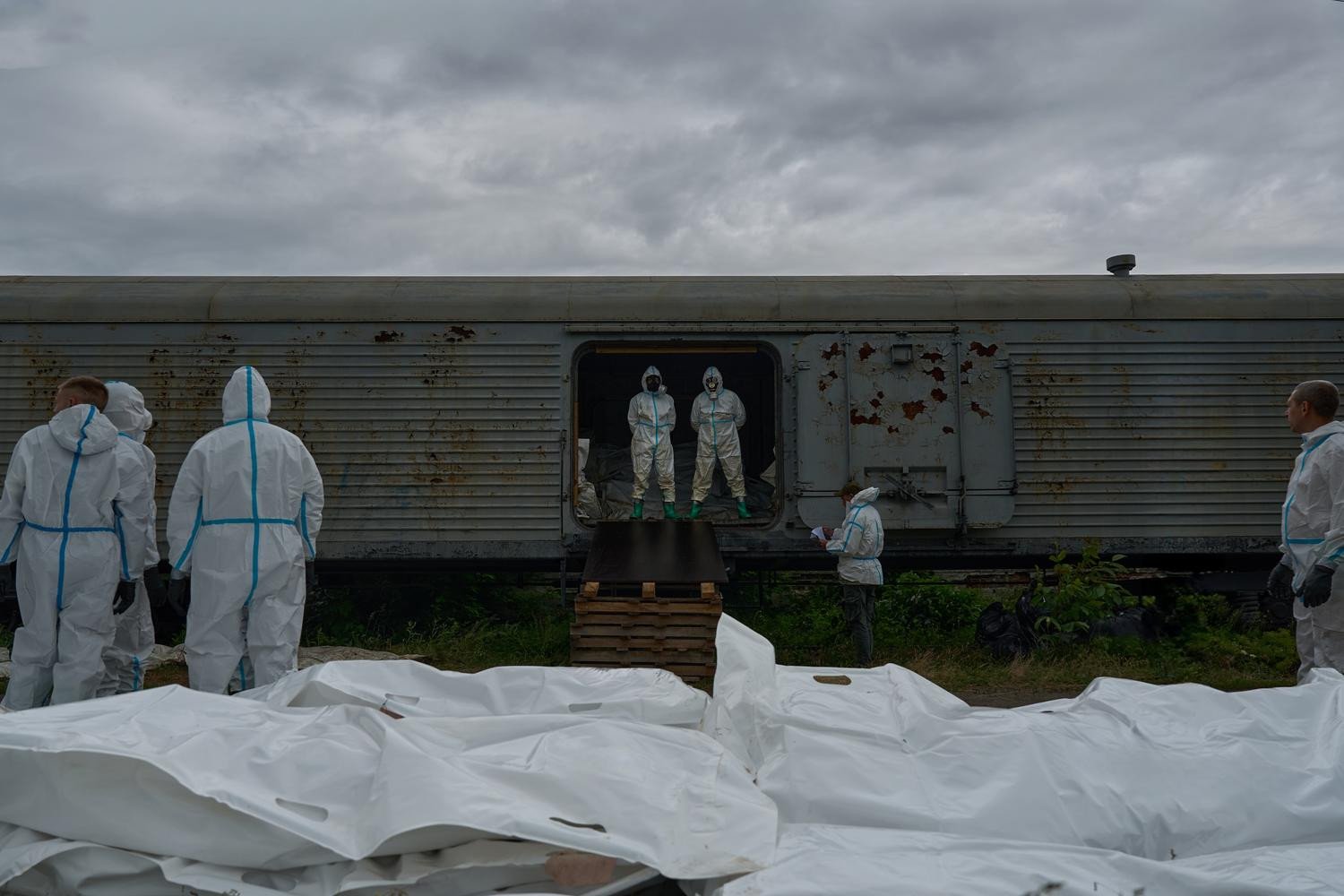
Ukrainian forensic experts in full white protective gear. Several dozen white body bags are arranged in neat rows on the ground in the foreground. Two experts stand in the open doorway of the refrigerated car, which is filled with more remains returned from Russia. Other experts on the ground take notes and inspect the bags as part of a large-scale identification effort.
Forensic experts briefly rest at the scene of a large-scale identification of Ukrainian servicemen at an undisclosed location in Ukraine. Dozens of bodies are laid out on the ground in rows to be inspected, cataloged, and identified by the specialized teams. Thousands of remains recently returned by Russia are stored in the dark interior of the train as Ukraine faces the daunting task of giving every fallen soldier a name. (Photo: Mykyta Shandyba / UNITED24 Media)
Ukrainian forensic experts in full white protective gear. Several dozen white body bags are arranged in neat rows on the ground in the foreground. Two experts stand in the open doorway of the refrigerated car, which is filled with more remains returned from Russia. Other experts on the ground take notes and inspect the bags as part of a large-scale identification effort.
Forensic experts briefly rest at the scene of a large-scale identification of Ukrainian servicemen at an undisclosed location in Ukraine. Dozens of bodies are laid out on the ground in rows to be inspected, cataloged, and identified by the specialized teams. Thousands of remains recently returned by Russia are stored in the dark interior of the train as Ukraine faces the daunting task of giving every fallen soldier a name. (Photo: Mykyta Shandyba / UNITED24 Media)

And then there was the smell: a vaguely sweet rancid stench that permeated every fabric of our clothing—protective gear be damned—and clung desperately to every nostril hair, for every second of the six-hour period we spent with the forensic experts.

If you’ve ever been in the presence of a decomposing human corpse, this smell, as you know, stays with you forever. Now, imagine this smell multiplied by a thousand and hitting you all at once: a tsunami of putrefaction and ruin. We didn’t know if the tears creeping forth from our eyes were due to the stinging burn of the chemicals flooding our senses, or if they were indicators of a deeply-rooted ancestral warning signal to urgently retreat. As my throat dried out and the contents of my stomach seemed increasingly intent on fleeing my body, one question—along with an all-consuming sense of despair—besieged my conscience: How could we do this to one another?
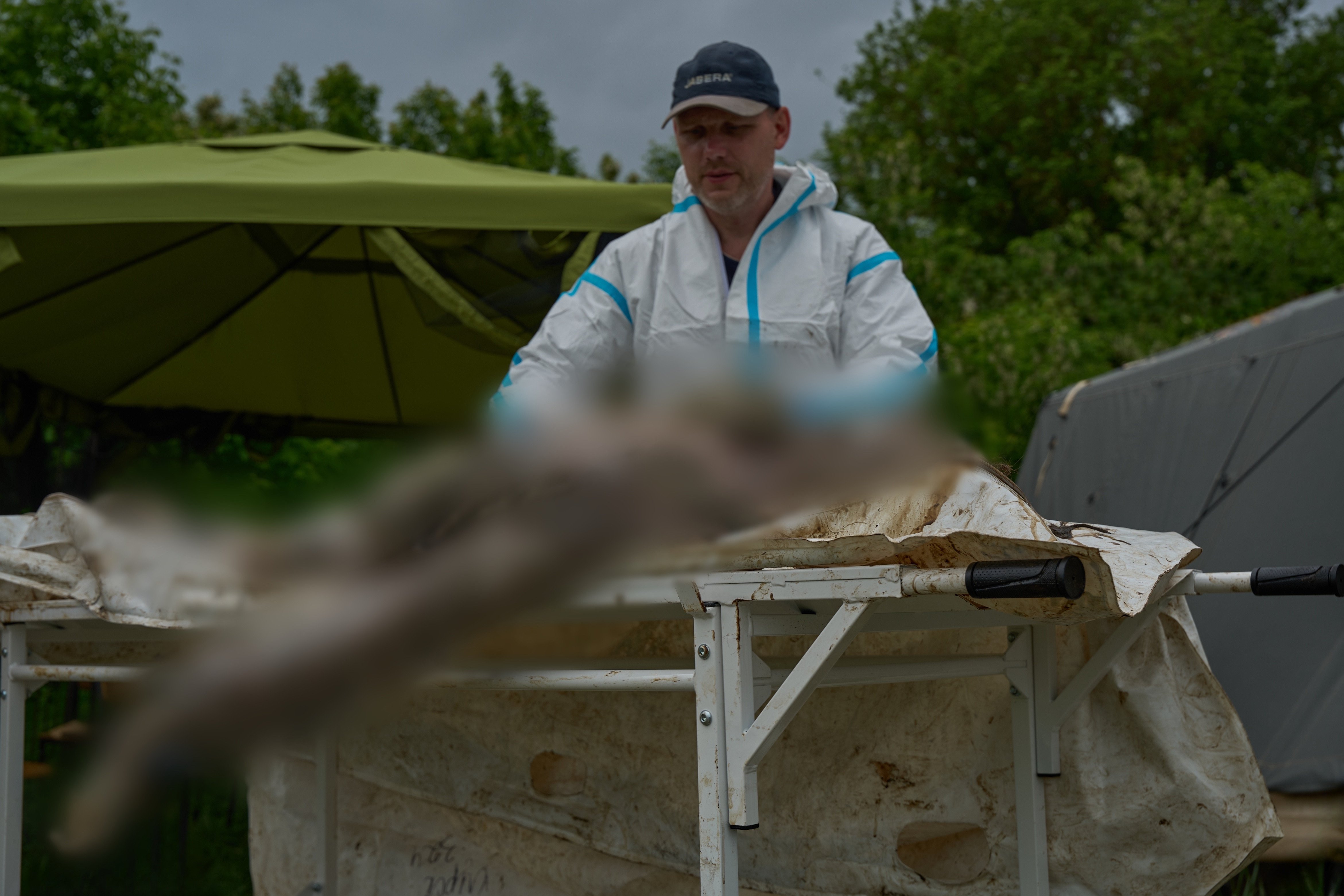
An outdoor photograph shows a Ukrainian forensic expert wearing a baseball cap and a white hazmat suit examining a body on a medical gurney. The heavily decomposed, dirt-covered remains are of a soldier still wearing remnants of tactical gear and combat boots. The expert works carefully near an open tent structure in the background, focusing on documenting trauma and identifying features on the remains.
A Ukrainian forensic expert in full protective gear examines the mummified remains of a fallen Ukrainian soldier, still clad in the remnants of tactical gear and boots. (Photo: Mykyta Shandyba / UNITED24 Media)

Proceeding across the field of decaying flesh—or whatever was left of it—we were ushered into a black examination tent, where several corpses were stretched carefully across makeshift gurneys, all stained a sickening shade of golden brown, owing to the bodily fluids incessantly draining out of the remains in front of us.

Our cameraman, in an impossible attempt to lighten the situation, quipped that the liquid resembled Tom Yum soup, which generated small chirps of laughter from the experts, a reaction that mercifully returned a few seconds of humanity to this nightmarish tribute to the worst parts of our human condition.
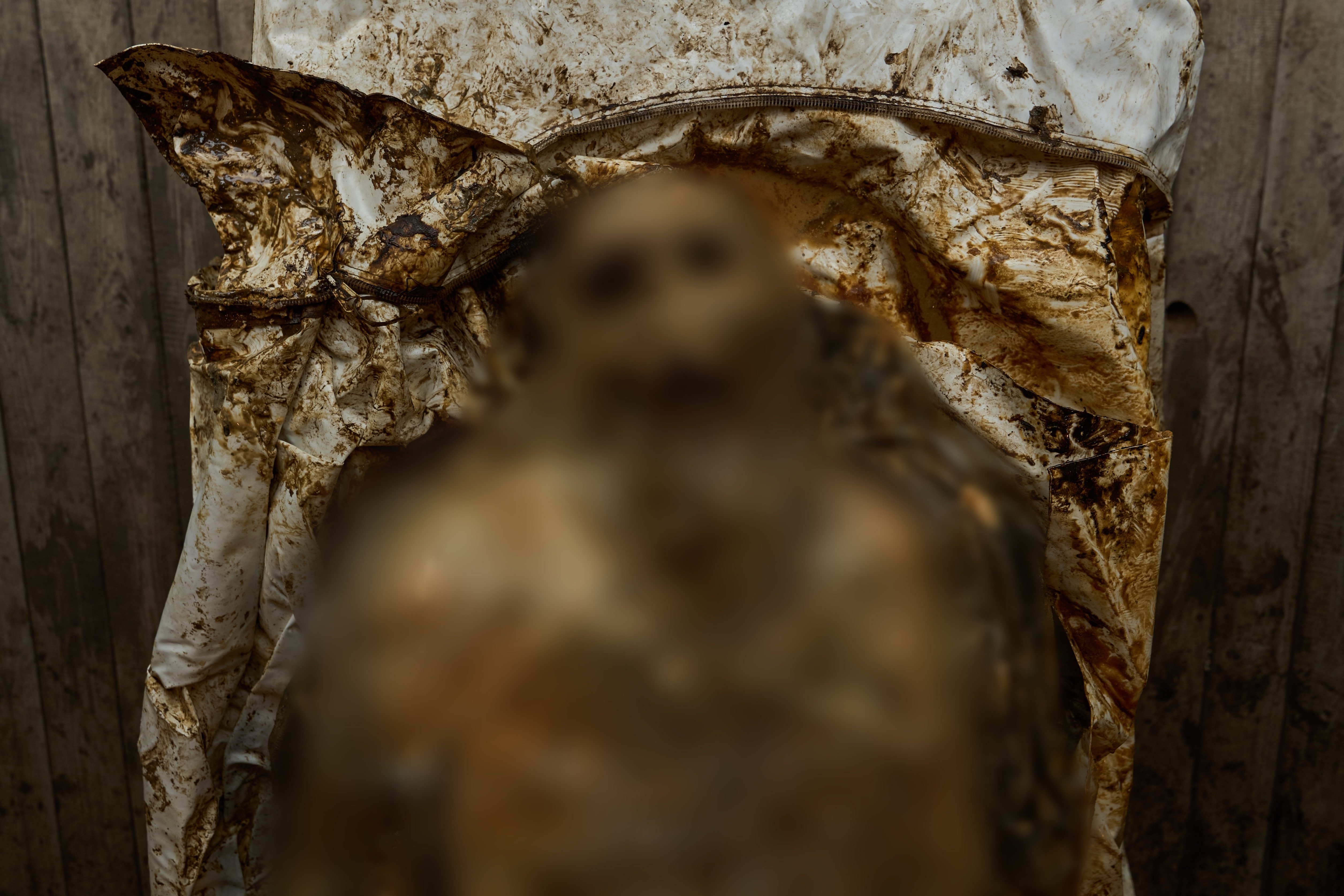
A close-up photograph shows the severely decomposed, mummified remains of a human body inside a soiled white body bag against a wooden background. The skin is deeply discolored, leathery, and decayed, exposing underlying facial bone structures, empty eye sockets, and teeth. Traces of a dark uniform are visible on the shoulders, illustrating the stark and brutal reality of frontline casualties awaiting forensic identification.
The severely decomposed remains of a soldier rest in a body bag, awaiting forensic examination. With thousands of bodies returned from frontline territories during repatriation swaps, Ukraine’s small team of forensic experts must carefully analyze highly degraded remains to extract DNA, establish the cause of death, and restore identities to the nameless fallen. (Photo: Mykyta Shandyba / UNITED24 Media)
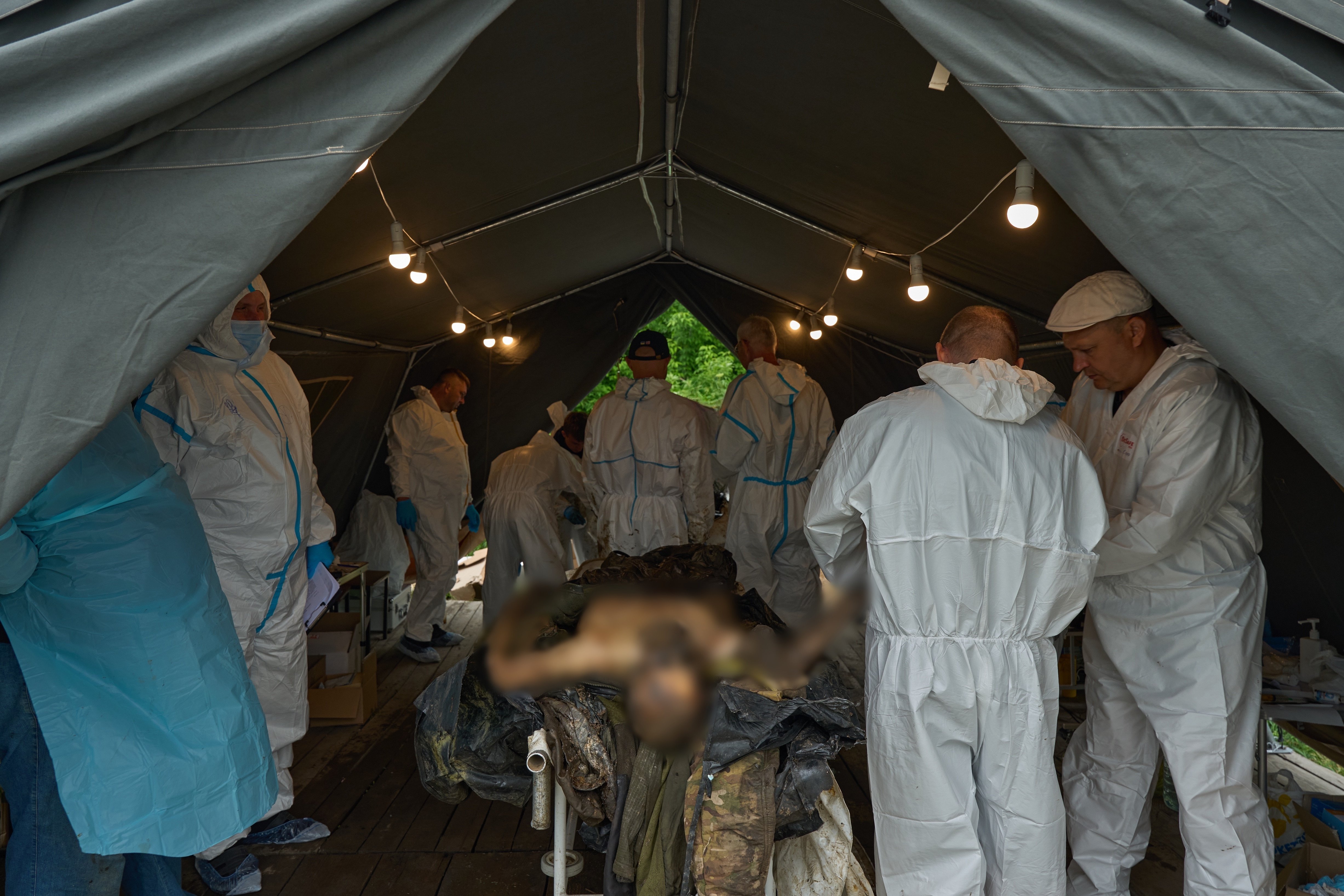
Inside a field tent under string lighting, several Ukrainian forensic experts wearing white hazmat suits and protective gear gather around an examination table. On the table lie the severely decomposed, mummified remains of a fallen soldier, with visible tatters of camouflage military uniform. The forensic specialists work methodically in groups, inspecting the body and documenting evidence to determine the cause of death and establish a DNA profile.
Inside a field lab, Ukrainian forensic specialists systematically examine highly degraded human remains recovered from frontline zones. Working under immense physical and psychological strain, these teams perform meticulous post-mortem autopsies—gathering DNA evidence, cataloging personal belongings, and examining remnants of uniforms to solve the identity of the missing and provide closure to families. (Photo: Mykyta Shandyba / UNITED24 Media)

The experts quickly returned to their work, not wanting to waste even a millisecond of time on anything that isn’t related to returning dignity to what remains of the fallen servicemembers strewn out in front of them.
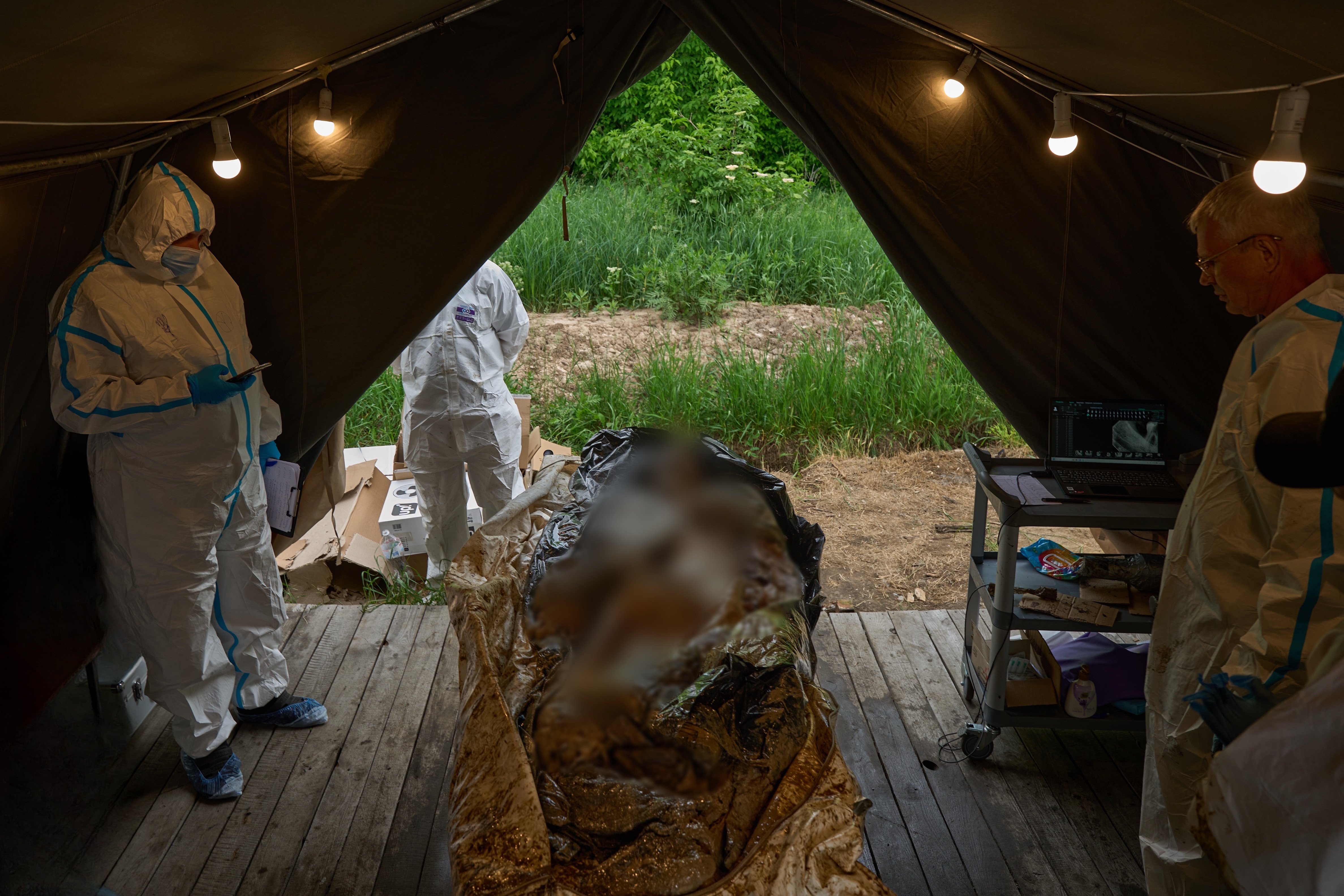
Inside a temporary field tent lit by hanging lightbulbs, Ukrainian forensic experts in white hazmat suits prepare to work on heavily decomposed human remains laid on a wooden floor. One expert stands on the left holding a smartphone and a clipboard, while another stands on the right near a mobile cart equipped with a laptop displaying a forensic image or scan. The open back of the tent looks out onto a green, grassy outdoor area.
Ukrainian forensic specialists gather around highly degraded remains at a field site to begin the post-mortem documentation process. Utilizing laptops and digital databases directly on the ground, a small nationwide team of just 200 experts handles thousands of repatriated bodies, meticulously cross-referencing physical evidence and trauma patterns to give nameless fallen soldiers their identities back. (Photo: Mykyta Shandyba / UNITED24 Media)

In stark contrast to the bloated flies lumbering across the space—laboriously crawling from one piece of rotten flesh to another—the experts rapidly dash from appendage to appendage, reanimating fingers, in a process that will allow them to capture fingerprints from the deceased. With surgical clarity, devoid of emotion, they explain to us their innovative method, being used for the very first time in Ukraine: first, you need to boil a large pot of water; the bodies arrive to the experts in a nearly frozen state, so everything underneath what is left of the flesh is cold and stiff.

Then, you search for a finger that won’t fall apart in your hand, pour the boiling water over it, and wait for a color resembling lifelike appearance to return; a solution must also be injected into the finger, in order to expand the skin and prepare it for pressure. Once this “reanimation” occurs, you then have precious seconds to hurriedly grab an ink brush, roll it across the finger, and then roll the finger across a fingerprint pad. The resulting biometric signature is then entered into a national database and compared to millions of samples, in a desperate digital attempt to reconnect what once was to what is.
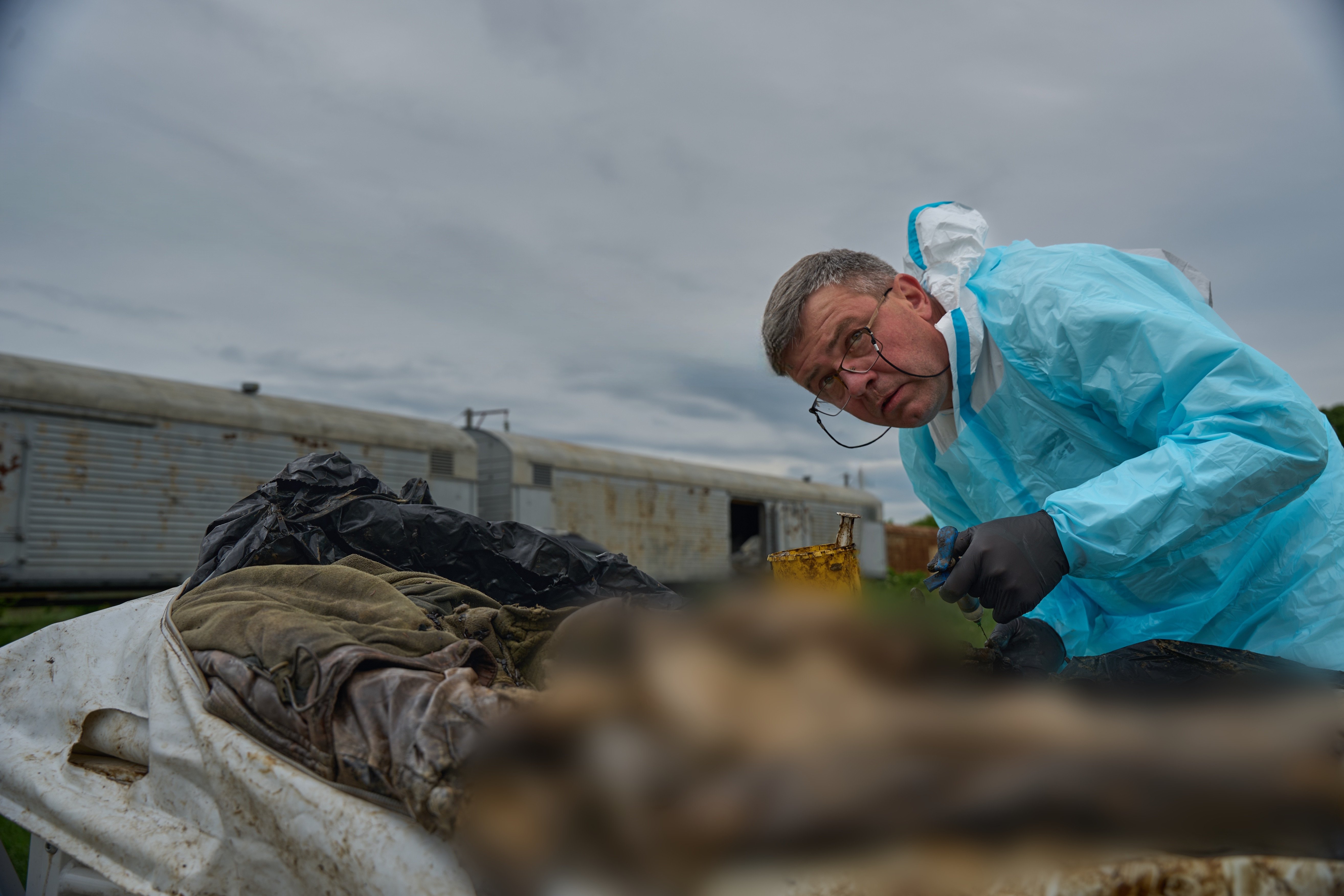
An outdoor photograph shows a middle-aged male Ukrainian forensic expert with glasses, wearing a light blue protective gown over a white hazmat suit and black gloves. He is leaning down to extract a bone marrow or tissue sample with a syringe from highly degraded, mummified remains on an outdoor stretcher. In the background, a gray refrigerated freight train car sits under a cloudy, overcast sky.
A forensic expert leans over a stretcher to collect a biological sample from a repatriated casualty at a field station. Working alongside the cargo trains that transport the returned dead from frontline regions, Ukraine's forensic teams extract fingerprints under missile and drone threats. These samples provide the essential DNA profiles needed to match with national missing persons databases and give long-awaited answers to families. (Photo: Mykyta Shandyba / UNITED24 Media)

As I watched these experts lovingly hold and caress the hands of these corpses, reaching briefly into the space between loss and abundance where empathy lives, I was reminded of James Baldwin’s words: “The world is held together, really it is held together, by the love and the passion of a very few people…you could be [a] monster…and you have to decide, in yourself, not to be.”
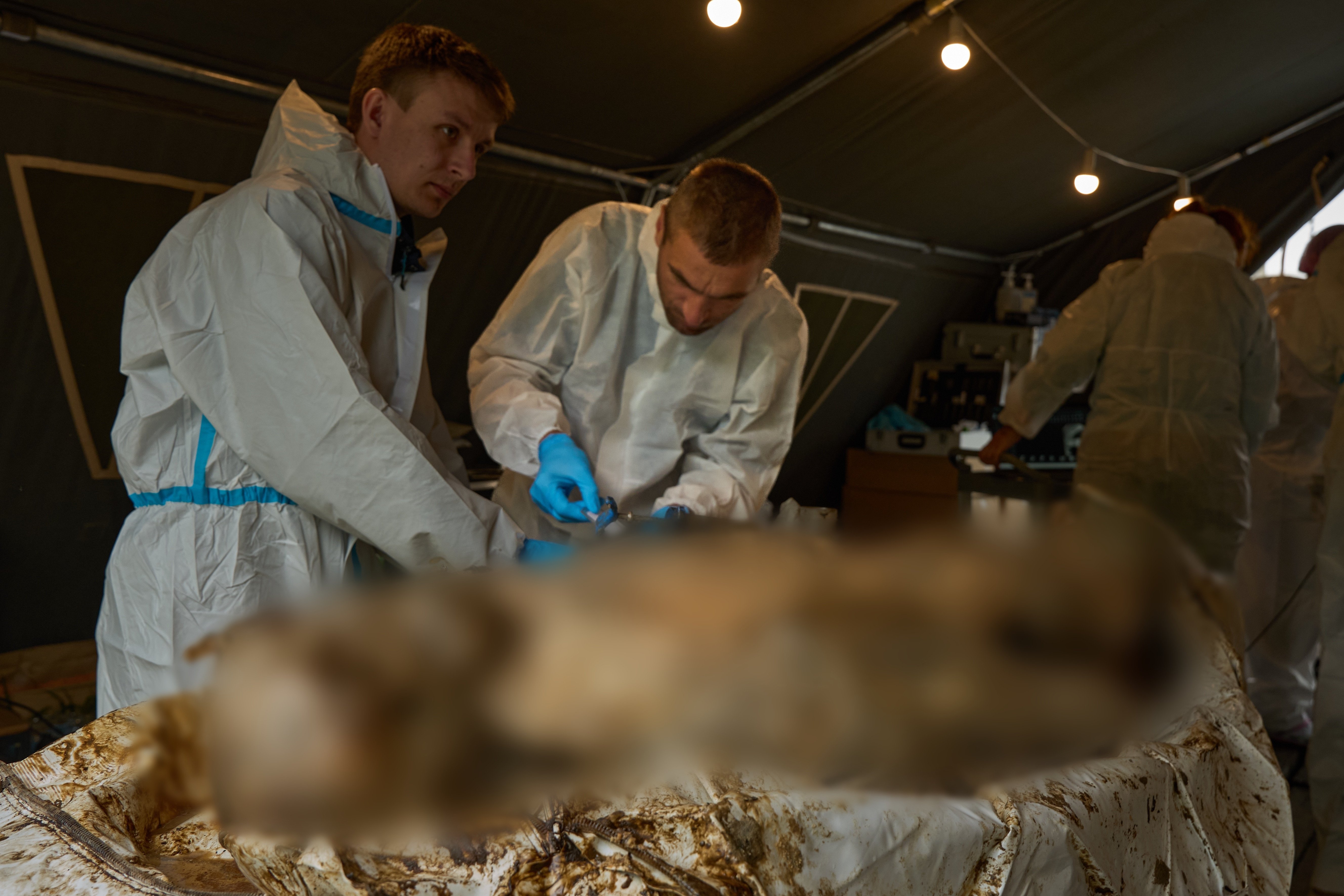
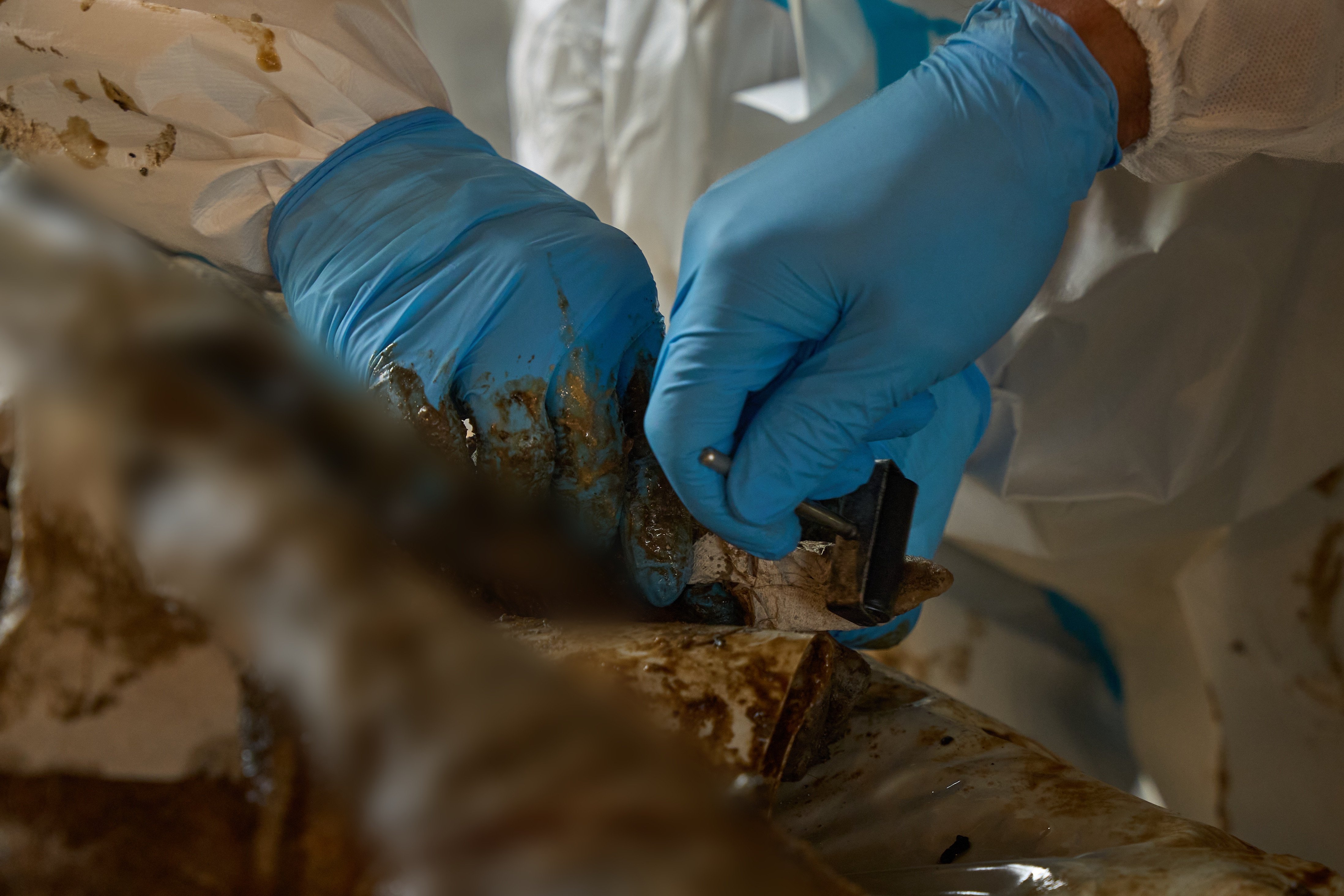
A close-up photograph shows two young male Ukrainian forensic specialists in white protective hazmat suits working intently over a severely mummified, decomposed human body. The expert on the right, wearing blue nitrile gloves, uses a specialized metal tool to carefully examine or stabilize the hand and fingers of the deceased soldier. The body is positioned on an examination table inside a temporary field tent lit by hanging incandescent bulbs.
Inside a mobile field laboratory, forensic specialists use meticulous technical procedures to rehydrate and preserve the fingers of highly degraded remains. This precise, difficult work allows teams to capture fingerprints that survived months of exposure, providing critical biometric data to cross-reference with national registries and restore a definitive identity to Ukraine's missing and returned service members. (Photo: Mykyta Shandyba / UNITED24 Media)
A close-up photograph shows two young male Ukrainian forensic specialists in white protective hazmat suits working intently over a severely mummified, decomposed human body. The expert on the right, wearing blue nitrile gloves, uses a specialized metal tool to carefully examine or stabilize the hand and fingers of the deceased soldier. The body is positioned on an examination table inside a temporary field tent lit by hanging incandescent bulbs.
Inside a mobile field laboratory, forensic specialists use meticulous technical procedures to rehydrate and preserve the fingers of highly degraded remains. This precise, difficult work allows teams to capture fingerprints that survived months of exposure, providing critical biometric data to cross-reference with national registries and restore a definitive identity to Ukraine's missing and returned service members. (Photo: Mykyta Shandyba / UNITED24 Media)

Once fingerprints are captured, the experts proceed to creating dental records for the fallen. First, they gently grasp the skull of the deceased. As these remains are in various states of decay, they quite often still have skin attached, sometimes even retaining strands of hair, by which you can more easily imagine what this person once looked like in life. The most striking example we observed was that of an ostensibly younger man, who’d had strawberry blonde hair, and was probably killed just days before his next shave.

A close-up, high-angle overhead photograph shows a forensic expert wearing bright blue nitrile gloves gently holding the decomposed, mummified head of a casualty. The skin of the face is deeply blackened, leathery, and covered in dirt, leaving the teeth exposed through the open mouth. Strands of light brown or strawberry blonde hair are visible on the top of the head and along the jawline, serving as a distinct physical identifier during the forensic examination.
A forensic specialist gently secures the highly degraded head of a repatriated casualty during an inspection. In cases where bodies have spent months exposed to the elements or buried in shallow graves, fragile traits like hair color, dental structures, and unique bone features become crucial clues for Ukraine's understaffed forensic teams working to cross-reference dental records and match the missing with their grieving families. (Photo: Mykyta Shandyba / UNITED24 Media)

Upon securing the head, the experts reach into the oral cavity, attempting to coax into view whatever remaining teeth they can find; in the event that the teeth have collapsed further into the corpse, they need to use a scalpel to delicately scrape back the flesh at the bottom of the mouth, and scoop up the jellied gum and tooth mixture.
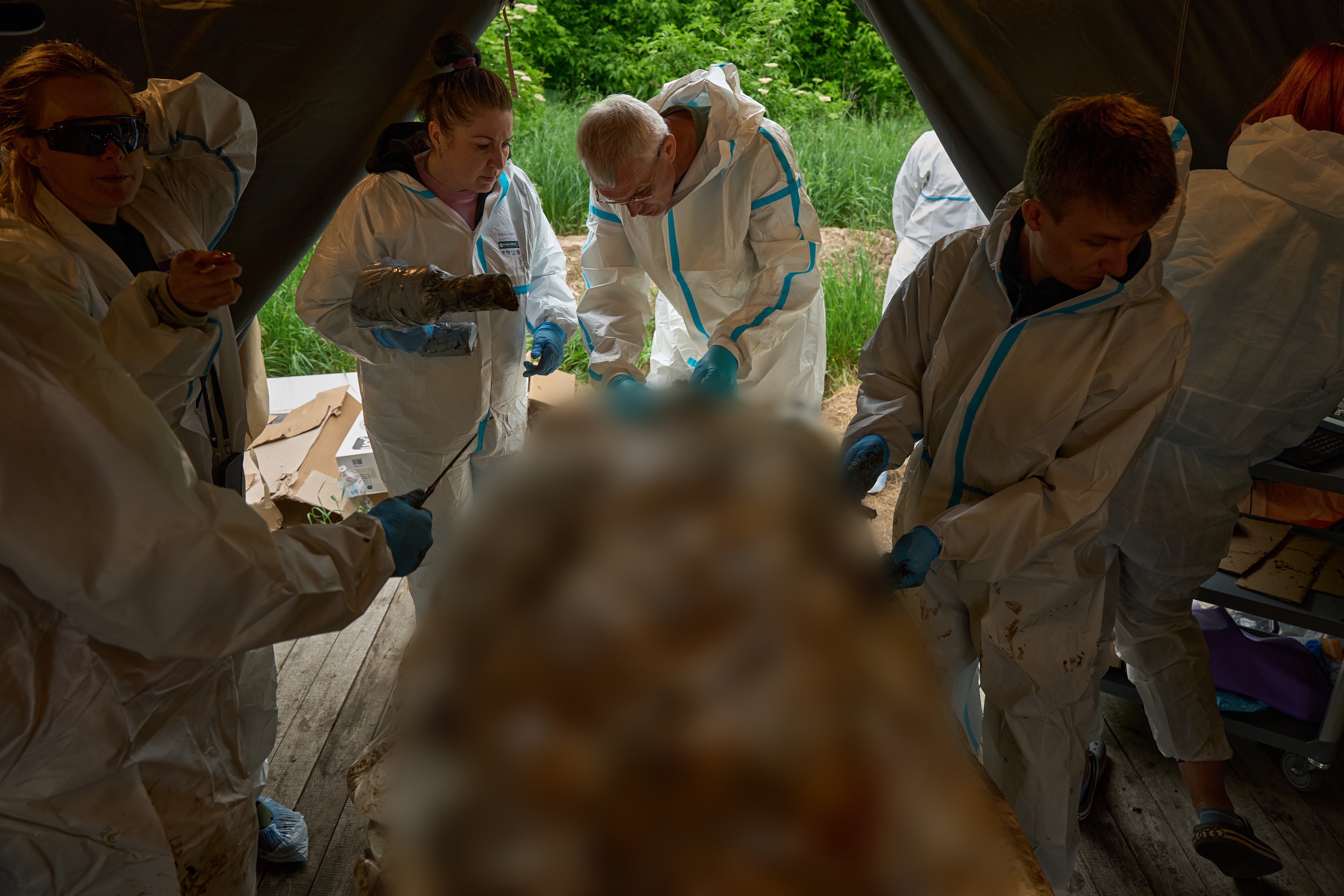
Inside a military field tent, a team of five Ukrainian forensic experts wearing white protective hazmat suits and blue nitrile gloves works around a heavily mummified, decomposed human body laid out on an examination table. In the center, an older male pathologist with glasses carefully inspects the oral and dental structures of the skull, while a female colleague assists from the left. Syringes and small sample containers rest on the chest of the deceased soldier during the post-mortem procedure.
A team of specialists performs a dental examination and charting on highly degraded remains inside a mobile tent station. Because teeth and jaw structures are among the most resilient parts of the human body after prolonged exposure or burial, dental data provides an invaluable biometric resource. Ukraine's understaffed forensic experts rely on these examinations to cross-reference pre-war dental records, serving as a reliable alternative when traditional identification methods are impossible. (Photo: Mykyta Shandyba / UNITED24 Media)

This process, called forensic odontology, allows the experts to identify the deceased by charting their teeth and comparing them to records available in the national database. They proceed by cleaning the remaining teeth with a special solution, and then they softly place a tool that looks like an ordinary hair dryer into what remains of the mouth, to get an X-ray image of the bone. Once this is done, they once again submit the biometric signature to a database, aiming to link this person to whomever might be waiting for their father, son, uncle, or grandfather to “come home.”

For many of the fallen, they’ve been listed as missing in action (MIA)  for years, their families holding onto a shred of hope that they might be still out there somewhere fighting to come home; for others, their families are tortured daily by the thought that their loved ones might be rotting in an empty field, languishing eternally in a state of indignity and waste. The work these 200 experts do in service of national memory and reconciliation constitutes a separate front of the war, and one that sometimes goes overlooked amid the flurry of battlefield reports and cold casualty numbers.
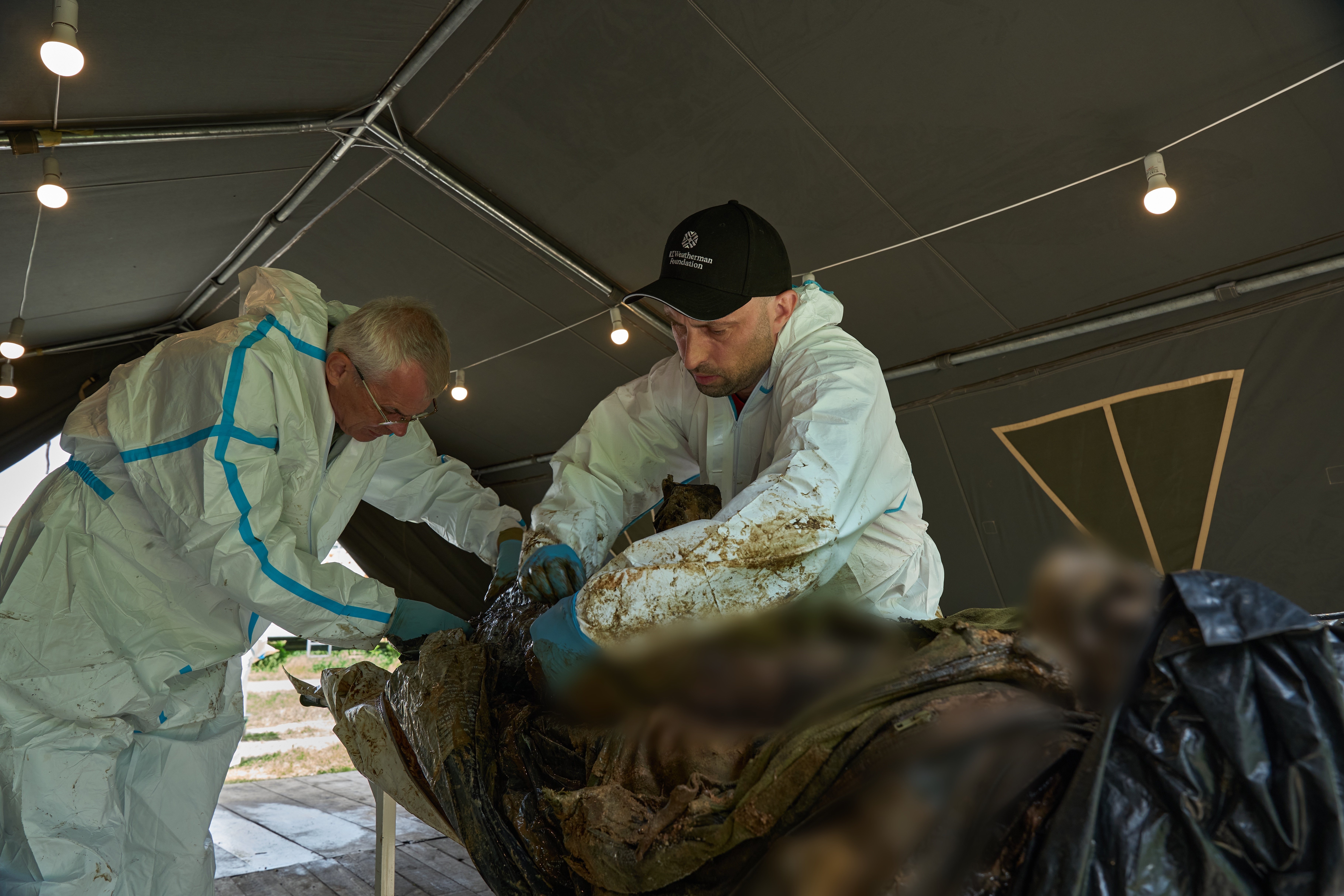
Inside a temporary tent station lit by incandescent bulbs, two male Ukrainian forensic experts in white hazmat suits and blue protective gloves work together on highly decomposed, mummified human remains. The expert on the right wears a black baseball cap with "RT Weatherman Foundation" logo and leans closely over the upper torso of the body. The older expert on the left with glasses assists with the delicate post-mortem examination.
Forensic experts examine the heavily degraded remains of a fallen soldier inside a field laboratory setup. To extract viable DNA samples, determine trauma causes, and look for physical markers, Ukraine's understaffed forensic teams must carefully work through layers of mud and decayed clothing. Each evaluation represents a critical step toward resolving missing persons cases and returning names to the repatriated dead. (Photo: Mykyta Shandyba / UNITED24 Media)

Ukraine’s 200 nationwide active forensic experts working with the RT Weatherman Foundation face a colossal task, under crushingly daunting conditions every single day that Russia’s full-scale invasion drags on: on a daily basis, they give their energy and sacrifice their psychological health to connect the brutal war-torn world of the living, with the desolation of violent journeys to the grave. Working under blaring air raid sirens and comparatively low pay, they solemnly receive thousands of repatriated bodies regularly, which they work diligently and tirelessly to identify.

While it is known that forensic experts generally are exposed to massive risks related to PTSD and “vicarious trauma”  , what Ukrainian experts specifically face is experienced on an exponentially increased scale, as they are constantly working intimately with victims of war crimes, mass death, and facing their own mortality, all while being expected to carry out their normal lives. Their work is also punctuated by regularly having to contact and console the survivors of the deceased, providing emotional and psychological support to the families of the very same people whose remains they might have been handling the same day. All of this, they do compassionately and painstakingly, while themselves attempting to survive a brutal war that has been raging for nearly five years. During my time spent in stupefaction and awe with these silent heroes, one question demandingly bounced across my skull: What can we do today to give these people everything they need right now to effectively fulfill their work?

A close-up, profile photograph shows the heavily decomposed, skeletal skull of a human casualty tilted backward on a medical tray. The bone structure is slick, discolored, and coated with wet organic matter and dirt, revealing an empty eye socket and nasal cavity. The jaw is slightly open, exposing a row of intact teeth and traces of facial hair or clothing fibers beneath the chin against a dark, out-of-focus background.
A human skull rests on an examination tray, highlighting the severe state of decomposition that Ukraine's forensic specialists must routinely navigate. When frontline casualties are recovered after months of exposure or burial, soft tissues are often lost entirely. Forensic experts must rely on skeletal markers, dental configurations, and trauma patterns on the bone to reconstruct the victim's final moments and trace a path toward identification. (Photo: Mykyta Shandyba / UNITED24 Media)

The RT Weatherman Foundation, through its Ukraine Mission, seeks to answer this question by providing holistic support to forensic experts in Ukraine through three avenues: Body, Mind, and Spirit.

Through its Body focus, the Foundation provides frontline combat medic training, evacuates critical medical cases to European hospitals, and coordinates complex logistics to repatriate the bodies of fallen volunteers.

Through the Mind avenue, RT Weatherman provides vital PTSD treatment for survivors of war crimes—including forensic experts—and via the Spirit avenue, the Foundation operates a victim identification program, through which they help guide the families of missing or killed in action (KIA)  servicemembers through the process of securing their rights and honors. This avenue is the one most directly associated with the work we observed during our time spent directly in the field with the experts.

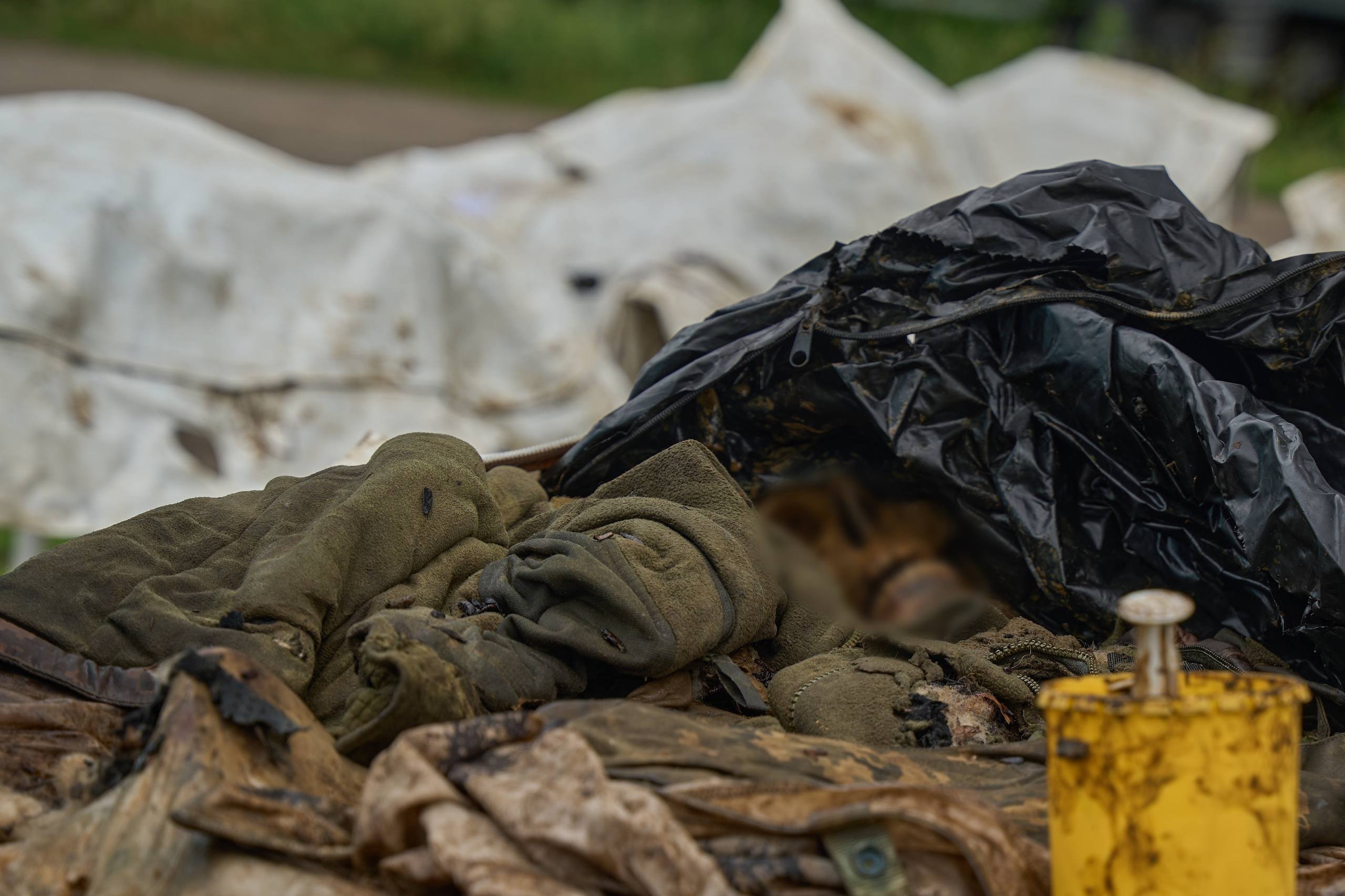
An outdoor, close-up photograph shows a skeletal human skull partially visible beneath a torn black plastic body bag and a bunched-up olive green military fleece jacket. The skull's teeth are prominent, and the surrounding remains are deeply degraded, covered in dirt and organic matter. In the foreground, a stained yellow medical container sits next to piles of decayed uniform fabric, with white body bags blurred in the background.
A human skull lies alongside remnants of an olive green military uniform, demonstrating how physical evidence is preserved amid severe decomposition. When processing repatriated remains returned from frontline zones, Ukraine's forensic teams carefully document tactical gear, clothing labels, and fabric types alongside skeletal analysis. These material remnants serve as crucial cross-references for family descriptions, helping investigators narrow down identities when DNA alone faces massive backlogs.(Photo: Mykyta Shandyba / UNITED24 Media)

While the sights and the smells of my time with workers from the RT Weatherman Foundation and Ukraine’s forensic experts will never leave me, something that will remain with me forever is the sense of urgency and duty with which everyone operated.

Even as Russian Geran-2 Shahed drones zipped by in the airspace above and stenches combined in a miasma of misery that seemed intent on choking us below, the experts moved with methodical precision and what can only be described as care fueled by an undying sense of purpose. We asked them for comments, and they were reluctant to talk about themselves or their families, only their work; we asked them to explain their connection to their feelings, and they could only talk about the processes behind their work and what it meant for humanity and the stories behind the muck and the slime. This sense of duty, this diligence, and this loyalty, not to a government or a piece of land, but to preserving human dignity and respect even in death was more powerful than what any bomb or missile can do; in these sentinels of silence working through what we can do when we’re at our worst, resides what we are when we’re at our best.

See all

"Missing in action" is a casualty classification assigned to combatants, military chaplains, combat medics, and prisoners of war who are reported missing.

Vicarious trauma (or secondary traumatic stress) is the profound emotional and psychological shift that occurs when you empathetically engage with trauma survivors.

Killed in action (KIA) is a military casualty classification used to describe personnel who die directly on the battlefield from enemy or hostile forces, including friendly fire. It does not include accidental deaths, suicides, or non-hostile events.

Be part of our reporting

When you support UNITED24 Media, you join our readers in keeping accurate war journalism alive. The stories we publish are possible because of you.