- Category
- Interview
"Five Shaheds Had One Mission: Kill Me": Ukraine’s Top EW Expert on Robots, AI, and Russia’s Assassination Attempt

Russia spent $500,000 on jet-powered Shahed drones to kill Serhii “Flash” Beskrestnov. The Ukrainian electronic warfare expert survived the strike and continued developing the drones and air defense systems, reshaping modern combat.
 Prefer U24 Media on Google
- Authors


Russia’s full-scale war against Ukraine has become an unrelenting race of technologies: interceptor drones, robotic systems, electronic warfare, and military AI are changing the battlefield faster than armies can adapt.
We bring you stories from the ground. Your support keeps our team in the field.
In an exclusive interview, Ukrainian Defense Ministry adviser Serhii “Flash” Beskrestnov—among the leading practical experts in drones, electronic warfare, and the analysis of enemy decision-making—tells us which old approaches are becoming obsolete and recalls the attack by Russia’s jet-powered Shahed drones on his home.
Is the war in Ukraine now a war of technology?
It has been a technological war for quite a while already. The front-line war has essentially reached a stalemate—the line of contact barely moves. Any equipment that appears on the battlefield is almost instantly destroyed by FPV drones. War is increasingly turning into a competition of engineering solutions.
For us, this is especially critical because Ukraine’s mobilization resources are far smaller than Russia’s. Every dead Russian soldier can be replaced, while for us, that’s a serious problem. So we reduce our losses through technology. First and foremost, through unmanned systems in every domain: air, sea, and land.
Robots must replace people.
Serhii “Flash” Beskrestnov
Ukrainian Defense Ministry adviser
This year has seen the rapid development of ground-based robotic systems. They are already taking over the highest-risk tasks: evacuating the wounded, delivering supplies to the front line. Robots armed with machine guns will seize positions. Lay mines. Clear mines. And the human operator will remain under cover.

You mentioned the sky, water, and land. But there’s another domain—underground.
You’re right, but today that’s still very difficult. So far, nobody has gone beyond the idea of digging tunnels into enemy rear areas. But we’re thinking about it. And so is the enemy.
I fully understand that Russia has capable engineers, excellent universities, and inventor groups just like ours. When people describe them as fools with backward thinking, that’s complete nonsense.
What is the main difference between Ukrainian and Russian engineering culture in wartime?
They have a highly developed large-scale military-industrial complex—enormous factories built over decades. We rely on small and medium-sized companies and independent development teams, each experimenting with its own ideas.
Roughly speaking, the Russians have one Iranian-designed Shahed drone—and that’s it. Meanwhile, we have five different groups simultaneously developing their own versions.
So that somewhat romantic image of garage startups fighting an empire is basically true?
Yes, and our foreign partners say the same thing. Small businesses are extremely flexible. We work with giant Western corporations like Airbus—and for them, introducing even a minor change can take months. Development cycles, testing, approvals, verification, bureaucracy.
Our war is so dynamic that something new can emerge not just every week, but every single day.
If you had an unlimited budget, where would you invest first—mass drone production, operator training, electronic warfare, signals intelligence, or something else entirely?
There is no single most important technology. But first and foremost, I would invest in anti-aircraft missile systems and radar systems—we lack both.
And these are precisely the areas where garage-style defense production is not enough. They require serious industrial manufacturing and major funding.
Which technology or solution over the past year has been the most important breakthrough?
Again, I can’t point to a single solution. But overall, for defending the country, the major breakthrough has been interceptor drones.
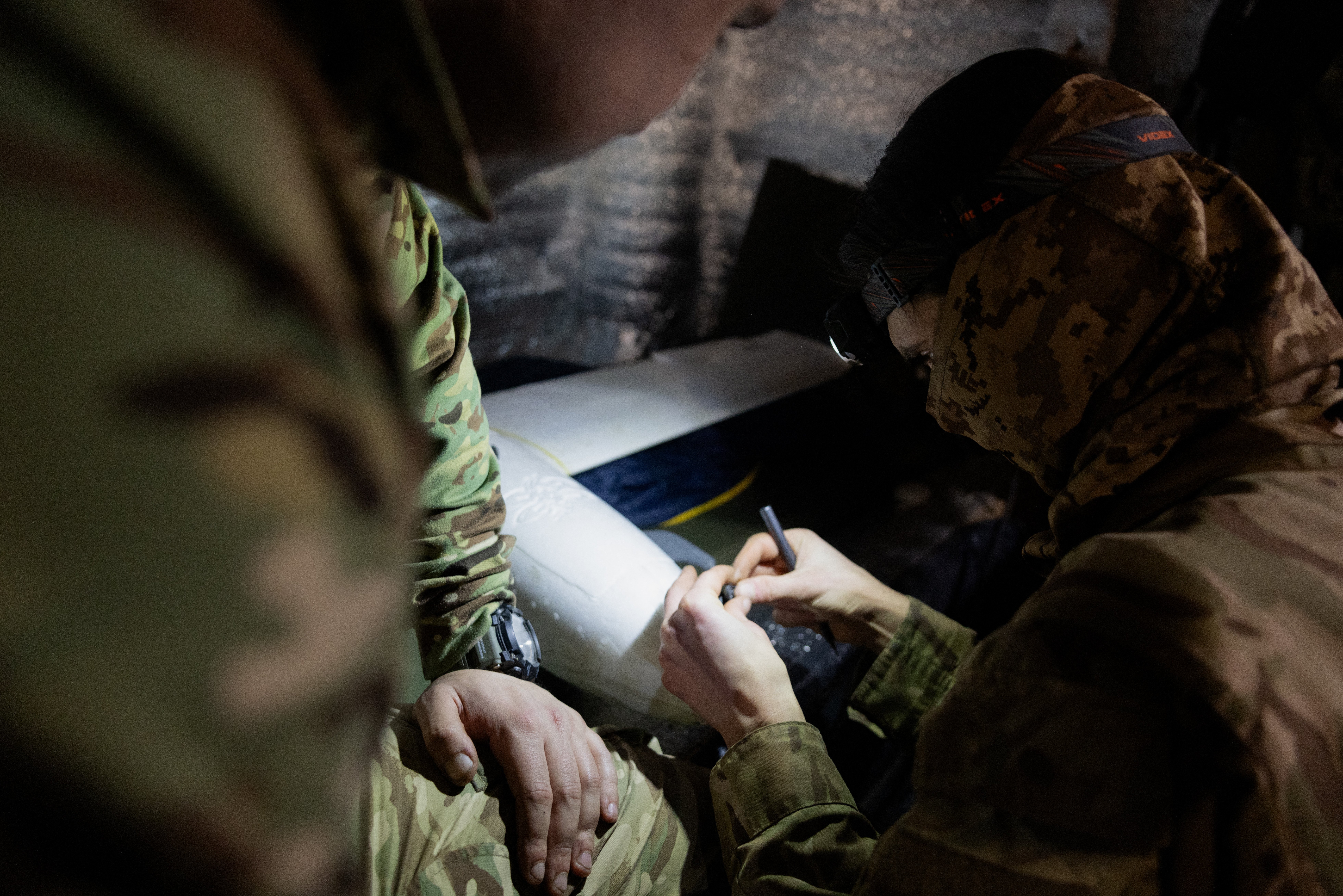
Previously, we had almost no effective solution against Shaheds or other strike UAVs. Russia had systems like the Tor and Pantsir. We filled that gap with anti-aircraft drones—and that has made the entire country safer.
How exactly was that achieved? Early in the full-scale invasion, I attended a kind of drone competition where the government chose which developers to fund. They even organized impromptu dogfights—drones trying to shoot each other down. None of the operators managed to hit their opponents.
The main engineering challenge was creating a drone capable of reaching very high speeds and flying far enough to intercept Shaheds and destroy them. You need speeds of 200–300 kilometers per hour.
Otherwise, it’s basically an FPV drone—just with a non-standard design.
Will there come a moment when classic armored vehicles lose all meaning?
That moment has already arrived.
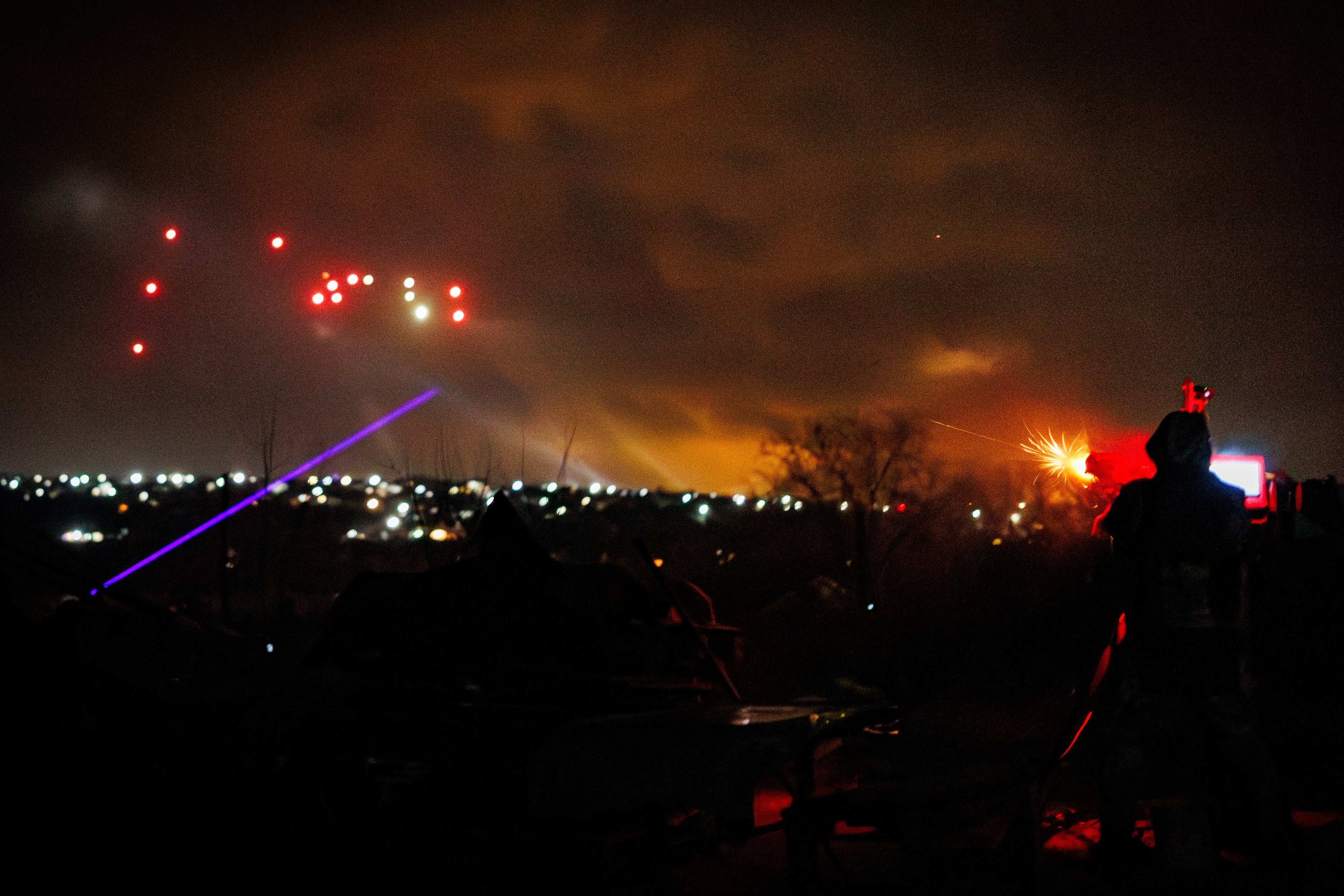
I was recently at a major European arms exhibition, looking at all these tanks worth millions of euros, and realizing that their actual lifespan on the battlefield is equal to a few inexpensive drones in skilled hands.
The moment a Russian tank appears near the front line, drones from every nearby unit swarm toward it like flies. Any armored vehicle at the front will survive not hours, but probably minutes.
Serhii “Flash” Beskrestnov
Ukrainian Defense Ministry adviser
In foggy conditions, you can still quickly transport troops to the line and immediately pull back. But driving tanks around the battlefield like before—that era is over.
And that’s one of the reasons the war has become positional.
Is the FPV drone the Kalashnikov rifle of modern warfare?
Absolutely. And there’s an entire ecosystem of technologies evolving around these drones.
Frequencies keep changing because electronic warfare systems have learned to jam the old ones. Battery technology is advancing to increase range. Fiber-optic guidance has appeared.
But fundamentally, yes—FPV drones are now the backbone of the front.
Is it fair to say the cycle now looks like this: Ukrainians or Russians invent something, the enemy adapts, and then comes counter-adaptation?
It really is a permanent race. And the winner is whoever thinks one step ahead.
I think we’ve stopped merely reacting to Russian solutions and started getting ahead of them: turrets, interceptor drones, deep-strike, and mid-strike systems.
The era of military artificial intelligence is beginning—when drones will fly autonomously, identify targets on their own, and decide independently when to attack. UAVs will operate in coordinated swarms.

Some of these technologies are already appearing at the front, on both sides.
How quickly does this cycle move? How long does a new solution survive on the battlefield?
Some last a week. Others survive much longer. Take fiber-optic drones—there’s still no effective countermeasure against them.
And some solutions are simply prohibitively expensive. We can’t equip every vehicle with an AI-powered laser weapon and radar station.
You’re probably the most visible public expert and innovator in this field. Tell us about Russia’s assassination attempt against you.
We have fully reconstructed the incident using our systems.
They were five jet-powered Shahed strike drones with live remote control. That day there were no other recorded attacks—this was a separate strike group with one specific mission: to kill me.
One drone was shot down immediately after crossing the border, two more deeper inside Ukrainian territory, one lost control and crashed about seventy meters away, but one struck my house directly.
Only a miracle saved me.
The Shahed hit slightly off-center, so the main impact was absorbed by the floor slab between two stories. As a result, the only room that was completely destroyed was, fortunately, the one where nobody happened to be.
The Russians later wrote about it themselves, didn’t they?
There’s a Telegram channel run by Shahed operators. They openly admitted they had tracked where I lived, posted the coordinates, and confirmed I was home before attempting to eliminate me.
Then, I assume, their superiors reprimanded them because Russia officially never admits responsibility for anything. So they deleted the post.
But I managed to save everything.
What do you think about all this?
Obviously, Ukrainians and Russians are enemies. Both sides are always looking for ways to inflict damage. But nowhere in the world has it ever been considered acceptable to target families. That’s taboo.
I expected an attempt on my life, and our intelligence services warned me about it—explosives, firearms, something like that.
But I never imagined the Russians would decide to kill my family as well by blowing up an entire residential building with five jet-powered drones.
A huge number of senior Russian military and government officials live exactly where they are officially registered. All of that information exists in public databases. It’s not difficult to find.
Five jet-powered drones with live guidance—that’s hundreds of thousands of dollars.
Yes. We examined the wreckage of the UAVs, recovered all the cameras and modems. Roughly half a million dollars.
What has the war involving Iran, and the confrontation between the US and regional forces using drones, revealed about the war in Ukraine?
First, it became obvious that when a truly massive aerial attack occurs, no air defense system in the world can fully withstand it.
Second, it appears that only Ukraine—a country living under these conditions every day—possesses truly large-scale combat experience in countering such threats.
Because no single method works on its own. It requires an entire integrated system: electronic warfare, mobile fire groups, missile air defense, and helicopters.
And right now, Ukraine is the only country that knows how to do this.
Discuss this article:
-4a56a6b482ec132402c16ef6fcabf9a2.png)


-206008aed5f329e86c52788e3e423f23.jpg "Photo of Oleksandr Moiseienko")
-f3430f0449615e9897dff835086ac204.jpg "Ukraine Broke With a Soviet-Era Military System and Rebuilt It Around the Soldier")
-e126c16a85d580738cf2d57e760b80a3.jpeg "Photo of Vladyslav Greziev")