- Category
- War in Ukraine
How Ukraine Builds Its Ground Robots for the Kill Zone
Ukraine’s drone war is moving onto the ground, where UGVs are taking on supply runs, evacuations, mine clearing, and assault support inside the expanding kill zone.
 Prefer U24 Media on Google
- Authors


Imagine being a Russian contract soldier after moving for miles on foot through Ukraine’s contested kill zone, into a dugout, a basement, or whatever piece of occupied ground is still available. You settle into the position, waiting for orders, listening for artillery or drones overhead. Then something else arrives: a tracked machine, operated from a distance, built to move through the same battlefield where infantry, pickups, and armored vehicles are increasingly easy to spot and easier to kill.
We bring you stories from the ground. Your support keeps our team in the field.
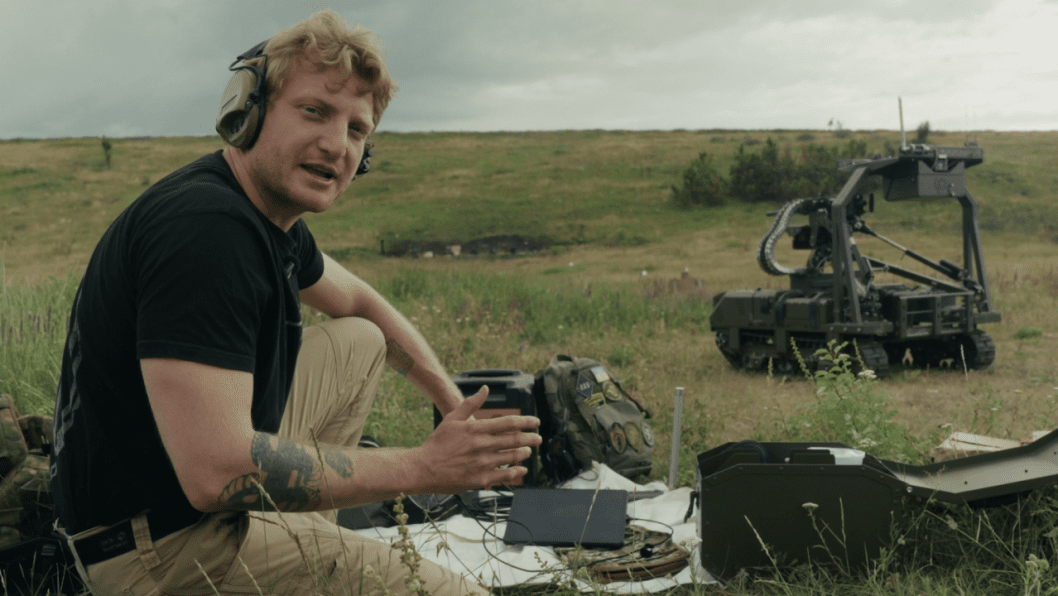
It is made of steel, or “adamantium,” as Borys Drozhak, co-founder of RoverTech, a leading unmanned ground vehicle (UGV) producer, half-jokingly describes the material behind his platforms. Drozhak refers to the machines as “Iron Cossacks” and “avatars,” because they are operated remotely and allow soldiers to perform certain tasks without being physically present at the point of danger, otherwise known as the killzone.
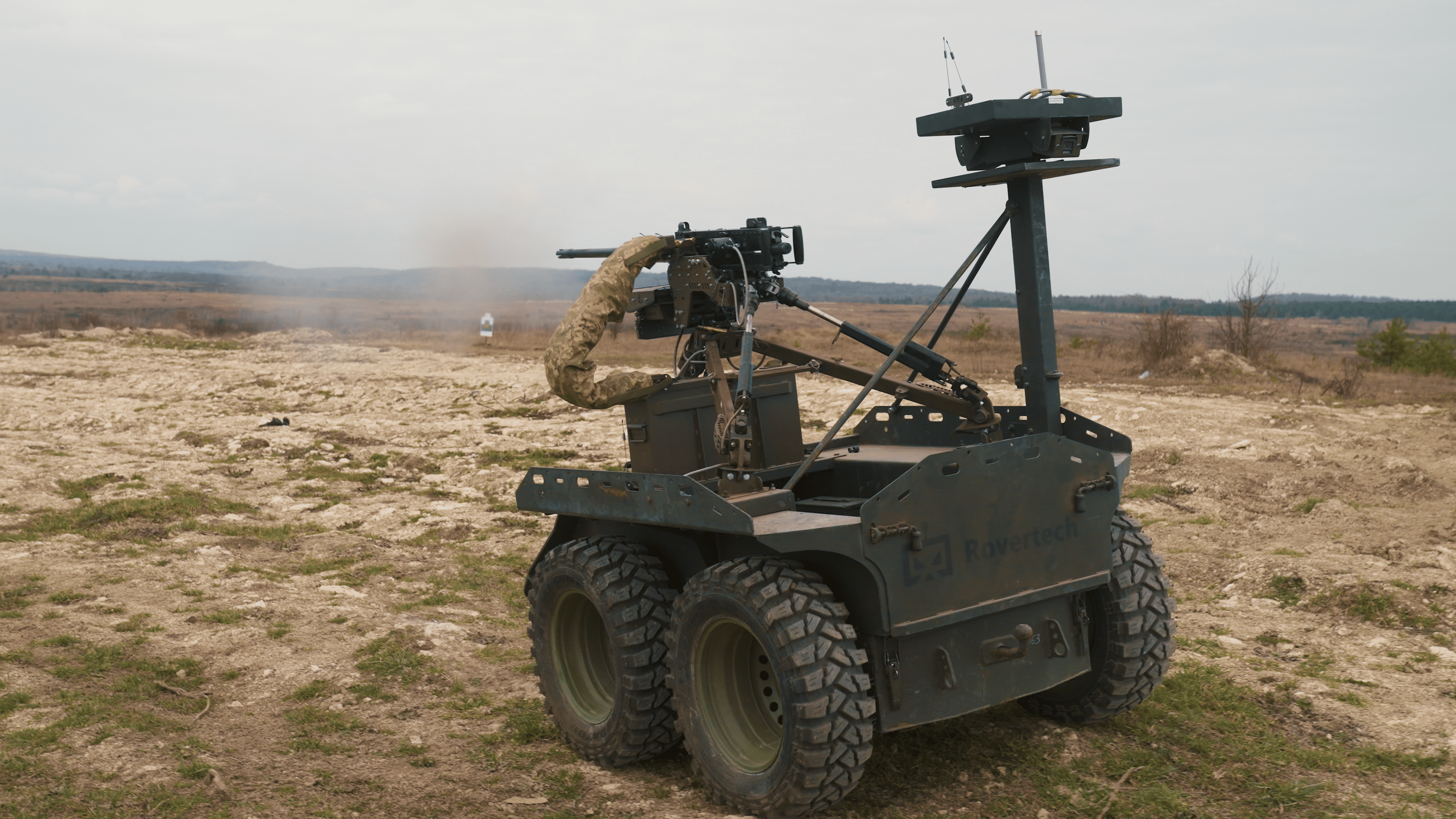
Some of these machines can carry supplies, others can evacuate wounded soldiers, retrieve bodies, clear mines, fight fires, or support assaults. Some can also be equipped with a two-way speaker system, allowing an operator, who can theoretically work from anywhere in the world, to speak through the machine and instruct Russian soldiers to surrender before Ukrainian troops move in to detain them.
The “Iron Cossacks”
For Vasyl Korenovskyi, a veteran and director at RoverTech, the value of UGVs is straightforward. Many of his former comrades are still fighting, and the less time soldiers spend carrying equipment, evacuating casualties, or moving through the killzone, the better their chances of survival. “Robots save lives,” he said. “This is metal that works effectively, like people, but without using human resources, without killing a serviceman.”
The rise of UGVs is tied to a newer battlefield reality: the kill zone, a byproduct of the expanding use of reconnaissance and FPV drones. The term describes an area wider than the traditional “grey zone” between opposing positions, where reconnaissance drones constantly observe movement and can be struck quickly by FPVs, artillery, or other weapons. In some sectors, reaching the frontline can now be more dangerous than holding the position itself.
That has changed what armies need from machines. A ground robot does not have to replace a soldier entirely to be useful. It only has to do the part of the task that is most exposed: crossing open ground, reaching a damaged position, carrying a load, approaching a trench, or staying in an area where a human would be too easy to detect and target.
The Ukrainian government is now trying to scale this technology. On April 18, Defense Minister Mykhailo Fedorov said the Ministry of Defense plans to contract 25,000 ground robotic systems in the first half of 2026, twice as many as Ukraine procured throughout all of 2025. The Defense Procurement Agency has already signed 19 contracts with manufacturers worth UAH 11 billion (±$250 million). Fedorov said the goal is for all frontline logistics to be carried out by robotic systems eventually.
That push is following battlefield demand. Ukrainian forces carried out more than 9,000 ground robot missions in March and more than 24,500 missions during the first quarter of 2026. The number of Ukrainian units using ground robots also rose from 67 in November 2025 to 167 in March 2026, according to figures cited by Ukraine’s Defense Ministry. UGV use is still much smaller than aerial drone operations, but the growth shows that these systems are no longer being treated as experimental equipment.
Withstanding the kill zone
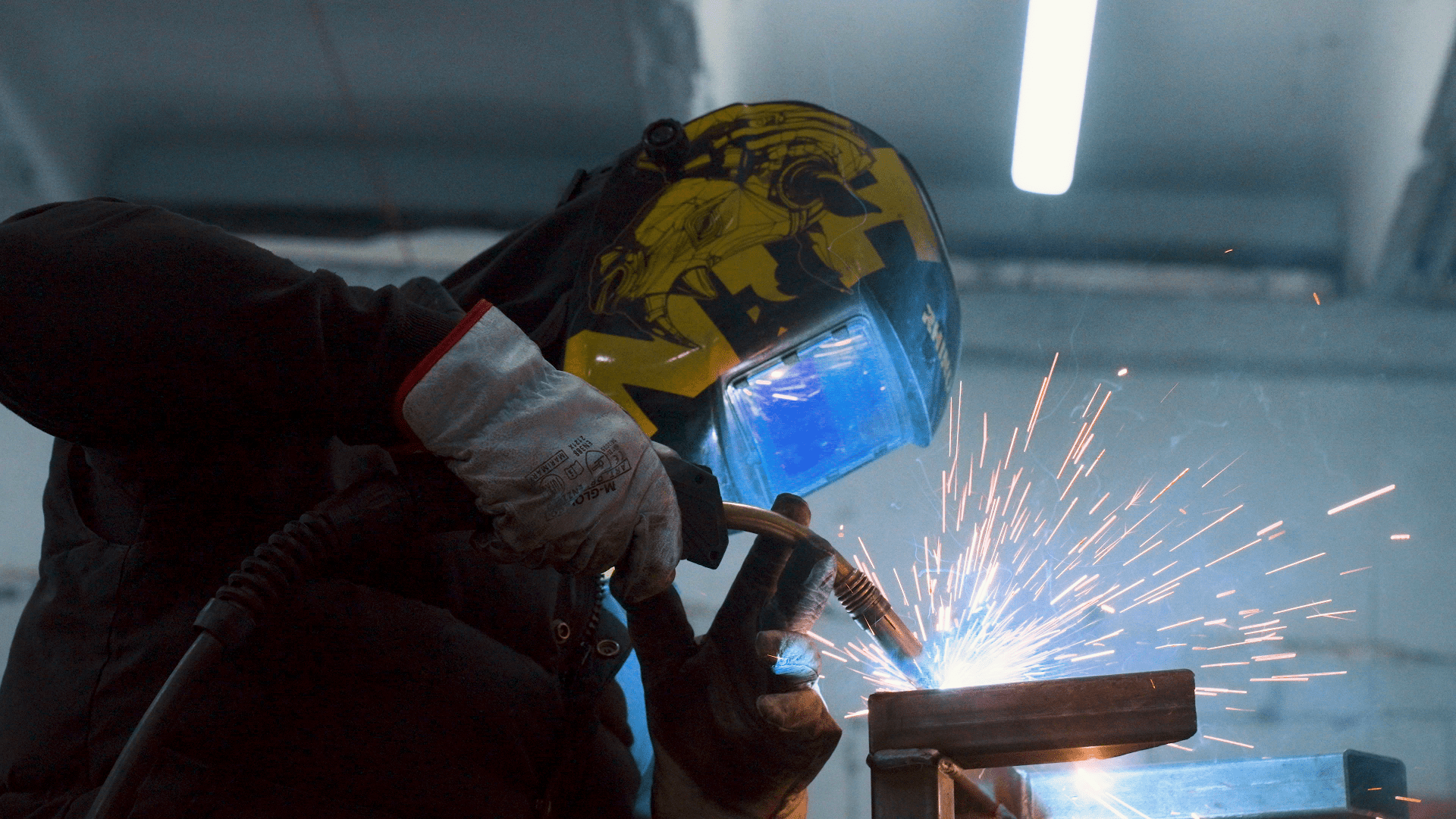
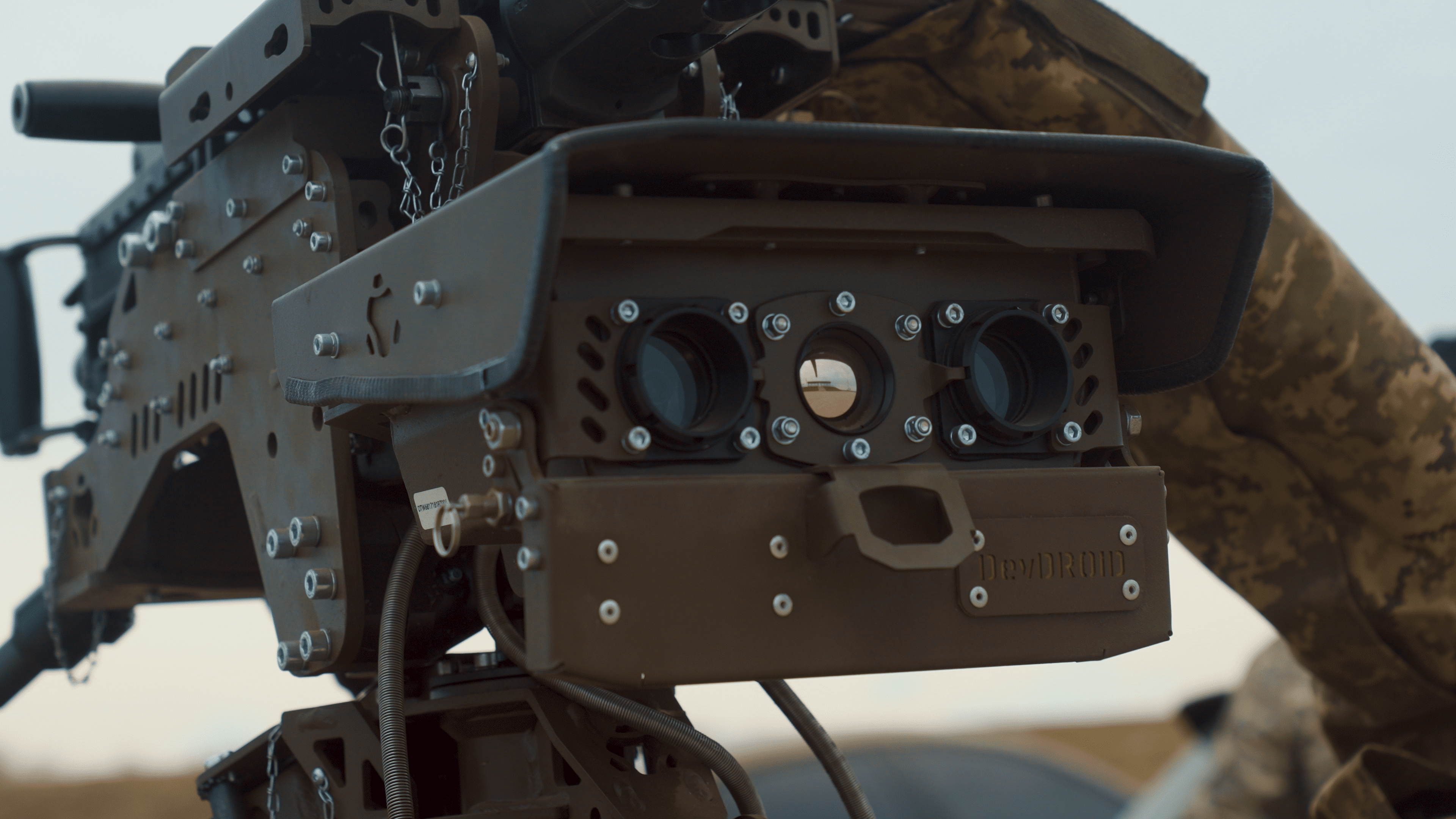
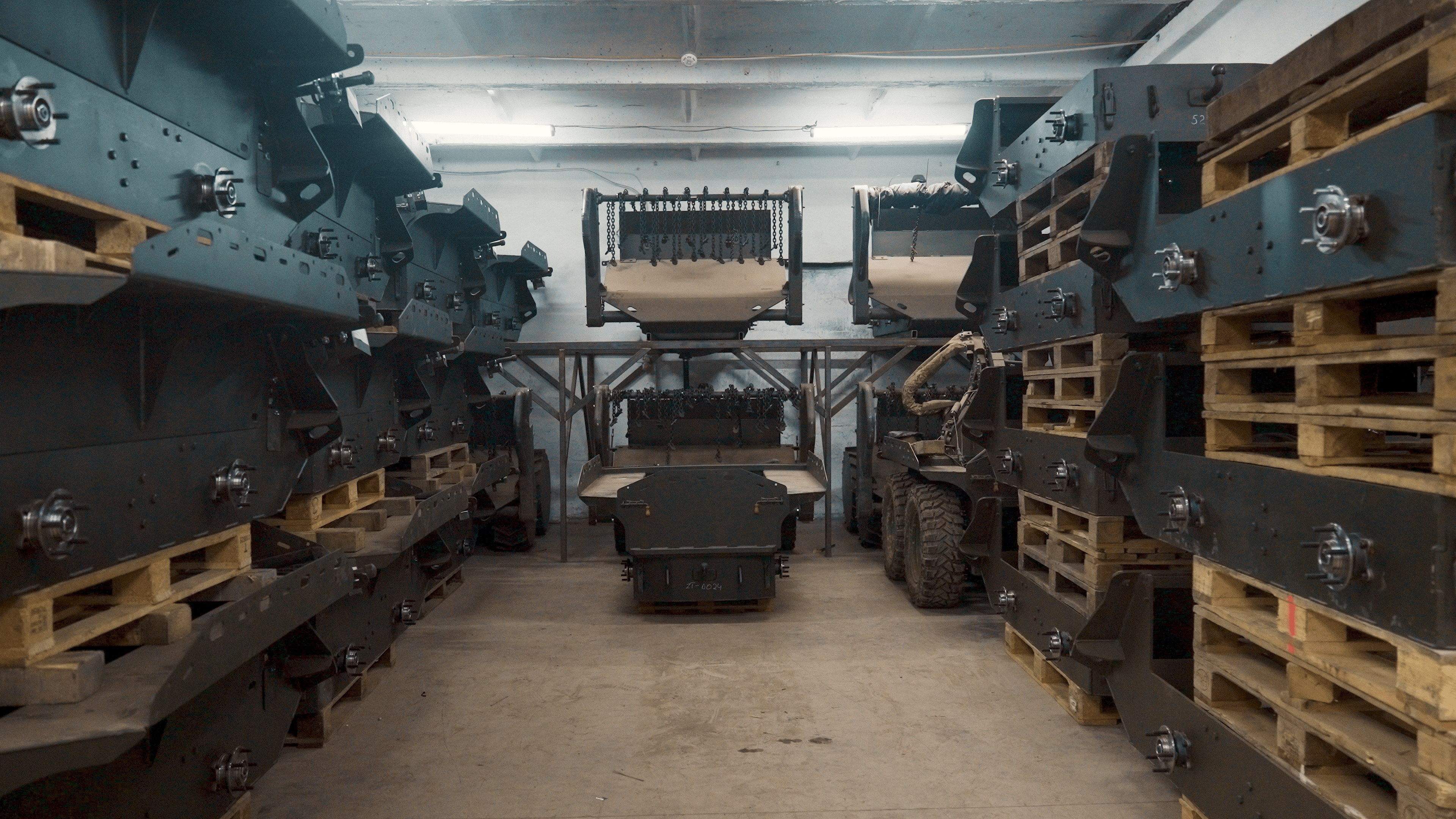
During filming, Borys Drozhak showed me ZMIY, the company’s multi-purpose UGV platform designed to withstand exposure to FPV drones, mines, debris, and artillery fire. Depending on the configuration, ZMIY can be used for logistics, evacuation, demining, firefighting, and combat support. Some versions are built for more specific battlefield tasks, including retrieving equipment and returning the bodies of fallen soldiers. Drozhak said the company’s distributed facilities can assemble up to 30 robots per day, though he added that logistics remain “a bit of a nightmare.”
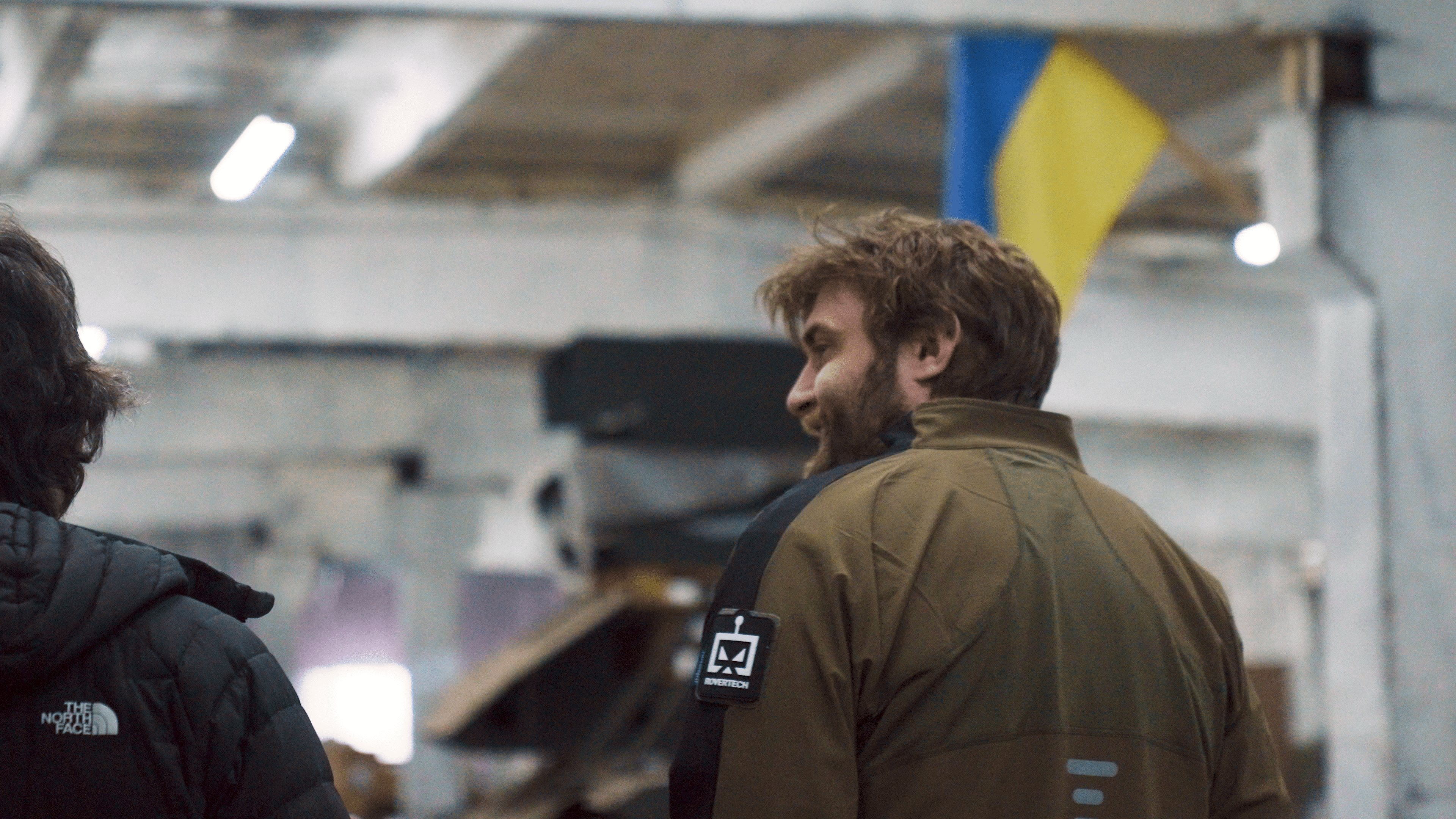
The company says its platforms are shaped by direct feedback from the front. Korenovskyi said RoverTech’s first logistics systems were not tested on training grounds. “All developments are not developed in laboratories,” he said. “They are produced and tested in combat conditions based on feedback.” Since then, soldiers have continued to call the company with requests, telling them “something needs to be improved, or something needs to be removed.”
That feedback loop matters because UGVs are not being developed for sterile testing environments. They have to move through mud, debris, mines, artillery fire, electronic warfare, and FPV drone attacks. Drozhak described RoverTech’s machines as platforms built specifically for the kill zone, not for peacetime use. In his view, this zone is wider than the traditional grey zone and is shaped by the constant presence of reconnaissance drones and FPVs. “No one can serve in the kill zone,” he said, referring not only to infantry, but also tanks, armored vehicles, pickups, and motorcycles.
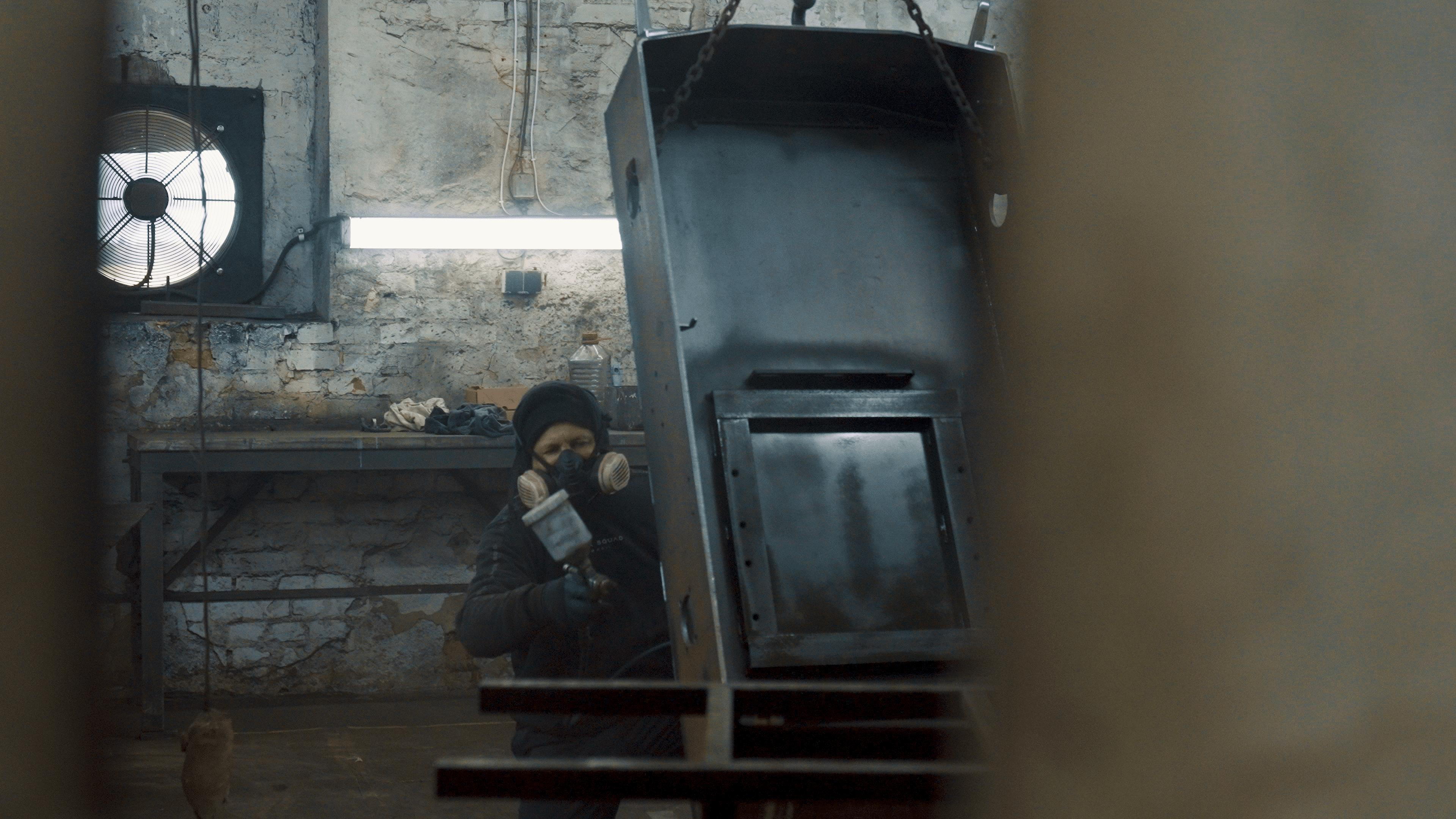
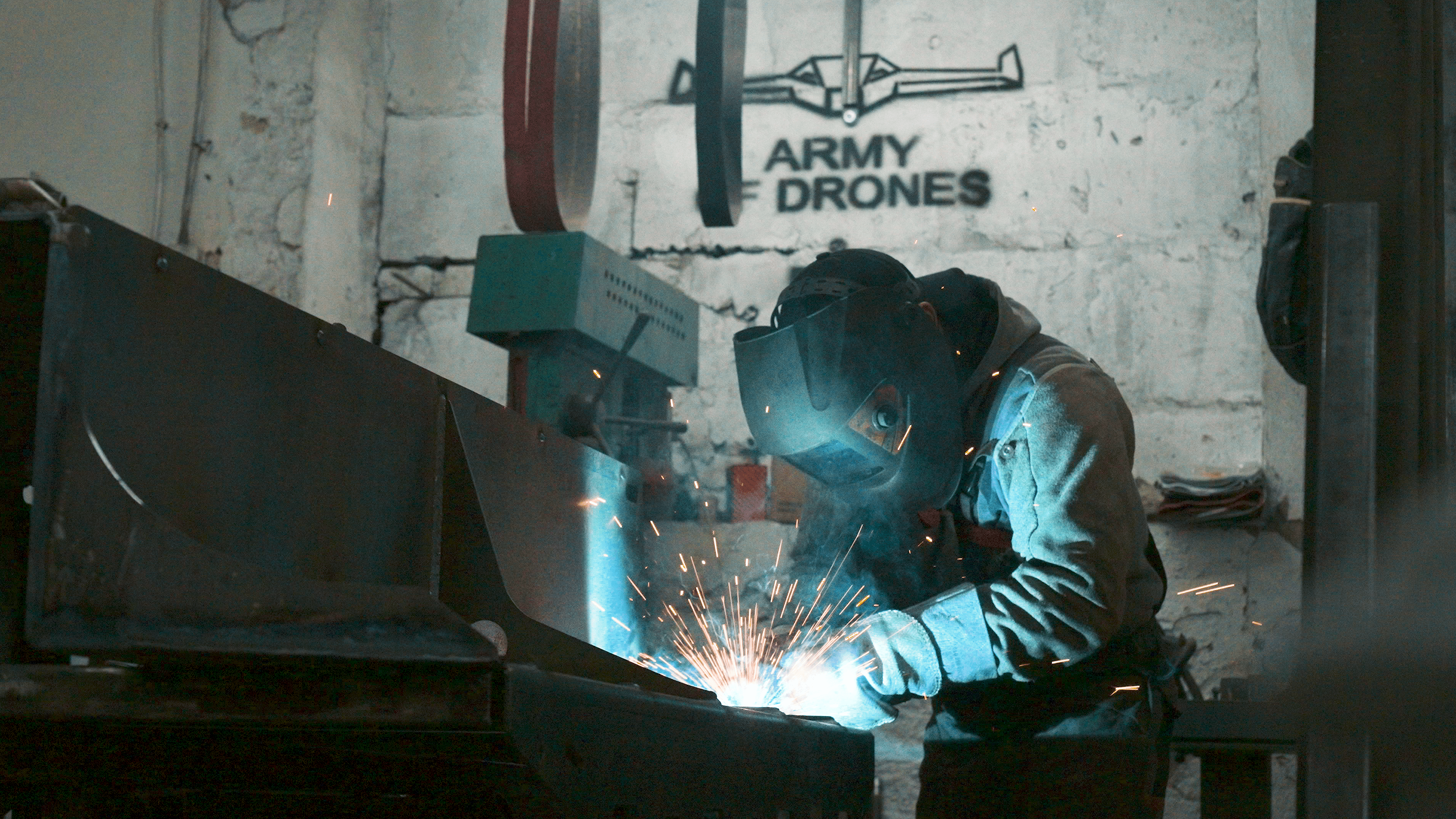
Moving 500 kilograms of supplies to a position can require up to 10 soldiers carrying 40 to 50 kilograms each, Korenovskyi said. A single ground robot can carry that load, return, and make several missions in one night. He made a similar point about casualty evacuation. One wounded soldier may require a medic and two more soldiers with a stretcher, meaning that one casualty can place several more people at risk.
The systems, however, are not fully autonomous robots. Ihor Shmyryov, head of the UGV department at Brave1, said the operator is still central to how they work. “Right now, the UGV and operator are working together,” he said. The operator controls the platform remotely, monitors what it is doing, and makes the key decisions during the mission. Autonomy is developing quickly, but for now, most UGVs are better understood as remotely operated “avatars” rather than independent robots.
Time for procurement to keep up
Ukraine is also trying to make these systems easier for units to obtain. In February, the Defense Procurement Agency added ground robotic systems to the DOT-Chain Defense marketplace, allowing military units to order them directly through the procurement platform. At launch, the marketplace offered seven ground robotic system models from six Ukrainian manufacturers. The same platform also includes FPV drones, fiber-optic drones, strike UAVs, interceptor drones, and electronic warfare systems.
Ground robots still come with their limitations. They depend on stable communications, workable terrain, trained operators, repairs, and unit tactics that know how to use them properly. Electronic warfare can disrupt them. Mines, artillery, and FPVs can still destroy them. But they are no longer being treated as experimental hardware. In Ukraine, UGVs are already moving into procurement, logistics, assault planning, and regular frontline work.
Russia’s invasion forced Ukraine to become a drone power in the air. Now the same pressure is moving the battlefield onto tracks and wheels. UGVs are not replacing soldiers, but they are beginning to take on the missions soldiers should not have to do by hand: carrying supplies, evacuating the wounded, approaching enemy positions, and working inside areas where movement is constantly watched and targeted.
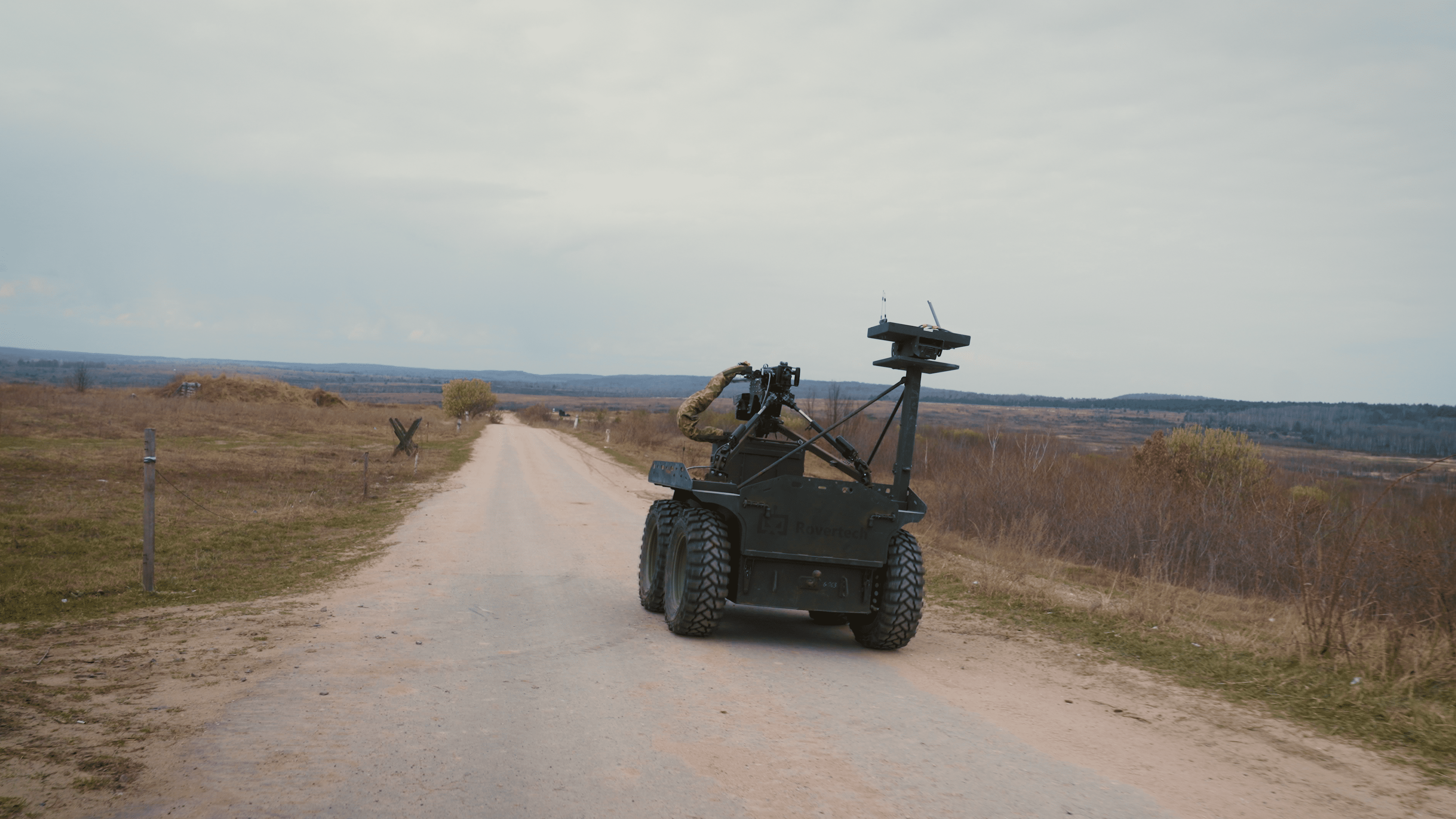
As Drozhak put it, “sooner or later, each of the known warfare methods is going to be put on UGVs.” For now, the question is not whether robots belong in this war. They are already here. The question is how much dangerous work can be transferred from Ukrainian soldiers to machines before the last soldier enters the kill zone.
Discuss this article:



-29a1a43aba23f9bb779a1ac8b98d2121.jpeg "Photo of Illia Kabachynskyi")

-72b63a4e0c8c475ad81fe3eed3f63729.jpeg "Photo of Cyril Barabaltchouk")
-37d0c4e589b794d453938c254fb3d00d.png "Comoros-flagged tanker KHORYV, Dnipro city, Ukraine, 2021.")