- Category
- War in Ukraine
Seven Days of Deep Strikes: Ukrainian Drones Cripple Russian Oil Exports via Baltic Ports
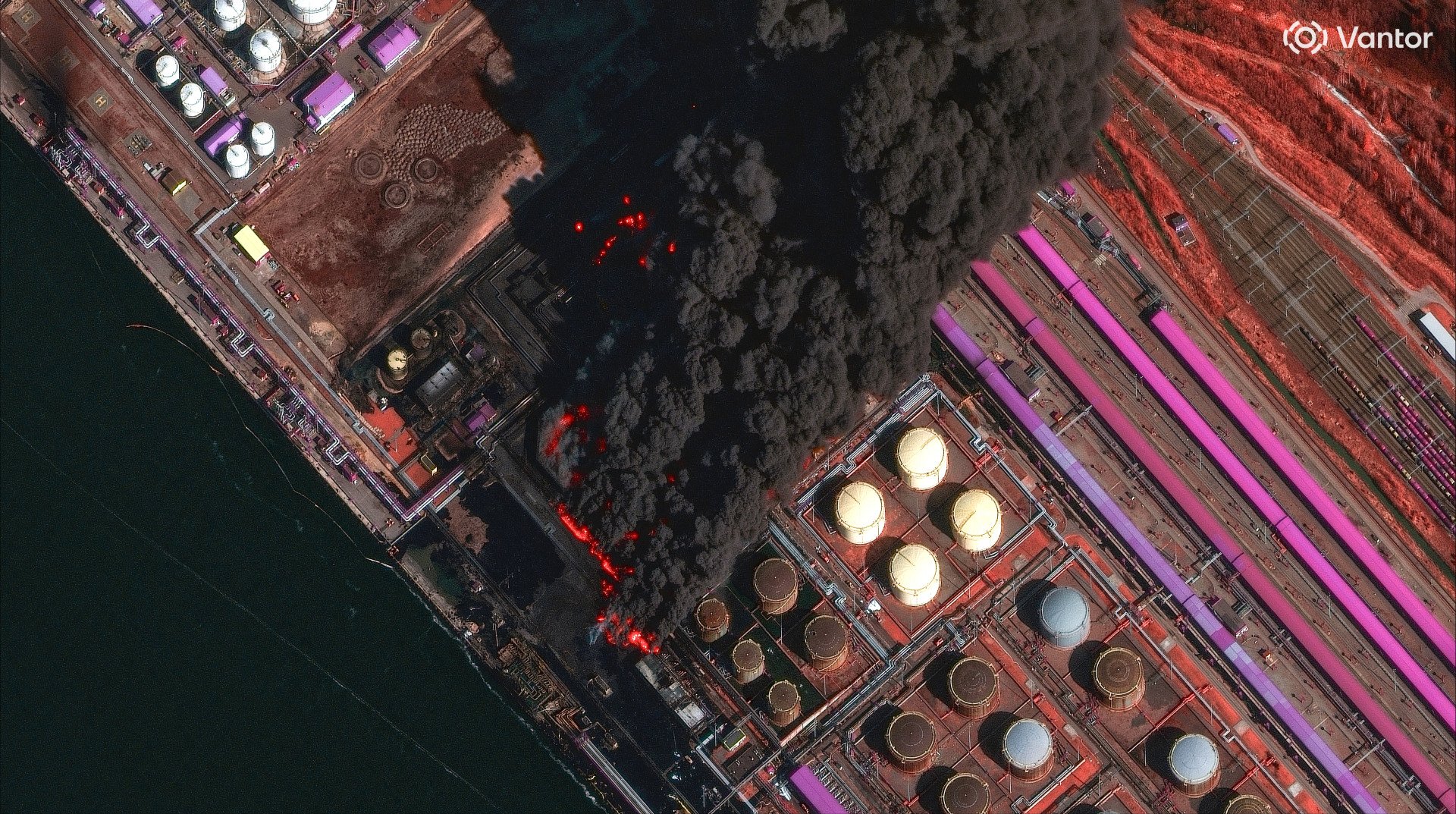
For a week straight, Ukrainian drones have struck Russia’s Baltic oil ports thousands of kilometers from the front—disrupting up to 30% of its oil exports and increasing pressure on Moscow to end the war.
 Prefer U24 Media on Google
- Authors

-29a1a43aba23f9bb779a1ac8b98d2121.jpeg "Photo of Illia Kabachynskyi")
The morning of March 31 started with reports of new Ukrainian drone strikes on oil infrastructure in Russia’s Leningrad region, including at the port of Ust-Luga.
The attack on that port and on the port of Primorsk has now been going on for a week: Ukrainian drones first reached the area on March 23. What initially seemed like isolated strikes has turned into a sustained campaign. Day after day, Ukrainian deep-strike drones are hitting new targets and destroying export infrastructure. Satellite imagery clearly shows that everything is burning.
We bring you stories from the ground. Your support keeps our team in the field.
For example, on March 29 alone, three fuel storage tanks at Ust-Luga were hit, with a combined capacity of 90,000 tons. And after the March 25 attack, three oil tankers, five fuel storage tanks, and three berths were damaged. After each attack, oil-loading operations were halted.
The Ukrainian strikes have already produced results. Bloomberg, which continuously tracks Russia’s seaborne oil exports, reports the following figures:
At the Primorsk port, only 4 tankers were loaded instead of 10.
At Ust-Luga, only 2 tankers were loaded instead of 8.
The total volume of Russia’s seaborne oil exports fell from 4.1 million to 2.3 million barrels per day.
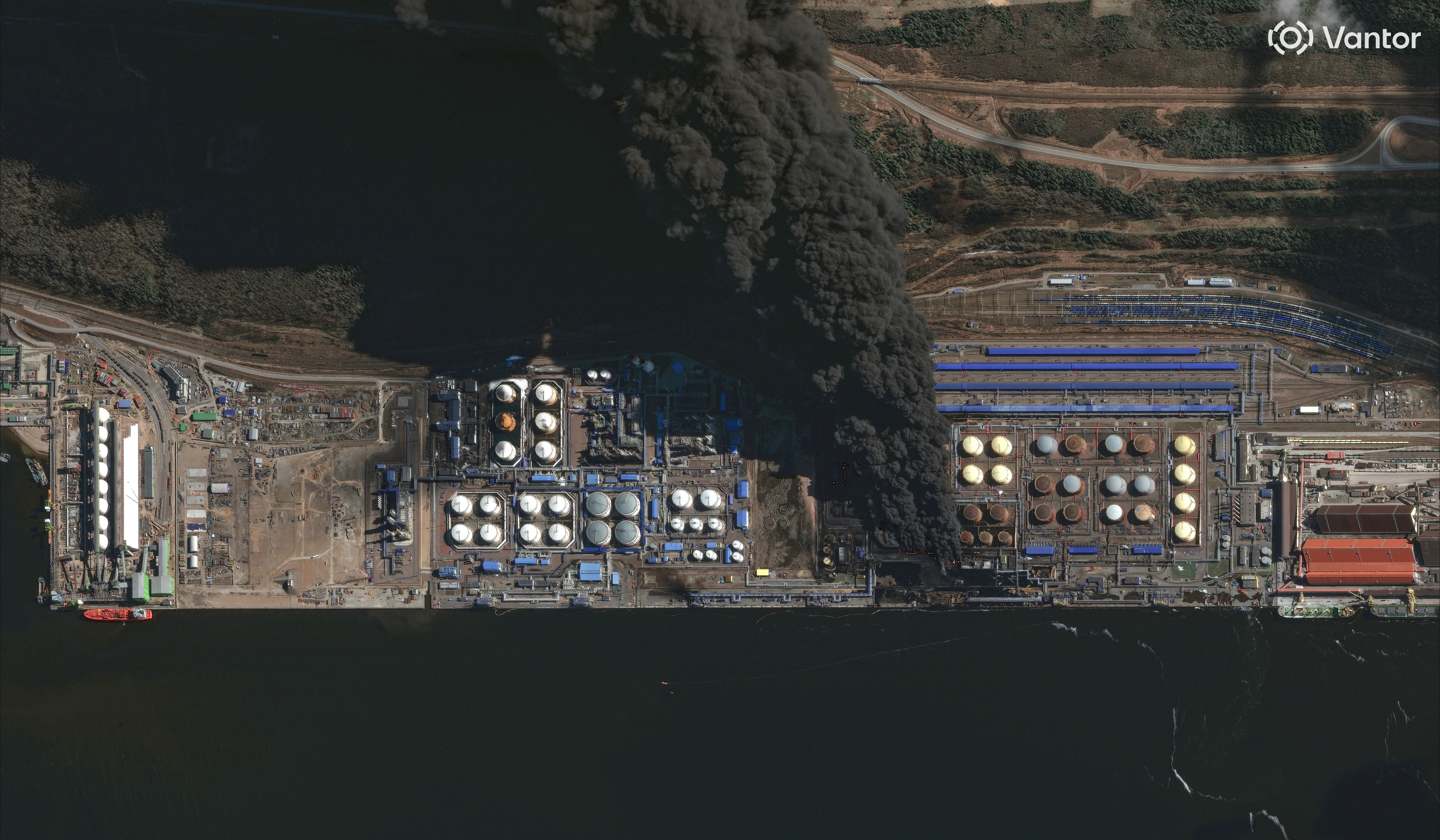
In this way, Ukraine has managed to cut exports by a factor of three along a route that accounts for 28% of all Russian exports. And Ukrainian drones continue to carry out strikes. But this is only part of the strategy.
Stopping oil exports from Siberia
Ukraine’s goal is not simply to carry out random strikes, but to reduce Russia’s capabilities. We previously explained this using the example of efforts targeting components used in ballistic missiles.
Now, Ukrainian drones are seeking to replicate a similar approach with oil produced in Siberia. For export, that oil is shipped via two routes: the Druzhba pipeline and the ports of Primorsk and Ust-Luga.
Also located along the pipeline route are the Yaroslavl refinery and the Kirishinefteorgsintez (KINEF) refinery, which draw off crude oil and produce petroleum products.
This concerns substantial export volumes when operating at full capacity:
Primorsk—exports 1 million barrels per day
Ust-Luga—0.7 million barrels per day
Druzhba via Ukraine—0.2 million barrels per day
Kirishinefteorgsintez refinery—0.4 million barrels per day
Yaroslavl refinery—0.3 million barrels per day
Together, that amounts to 2.6 million barrels per day. Russia says it can produce about 9 million barrels per day, meaning the infrastructure mentioned above accounts for nearly 30% of total Russian oil production.
The Druzhba pipeline has not been operating for some time. All of the other facilities were hit by Ukrainian drones over the past week and either fully or temporarily ceased operations.
Ukraine’s challenge is to ensure that this infrastructure remains out of service for a long time, or cannot be restored at all. Russia’s challenge is that it cannot reroute Siberian oil in such volumes—there is simply no way to do so and nowhere to send it. In that case, production will have to be reduced, and with it, revenue will be lost.
When oil prices fall, losses to the Russian budget will reach tens of billions of dollars, which in turn will create pressure on the Kremlin to end the war in Ukraine and come to the negotiating table.
Discuss this article:



-c439b7bd9030ecf9d5a4287dc361ba31.jpg "Photo of Katherina Popilnichenko")