- Category
- War in Ukraine
Russian Troops Used Pipelines for Surprise Attacks. Now It’s a Disaster

Russian soldiers are using large infrastructure pipelines in Ukraine to bypass Ukrainian positions and launch surprise attacks. Previously, this tactic helped them capture a major city. Today, the pipes are becoming their graves.
 Prefer U24 Media on Google
- Authors

-29a1a43aba23f9bb779a1ac8b98d2121.jpeg "Photo of Illia Kabachynskyi")
Ukrainian forces reported in February 2024 that Russian troops were infiltrating Avdiivka through underground pipes. The city, which had held its ground since 2014, faced an unexpected attack from the rear. What kind of pipes were these? They were sewer lines—complete with everything one might imagine. Russian soldiers were equipped with gas masks so they could breathe, but some reportedly drowned in the city’s sewage. Only a portion of them reached their designated positions.
We bring you stories from the ground. Your support keeps our team in the field.
The pipe itself stretched 3.7 kilometers (2.3 miles) and had a maximum diameter of 1.4 meters (4.6 feet). Bent over, carrying weapons and gear, wearing gas masks, and moving in freezing temperatures, Russian troops advanced toward Ukrainian positions while hiding from artillery fire and drone surveillance.
Pipes as a tool of assault
For the Russian military, pipelines have become one element of surprise and an unconventional method of attack. This raises an obvious question: what exactly are these pipes, and where do they come from?
Pipelines are part of the logistical infrastructure designed to transport liquids or gas. In the history of the Russia-Ukraine war, three types have been used:
Sewer pipelines
Gas pipelines to transport natural gas
Water canal pipelines
Typically, the pipes in cities have relatively small diameters, making passage through them impossible or extremely difficult. However, some infrastructure—particularly between cities—includes pipes large enough in diameter, sometimes up to two meters (6.5 feet). Their size allows troops to move through them—crucially, in a concealed and unexpected way.
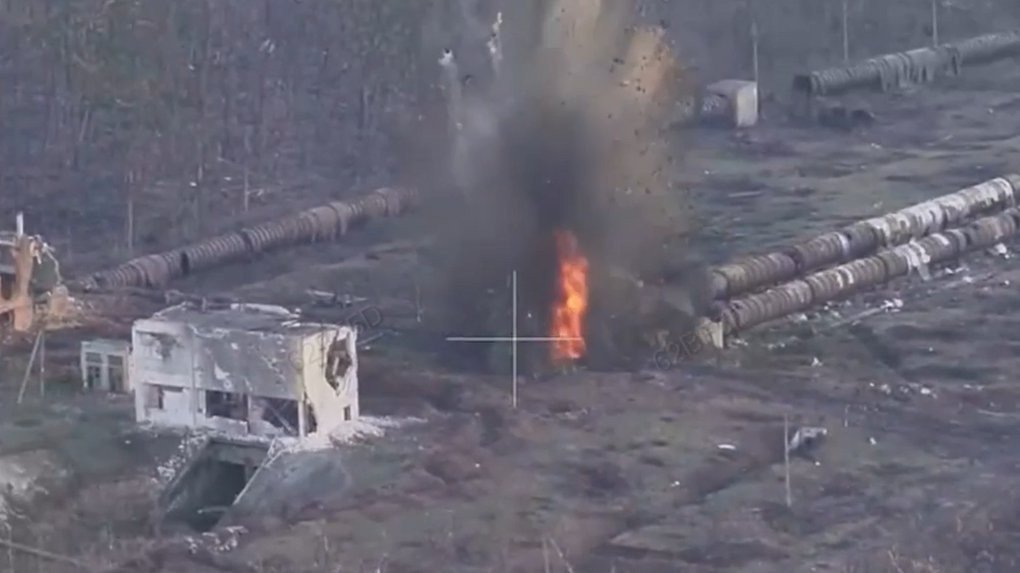
One such example is Chasiv Yar, a city in eastern Ukraine near Bakhmut.
Massive-diameter pipes run through the city as part of the Siverskyi Donets–Donbas water canal. The canal stretches more than 130 kilometers (80 miles), and most of it consists of an artificially constructed open channel. In some sections, however, the water is routed through pipes—usually in urban areas, near railways, and similar locations. Two such exceptionally wide pipes cut directly through Chasiv Yar.
Today, these pipes are largely destroyed—riddled with damage and severed. Russian forces attempted to use them to organize assaults, funneling troops through them. The pipes began several kilometers outside the city, and that is where Russian forces initially sent personnel inside. There has long been no water in the pipes; pumping stations were destroyed by Russian artillery.
Entire Russian units tried to enter the city through these pipelines. But Ukrainian forces were aware of this possible tactic and quickly eliminated the attackers with drones, artillery, or small-arms fire.
Update: In May 2026 it was reported that Russian troops continued their attempts to infiltrate Ukrainian rear positions, this time in the Zaporizhzhia region, by traveling more than 13 kilometers through a major underground gas pipeline.
Ukraine’s Southern Defense Forces, Russian troops had been preparing to use the pipeline system for logistics and covert infiltration for an extended period. Captured Russian soldiers said troops moved through the 1-meter-wide pipe using carts and scooters and claimed each section was welded shut behind them after entry, leaving “no way back.” The operation ended in disaster after Ukrainian forces ambushed the assault groups near the exits.
A strategy that doesn’t work
The element of surprise in attacks through pipelines is no longer what it once was. For the Ukrainian military, the lesson of Avdiivka has been learned.
In 2025, the Russian army attempted to use gas pipelines to advance on Kupiansk. The gas pipeline was lengthy, and Russian troops entered it well before reaching the outskirts of the city. Open sources suggest the Russians had gained some experience and established a logistical route through the pipes.
“Specially designed wheeled stretchers are used to move inside the pipe, as well as electric scooters, where the height allows. The route to the outskirts of Kupiansk takes approximately four days, so designated rest areas and food supplies have been set up along the way.”
Ultimately, Russian forces failed to capture Kupiansk. Ukrainian troops carried out a significant counteroffensive, pushed them back, and cleared the outskirts. The pipeline became a grave for many Russian soldiers, as it did in Chasiv Yar.
Discuss this article: