- Category
- War in Ukraine
Russia’s Regions Are Drowning in Debt as Deficits Surge Fivefold Due to the War
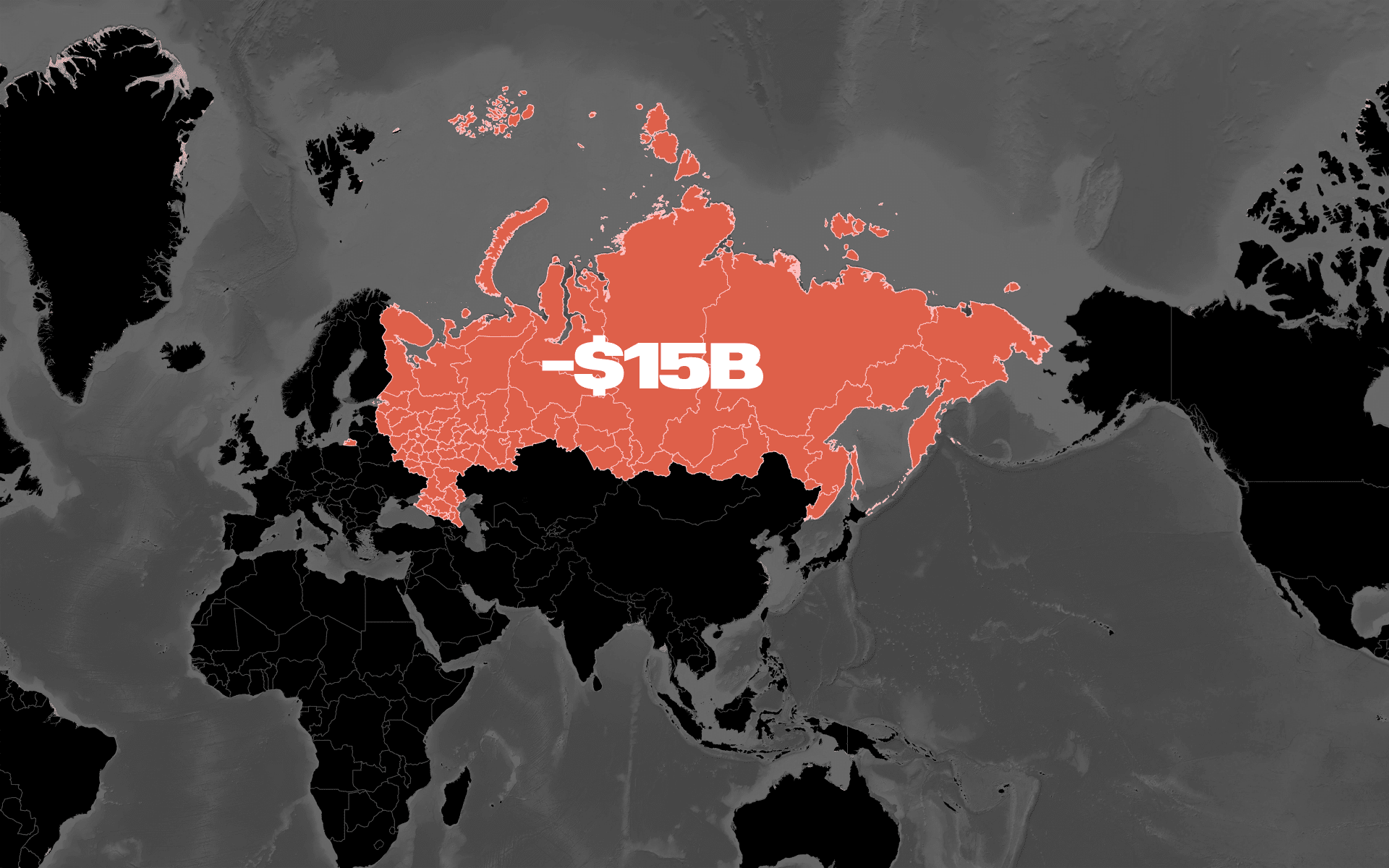
Russia’s economy is coming apart at the seams. Since the launch of the full-scale invasion against Ukraine, nearly every sector of the economy has been losing money, with only those tied to the war effort turning a profit. As a result, Russia’s regions are sinking into debt, setting a new record for budget deficits.
 Prefer U24 Media on Google
- Authors

-29a1a43aba23f9bb779a1ac8b98d2121.jpeg "Photo of Illia Kabachynskyi")
Russia’s regions closed out 2025 with a record budget deficit of 1.538 trillion rubles—or roughly $19 billion. For comparison:
In 2024, the deficit stood at 297 billion rubles, or $3.8 billion.
In 2023, it was about 200 billion rubles, or $2.9 billion.
At the beginning of 2025, officials had publicly projected a deficit of around 300 billion rubles ($3.8 billion)—roughly in line with the previous year.
We bring you stories from the ground. Your support keeps our team in the field.
In reality, the deficit ballooned to five times the forecasted level in just one year. Amid shrinking tax revenues, declining business activity, and mounting war expenditures, the gap between income and spending proved roughly five times larger than expected. Regional revenues in 2025 totaled 22.6 trillion rubles ($290 billion), while expenditures reached 24.1 trillion rubles ($310 billion). Spending growth is significantly outpacing revenue growth, and the trend is likely to continue into 2026.
Budget deficit of Russian regions
The backbone of regional budgets consists of personal income tax and corporate profit tax. One of the key drivers of the deficit is the downturn in small and medium-sized businesses, which has led to a reduction in both corporate tax revenues and payroll-based tax contributions.
Rail freight volumes in Russia have been declining for nearly 4 years in a row. Car sales are falling, the coal industry is posting losses, and the timber sector is stagnating under sanctions pressure. Even food and beverage production is decreasing, while investment in new projects has dropped by 45% compared to 2024. All sectors of the economy—except the Russian arms industry—are contracting.
Since the start of the full-scale invasion, Russia has been living on borrowed money. The so-called “Fortress Russia” appeared self-sufficient, but war is enormously expensive for the country—and it has failed to deliver the desired results. In February 2025, Russian forces captured only 100 square kilometers of Ukrainian territory, the smallest territorial gains in the past 18 months. Russia lost 26,000 troops and equipment worth hundreds of millions of dollars while launching missiles costing more than $1 billion. At the same time, the country recorded a federal budget deficit of more than 5 trillion rubles—around $60 billion.
The Russian government is attempting to downplay the problems, while the Federal State Statistics Service Rosstat insists that Russians are getting richer. Rosstat says real disposable incomes grew by 7.4% in 2025, with the average monthly income reaching about 74,845 rubles—nearly $1,000. Yet few openly acknowledge that real inflation is wiping out those gains.
The Central Bank reports that Russians are cutting back on purchases of expensive electronics, switching to cheaper food products, and postponing non-urgent medical procedures. Russians do not believe the situation will improve in the future.
Businesses share that skepticism. In 2025, additional taxes were introduced, effectively doubling the tax burden. Small businesses with annual revenues starting at 20 million rubles (about $250,000) are now required to pay a 5% value-added tax in addition to a 6% gross revenue tax. Some businesses simply will not survive.
The Kremlin faces two options:
Cover the regions’ debts from the federal budget
Allow regions to go bankrupt
Russian media suggest that social spending will most likely continue to be cut. While Moscow may support select industries or companies, broad debt forgiveness is unlikely, as it would fuel inflation—something President Vladimir Putin is particularly wary of. Investment programs and capital-intensive initiatives are likely to be scaled back or canceled.
At the same time, war spending will remain untouched. Western experts already project that in 2026, Russia will allocate a record $186 billion to the war effort.
Discuss this article:
-9a7b3a98ed5c506e0b77a6663f5727c5.png)


-c439b7bd9030ecf9d5a4287dc361ba31.jpg "Photo of Katherina Popilnichenko")