- Category
- Defense Tech
From FP-1 to FP-7: How Ukraine’s Drone and Missile Program Went Ballistic

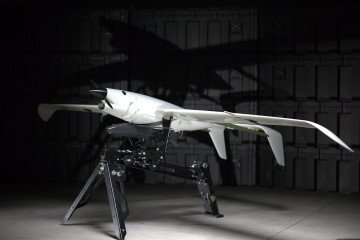
Fire Point is one of the Ukrainian defense companies behind the FP-series strike drones and the FP-5 “Flamingo” cruise missile, systems used in long-range strikes against Russian military infrastructure. The company is now developing the FP-7 ballistic missile.
 Prefer U24 Media on Google
- Authors


In exclusive interviews, we spoke with Fire Point’s chief designer, Denys Shtilerman, CEO and CTO Iryna Terekh, and advisor and former US Secretary of State Mike Pompeo about how the project began during the early months of the invasion, how its weapons are built, and what comes next as Ukraine expands its domestic missile and drone programs.

The company itself was founded by a group that did not come from a traditional arms-industry background. General director Yehor Skalyha previously worked as a film producer, while Terekh trained as an architect before the war. Shtilerman brought a more technical background, with experience in IT and engineering studies at the Moscow Institute of Physics and Technology (MIPT).
Like many Ukrainians at the onset of Russia’s full-scale invasion, they pooled their expertise and eventually became part of the wave of civilians that helped build Ukraine’s modern defense-tech industry.
“We transported artillery and trained soldiers,” said Shtilerman, describing the group’s earliest activities.
Shtilerman says the team was helping supply frontline units with urgently needed equipment in 2022. One of those efforts, which he would describe as the impetus for creating Fire Point, involved sourcing drones for combat operations, a process that soon exposed what Shtilerman believed was a deeper issue within the wartime drone market.
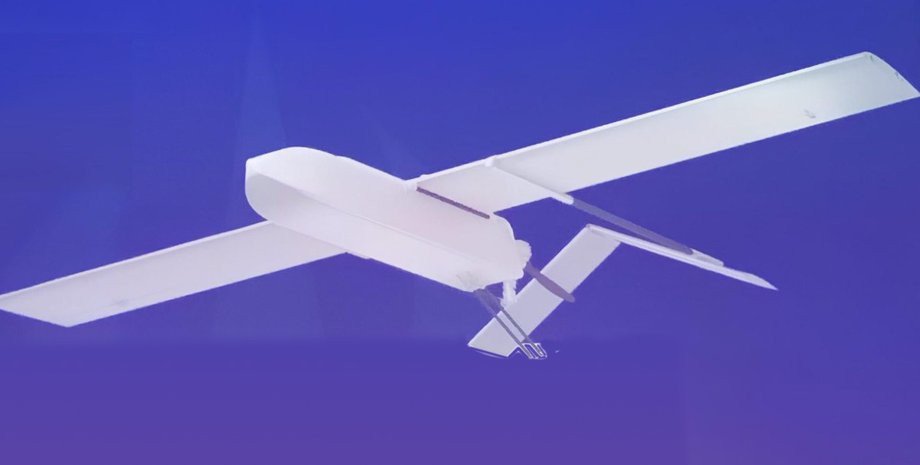
The price gap in the drone market is significant, he says. After purchasing drones for frontline units, Shtilerman said he began questioning why relatively simple systems were selling for such high prices. “Then I started buying drones and saw how much they cost,” he said, noting that many long-range drones were mechanically straightforward but priced according to traditional defense procurement models rather than their technical complexity.
Seeing those prices pushed the team toward building their own system. Shtilerman said the goal was to develop a long-range suicide drone capable of carrying a 50-kilogram payload to a distance of roughly 700 kilometers. Work on the design began in late 2022.
The first prototype flew in January 2023, followed by additional testing in February. The system received certification in May 2023, and by the fall of that year, the company had secured its first production contract for 200 drones, says Shtilerman.
FP-1 and FP-2
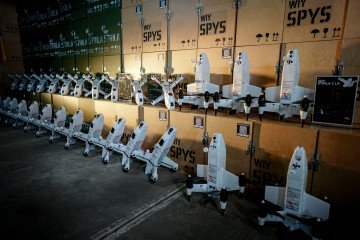
Fire Point’s first operational systems were the modular FP-1 long-range and FP-2 mid-range strike drones. These early platforms share the same carbon fiber airframe but differ in their fuel-to-payload configurations: the FP-1 is optimized for longer range with a larger fuel capacity, while the FP-2 sacrifices some range in favor of a heavier payload.
-383df2dd6ac96690cfe0472f7742b490.png)
This set the baseline for how the company approached weapons development going forward. Instead of focusing on highly refined engineering or complex features, the emphasis was placed on cost, pragmatic design, and the ability to scale production quickly.
The FP-1 has since become a widely used platform in Ukraine’s deep-strike campaign. Ukrainian military reporting attributes roughly 59% of long-range strike missions and about 54% of confirmed target hits to FP-1 systems, making it the backbone of the country’s drone strikes against military targets inside Russia.
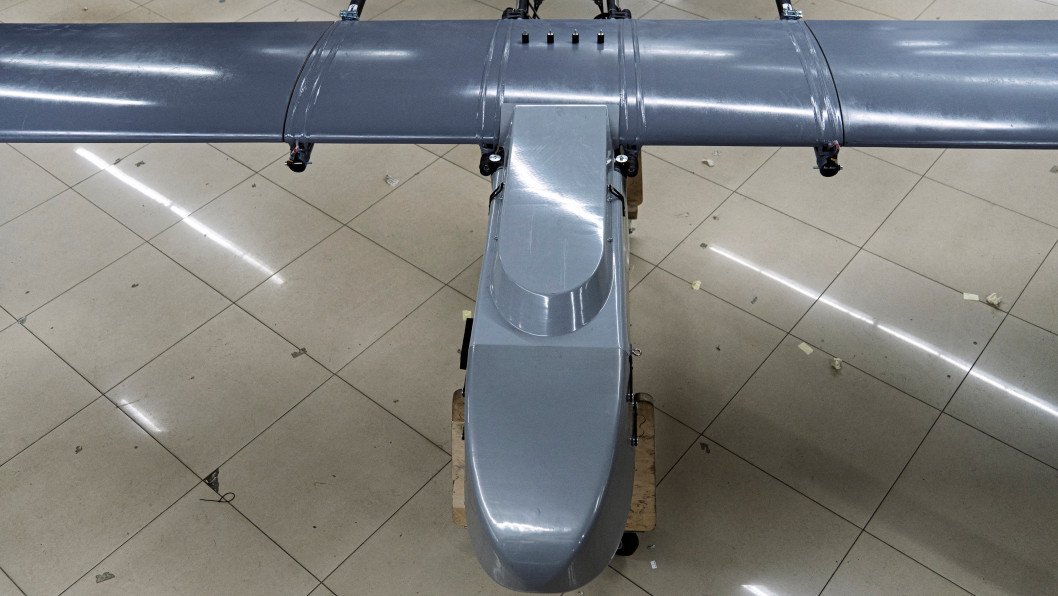
Ammunition depots, command posts, radar stations, air defense batteries, energy facilities, and so on—the drones have been used to target a wide range of infrastructure. FP-1 strikes have been linked to attacks on major Russian oil refineries such as Saratov, Novokuibyshevsk, and Volgograd, which Ukrainian officials say are intended to disrupt the industrial base that supports Russia’s war effort.
With a range reported to reach up to 1,600 kilometers, the drone allows Ukrainian forces to hit military and economic targets well beyond the battlefield while forcing Russia to divert air defense resources deeper inside its territory.
FP-5 Flamingo
Fire Point’s most advanced system to date is the FP-5 “Flamingo,” a domestically developed cruise missile intended for long-range strikes against military and petrochemical infrastructure deep inside Russia. The project was funded by the sales of FP-1/2 drones, and while the system is more sophisticated and expensive than the company’s earlier drones, the same design principles apply.
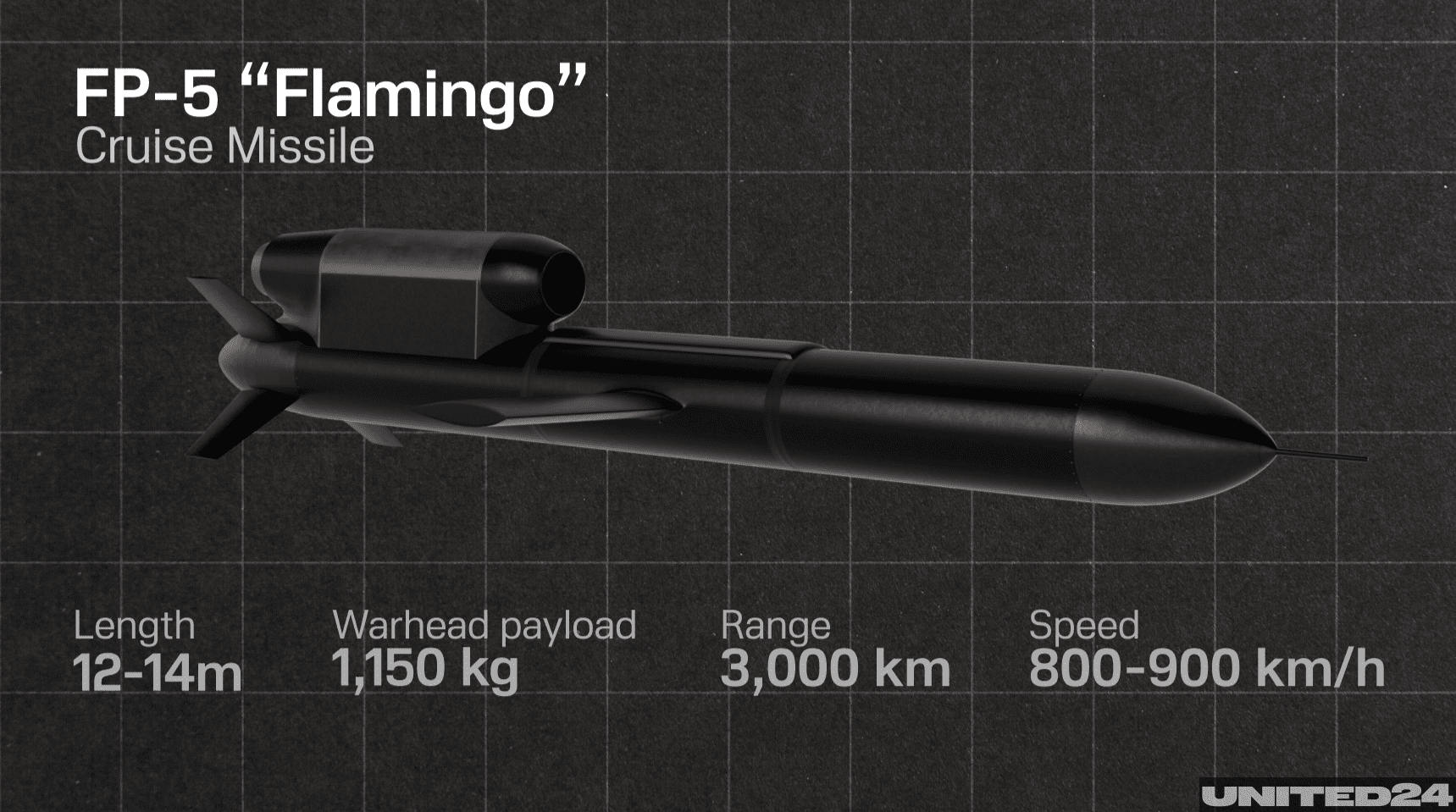
The Flamingo’s 14-meter frame is mainly comprised of carbon fiber, and sports a massive AI-25TL turbofan engine found in scrap yards across Ukraine. The FP-5 carries a warhead of roughly 1,150 kilograms and has a range exceeding 3000 kilometers. Like many modern cruise missiles, it navigates using satellite guidance and low-altitude flight paths designed to reduce radar visibility.
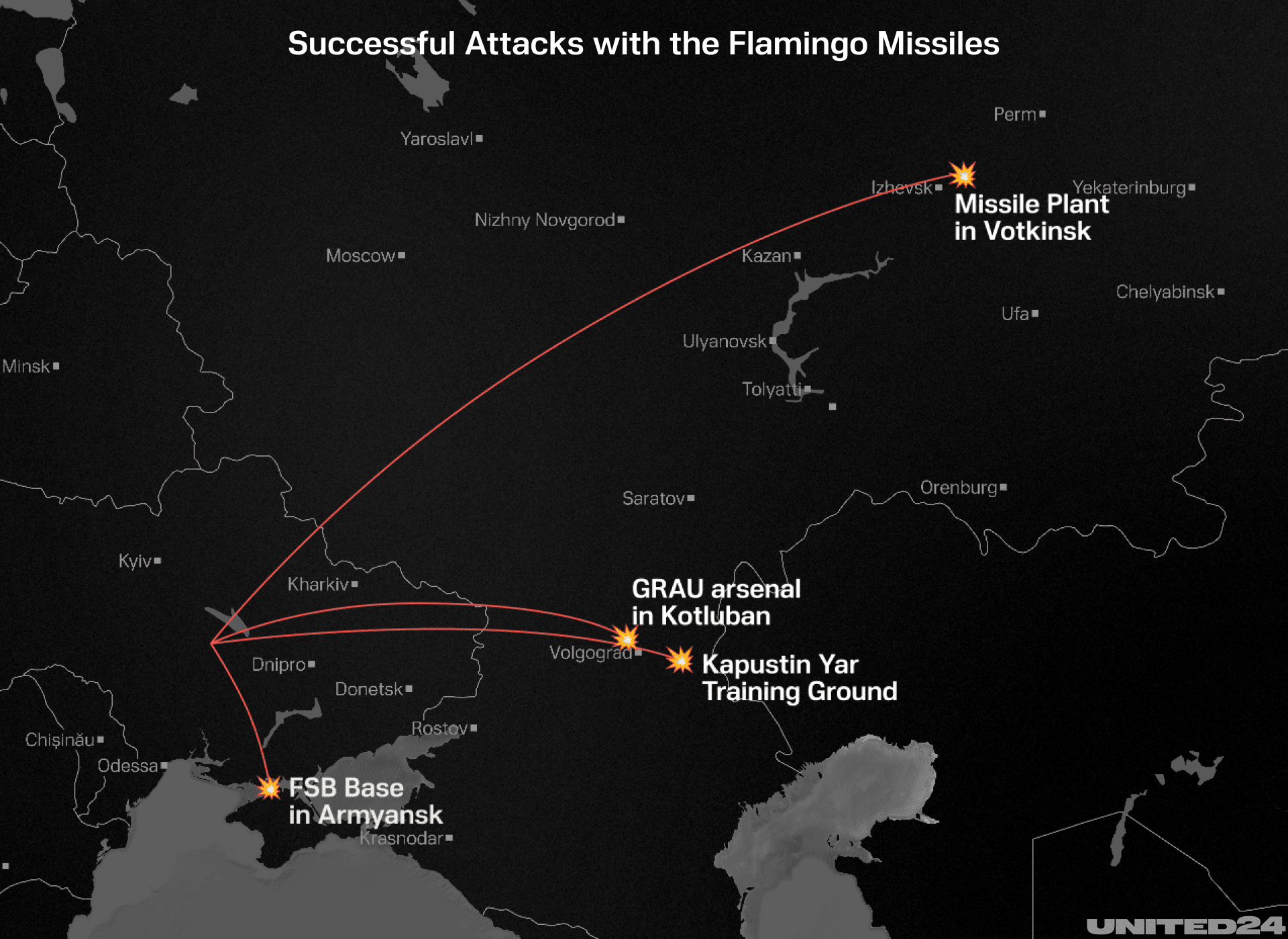
Several Flamingo strikes have been publicly linked to attacks on Russian military facilities far from the front line. Among the sites associated with the system are the Votkinsk Machine Building Plant in Udmurtia, which produces ballistic missiles; the Kapustin Yar missile test range in the Astrakhan region; a GRAU ammunition depot near Kotluban in the Volgograd region; and an FSB installation in Armyansk in temporarily occupied Crimea. All of these locations sit hundreds of kilometers from Ukrainian-controlled territory and form part of Russia’s military logistics and weapons infrastructure.
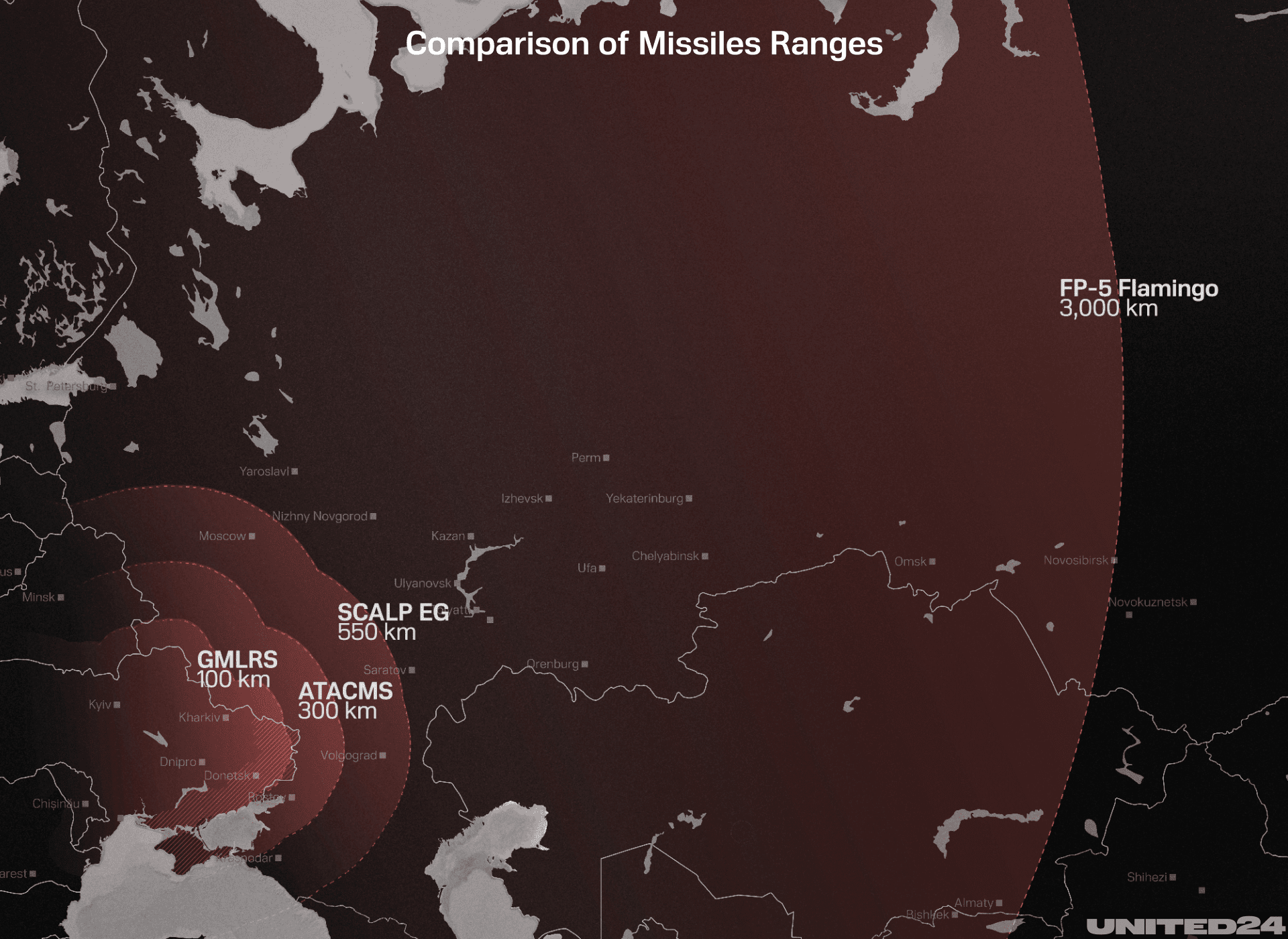
“Currently, we are fighting with more than 55% of domestically produced weapons,” said Iryna Terekh, referring to the growing role of Ukrainian-made systems like the FP-5 cruise missile in the country’s long-range strike capabilities.
Pompeo explained in a separate interview with UNITED24 Media that the approach is similar.
“Lots of Western systems were exquisite, relatively high cost,” he said. In high-intensity warfare, he argued, large numbers of relatively inexpensive systems can place sustained pressure on air defense networks. “Quantity has its own stealth nature.”
FP-7
Fire Point is now developing a medium-range ballistic missile as part of a broader push into both offensive strike weapons and air-defense systems. The program is centered on the trials of the FP-7 medium-range ballistic missiles, which the company describes as the basis for medium, long-range, and interceptor variants.
We welcome ballistic missile FP7) pic.twitter.com/AzkFU8uq0f
— Denys Shtilierman (@DenShtilierman) February 27, 2026
Terekh said the company carried out its first ballistic missile launch on February 27, a test that exceeded internal expectations. The launch was considered successful because several technical milestones were reached earlier than anticipated in the development cycle, she says.
“We expected such results from launch number five or seven,” says Terekh, noting that the system achieved its planned parameters during the initial tests.
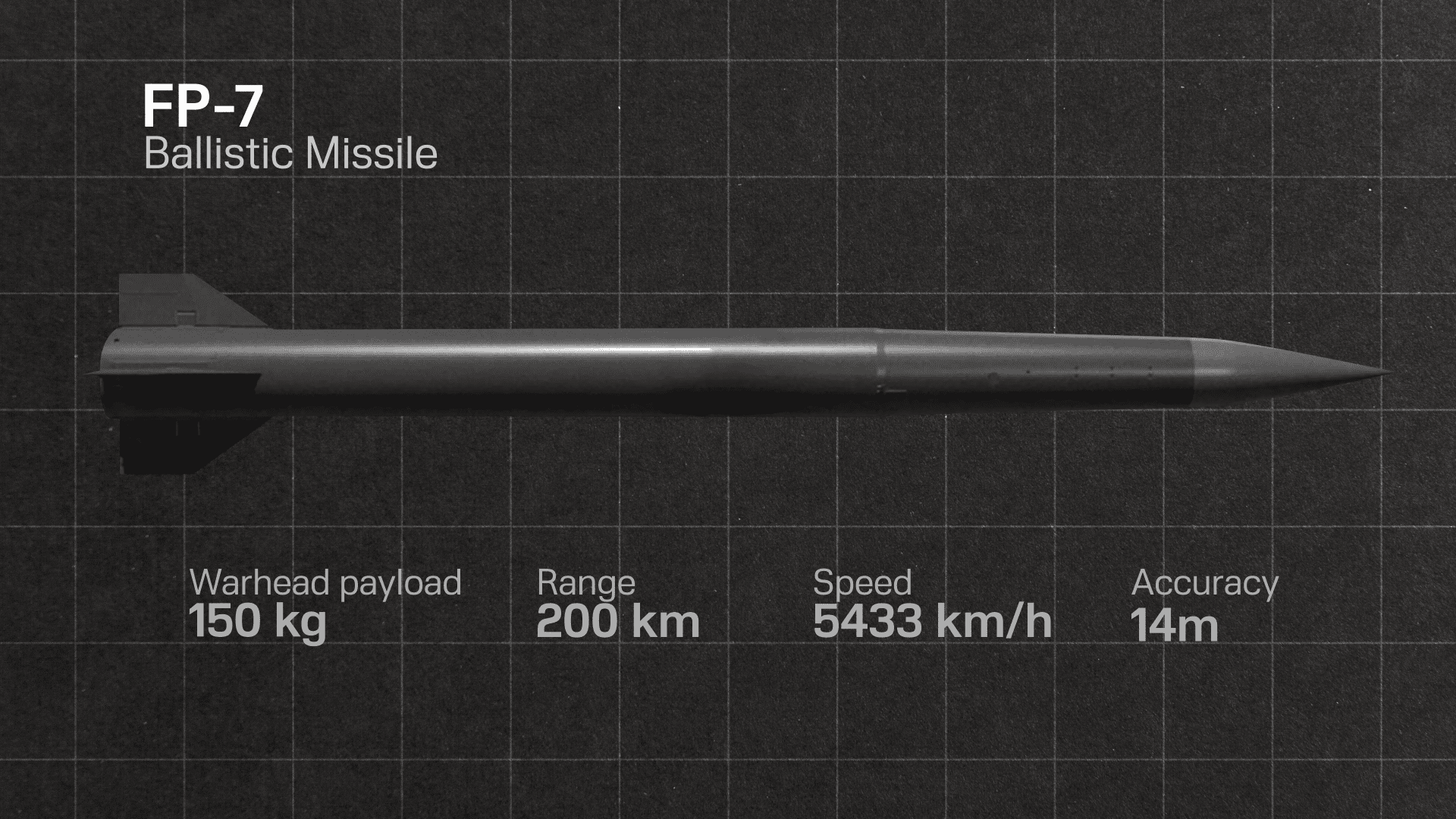
“A long-lost expertise of ballistic capabilities on the European continent is only preserved in France,” says Terekh, noting that Ukraine once held a significant share of that knowledge through Soviet-era missile design bureaus and factories. “Now we have all the technologies and capabilities to restore this program. It’s not a specific missile that is a game changer—it’s the possibility that we can mass produce them at a very low price with zero bottlenecks or almost zero bottlenecks.”
The missile program is built largely around domestic manufacturing. Terekh said the system is about 90% localized in Ukraine, with the remaining components sourced from European suppliers. The goal, she said, is not only to produce a ballistic missile but to restore missile engineering capabilities that largely disappeared across Europe after the Cold War.
“Ballistic shield”
The ballistic program is also tied to a much larger proposal involving European air defense, Shtilerman says. The company has suggested building an open-architecture “ballistic shield” for Europe, where Fire Point would provide interceptor missiles and software systems while European partners contribute radar networks.
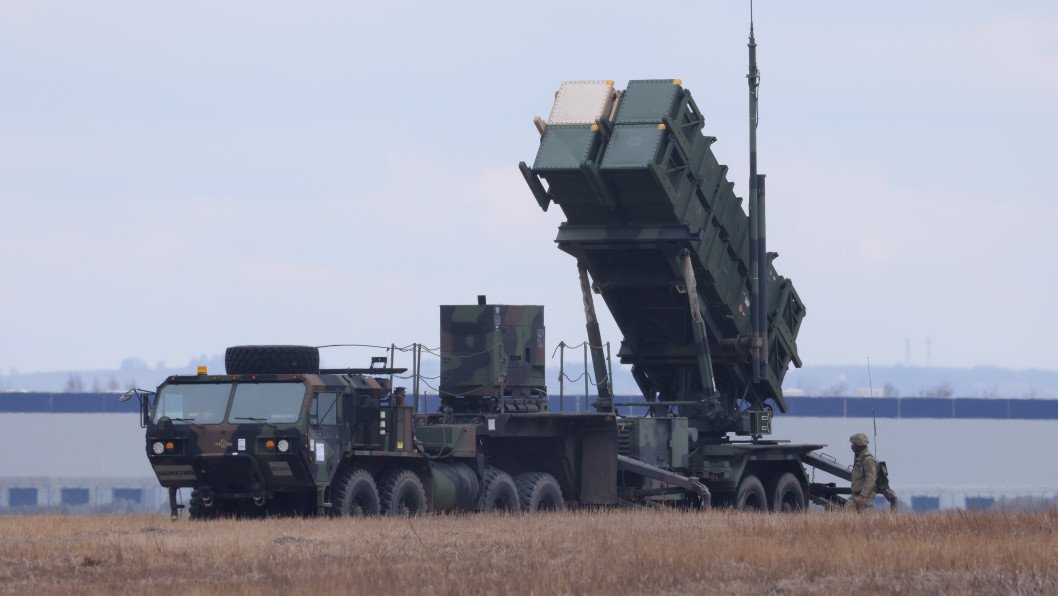
“We invite companies to train their radars on our ballistic launches,” Shtilerman said. “Let’s build a system of a ballistic shield all over Europe.” Several European companies have already joined discussions around the project, he says.
Shtilerman estimates that the first operational interception using the system could take place by the end of 2027. The concept relies on open-architecture software, which he argues would allow participating countries to verify that radar networks and command systems contain no hidden control mechanisms or “kill switches.”
“Everyone should see the mathematics,” he said, describing the idea of a shared system where partners can audit the software used in both missiles and radar networks.
800 Patriot missiles were used for air defense in just 3 days in the Middle East. Ukraine received 600 in 4 years of full-scale war.
— Defense of Ukraine (@DefenceU) March 10, 2026
Russia, Iran and North Korea form a new Axis of Evil. Ukraine was the first to confront this Axis. We continue to fight, but we need support.
The… pic.twitter.com/wUQVn9gSVK
As conflicts expand beyond Ukraine, interceptor missiles and other defensive systems are increasingly being redirected to other regions. When asked whether the fighting in the Middle East could further strain supplies, Terekh said it only reinforces the need for Ukraine to expand its own production capabilities rather than relying entirely on foreign deliveries. For Fire Point, that means developing both strike weapons and air defense systems domestically, with the aim of building a more self-sufficient industrial base.
Secretary Pompeo argues that the war in Ukraine is already forcing governments to rethink how weapons are produced. Western militaries spent decades investing in smaller numbers of highly sophisticated systems, often with long development timelines and high costs. But large-scale wars, he said, place different demands on industry. In that environment, the advantage increasingly belongs to whoever can build weapons faster, cheaper, and in greater numbers.
Discuss this article:
-9a7b3a98ed5c506e0b77a6663f5727c5.png)



-111f0e5095e02c02446ffed57bfb0ab1.jpeg "Photo of Roman Kohanets")