- Category
- Business
Ukraine’s Famed Flamingo Missile Maker Finally Speaks Out as Scrutiny Mounts. Here’s What We Know

At the height of its popularity, one of Ukraine’s fastest-growing and most secretive weapons manufacturers—Fire Point, known for successful long-range strikes, including the FP-1 drone and the pink-painted Flamingo missile—decides to set the record straight amid controversy and a growing rumor mill.
 Prefer U24 Media on Google
- Authors


In an undisclosed yet upscale venue in Kyiv, members of the press, military, and civil society gathered for something unprecedented: Fire Point’s first public press event. Until now, it has kept most of its work in the shadows, often deflecting inquiries with the familiar shield of state secrets.

At the entrance, guests were met with the slogan Quis nisi nos—“If not us, then who?” The message lands differently given the moment. International outlets have probed the company’s alleged ties to central figures in Ukraine’s anti-corruption investigation known as Operation “Midas.”
We bring you stories from the ground. Your support keeps our team in the field.
With Fire Point now in the spotlight for hitting Russian military sites at long range, and with former US Secretary of State Mike Pompeo joining its advisory board, many attendees arrived with the same question: how did a three-year-old startup become so central to Ukraine’s strike doctrine?
Fire Point makes its case
The event opened with an unusual request for a press event: Fire Point CTO Iryna Terekh asked everyone to switch off phones and recording devices. The company then screened a compilation of previously classified footage showing FP-1 long-range drones and FP-5 “Flamingo” missiles in combat use.

The video ran over an orchestral cover of AC/DC’s “Back in Black” and stitched together launch sequences, mid-air booster separations, and confirmed strikes on bridges, oil refineries, airfields, ports, and fuel depots, both in the Russian-occupied territory of Ukraine and deep inside Russia.
A spokesman for the General Staff, Dmytro Lykhovii, provided data collected by the military. He said FP-1 has been in steady combat use for more than two years and now accounts for a major share of Ukraine’s long-range strikes on Russian oil and gas infrastructure.
Lykhovii says that about half of FP-1’s deep-strike missions succeed at ranges of 800–1,000 km, placing it among the most effective tools Ukraine has for degrading Russia’s wartime economy. He added that FP-1 is three times cheaper for the military than comparable long-range systems built by the Antonov company , and that operators require minimal training—one of the reasons the platform has scaled while others stalled.
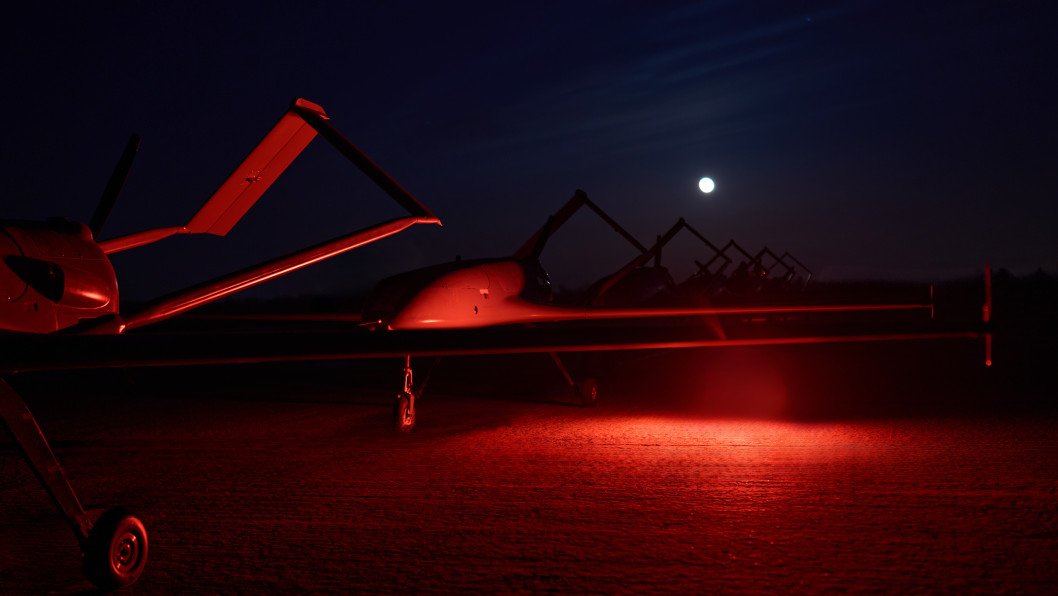
Fire Point outlined its broader lineup in unusually direct terms. FP-2 functions as a short-to-mid-range strike drone—effective in the 40–200 km band and carrying a larger payload than FP-1, but it does not dominate Ukraine’s mid-range market the way FP-1 does for deep strikes.
The FP-5 “Flamingo” was described as real, already produced, and undergoing combat testing, but still in what the team called a “statistics-forming phase”—meaning Fire Point won’t share performance numbers until it has a large enough pool of launches to validate tactics.
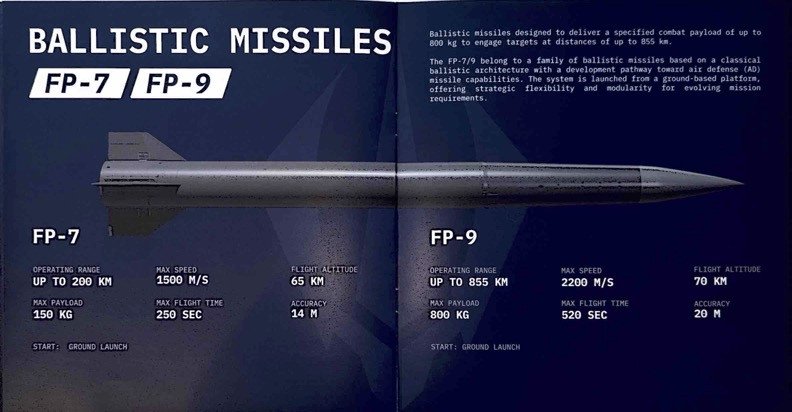
The newly announced ballistic FP-7 and FP-9 systems, as shown in the company booklet, exist as development-stage platforms: the FP-7 has a 200 km range, while the FP-9 extends up to 855 km. Their engineers framed them as long-term projects, not yet fielded at scale. Fire Point also stated that it is working on air-defense interceptors, but this program is currently in its early research phase.
Operators from The Unmanned Systems Forces, Ukrainian military intelligence, Special Forces, and the National Guard describe beginning to use Fire Point systems in 2023–2024. Early results were uneven, but the company responded quickly, addressing problems and adapting the drones in real-time based on frontline feedback.
They say FP systems have since become core tools in their units, valued for reliability and rapid evolution. Several note that they also use other long-range drones, but Fire Point now stands out as one of the most effective options available.
Fire Point strike targets, 2025
Fire Point provided a list of Russian military targets, which includes all documented strikes carried out with their systems over the past year.
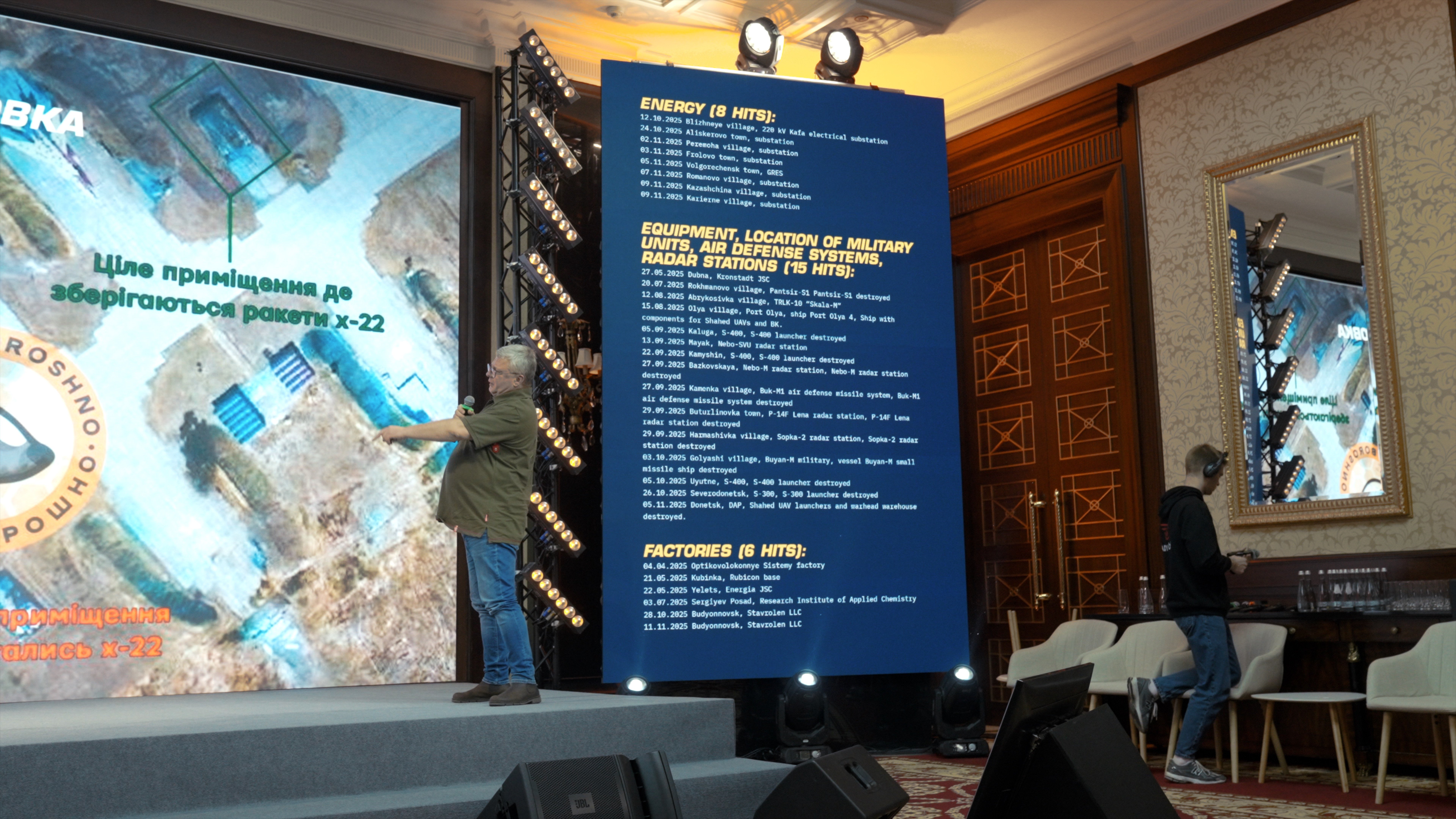
Energy (8 hits)
• 12.10.2025 — Blizhneye village: 220 kV Kafa electrical substation
• 24.10.2025 — Aliskerovo town: Substation
• 03.11.2025 — Peremoha village: Substation
• 05.11.2025 — Frolovo town: Substation
• 05.11.2025 — Volgorechensk town: GRES
• 07.11.2025 — Romanovo village: Substation
• 09.11.2025 — Kazashchina village: Substation
• 09.11.2025 — Karierne village: Substation
Equipment, military units, air defense systems, radar stations (15 hits)
• 27.05.2025 — Dubna: Kronstadt JSC
• 27.06.2025 — Rokhmanovo village: Pantsir-S1 destroyed
• 12.08.2025 — Abrykosivka village: TRLK-10 “Skala-M”
• 12.08.2025 — Port Olya village: Components for Shahed UAVs and BK destroyed
• 09.09.2025 — Kaluga: S-400 & S-400 launcher destroyed
• 12.09.2025 — Mayak: Nebo-SVU radar station
• 12.09.2025 — Kamyshin: S-400 & S-400 launcher destroyed
• 12.09.2025 — Bazkovskaya: Nebo-M radar station destroyed
• 27.09.2025 — Kamenka village: Buk-M1 air defense system destroyed
• 29.09.2025 — Buturlinovka town: P-14F Lena radar station destroyed
• 29.09.2025 — Harmashivka village: Sopka-2 radar station destroyed
• 03.10.2025 — Golyashi village: Buyan-M military vessel destroyed
• 15.10.2025 — Ulyutne: S-400, S-400 launcher destroyed
• 20.10.2025 — Severodonetsk (Siverskodonetsk): S-300, S-300 launcher destroyed
• 26.10.2025 — Donetsk: Shahed UAV launchers & warhead warehouse destroyed
Factories (6 hits)
• 04.04.2025 — Optikovolokonnye Sistemy factory
• 21.06.2025 — Kubinka: Rubicon base
• 22.05.2025 — Yelets: Energia JSC
• 27.06.2025 — Sergiyev Posad: Research Institute of Applied Chemistry
• 28.10.2025 — Budyonnovsk: Stavrolen LLC
• 11.11.2025 — Budyonnovsk: Stavrolen LLC
Oil refineries, oil depots & gas (28 hits)
• 24.07.2025 — Timashevsk: Oil depot
• 26.07.2025 — Prudovy: Oil depot
• 28.07.2025 — Salsk: Oil depot
• 01.08.2025 — Novokuybyshevsk: Refinery ELOU AVT-11 unit
• 03.08.2025 — Frolovo: Fuel train
• 06.08.2025 — Afipsky: Afipsky refinery
• 07.08.2025 — Saratov: Saratov oil refinery
• 13.08.2025 — Volgograd: Lukoil refinery, ELOU AVT-1 unit
• 14.08.2025 — Syzran: Primary oil processing unit
• 17.08.2025 — Novonikolskoye: Nikolskoye LPDS
• 20.08.2025 — Dzhankoi: Fuel train
• 25.08.2025 — Ust-Luga: Gazprom Ust-Luga oil refinery
• 29.08.2025 — Samara: Kuybyshevsky refinery
• 29.08.2025 — Krasnodar: Krasnodar refinery
• 29.08.2025 — Syzran: Syzran refinery
• 04.09.2025 — Ryazan: Ryazan refinery
• 06.09.2025 — Ilsky: Ilsky refinery
• 06.09.2025 — Naytopovichi: LPDS 8-R
• 11.09.2025 — Primorsk: Oil loading port (barge & pumping stations)
• 18.09.2025 — Kirishi: Kirishinefteorgsintez refinery
• 19.09.2025 — Saratov: Saratov refinery
• 19.09.2025 — Samara: Novokuybyshevsk refinery (again)
• 29.09.2025 — Slavyansk-on-Kuban: Slavyansk-ECO refinery
• 03.10.2025 — Kirishi: Kirishinefteorgsintez (second hit)
• 12.10.2025 — Ufa: Bashneft-Novoil refinery
• 22.10.2025 — Ryazan: Ryazan refinery
• 25.10.2025 — Tuapse: Oil loading port
• 05.11.2025 — Volgograd: Lukoil refinery
Airfields (7 hits)
• 30.03.2025 — Shaykovka airfield: BK & Tu-22M3 warehouse
• 24.05.2025 — Tver, Migalovo airfield: Il-76 destroyed
• 04.06.2025 — Savasleyka: Su-34 & MiG-31 hit
• 28.06.2025 — Kushchevskaya: Training airfield
• 26.06.2025 — Marinovka village: Two Su-34s destroyed, two damaged
• 04.07.2025 — Borisoglebsk: Yak-130 & warehouse with KABs hit
• 29.08.2025 — Novofedorovka (Saki airfield): S-300 radar destroyed
Fire Point’s newest member
Pompeo joined the briefing over video link. The former Army officer, CIA Director, and US Secretary of State has already drawn attention for joining the company’s advisory board. He said the choice was straightforward: the systems work, and Ukraine needs a long-range strike capability that can scale.

“I’ve watched this technology closely,” said Pompeo. “The ability to strike deep and at volume matters for Ukraine, for Europe, and for my own country.” He added that before entering public service, he co-founded Thayer Aerospace and worked in the defense sector for years—experience he argues is directly relevant to Fire Point’s ambitions.
He rejected suggestions that long-range strike systems will become irrelevant if peace talks advance and hinted at a path to selling to NATO markets. Deterrence, he argued, is the only way any agreement can hold.
There will be a day when this war ends, but a deterrent force like Fire Point increases the probability that we get there quickly and on Ukraine’s terms.
Mike Pompeo
Former Secretary of State and CIA Director
When asked how Ukraine’s wartime innovation is reshaping US doctrine, Pompeo didn’t hesitate. “The US military is watching,” he said. “Fire Point and other Ukrainian teams have shown an ability to innovate at the speed of war. That’s something Western militaries have to learn from.”
Pompeo also addressed Fire Point’s governance, saying he wouldn’t have joined if he didn’t believe the company could meet Western transparency and compliance standards. His role, he said, is to help the leadership build a structure capable of operating in the US and European defense markets. “Absent world-class corporate governance, absent sufficient transparency, you can’t become a global player in the aerospace and defense industry,” he said. “Fire Point understands that—and that’s why I’m here.”
Scrutiny and rumors
One of the central topics of the briefing was the series of corruption-related allegations circulating around Fire Point: the ongoing procurement probe by the National Anti-Corruption Bureau of Ukraine (NABU), rumors of a search at the company’s Lviv office, questions about potential ties to individuals referenced in Operation “Midas,” and claims of inflated pricing.

Earlier this year, reports raised concerns that Fire Point co-founder Denys Shtilerman held Russian citizenship—a sensitive issue given his critical role in Ukraine’s defense industry. Prior investigations showed he once possessed Russian internal passports and appeared in Russian registries, prompting questions at the briefing.
Shtilerman said he received Russian citizenship automatically in 1991 while living in Moscow during the Soviet collapse, and that it was revoked in 2016 due to his participation in the Revolution of Dignity and public criticism of Russian authorities. He stated he has not used Russian citizenship in any capacity, does not hold a valid Russian passport, and that Ukraine’s security services have confirmed he has no access to state secrets.
Regarding the NABU probe, Fire Point’s executives also said that no searches had occurred at any of their facilities, no indictments had been issued, and that all documents requested by state regulators and auditors had been submitted months earlier. They stressed that the NABU case concerns state procurement officials, not Fire Point, and that the company is only one of several suppliers whose contracts are being reviewed.
-167232ab4ac20b026415b2545a148681.jpg)
Reporters also asked about alleged ties to three individuals named in public discussions of Operation “Midas”: Ihor Fursenko, Oleksandr Tsukerman, and Timur Mindich. Shtilerman addressed each case. He acknowledged knowing all three individuals but said neither had any role in the company’s operations or financing.
Regarding Fursenko, who appears in NABU materials under the alias “Roshyk,” journalists noted registry data showing that he was formally employed by Fire Point as an administrator as of March 19th, 2025.
Shtilerman said that Fursenko only existed on paper and had no technical or managerial responsibilities. He added that Fursenko’s only connection to him was assisting his ex-wife and children with relocation from Russia during the start of the war.

Shtilerman told New Voice of Ukraine that Fire Point terminated Fursenko’s employment immediately after learning of the indictment, stating: “We are obliged to dismiss anyone against whom proceedings have been opened and suspicions have been raised.”
When speaking about Tsukerman, Shtilerman said the relationship was limited to personal acquaintance and that Tsukerman never worked for, consulted with, or funded Fire Point. The company called suggestions of deeper involvement “distortions.”
Regarding Mindich, the founders confirmed that he attempted to purchase 50% of Fire Point after its successful trials in early 2024. They said the offer was rejected immediately and that Mindich never held any influence, stake, or decision-making authority. Across all three cases, Fire Point reiterated that none of the men had any operational role in the company, that no electronics or documents were seized from any Fire Point facility, and that all relevant materials had already been reviewed by state auditors before the briefing.
Why Fire Point exists
Ukraine’s Soviet legacy missile industry, built for Moscow and never modernized after independence, was unable to deliver long-range strike systems at scale that the war required. The founders say they stepped in because no one else could move fast enough. “We had to choose between complaining and building,” technical director Denys Shtilerman said. “So we built.”
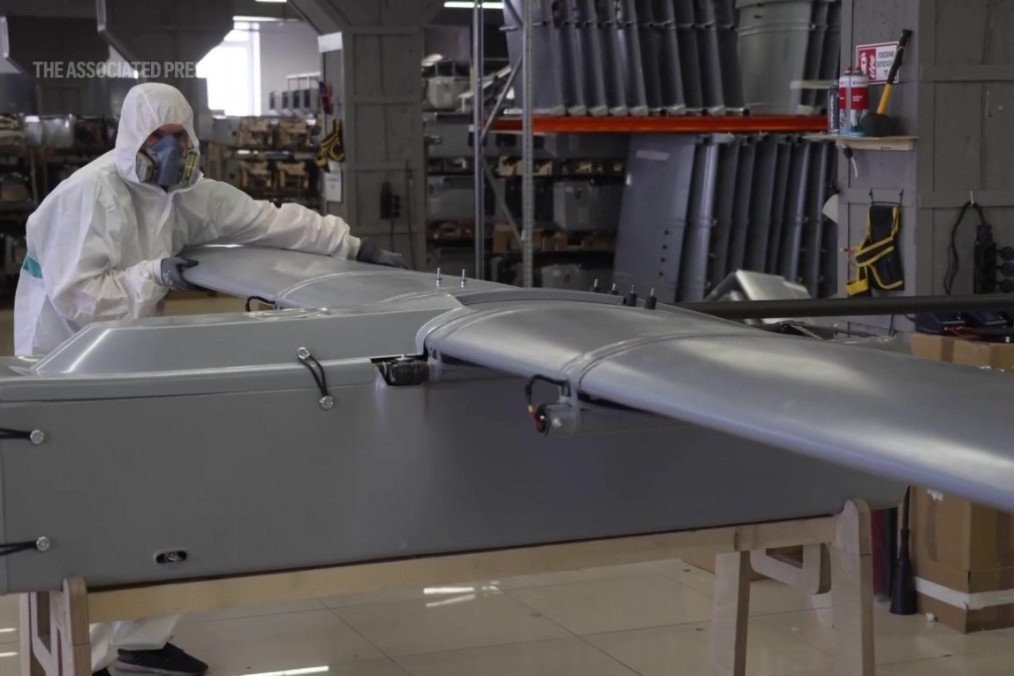
The team built the FP-1 entirely within Ukraine, using whatever resources they could source during a full-scale war. FP-5 was engineered the same way: its airframe and flight logic were redesigned around a supply chain that shifts constantly, with engines taken from old L-39 trainers because they’re the only turbofans Ukraine can secure at scale.
One of the only foreign-made components is the rocket-fuel mixture, which will be made in Denmark under the “Danish Model”.
The company said the FP-7 and FP-9 ballistic missiles are financed entirely through FP-1 revenue, not state money, and are built inside Ukraine wherever it is physically safe to manufacture.
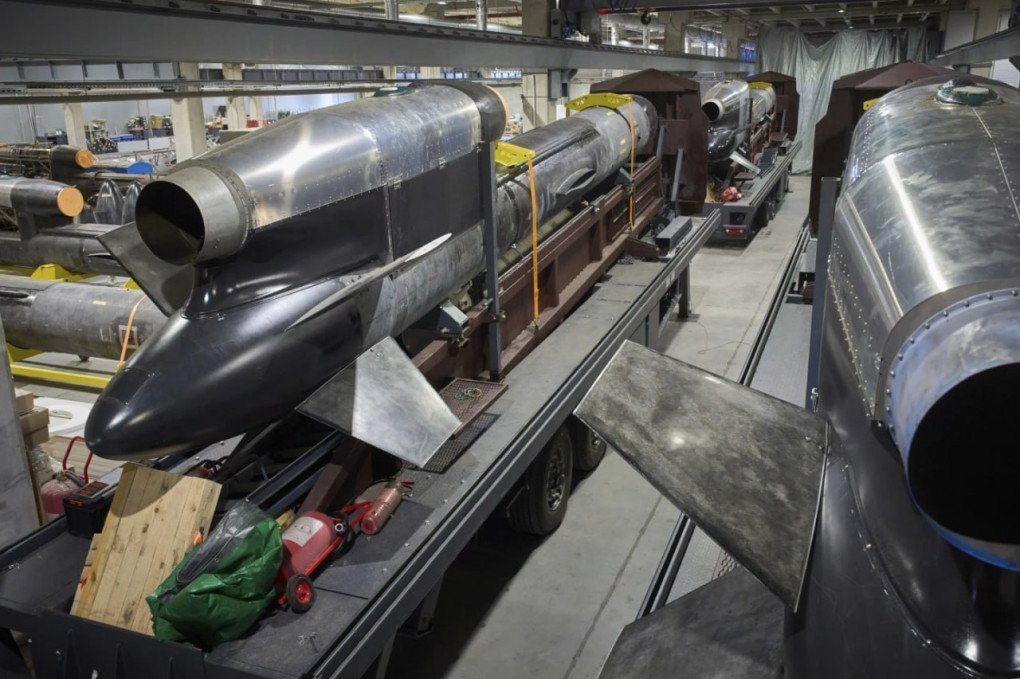
Fire Point says its ambitions now extend beyond strike systems into interception—a capability Ukraine essentially lacks today. The company is developing a new interceptor missile, with most components built in Ukraine and the hazardous propulsion elements manufactured abroad for safety. The missing piece is the guidance head, which will allow the system to track a ballistic missile throughout its trajectory and perform a high-speed intercept.
Fire Point also confirmed that several major European defense firms have joined the project, using the company’s software architecture as the basis for what could evolve into a shared EU ballistic-missile defense layer.
Discuss this article:


-5f84711170d2769c4cda67ca2bebf5d2.jpg "Carpathian 8 Summit: Ukraine Leads Push for Security & Regional Growth")


-111f0e5095e02c02446ffed57bfb0ab1.jpeg "Photo of Roman Kohanets")
-4258f90da45ed571f27851d158610665.jpeg "Photo of Valeriya Ionan")
-92cc3cc3704a042ef4f32eb51a51081d.png "Activitis Builds Fintech Infrastructure for Ukrainian Business During Wartime")
-29a1a43aba23f9bb779a1ac8b98d2121.jpeg "Photo of Illia Kabachynskyi")