- Category
- Life in Ukraine
Operation “Midas”: Inside Ukraine’s High-Profile Anti-Corruption Investigation
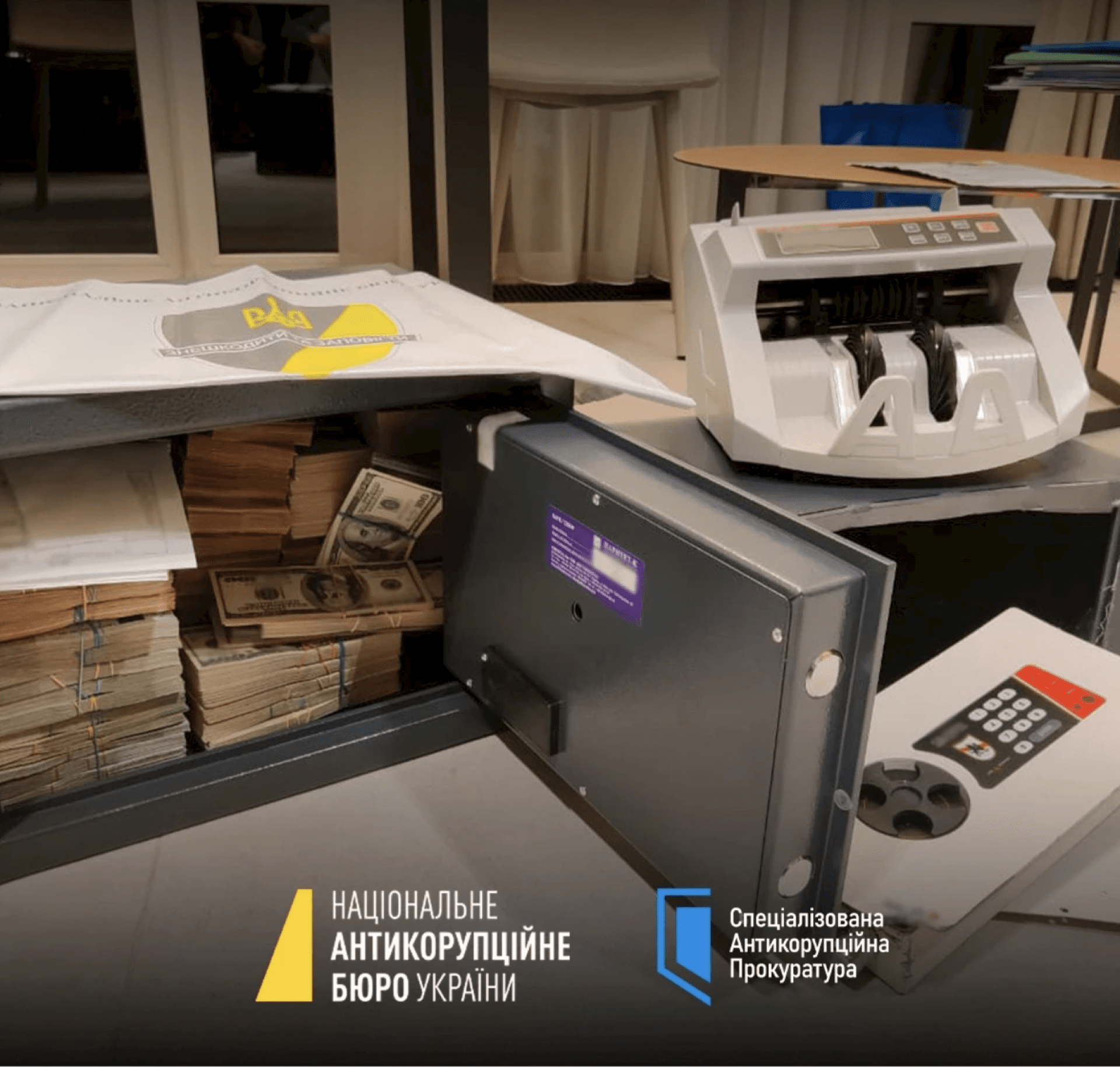
Ukraine’s anti-corruption agencies launched a large investigation this week, targeting procurement abuses at Energoatom, the state-run nuclear energy giant with nearly $5 billion in annual revenue. The operation has already triggered suspensions in the Cabinet of Ministers and the dissolution of the company’s Supervisory Board. Its consequences may prove to be a crucial test for Ukraine’s image.
 Prefer U24 Media on Google
- Authors

-206008aed5f329e86c52788e3e423f23.jpg "Photo of Oleksandr Moiseienko")
Detectives from the National Anti-Corruption Bureau of Ukraine (NABU) conducted dozens of simultaneous raids on November 10 as part of Operation “Midas,” a case they had been working on for over a year and a half.
Nearly all of NABU’s personnel—approximately 1,000 staff—were involved. At least five individuals were detained as a result of the operation, and millions of dollars in cash were seized.
Members of the criminal group allegedly spent several years building a shadow chain of command over the strategic energy company, relying on a system of kickbacks, blackmail, and political influence, the investigation reveals.
Key figures uncovered by operation “Midas”
While NABU did not release the names of the suspects, Ukrainian media quickly identified the possible main actors in the scheme:
“Carlson” — Timur Mindich, businessman. NABU says he was the organizer of the scheme.
“Che Guevara” — Oleksiy Chernyshov, former Deputy Prime Minister of Ukraine.
“Rocket” — Ihor Myroniuk, former advisor to ex-Energy Minister Herman Halushchenko and previously an aide to pro-Russian MP Andrii Derkach.
“Tenor” — Dmytro Basov, former Head of Physical Protection and Security at Energoatom, who, according to investigators, controlled the company’s financial flows.
“Professor” — Herman Halushchenko, former Energy Minister who later became Justice Minister. He was suspended from office on November 12, after NABU released audio recordings.
“Sugarman” — Oleksandr Tsukerman, one of the coordinators of the “laundromat,” a financial back office in central Kyiv.
The case also involves Serhii Pushkar, a member of the National Commission for State Regulation of Energy and Public Utilities (NKREKP), who, according to MPs, secured his position through the group’s patronage.
How the scheme worked
Investigators stated that private companies seeking to work with Energoatom were required to pay 10–15% kickbacks to sign or process contracts. Those who refused were dropped from the list of suppliers. Inside the scheme, this was known as “the barrier”: either you shared the profits, or “the door stayed shut.”
NABU says that actual management of the state-owned energy giant was carried out by individuals who held no official positions, yet controlled procurement, staffing, and payments.
The “laundromat” in central Kyiv
NABU identified a financial back office responsible for laundering kickbacks through a network of companies outside Ukraine. The office operated out of a property linked to the family of fugitive MP Derkach, according to the investigators. Operations were coordinated by the so-called Tsukerman brothers, business partners of Mindich. Investigators believe that over $100 million passed through this office.
The funds were transferred via cash, foreign currency accounts, cryptocurrency, and offshore structures, with a geographic reach spanning from Kyiv to Atlanta and Moscow. NABU has so far released only the first three parts of the “Midas” operation. Five people have been arrested, and seven suspects have been formally charged with participating in a criminal organization.
If proven in court, this could become the largest corruption scandal in Ukraine’s energy sector since the start of the full-scale war.
Ukrainian government response
“Any effective action against corruption is greatly needed. The inevitability of punishment is essential,” Ukrainian President Volodymyr Zelenskyy stated in his evening address on November 10. “Energoatom currently provides Ukraine with the largest share of power generation. Integrity within the company is a priority. The energy sector and every field. Everyone who has built corrupt schemes must face a clear procedural response. There must be convictions.”
The Cabinet of Ministers dissolved Energoatom’s Supervisory Board on November 11 and announced an independent audit of the company’s operations.
Prime Minister Yulia Svyrydenko said that the board—two of whose members were reputable non-residents of Ukraine—had the authority necessary to prevent corruption at the company:
“In 2023, we launched corporate reform. We selected the composition of this supervisory body through a competition. Full authority—from appointing management to overseeing the company’s activities—rests with the Supervisory Board.”
Following corporate reform, internal auditors, compliance units, and anti-corruption departments at state-owned enterprises report directly to independent supervisory boards. In this case, it’s clear that their role was largely formal, enabled by the Supervisory Board, which failed to take its responsibilities seriously.
The first suspension followed on the morning of November 12. Halushchenko, who was serving as Justice Minister and was featured in NABU’s recordings as “Professor,” was suspended from office. According to him, being suspended for the duration of the investigation is a “civilized and proper course of action.” Halushchenko said on Facebook that he would defend himself through legal means and “present his case.”
In addition to Halushchenko, Energy Minister Svitlana Grynychuk will also be suspended from her position. Sanctions will also be imposed on Mindich and on the organizer of the “laundromat,” Tsukerman.
"Right now, it is extremely difficult for everyone in Ukraine. We are going through power outages, Russian attacks, and losses. It is absolutely unacceptable that there are still some schemes in the energy sector. I will sign a decree imposing sanctions on two people who are involved in the NABU case concerning Energoatom. Now we all need to protect Ukraine. To undermine the state means to be held accountable for it. To break the law means to be held accountable for it," President Zelenskyy emphasized in his latest address.
Operation “Midas” fallout
The investigation has sparked considerable public attention, as Ukraine is facing ongoing Russian attacks on its energy infrastructure, leaving many Ukrainians without power for much of the time and pushing critical infrastructure to the limits of its capacity.
Over the past decade, Ukrainian society has fought for transparency—both through peaceful means and through protest—backed by independent anti-corruption institutions. Now, that infrastructure is finally delivering strong results.
Operation “Midas” is not just a corruption scandal—it’s a litmus test for Ukraine’s reform process and a measure of public trust in institutions that will shape the country’s path to EU membership. Many doubted that Ukraine had a real anti-corruption system. “Midas” proves it does: it is independent and working as intended.
It shows that no government position or former ties to current leadership will shield those who remain focused on building corrupt schemes for personal enrichment around state-owned enterprises.
Discuss this article:

-24deccd511006ba79cfc4d798c6c2ef5.jpeg "Photo of Louis Beaudemont")



-554f0711f15a880af68b2550a739eee4.jpg "Photo of Lucile Brizard")