- Category
- Anti-Fake
Is Remembrance a Violation? Why the IOC Disqualified a Ukrainian Athlete 30 Minutes Before Race
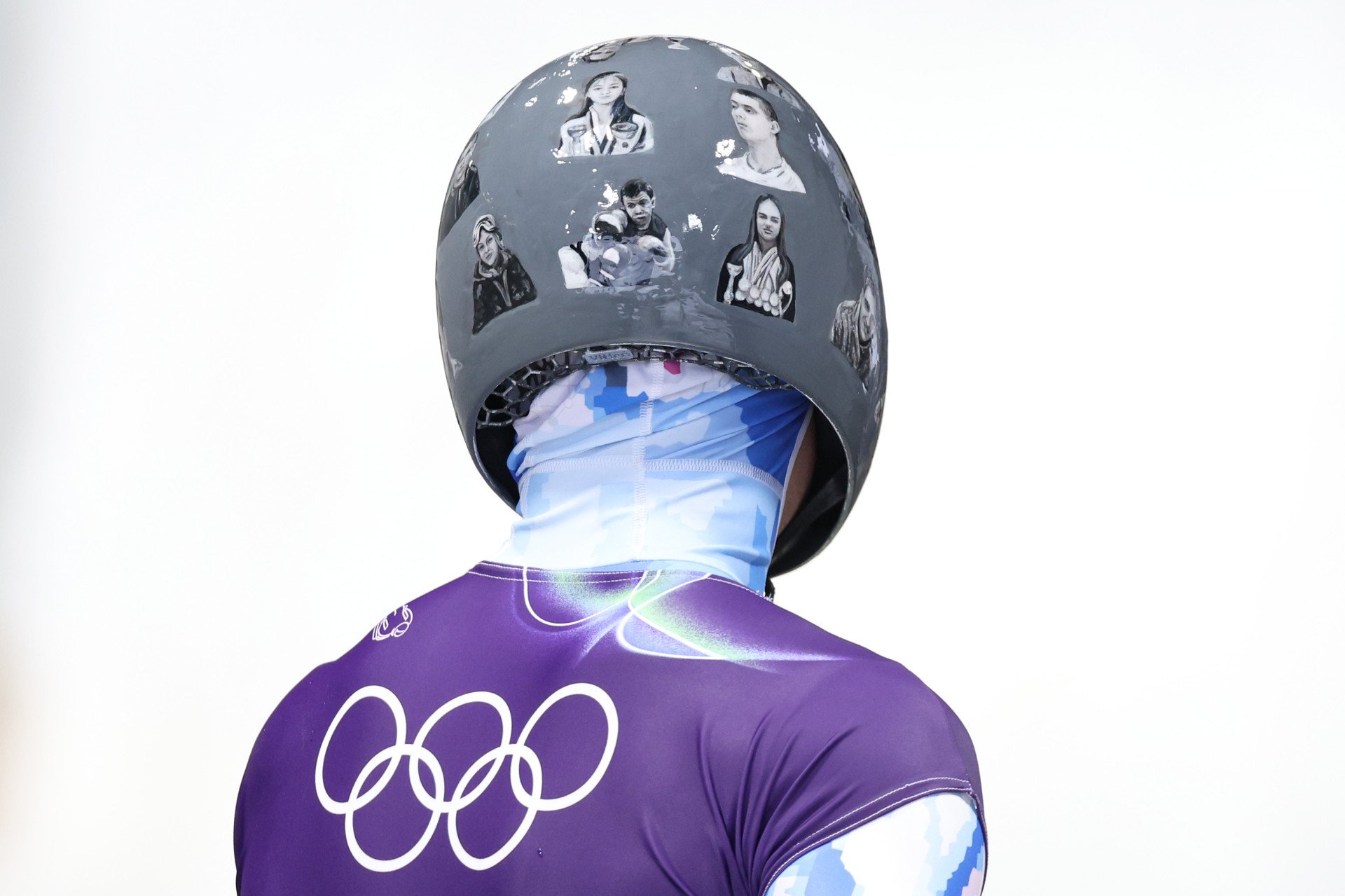
The International Olympic Committee (IOC) disqualified Ukrainian skeleton athlete Vladyslav Heraskevych on February 12. The reason was his intention to compete in a special helmet honoring athletes who were killed as a result of Russia’s war.
 Prefer U24 Media on Google
- Authors


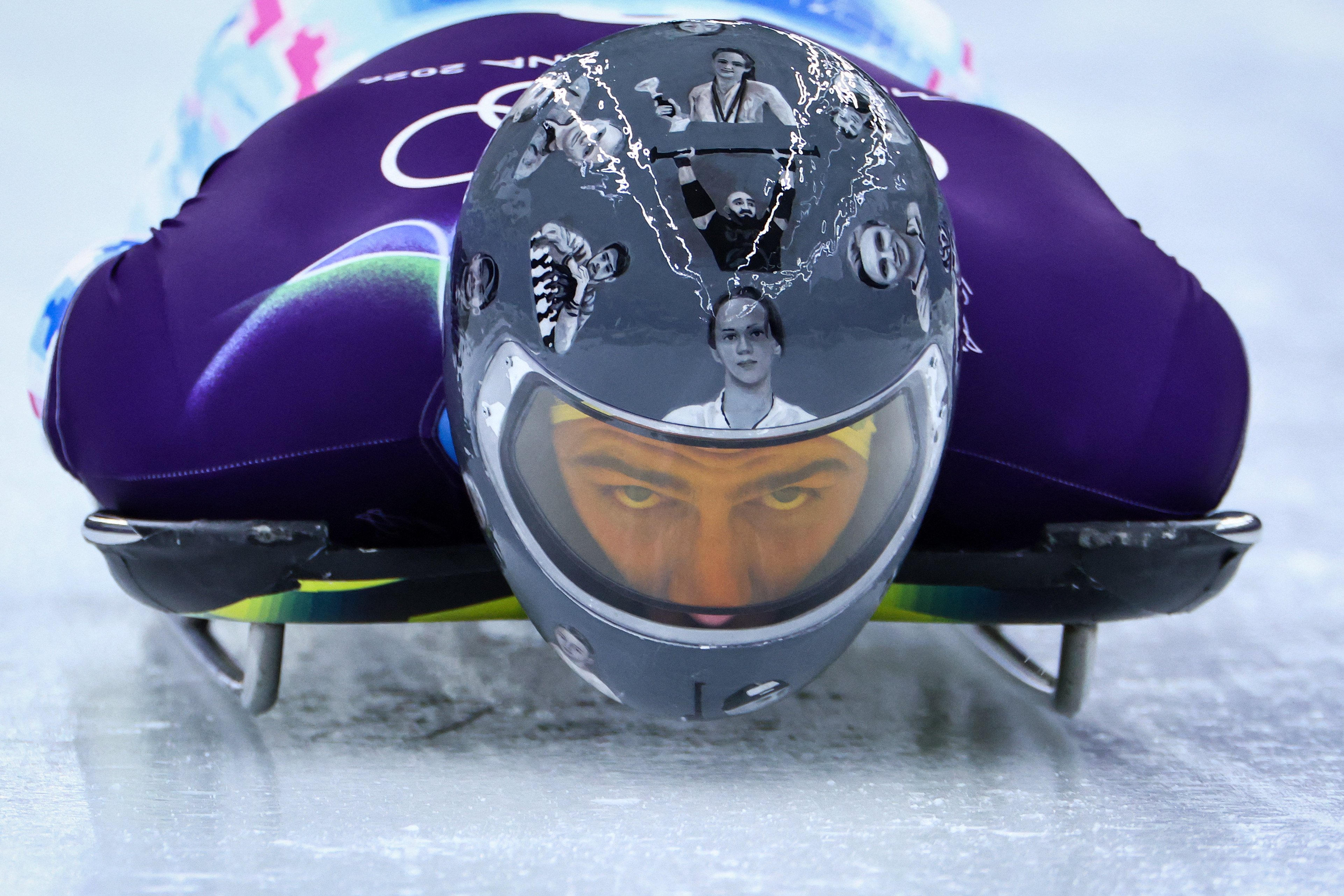
On Monday, February 9, Heraskevych appeared at a training session on the Olympic track wearing the special skeleton helmet. It featured images of Ukrainian athletes who had died following Russia’s invasion.
The designer of the “helmet of remembrance” is Ukrainian artist Iryna Prots, who has remained in Kyiv since the start of the full-scale invasion. Despite Russia’s attacks on the city and its energy grid, the lack of electricity and heating, she continues to create her paintings.
“The helmet is special,” Heraskevych explained. “It shows several athletes who have died over the past four years. Some of them were members of the Olympic movement, part of the Olympic family; others were simply children who came under Russian fire. These were people who had been closely connected to sport their entire lives, who supported us and were our friends.”
The Olympic helmet bears portraits of 24 people. Among them are track and field athlete Kateryna Troyan, figure skater Dmytro Sharpar, boxer Maksym Halinichev, cyclist Andriy Kutsenko, gymnast Karina Diachenko, hockey player Oleksii Lohinov, fencer Fedir Yepifanov, and kickboxer Karyna Bakhur.
Another member of Ukraine’s national team, biathlete Oleksandra Merkushyna, spoke about her colleague Yevhen Malyshev, who is also depicted on the helmet of remembrance: “It hits a very painful spot for me. Seeing all the athletes who have died is truly painful. On this helmet, there is a person who competed alongside me. We competed together at the Ukrainian Youth Championship. I remember this young man. And when he died, it was, of course, a tremendous loss for all of us.”
At the beginning of 2022, Heraskevych had already expressed his civic position when he appeared at a competition holding a sign reading “No war in Ukraine.” At that time, the IOC supported the Ukrainian skeleton athlete. This time was different.
IOC cites Rule 50
The incident adds tension to Ukraine’s preparations for Milano Cortina 2026, as the country’s Olympic delegation navigates both sporting competition and wartime realities.
On the evening of Monday, February 9, Heraskevych announced that he had been prohibited from using the helmet. The IOC did not grant permission for him to compete in it, citing Rule 50, which prohibits “any form of political, religious, or ethnic demonstrations.”
It also emerged that the IOC had previously banned a helmet worn by Ukrainian freestyle skier Kateryna Kotsar that read “Be brave like Ukrainians.” Heraskevych decided to take the matter to the end.
On Tuesday, February 10, the National Olympic Committee of Ukraine appealed to the IOC to allow the use of the helmet of remembrance, emphasizing that it complied with the organization’s rules. Ukrainian President Volodymyr Zelenskyy also responded, telling the IOC that the truth about the victims of the war caused by Russia “cannot be inconvenient, inappropriate, or called a 'political demonstration at a sporting event’”. The IOC left its decision in place but allowed athletes to wear black armbands at the start.
After the second day of training, Heraskevych held a press conference, stating that he still intended to compete in the helmet of remembrance despite the ban.
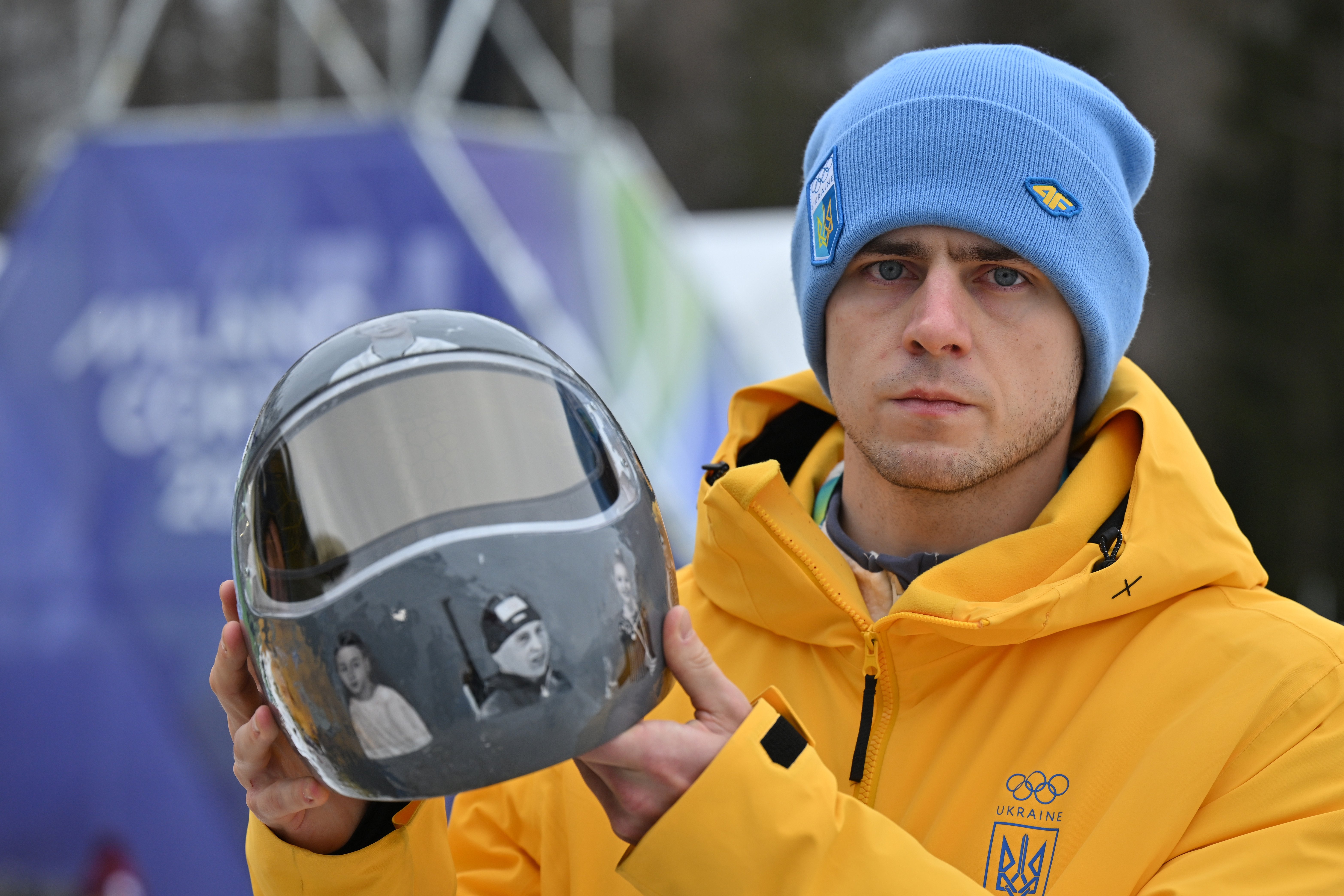
“I believe that black ribbons are simply not enough to honor all the Ukrainian athletes killed by Russia,” the Ukrainian skeleton athlete said. “There are 24 people on this helmet, but in total, more than 500 Ukrainian athletes have died as a result of Russian aggression. Thanks to their sacrifice, we are able to compete here, not just me, but the entire Ukrainian team.”
Heraskevych stressed that if not for the sacrifice of those who died, the war could have spread further into Europe, and their memory deserved to be present at the Olympics.
At the next training session, he wore the same helmet again. Other Ukrainian athletes showed their support. Luger Olena Smaha started her run in the singles event wearing a glove bearing the inscription “remembrance is not a violation.” Twenty-year-old alpine skier Dmytro Shepiuk expressed solidarity in the same way at the start.
Disqualification
On Thursday, February 12, half an hour before the skeleton competition began, the IOC officially announced Heraskevych’s disqualification. The decision was made by the jury of the International Bobsleigh and Skeleton Federation (IBSF) on the grounds that the helmet he intended to wear did not comply with the rules. Officials again cited Rule 50, which bans “any form of political, religious, or ethnic demonstrations.”
The controversy also comes as questions persist over the IOC’s decision to allow Russian and Belarusian athletes to compete under a neutral flag. Several athletes with links to Russian military structures or state-affiliated sports clubs have been identified, raising doubts among Ukrainian officials about the practical meaning of “neutrality.”
“Today, we paid the price for our dignity,” Heraskevych said. “I believe I did not break any rules; I stood up for Ukraine’s interests, not so much the country as the memory of our athletes. They deserve it. Unfortunately, the IOC thinks otherwise.”
Mykhailo Heraskevych, head of the All-Ukrainian Bobsleigh and Skeleton Federation and the athlete’s father, could not hold back tears after Vladyslav was barred from the 2026 Olympic Games.
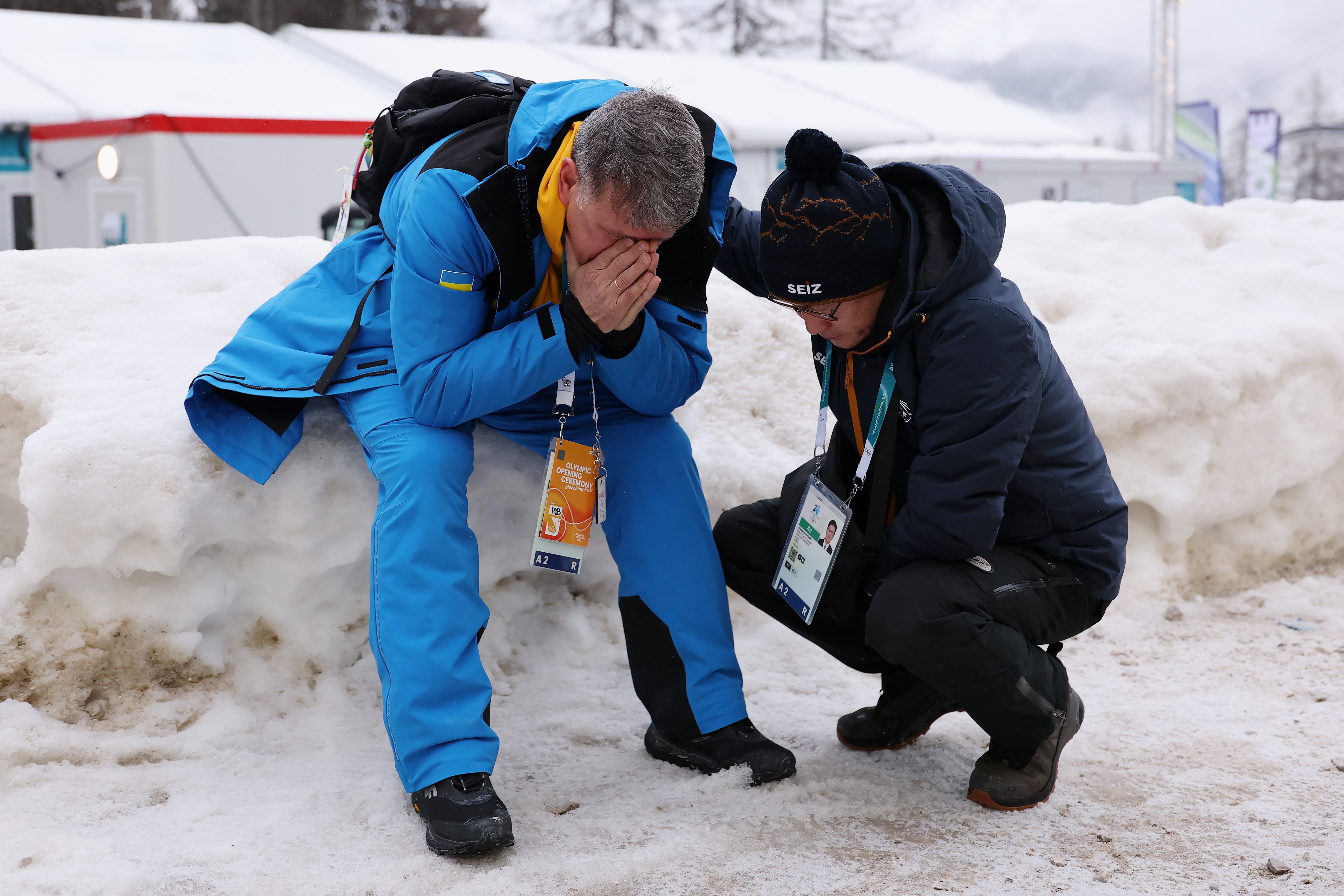
In response to a question about whether he regretted his actions, the athlete said: “Of course it’s unfortunate. I did not want this scandal. I wanted to be part of this sporting celebration, which was also taken away from me. I wanted to be part of these Olympic Games in a friendly atmosphere, alongside many athletes with whom I have good relations. We had excellent training sessions, excellent results. We clearly saw that we could fight for medals at these Olympic Games. But there are things more important than medals. I stood up for what I believe in.”
Ukraine plans to continue defending its position and intends to file a claim with the Court of Arbitration for Sport (CAS) over the case.
“The IOC did not disqualify Vladyslav—it disqualified Ukraine,” said Mykhailo Heraskevych, citing support from Ukraine’s president, parliament, sports ministry, national Olympic committee, and frontline soldiers. “This is the disqualification of democracy in favor of private interests, under the sensitive pressure of Russian sponsors.”
Latvia’s national team has also filed a protest, he said, while South Korea, Denmark, Italy, and others have expressed support.
UK Olympic skeleton champion Elizabeth Yarnold also commented on the disqualification: “It’s actually quite shocking. Lots of the sliding community have been in contact straight away. There is shock and confusion. Taking away his accreditation means he now needs to leave the Olympic Games. The reaction to something which was an act of memorial, incredibly emotionally important to him. I’m quite shocked. I think the IOC owe him an apology. I think this was the wrong decision. He was also a medal contender for the race. He’s a phenomenal athlete.”
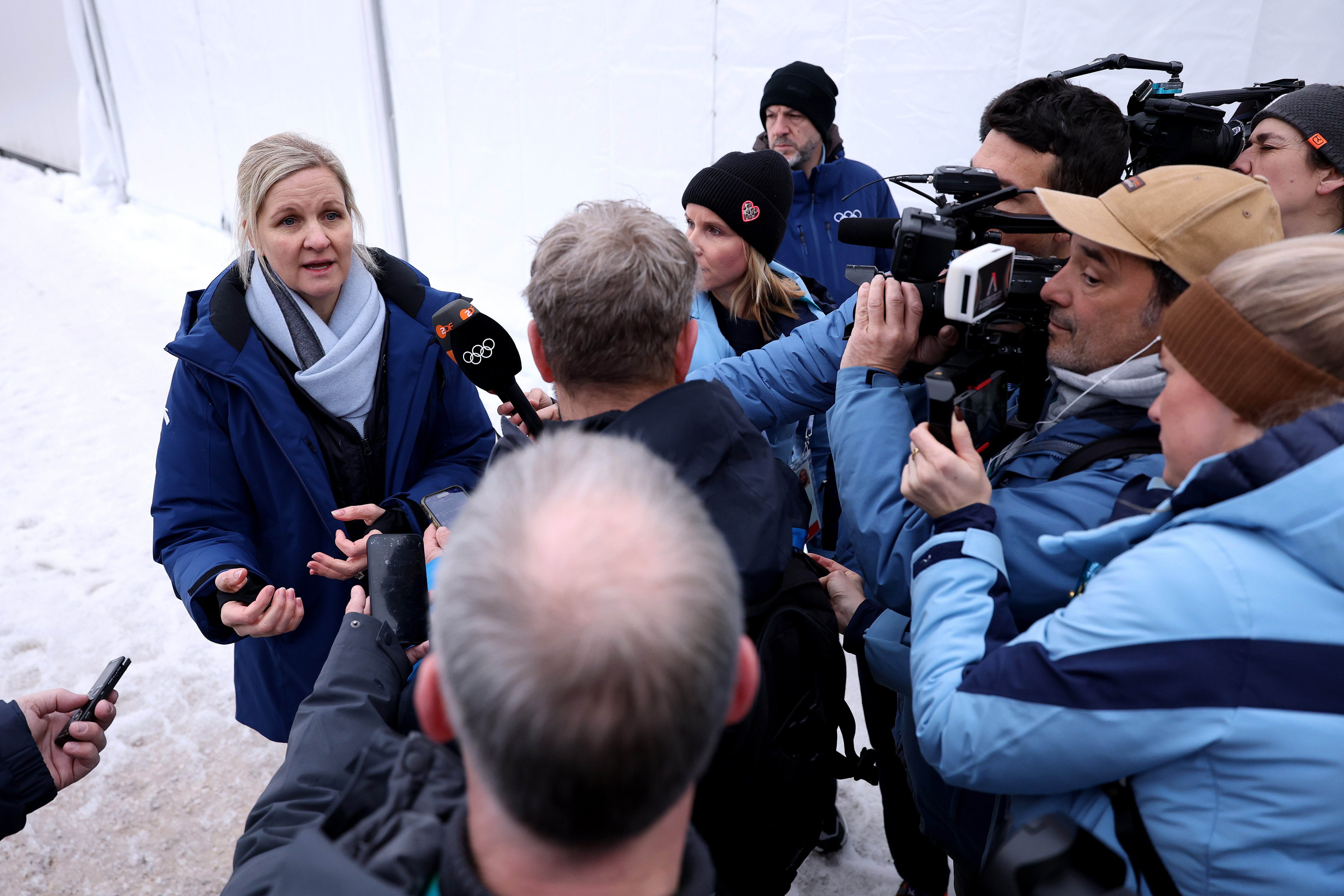
Later, IOC President Kirsty Coventry requested that the Chair of the IOC Disciplinary Commission review the decision to withdraw Vladyslav Heraskevych’s accreditation for the Milano Cortina 2026 Winter Games. The request was granted, allowing the Ukrainian skeleton athlete to remain at the Games, though he is not permitted to compete.
As for the future of the helmet of remembrance, Heraskevych noted that its journey does not end with the Olympic Games. He plans to auction it off and use the proceeds to support Ukraine.
“I think in this way it will help Ukraine much more and save many lives,” the Ukrainian athlete said.
Discuss this article:

-206008aed5f329e86c52788e3e423f23.jpg "Photo of Oleksandr Moiseienko")

-72b63a4e0c8c475ad81fe3eed3f63729.jpeg "Photo of Cyril Barabaltchouk")