- Category
- Anti-Fake
Russia’s World Domination Dreams in Fiction, from Comrade Hitler to “Russian America”
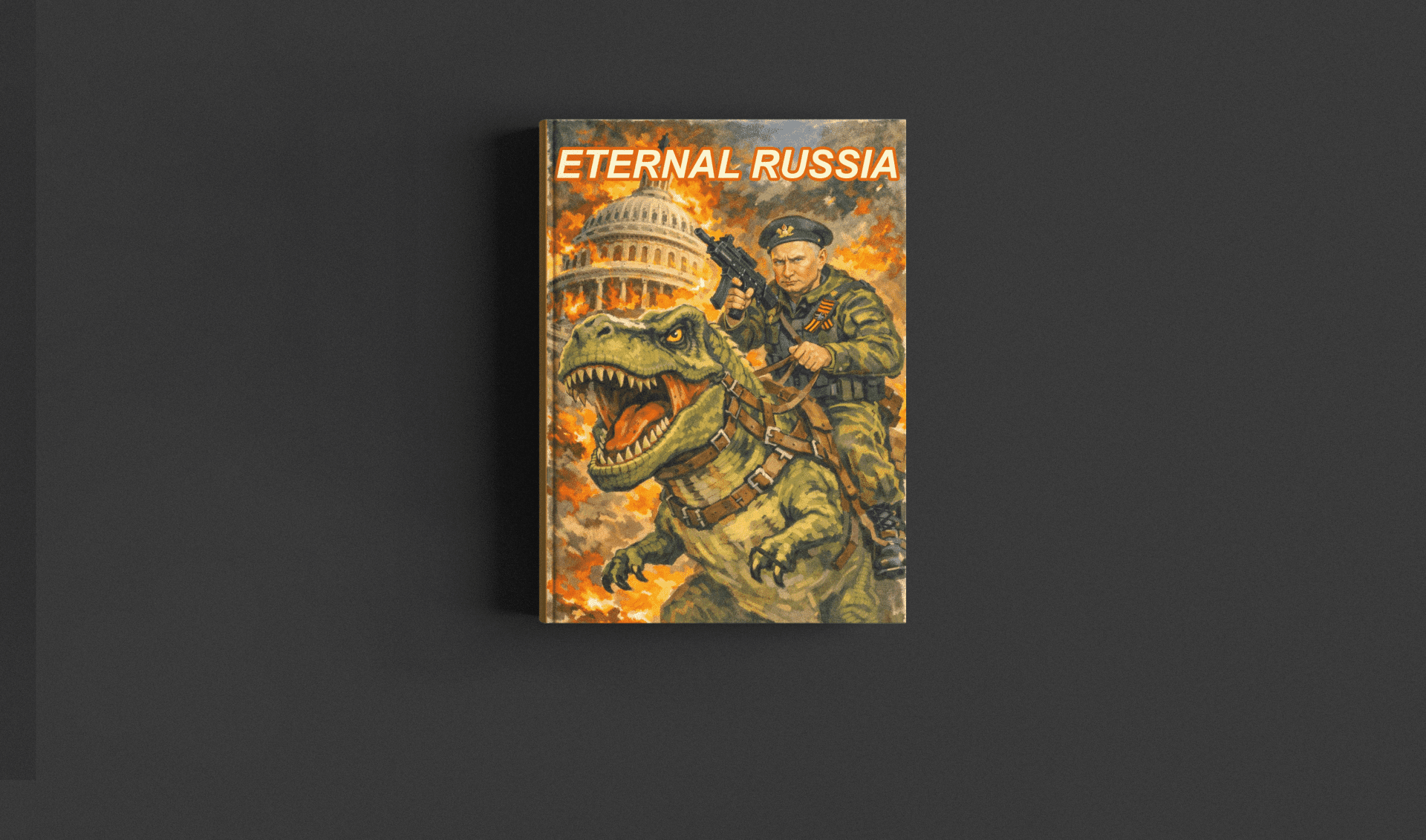
What do time travel, nuclear weapons, and world domination have in common? In Russia’s bestselling science fiction novels, they serve as tools for rewriting the past and advancing a vision of national strength.
 Prefer U24 Media on Google
- Authors


“Culture is the name for what people are interested in,” wrote American journalist and thinker Walter Lippmann. “Their thoughts, their models, the books they read and the speeches they hear, their table talk, gossip, controversies, historical sense and scientific training, the values they appreciate, the quality of life they admire.”
By that definition, popular fiction can offer insight into what a society values, or what it wishes were true.
One of the most widespread genres in contemporary Russian sci-fi is called popadantsy (literally, “those who end up somewhere”). One of the earliest notable works in such a time‑travel genre is A Connecticut Yankee in King Arthur’s Court by Mark Twain, in which an American engineer finds himself transported to the age of knights. This theme was also explored by such renowned authors as L. Sprague de Camp, Edgar Rice Burroughs, and Ray Bradbury. These stories follow modern characters who travel back in time and use present-day knowledge to change the course of history. In Russian fiction, that change benefits Russia. It becomes stronger, more advanced, and globally dominant.
Across dozens of titles, a pattern emerges, reflecting nostalgia for past power, with detailed fantasies of military victories, territorial expansion, and global influence.
In Russian literature, time-travel plots exploded in popularity over the last few decades. After the collapse of the Soviet Union, Russia found itself far from the global power many Russians had hoped it would become. These tales serve as wish-fulfillment, providing readers with a fantasy of restored imperial greatness—at least on paper.
Here are just a few examples.
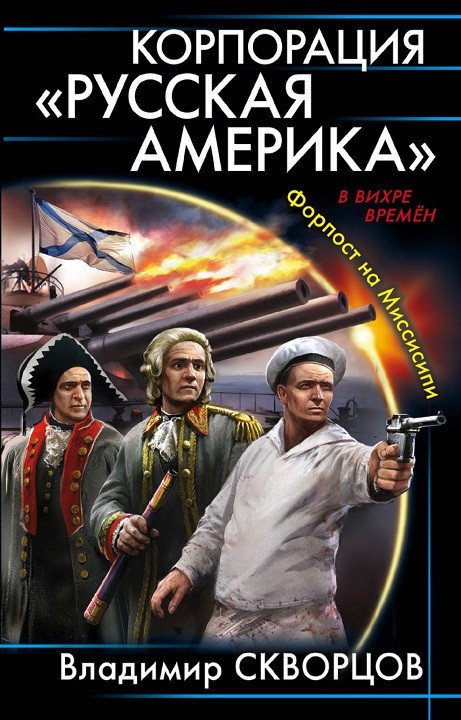
The “Russian America”
Empress Catherine II launched a round-the-world expedition in 1786. Through an astonishing twist of fate, the consciousness of a modern man is transferred into the body of her fleet commander. Armed with future knowledge, he creates a powerful enclave of advanced technology, allies with Napoleon, and crushes first Britain, then North America.
“Russia gained the lands north of the Great Lakes—meaning all of future Canada—the isthmus between North and South America, the Bosporus and Dardanelles, the Philippines, and the Arabian Peninsula,” the author matter-of-factly summarizes in the final chapter. But triumph is premature, he immediately warns. Even though “Russia has gained the key to world domination,” much work lies ahead, and it’s unlikely he means peaceful coexistence.
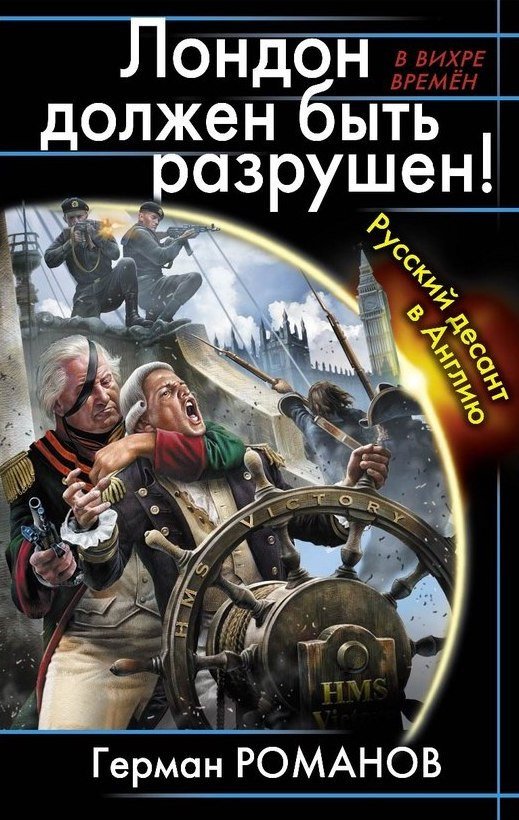
Russians destroying London
Russian authors have a particular fondness for conquering the US or Great Britain. Here’s just one such book. A 21st-century man ends up in the body of Emperor Peter III and, of course, demonstrates Russia’s greatness to the world.
“A global inferno rages from Russian Alaska to the Solovki Islands, from Fort Ross in California to Warsaw, from Persia to Quebec, from Jerusalem to India.”
First, the Russians conquer the British colony of India, and then they land on the British Isles themselves. In the final scene, the protagonist returns to his own time and studies a map of the new world order, now dominated by Russia:
“We really gave it to the Brits! Not only did we destroy the States, but we turned their parts against each other. Now that’s the kind of world I like—a multipolar setup is way better than a two-superpower standoff or, worse yet, American global dominance!”
Together with Hitler
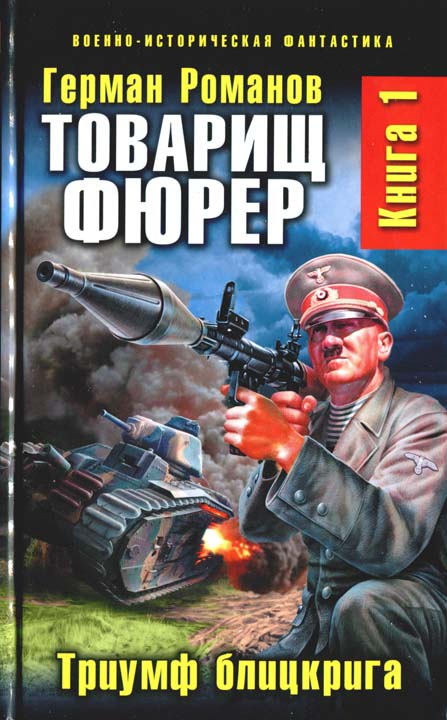
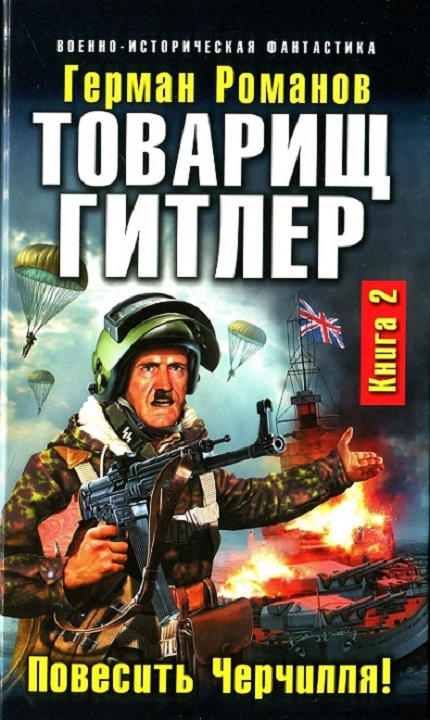
Russia’s current regime is often described as fascist, and its authors’ fantasies back that up. In the Comrade Führer duology, the protagonist ends up in Adolf Hitler’s body and changes the course of WWII in an astonishingly creative way. The Reich allies with Stalin, raising some provocative questions:
“Will they manage to hang Churchill for war crimes against humanity? Can Comrade Hitler and Comrade Stalin together defeat the United States and build an atomic bomb before the Americans?”
Dreams of a German-Russian alliance resurface in another novel. This time, not one man, but two entire brigades of Russian special forces are sent back to 1941. Thanks to them, the Reich exits the war and unites with the USSR into a rising Eurasian Union. But the sinister Atlantic Democratic Alliance starts World War III and uses nuclear weapons. Stalin retaliates with thermonuclear strikes on enemy fleets and Los Alamos. Naturally, he wins.
“Russian-German brotherhood against the star-spangled plague! The Soviet Army, in alliance with the Wehrmacht, storms the future and liberates the entire world! The time-travelers repaint 20th-century history in victorious red!”
Taking Washington
Medal for the city of Washington is the final book in a massive cycle about Russian “angels in uniform.” In this installment, a squadron of Russian warships en route to Syria in 2012 is suddenly scattered across different eras—one lands in 1877. The time travelers eagerly destroy the Ottoman Empire and create a new state called “South Russia.” From there, global conquest continues.
In one volume, Russians and South Russians crush Britain. Of course, they eventually take on the United States. The 21st-century visitors cross the Atlantic to join forces with the Confederates and punish the Union.
A tsar from the future
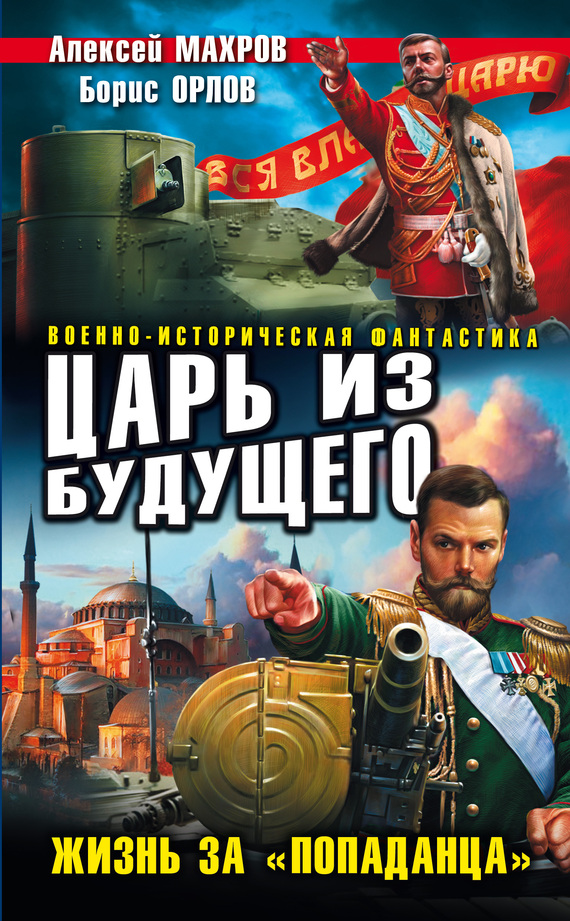
A time-traveler ends up in the body of Nicholas II, Russia’s last emperor. “Will the time-traveling Tsar fulfill the age-old dream of the Russian people?” the author asks in the blurb.
The dream in question is to “liberate Istanbul and sink the British fleet.” The book ends with the Ottoman Empire’s collapse and the Tsar drinking with his buddies.
“So, who’s next? Who else do we get to crush?” The conversation turns to after the fourth round of vodka. All the Russians agree on Austria. After all, Europeans and Americans are so terrified of Russia that they’re already “shitting their long johns.”
Russian tankers vs NATO
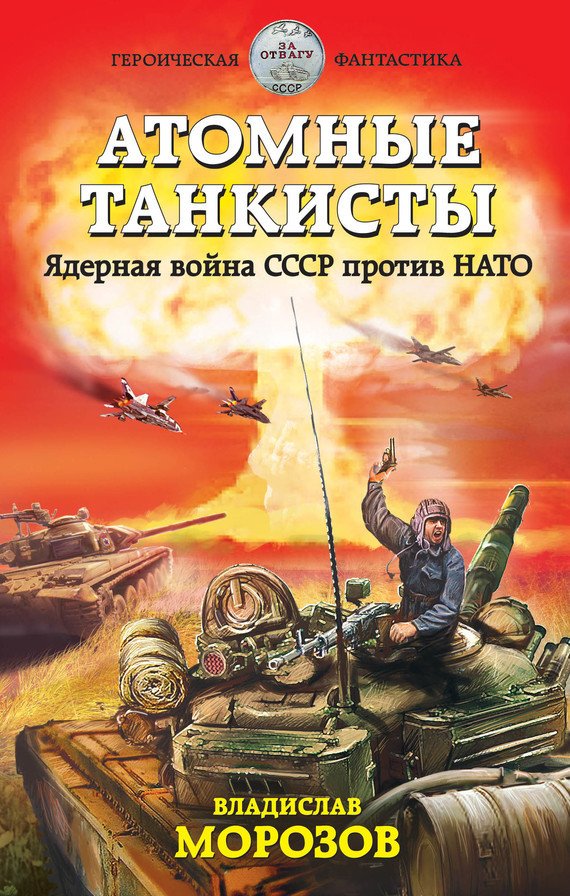
The author himself calls his work on Atomic tankers book “the most realistic and accurate novel that models, with documentary precision, a crushing Soviet tank assault on Western Europe.”
The plot: In 1982, after a political crisis in Poland, President Reagan used tactical nuclear weapons. The USSR responds in kind. From there, the story unfolds as: “Across scorched earth and through radioactive dust clouds, Soviet atomic tankers charge toward the English Channel.”
None of this is official doctrine. It’s pulp, with fast plots, cheap covers, sometimes endless sequels. But it’s also consistent, as the enemy is always the same. The solution is force, and the ending is triumph. Time travel here is just the mechanism. The real fantasy is simple: that history went wrong somewhere and that Russia, if given another chance, would set it “right.”
Discuss this article:



-c439b7bd9030ecf9d5a4287dc361ba31.jpg "Photo of Katherina Popilnichenko")

-206008aed5f329e86c52788e3e423f23.jpg "Photo of Oleksandr Moiseienko")