- Category
- Perspectives
Putin’s Plan to Save the Empire Is Destroying It—A Harvard Historian on Russia’s Fate
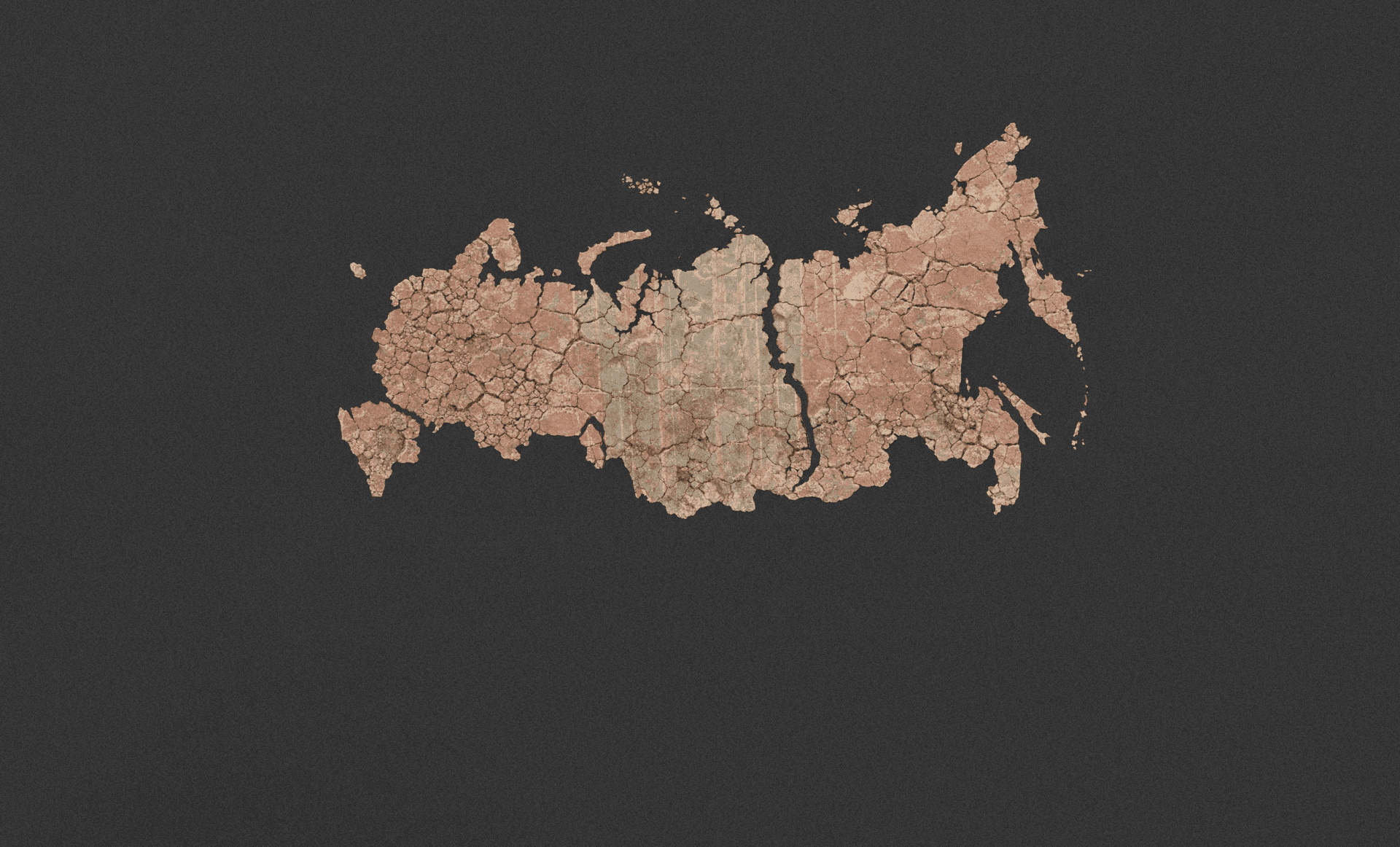
What happens when an empire tries to outrun history? Historian Serhii Plokhy explains how Russia’s attempt to preserve its imperial reach through war follows a familiar and fatal pattern.
 Prefer U24 Media on Google
- Authors


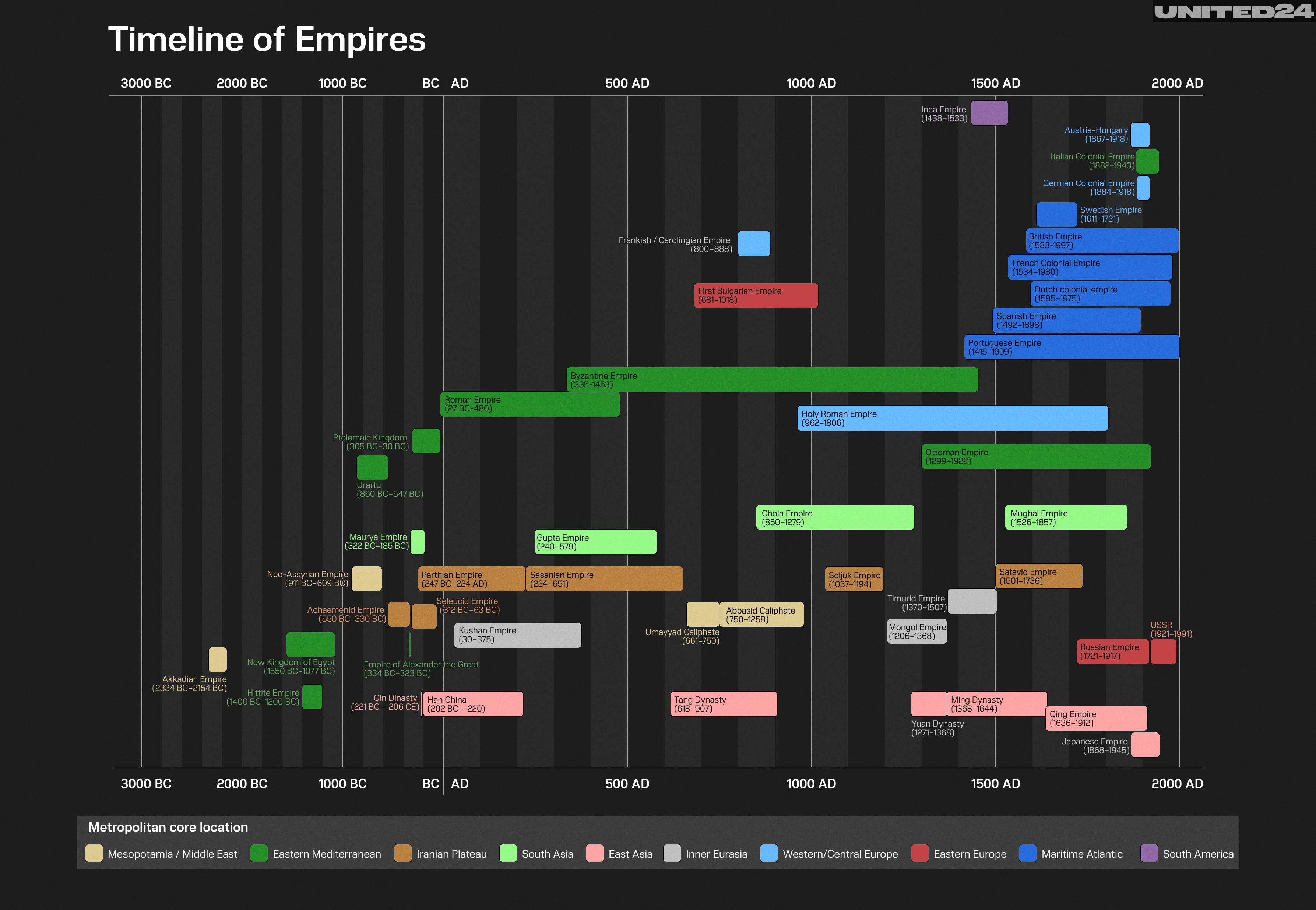
Imperial collapse rarely arrives as a single moment. It unfolds through pressure, miscalculation, and conflict, even if over decades or centuries. The world has seen many empires, and all of them have eventually collapsed, including the Russian Empire in its earlier forms. In this interview, Plokhy, a leading American-Ukrainian specialist in Eastern European history and Harvard professor, explains which imperial traits Russia still retains and why, sooner or later, it too will fall.

Can we generalize the common features empires share when they are already in decline, on the eve of collapse?
The fall of each empire is a specific event. But often it occurs during wars or as a result of them. In the 20th century, there were three major waves: following World War I, following World War II, and following the Cold War.
At the same time, empires can also collapse under relatively peaceful conditions—for example, the Portuguese Empire, which essentially succumbed to economic exhaustion. Still, war amplifies pressure on all other factors: structural, political, and economic.
What imperial traits does contemporary Russia have?
Just look at the map. This is not a nation-state, and not a political nation-state; political nations do not reach such scales. It is clearly the territory of an empire. Second, it is multiethnic. Third, governance is centralized, with minimal self-government.
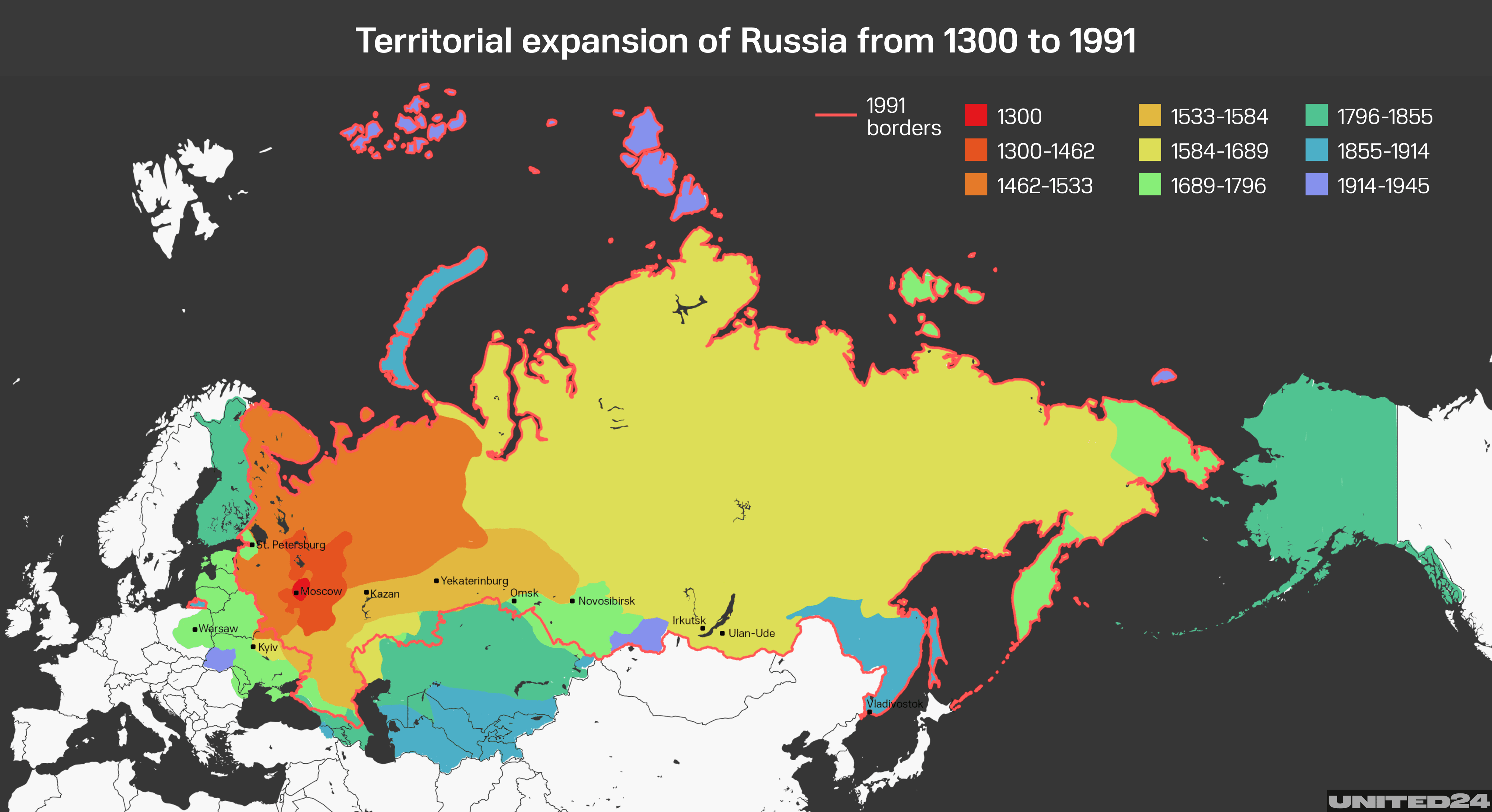
Another feature is geopolitical challenges. Russia must contend with Japan, the United States, Ukraine, Europe, Iran, and the Arctic issue. This is a list of problems that only empires face, regardless of their self-designation.
If we consider all these aspects—political, poor governance, independence movements, war—what can be said right now about Russia in this context?
Russia is currently trying to stop the process of its imperial decline. This is not a one-act play; it is a multifaceted process that can span not just decades, but centuries.
The British Empire collapsed after World War II, but in fact, the process began with the declaration of American independence in the 18th century. Similarly, one could say that the Yugoslav wars of the 1990s or events in the Middle East are part of the reconfiguration of the former Ottoman Empire.
Today, Russia is attempting either to freeze or alter the process of imperial disintegration. It is attempting to hold on to its borders and expand them at the expense of Ukrainians and Belarusians, who, in Moscow’s ideal vision, are to be absorbed into Russians, increasing the Slavic element—the Slavic core—of the empire. Russia’s overarching goal is to preserve the empire and reformat it into a nation-state. Xi Jinping is attempting the same task in China—by placing Uyghurs in concentration camps or pressuring Tibet.
Putin wants to preserve imperial territory while turning it into not a multiethnic but a monoethnic state.
Moscow is trying to work with the national factor—strengthening the dominant nation and Russifying everyone who is not Russian. Lenin and Stalin tried to do this differently: they created an empire of different nations within the USSR. And although this later changed somewhat, the collapse of the Soviet Union showed that combining empire with the ethno-national factor leads to the collapse of that empire.
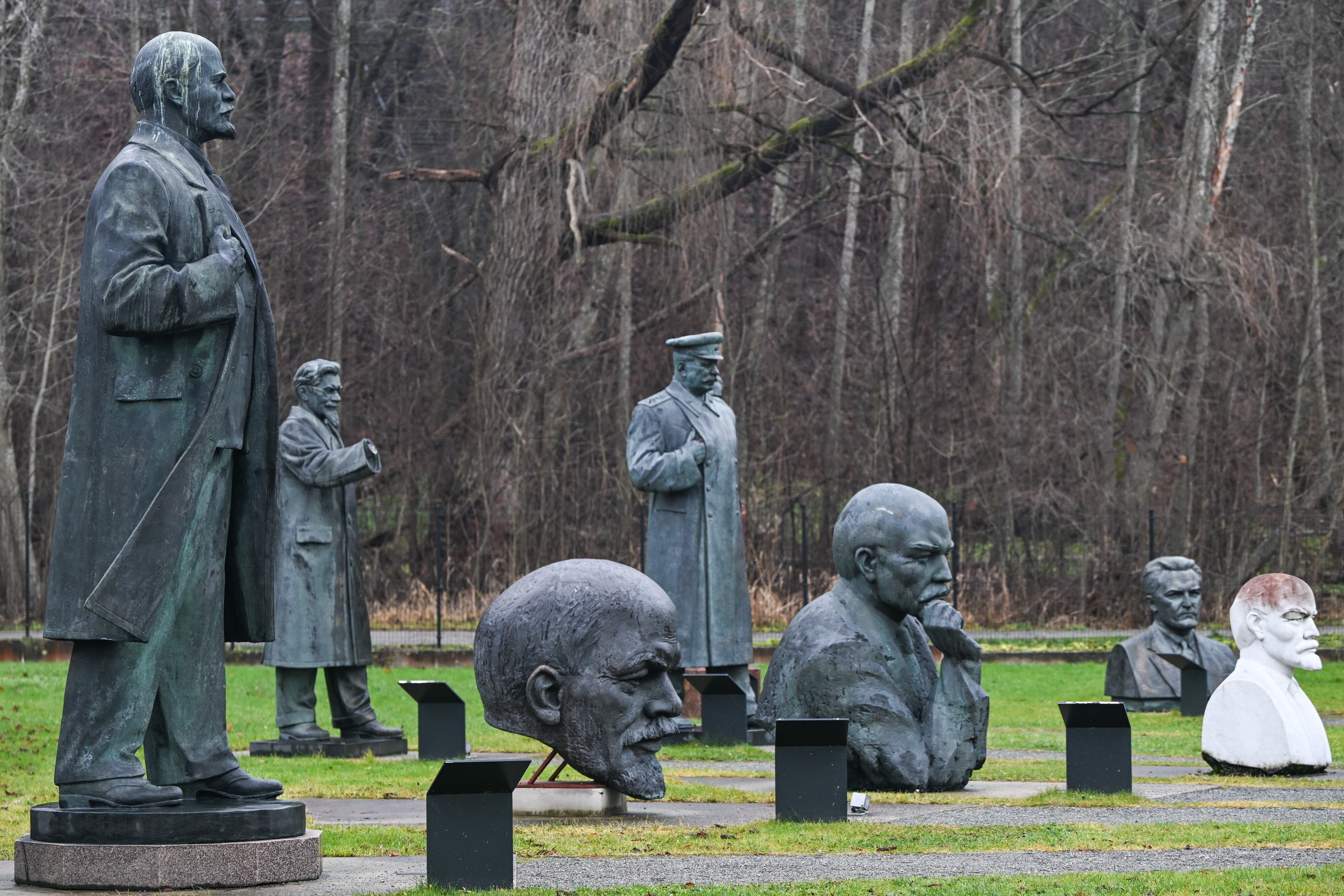
We do have the example of the USSR, which for much of its existence tried to create a supranational “Soviet person.” But in the end, it failed, and when it collapsed, ethnic states emerged. Isn’t that a lesson for Putin?
The Bolsheviks made concessions to national minorities—Ukrainians, Belarusians, Georgians, Uzbeks, and others. There was even a purely formal but codified right to secede from the USSR. Russia has nothing like that. National autonomies or republics have been equalized in status with ordinary regions. And there is no legal way to leave the Russian Federation. We can see how Russia acts in the occupied Ukrainian territories: by 2030, they want to turn all Ukrainians there into Russians.
What needs to happen for ethnic groups currently within Russia to begin thinking about independence?
Two things are required. First, a crisis within the empire—usually as a result of war or economic exhaustion. Essentially, the center loses the ability to intimidate the periphery or buy it off by granting certain rights or privileges.
Second, the region that wants to pursue a different path must have some alternative vision, articulated in a national historical narrative, culture, and so on. This has always been the case with Ukraine. No matter how hard Russia tried to destroy the Ukrainian language, literature, and intelligentsia, there was always culture and leadership.
If we view Russia as an empire, where is its weakest point today?
Today, Russia is in a situation where it is systematically depleting its reserves—military, economic, political, and others. If these processes continue and accelerate, that is precisely how Russia could be defeated.
Putin’s modern Russia was born out of the wars that followed the collapse of the Soviet Union—for example, the Chechen war—and out of the economic crisis of 1999. These two birth traumas—economic crisis and war—continue to accompany Putin’s regime.
The country is also becoming increasingly reliant on China. Russia is reorienting itself from West to East. This is highly problematic for Russian elites who, since the late 17th century—thanks in part to graduates of Ukraine’s Kyiv-Mohyla Academy—have oriented themselves toward the West. Reorienting quickly and smoothly toward Beijing is extremely difficult.
We bring you stories from the ground. Your support keeps our team in the field.
Can empires transform into modern nation-states? Or does it always happen through war, conflict, and violence?
Great Britain, having shed its empire, now functions largely as a nation-state. The same can be said of France and Italy.
But France had the war in Algeria—imperial collapse through conflict.
Empires do not collapse entirely without violence, but the level of violence can vary. The British lost theirs with far less bloodshed than the French, who had Algeria, Vietnam, and Indochina. In Africa, major wars took place on the territory of the Portuguese Empire, but they began essentially when the Portuguese had already left. In other words, it almost never happened without conflict, but often the conflict was minimized for the metropole itself.
Unfortunately, Russia’s story is different. This empire is receding into the past through major wars, through attempts to reconquer lands once appropriated, with Ukraine at the epicenter of this process.
You mentioned “reconquering lands.” How capable is this concept of uniting people and consolidating a state in the modern world?
It is one way to play on imperial nostalgia, to show the former metropole as a victim. In wartime, the government gains the ability to effectively usurp power. This is one of the tools of governance and mobilization around the center of power. It also gives the population a sense of purpose.
Recall the period in China known as the “century of humiliation.” Xi legitimizes his usurpation of power with promises of “great rejuvenation.” If you listen to Putin, he constantly complains that Russia has been humiliated and must be lifted from its knees. Living standards decline, but people are distracted by talk of overcoming humiliation, standing up from their knees, restoring greatness, and “reunifying” allegedly historical Russian lands.
Between World War I and World War II, Hitler spoke in similar terms about uniting Germany from Vienna to Danzig. We all hope that the defeat of Nazi Germany was not an exception, but a pattern—showing where such tools of political mobilization lead.
When considering historical parallels, can Russia’s war in Ukraine be compared to other events?
Most countries have an Independence Day on their calendar. That is, most states in the world are not former empires but former colonies. And a significant number of them achieved independence through war—anti-imperial, anti-colonial wars. The United States is a prime example.
The war in Ukraine is unprecedented in scale since World War II. Yet it clearly fits into the global context of wars for independence. This conflict was simply postponed, which is why the events are so large-scale.
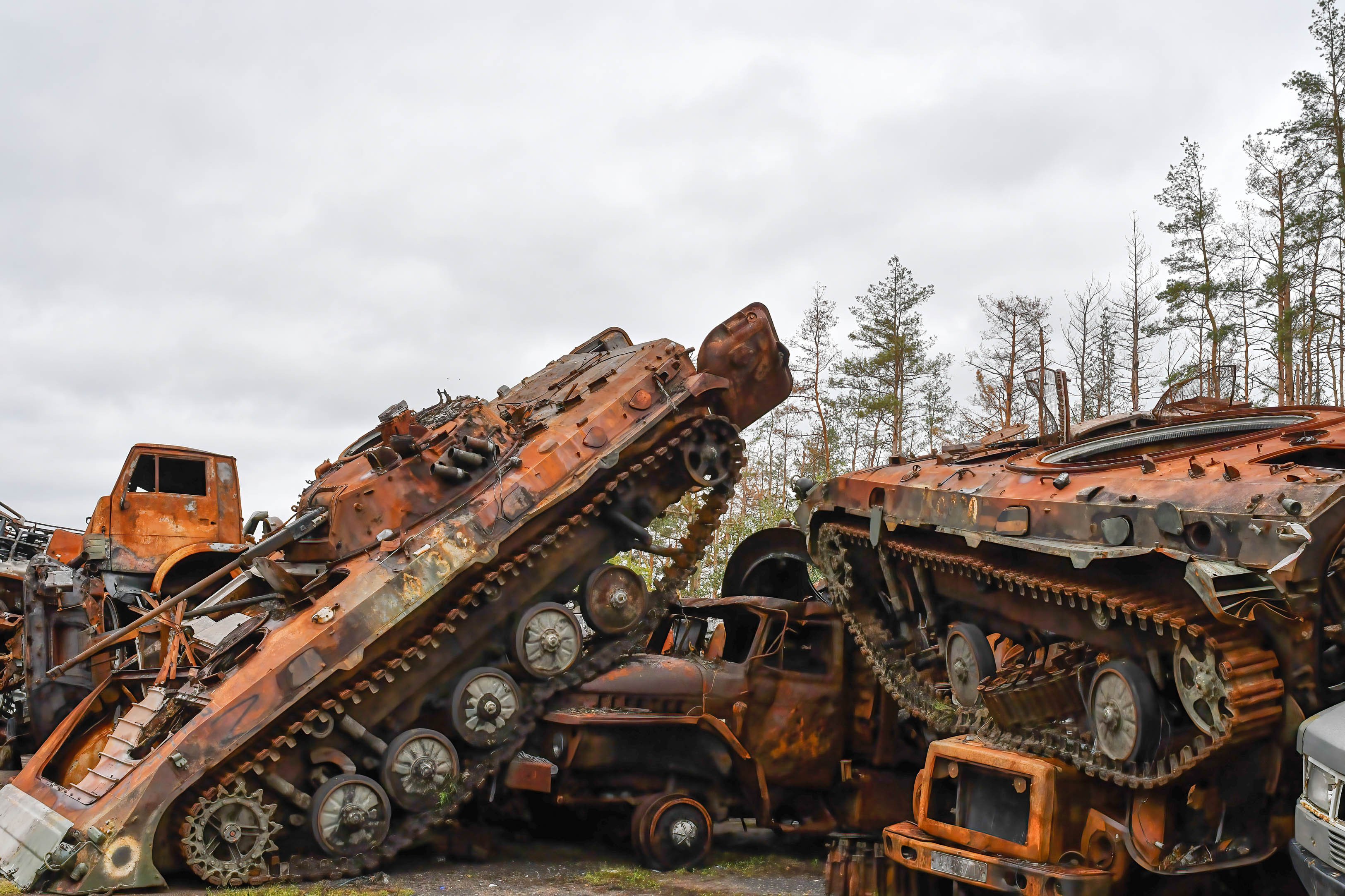
Is it fair to say that all empires eventually collapse, and why?
All empires collapse, and all states are reformatted. This is the reality of human history. Societies are always looking for better ways to organize themselves. Empires have brought immense suffering, but they also have had some positive effects—for example, today’s global communication was partly made possible by them. However, we are now at a moment in history when empires have reached their limits.
Are there grounds to believe that Ukraine’s resistance could become a catalyst for Russia’s collapse?
Absolutely. In 2022, we saw protests against military mobilization and unrest in national regions; in 2023, we saw Prigozhin’s mutiny in Russia. At the same time, Ukraine had successes on the battlefield. That was the moment when Russia found itself in its weakest position. Putin then resorted to nuclear blackmail—and it worked: allies reduced their support for Ukraine.
The war continues. The West has become far less consolidated. The situation at the front is difficult for Ukraine. But at the same time, Russia is becoming increasingly economically exhausted.
In sum, much depends on how this war ends and in what condition Russia emerges afterward. After all, the British Empire collapsed after winning World War II—because it failed to recover from an extremely exhausting conflict at the expense of its colonies.
To prevent such an outcome, Putin is pursuing the “nationalization” of the former empire—turning all peoples he can conquer into Russians. Whether he succeeds or not depends on Ukraine and its allies.
Discuss this article:
-ee9506acb4a74005a41b4b58a1fc4910.webp)




-886b3bf9b784dd9e80ce2881d3289ad8.png "How Ukraine Took the Fight Into Russia: General Syrskyi Reconstructs War’s Boldest Operation—Kursk")

-c42261175cd1ec4a358bec039722d44f.jpg "I Took Pokrovsk for Granted—Now the Ukrainian City Behind \"Carol of the Bells\" Is Fighting for Its Life")
-46f6afa2f66d31ff3df8ea1a8f5524ec.jpg "Photo of Jess Daly")