- Category
- Opinion
Ukraine’s Arms Export: New Rules, Risks, and Opportunities
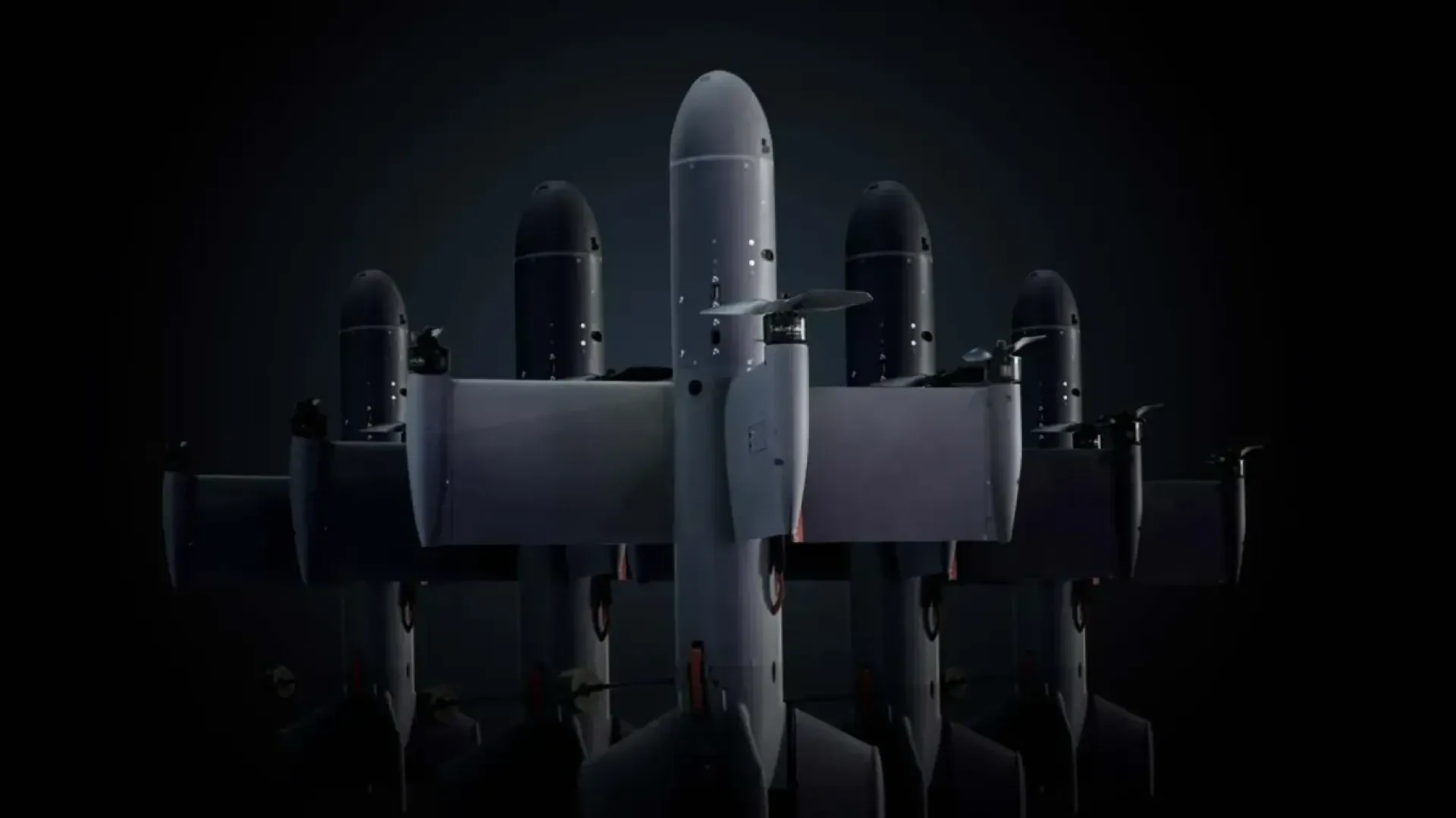
As war fuels innovation, Ukraine is turning battlefield breakthroughs into exportable firepower, pushing to become a major player in the global arms trade while walking a tightrope of transparency, oversight, and national security.
 Prefer U24 Media on Google
- Authors




Ukraine is moving—slowly but steadily—toward establishing a regulated arms export market. Just days ago, the Cabinet of Ministers approved a streamlined procedure for obtaining export permits for military goods. This special framework is designed to help exporters operate within the boundaries of intergovernmental and interagency agreements signed by Ukraine.
Last month, President Volodymyr Zelenskyy announced the opening of Ukraine’s first dedicated arms export office in Berlin. A similar office is set to open in Denmark—a logical step given the country’s proactive role in implementing the so-called “Danish model.” Both Denmark and Germany aim to become platforms for Ukrainian arms exports. Interest is also growing in Norway, the UK, Lithuania, Finland, and Poland, particularly in Ukraine’s unmanned systems. France and the United States are also paying attention to Ukrainian defense technologies—as are countries in Africa and the Middle East.
Why arms export matters now
Russia’s full-scale war has served as a catalyst for rapid development in Ukraine’s defense-industrial complex. The sector’s production capacity is projected to grow 35-fold—from $1 billion in 2022 to $35 billion by 2025. This surge means that domestic manufacturing capabilities now far exceed the volume of state defense procurement. Ukraine has the facilities and the production lines—it can earn revenue—but the government lacks the budget to fully utilize this capacity. To address this imbalance, a presidential directive will now permit the controlled export of certain categories of weapons.
Three primary models have been considered for implementing arms exports:
Individual approval of each export project.
Authorization to export only a portion of production (e.g., 50% of contracts), with a portion of the proceeds earmarked for Ukrainian Armed Forces procurement.
A 20% export duty to fund a special procurement budget for the Ukrainian Armed Forces.
Every stage of international transfers of military goods must be tightly regulated—from contract negotiations to obtaining final approvals for cross-border shipments. The legal foundation is Law No. 549-IV “On State Control over International Transfers of Military and Dual-Use Commodities,” as well as numerous government resolutions.
Though there’s no legal ban on arms exports under martial law, an informal moratorium was in place for a long time at the permit approval stage—a complex and time-consuming process.
Under standard procedure, manufacturers must undergo a review by Ukraine’s State Service for Export Control, which, in turn, requires approval from the Defense Ministry and the Interagency Commission on Defense-Industrial Complex under the National Security and Defense Council (NSDC). This commission includes representatives from key government bodies: NSDC, the Ministries of Foreign Affairs, Defense, Economy, Environment and Agriculture, Justice, Internal Affairs, the President’s Office, and the Parliamentary Committee on National Security Defense and Intelligence.
We bring you stories from the ground. Your support keeps our team in the field.
Enter Defense City
A new legal framework—Defense City—launched this year following the enactment of Law No. 4577-IX and Cabinet Resolution No. 1745. In 2026, the drone manufacturer “Vampir” became the first official resident of Defense City.
At the beginning of January, the Cabinet passed Resolution No. 6 (mentioned earlier), which simplifies the permit review process. While standard procedures can take up to 90 days, the timeline for Defense City residents is reduced to 15 days.
One of the most important innovations introduced by Defense City is that the most complex step—the export control review—is conducted centrally rather than for each individual sample or company, during the preparation phase of an international agreement. During this process, the State Export Control Service assesses national security implications, Ukraine’s international obligations, and end-user guarantees.
Priority is currently being given to the export of Ukrainian unmanned systems—air, ground, and maritime. The first real contracts are expected in the second half of 2026, as international partners require time for testing and certification.
Export destinations will be limited to countries approved by the NSDC, with priority given to nations that have signed security agreements with Ukraine. As of November 2025, there were 27 such countries, plus a separate agreement with the EU.
The key security safeguard: in the event of an urgent need by the Ukrainian Armed Forces for specific weapons, any existing export permit may be suspended or revoked immediately.
What needs to be done for effective and responsible export?
In order for controlled arms exports to become a high-quality and efficient tool, several measures should be adopted, the Independent Anti-Corruption Commission (NAKO) says:
1. Prioritize the needs of the Ukrainian Armed Forces in international agreements
Introduce a “national security clause” in all international and intergovernmental agreements to ensure state defense orders (or direct contracts with Ukraine’s defense forces) take precedence over export obligations during heightened security threats.
Legally define the declaration of mobilization or urgent defense needs as a force majeure event that releases manufacturers from penalties or fines under foreign contracts.
Establish state guarantees: if an export contract is halted for national security reasons, the Ukrainian government should commit to purchasing the produced goods at the contracted price.
2. Establish a transparent mechanism for including weapons in international agreements
Develop and adopt a list of criteria (such as technological readiness, combat performance, NATO compliance, and degree of local production) for the Interagency Commission to decide which systems to promote internationally.
Create a secure export module within the Defense City registry, allowing domestic manufacturers to submit real-time applications to have their products included in military-technical cooperation plans.
Assign the NSDC—based on Commission recommendations—the role of final arbiter to coordinate exporters and national security actors, minimizing internal competition in foreign markets.
3. Restore arms export reporting (State Service for Export Control model).
Transparency with international partners and the public is key to building trust, but it must be balanced:
Use UNROCA (UN Register of Conventional Arms) categories. Instead of listing specific models or modifications, report by category—e.g., “armored vehicles,” “artillery systems,” “UAVs”—with a delay in publication.
Omit recipient country details from public reports to safeguard partners and logistics while retaining information about the types and volumes of transferred arms.
More than just government action
Launching a controlled arms export system is a strategic step. It enables Ukraine to transform surplus defense-industrial capacity into a steady stream of budget revenue. But now is the time to embed critical safeguards that protect both the state and the manufacturers.
This task requires more than government action—it demands active engagement from civil society. Organizations like NAKO, which have worked to curb corruption in the defense sector since 2017, must provide analytical and institutional support to the reform process: identifying corruption risks, offering practical solutions, setting transparency standards, and pushing for their adoption in legal frameworks.
Only through the combination of robust state policy, responsible business practices, and independent civil oversight can Ukraine build a trustworthy and effective arms export system—one that serves both its people and its international partners.
Discuss this article:
-4a56a6b482ec132402c16ef6fcabf9a2.png)


-f3430f0449615e9897dff835086ac204.jpg "Ukraine Broke With a Soviet-Era Military System and Rebuilt It Around the Soldier")
-e126c16a85d580738cf2d57e760b80a3.jpeg "Photo of Vladyslav Greziev")