- Category
- War in Ukraine
Mapping Ukraine’s Drone Campaign to Destroy Russia’s Oil Empire
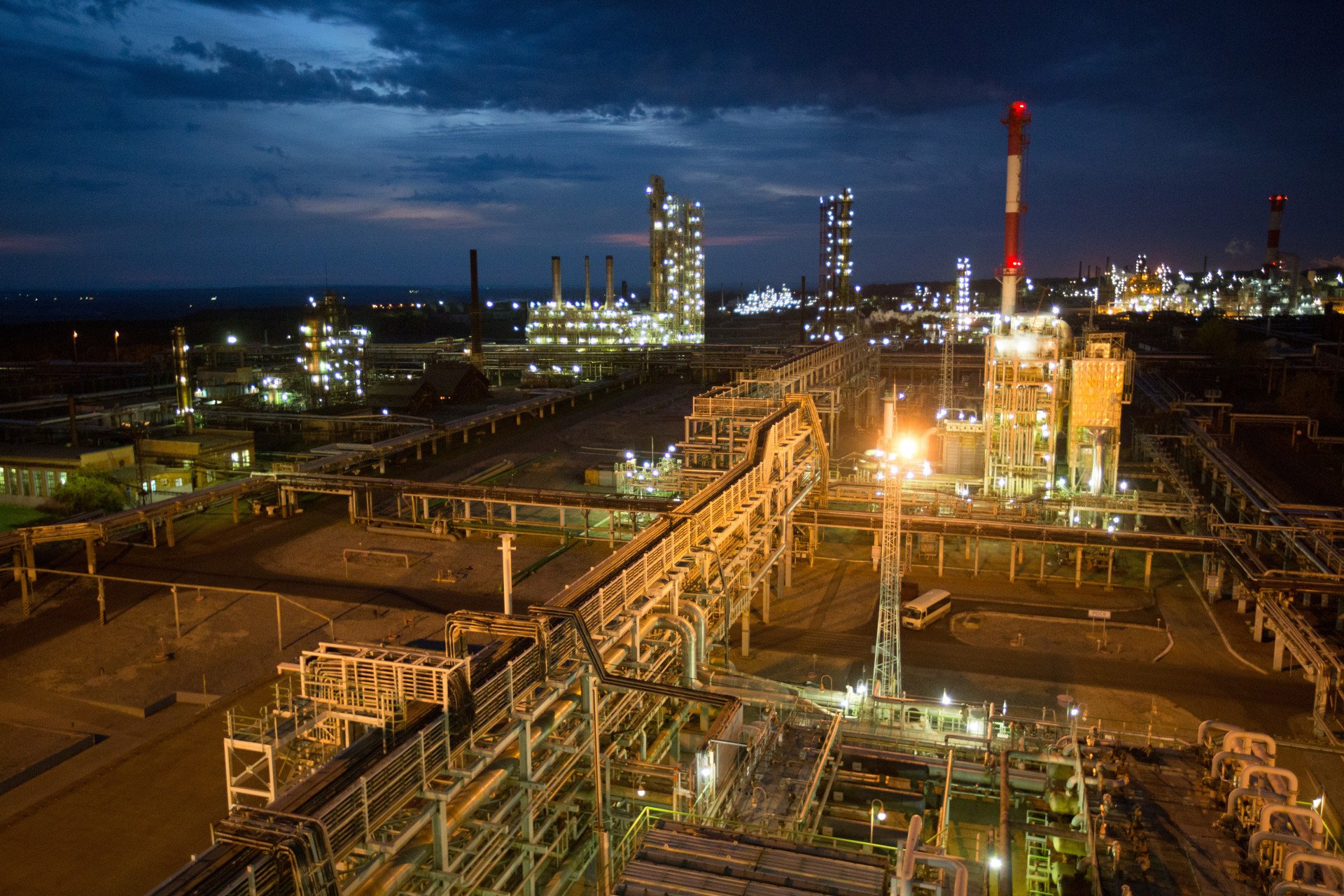
Few could have imagined Ukraine striking deep inside Russian territory, let alone targeting strategic energy facilities nearly 2,000 kilometers from its borders, at the beginning of Moscow’s full-scale invasion in 2022. Now, almost four years later, such strikes have become routine, occurring almost daily without drawing surprise.
 Prefer U24 Media on Google
- Authors

-f88628fa403b11af0b72ec7b062ce954.jpeg "Photo of Amira Barkhush")
What pushed Ukraine to adopt this long-range drone strategy, and why does it continue to rely on it? And how does it affect Russia?
Mapping the Ukrainian drone strikes
Ukraine has been striking the Russian military infrastructure since 2022, including gunpowder, lead, and tank engine production plants. At the beginning of 2024, Ukraine started to gradually intensify its drone attacks on Russia’s oil energy facilities, in particular, refineries and depots. Since January, 21 of Russia’s 38 major refineries have been struck, marking a 48% increase in successful attacks compared to all of 2024, the BBC reported.
UNITED24 Media mapped out the Russian oil refineries that were confirmed to have been targeted one or multiple times by the Ukrainian military, according to open-source data:
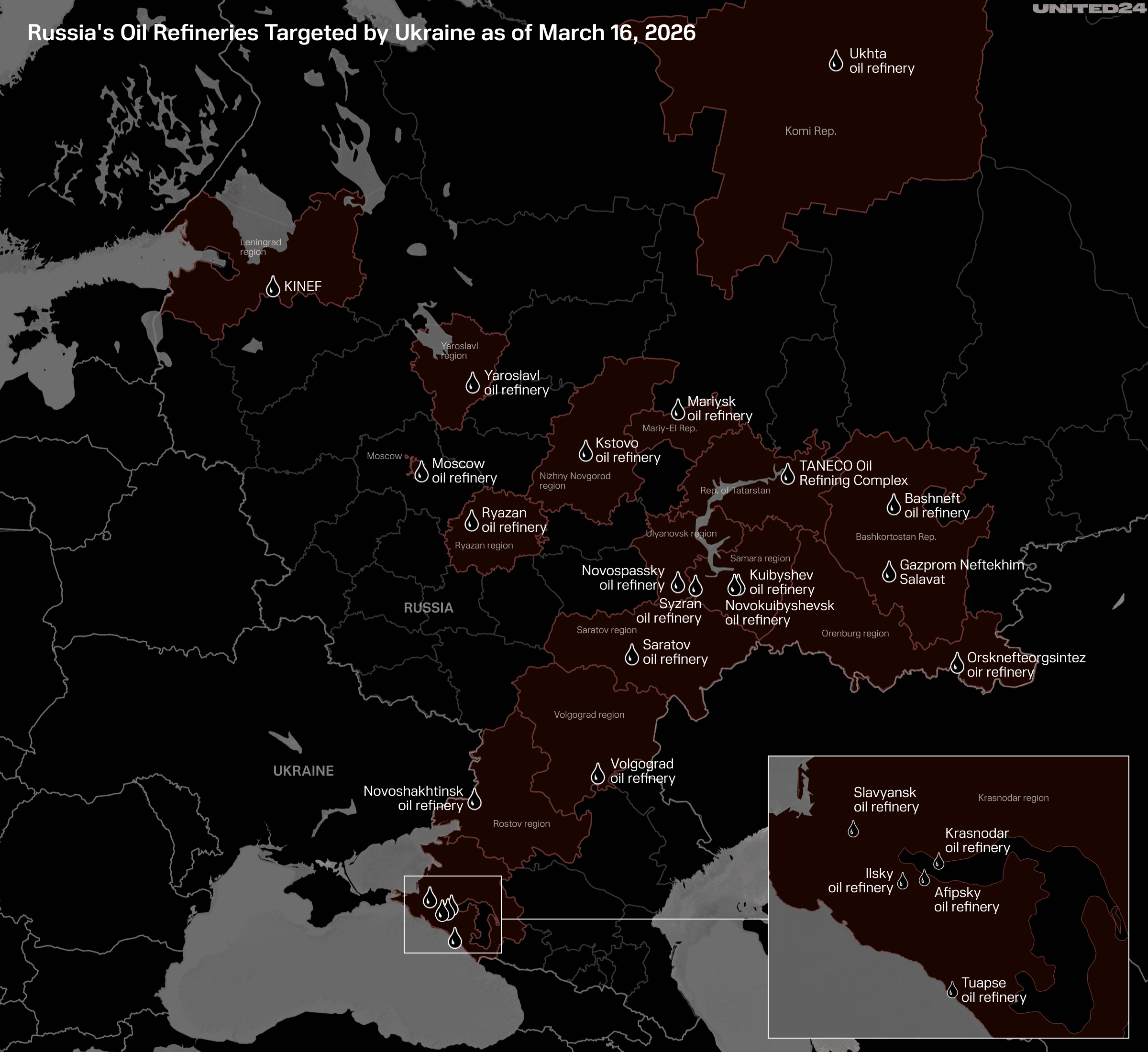
The Kirishinefteorgsintez oil refinery (KINEF), Leningrad region.
Ryazan oil refinery, Ryazan region.
The Kstovo oil refinery, Nizhny Novgorod region.
The Taneko oil refinery, Republic of Tatarstan.
Volgograd oil refinery, Volgograd region.
Tuapse oil refinery, Krasnodar region.
Moscow oil refinery, Moscow.
Gazprom Neftekhim Salavat petrochemical plant, Bashkortostan Republic.
Bashneft oil refinery, Bashkortostan Republic.
Novokuibyshevsk oil refinery, Samara region.
Afipsky oil refinery, Krasnodar krai.
Kuibyshev oil refinery, Samara region.
Saratov oil refinery, Saratov region.
Syzran oil refinery, Samara region.
Ilsky oil refinery, Krasnodar krai.
Orsknefteorgsintez oil refinery, Orenburg region.
Slavyansk oil refinery, Krasnodar krai.
Novoshakhtinsk oil refinery, Rostov region.
Ukhta oil refinery, Komi Republic.
Krasnodar oil refinery, Krasnodar krai.
Mariysk oil refinery, Mari El Republic.
Novospassky oil Refinery, Ulyanovsk region.
Yaroslavl refinery, Yaroslavl region.
Volgograd oil refinery, Volgograd region.
Tuapse oil refinery, Krasnodar krai.
Impact on Russia’s economy and military
Ukraine’s objective of targeting Russian oil infrastructure appears to serve military and economic purposes, in addition to putting psychological pressure on Moscow.
The President of Ukraine, Volodymyr Zelenskyy, stated during a briefing with journalists on October 28, that strikes on this sector are a priority, as it directly finances Russia’s aggression: “This is their war money — from oil refining. That’s why we’re targeting it.”
Ukrainian drone strikes on Russia’s energy sector have reportedly disabled nearly 40% of the country’s oil refining capacity, plunging Moscow into its worst fuel crisis in decades. The sustained wave of drone attacks has crippled Russia’s refining industry, forcing unprecedented shutdowns and sparking a nationwide fuel shortage, The Moscow Times reported on September 30, citing RBC. By late September, around 38% of Russia’s refining capacity—equivalent to about 338,000 tons of crude oil per day—was offline, data from the analytics firm Seala shows.
-ed051fb1853bcb98ed81f53fa31bd834.png)
Russia’s seaborne fuel exports fell by 17.1% in September compared to August, dropping to 7.58 million tons, Reuters reported, citing collected data. According to market participants, unplanned shutdowns at several key facilities led to a decrease in refined fuel exports and a corresponding increase in crude oil exports.
The outlet notes that in September, total exports of petroleum products through Baltic ports, Primorsk, Vysotsk, St. Petersburg, and Ust-Luga, fell by 15.4%, reaching 4.36 million tons, according to market data. Meanwhile, fuel exports through Black Sea and Azov ports dropped even more sharply, by 23.2% compared to August, down to 2.52 million tons.
In September, gasoline exports from Belarus to Russia by rail increased fourfold compared to the previous month, Reuters reported, citing its own sources, which linked this to fuel shortages in Russia caused by Ukrainian strikes on refineries and other energy infrastructure. According to market data, Belarusian gasoline rail shipments to Russia totaled 49,000 tons, while diesel fuel exports reached 33,000 tons.
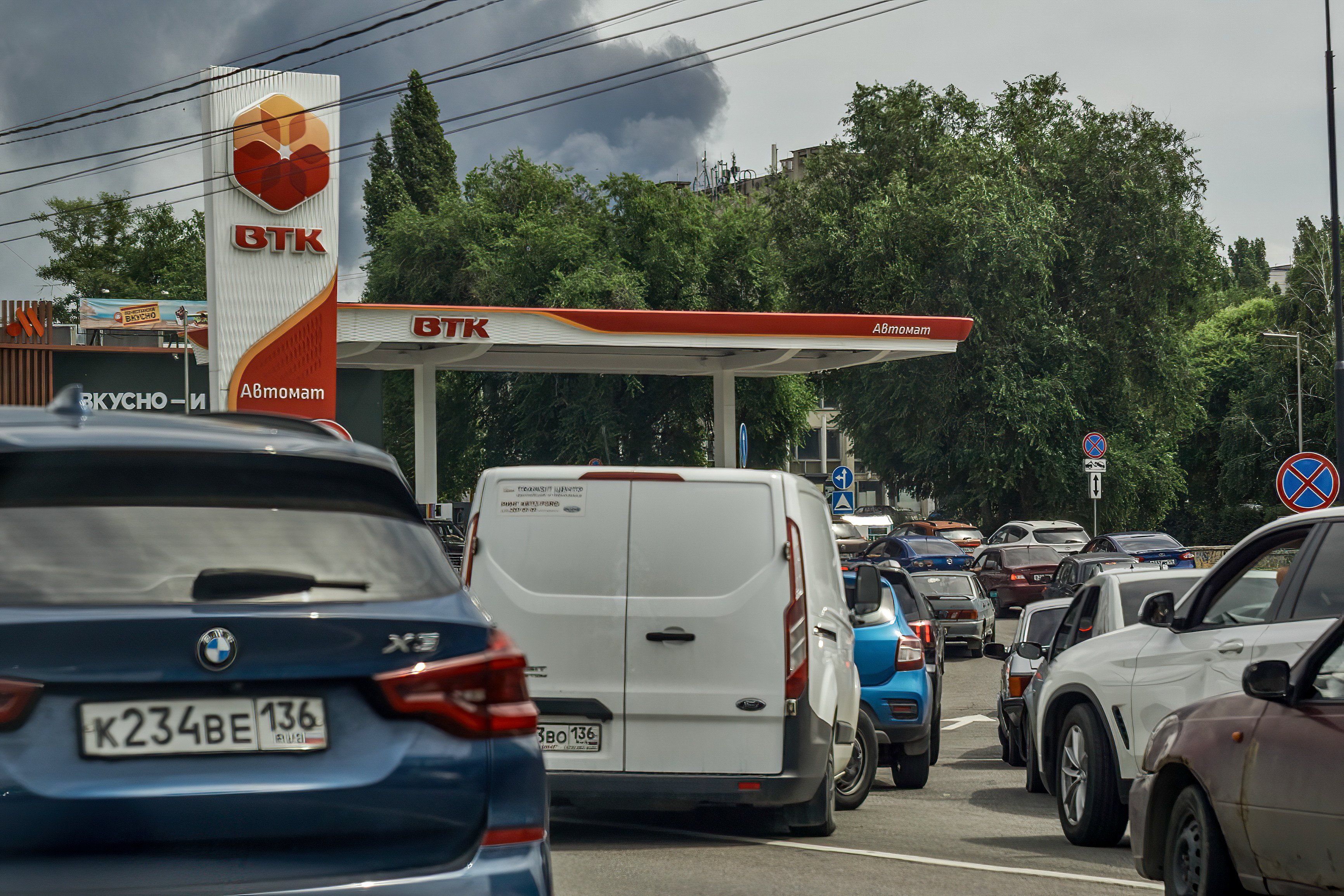
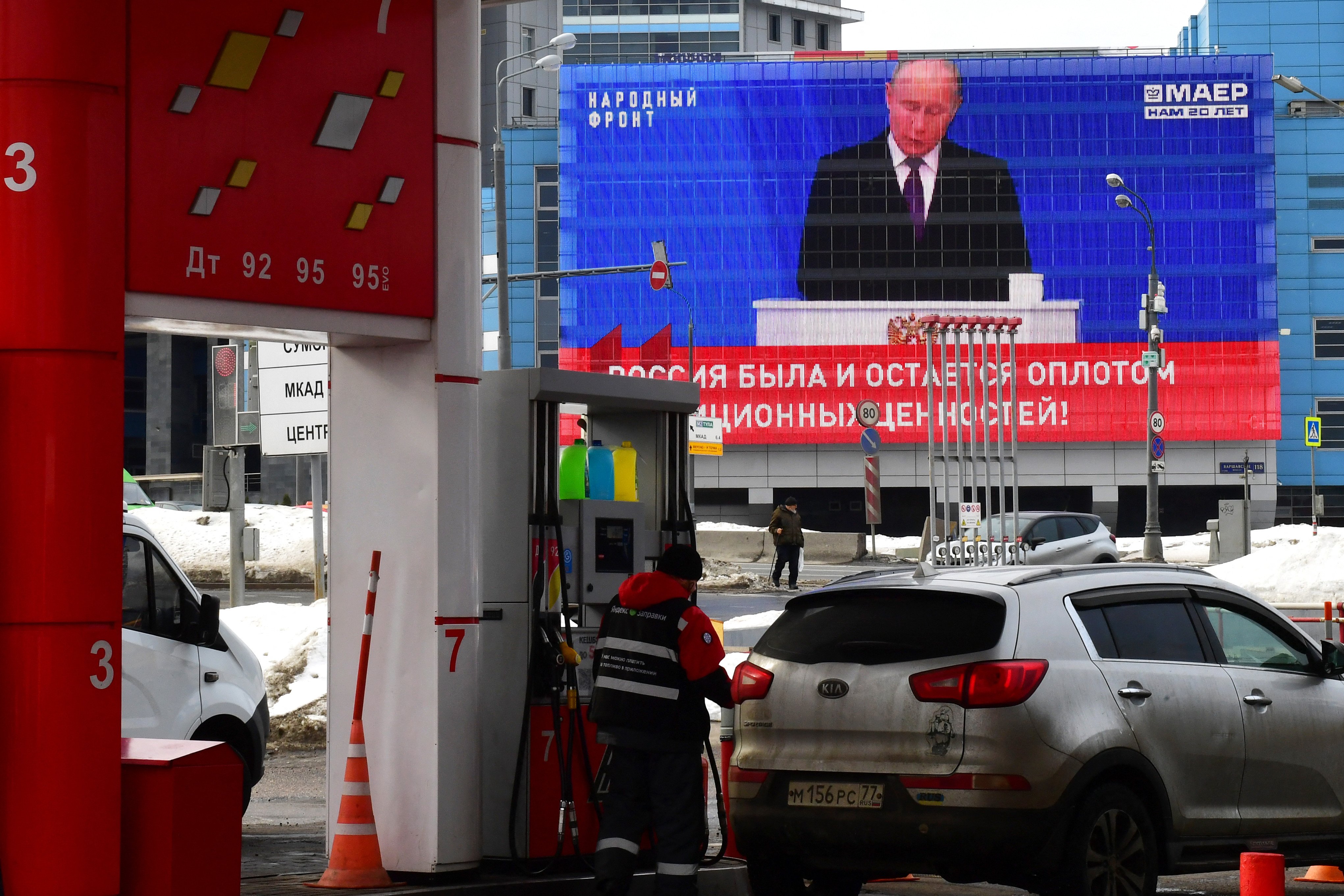
74% of Russian drivers have “noticed” gasoline price increases since August 2025, and 90% expect further increases, according to a poll from online finance platform WEBBANKIR.
Survey results indicate that 56% of drivers consider the price increase significant, while 18.9% have experienced issues with empty gas stations. Over 40% of drivers have changed their driving habits, and 38% have started buying cheaper fuel in an effort to save money.
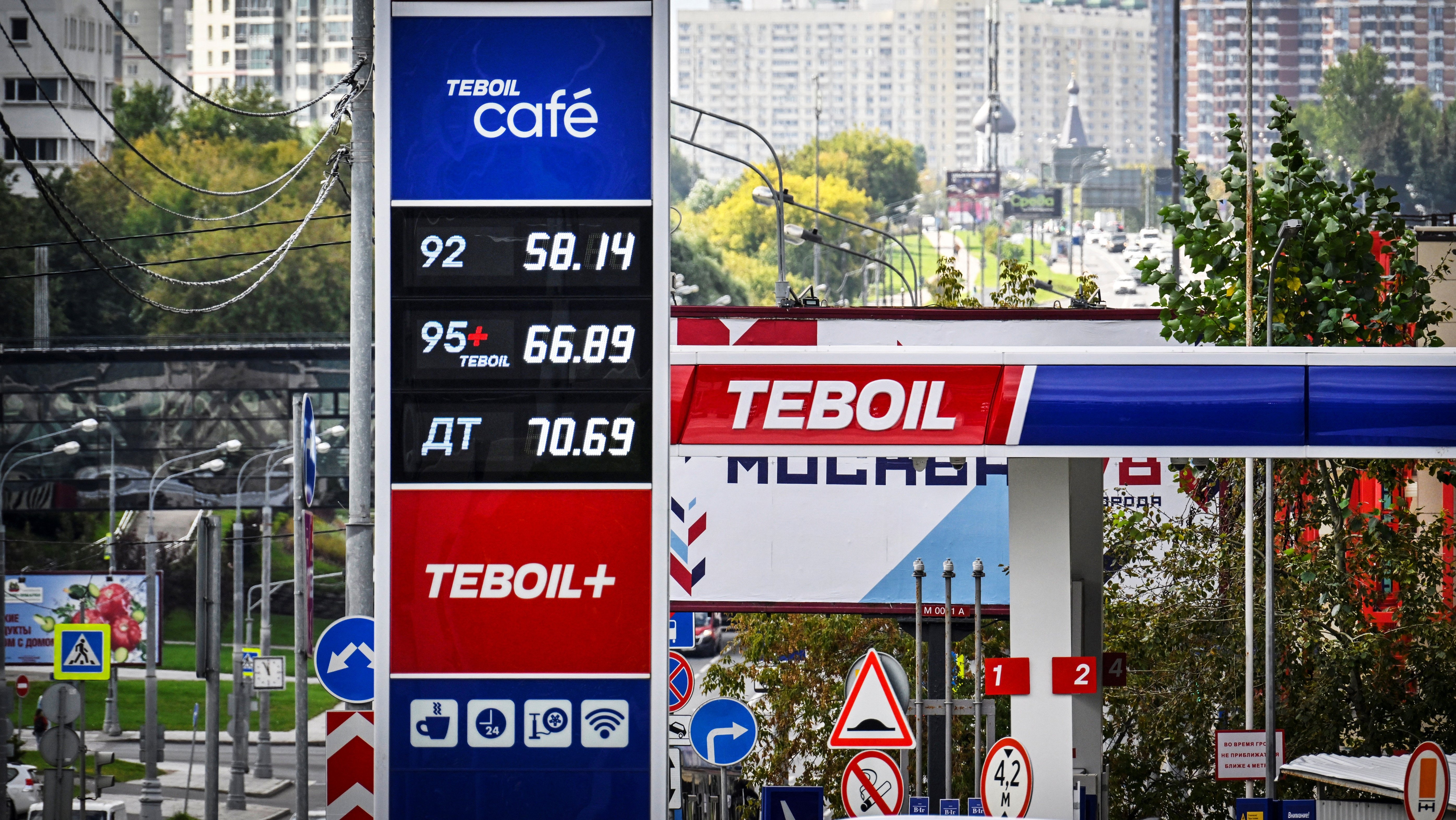
Gasoline prices in Russia have risen by 10% since the beginning of the year — the sharpest increase in the past 15 years. At the same time, Yurii Valko, the head of the Russian Union of Car Services, said that some gas stations have begun selling low-quality fuel.
President Volodymyr Zelenskyy addressed Russian fuel shortages, citing Ukrainian intelligence estimates that Moscow is already facing a gasoline shortfall of “up to around 20%” of needs.
“Estimates vary from 13 to 20%—but it is confirmed that the shortage is already significant,” Zelenskyy said.
Ukraine’s stance
Ukraine’s strikes on Russian oil refineries have dented Moscow’s revenues more than economic sanctions, the head of Ukraine’s Main Intelligence Directorate (HUR), Kyrylo Budanov, stated during the Kyiv International Economic Forum on October 16, the UNN news agency reported.
The financial impact of the strikes is “a mathematical truth,” directly inflicting far greater damage on Russia’s profits than any sanctions to date, he said.
“This is also an unpleasant truth, because it leads us to the following conclusion: it is clearly not enough,” Budanov said. “The sanctions are not enough. If it continues as it is, it will not have such an impact as to change Russia’s worldview. But in conjunction with what we are doing, it will yield results and is already yielding them.”
Ukraine’s Armed Forces carry out the strikes on Russian oil refineries primarily using domestically produced weapons, he said, allowing Kyiv to employ these systems in ways that align with its own strategic vision.
The success of strikes on Russian oil refineries shows Kyiv has significantly increased domestic drone production and can now deploy them in greater numbers, Zelenskyy told reporters on September 20.
“We have drones, and we know how to produce them,” Zelenskyy said. “Everything depends on how many we can use in a day. Judging by the results of recent operations, it’s clear that we’ve started using more drones.
He noted that it’s not yet enough to meet the targets set for the Ukrainian manufacturers and the Defense Ministry.
“Once our drone numbers match those of the Russians, they’ll feel it,” said Zelenskyy. “In fuel shortages, in queues at gas stations. We’re already seeing more and more of that. More of them are reaching their targets.”
Western response
The United States has reportedly provided intelligence assistance that helps Ukraine plan long-range strikes on Russian energy infrastructure, including refineries.
“The Ukrainian people are acting in self-defense, and we consider that Russia is the aggressor,” said the then–French Foreign Minister Stéphane Séjourné in April 2024, commenting on Ukraine’s strikes. “In such circumstances, there is hardly anything else to say. I think you understood me.”
Finnish President Alexander Stubb described Ukraine’s strikes on Russian oil refineries as acceptable, saying that Russia “understands only this language,” during a joint press conference with Zelenskyy on April 3, 2024.
“The only language is the language of power,” he said. “It is available in Russia. Whoever is responsible for these attacks in Russia, the question remains the same: is it a question of the oil price, or do we have difficulties with it? War entails collateral damage, and whoever attacks [Russian refineries] knows what they are doing; they do it skillfully, without endangering civilians, and this needs to be kept in mind.”
Ukraine’s strikes on Russian oil refineries are impacting not only the battlefield and Moscow’s ability to sustain its war but also the situation inside Russia itself: fuel shortages, economic strain, and growing public frustration.
“Without striking targets inside Russia, the war would be purely Ukrainian, and people in Russia wouldn’t feel what’s happening,” Volodymyr Havrylov, a retired major general and former deputy defense minister of Ukraine.
Discuss this article:


-c439b7bd9030ecf9d5a4287dc361ba31.jpg "Photo of Katherina Popilnichenko")

-72b63a4e0c8c475ad81fe3eed3f63729.jpeg "Photo of Cyril Barabaltchouk")