- Category
- Latest news
110-Truck “Humanitarian” Convoy From Central Asia Heads To Iran—But What’s Inside?
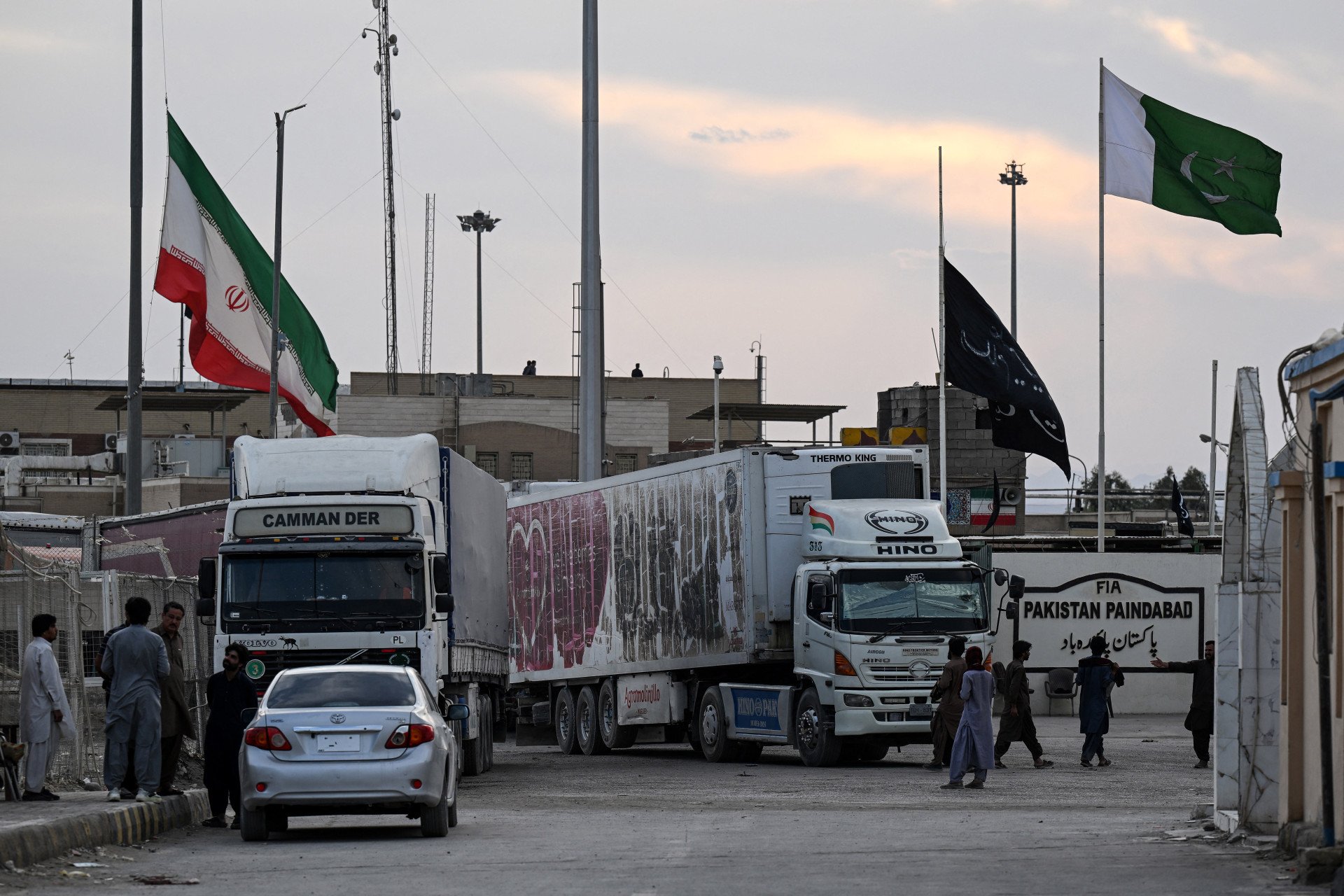
A large “humanitarian aid” convoy from Tajikistan to Iran raises a key question about its contents, given the lack of transparency, Tajikistan’s role in Iranian drone production, and well‑established Central Asian transit routes also used for Russia–Iran logistics.
 Prefer U24 Media on Google
- Authors


A large convoy of trucks labeled as “Humanitarian Aid” has departed Tajikistan for Iran, drawing scrutiny amid documented defense ties between Tehran and Dushanbe and broader concerns over regional logistics networks.
We bring you stories from the ground. Your support keeps our team in the field.
According to Tajikistan’s Ministry of Foreign Affairs on March 18, the shipment consists of 110 trucks carrying approximately 3,600 tons of cargo, including medical supplies, food, hygiene products, tents, and construction materials.
The convoy was officially described as humanitarian assistance intended for populations affected by recent developments in Iran.
The official statement lists essential goods such as medicines and basic necessities, but no detailed manifests for individual shipments or independent verification of the cargo have been publicly disclosed.
Numerous trucks are reportedly entering Iran from Tajikistan under the label of “humanitarian aid.”
— Hemad Nazari (@Hemadnazari) March 19, 2026
But this raises serious concerns. Islamic Regime has previously established drone production facilities in Tajikistan, this is documented and worth revisiting.
Link:… pic.twitter.com/XU30fi9Ydl
The scale and composition of the shipment—particularly the inclusion of construction materials—have drawn attention, along with the lack of transparency regarding end recipients and distribution channels inside Iran.
Documented defense links between Iran and Tajikistan
Concerns are amplified by prior defense cooperation between Iran and Tajikistan, particularly in the field of unmanned aerial systems.
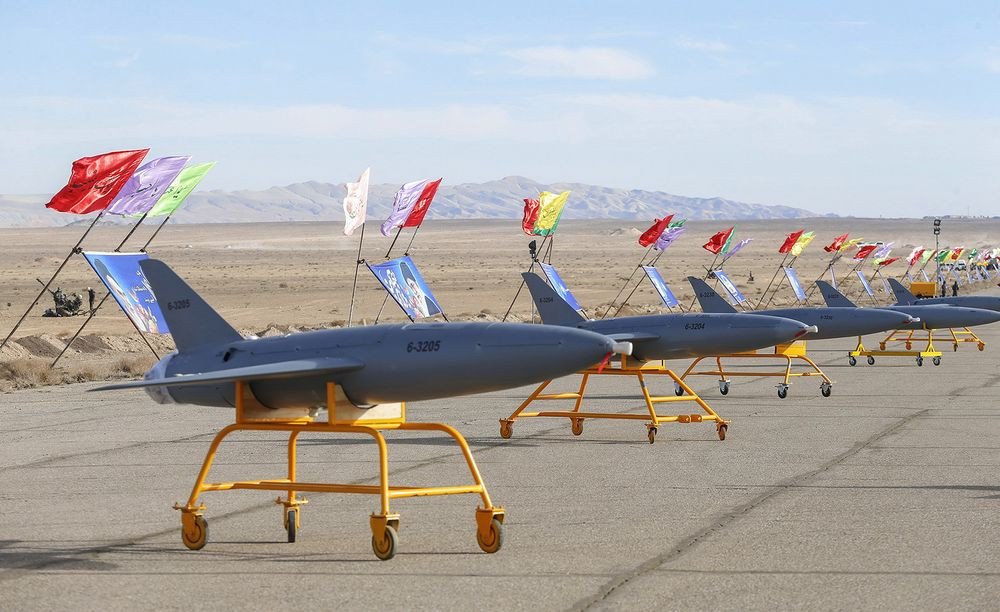
Iran inaugurated a drone production facility in Tajikistan in May 2022. The plant, located near Dushanbe, was launched during a visit by Iran’s Armed Forces Chief of Staff Mohammad Bagheri and is reported to manufacture Ababil-2 unmanned aerial vehicles.
The Ababil-2 is a short-range UAV capable of reconnaissance and strike missions, including use as a loitering munition, making it relevant in both surveillance and attack roles.
The facility marked Iran’s first known drone production site abroad and signaled a shift toward exporting not only UAV systems but also manufacturing capabilities to partner states.
Every one of these trucks must be thoroughly investigated. The Islamic Republic has already set up drone production in Tajikistan, so shipments labeled ‘humanitarian aid’ don’t look right. Iran doesn’t need aid from Tajikistan, if that’s even what’s inside, and not drone… https://t.co/coOtI6zCcs pic.twitter.com/UX31JYIfqn
— Katierebel ☼𓃬 (@Katierebel2nd) March 19, 2026
The project reflects expanding military-technical cooperation between Tehran and Dushanbe, including the transfer of production know-how and assembly infrastructure outside Iranian territory.
Separate advisories issued by US government agencies in 2023 indicated that Iran has explored transferring drone production technologies to partner countries, including Tajikistan and Russia, as part of broader efforts to expand its unmanned systems ecosystem.
Regional transport routes and potential transit role
Tajikistan is connected to Iran through overland routes that pass via Uzbekistan and Turkmenistan, forming part of a regional transport corridor linking Central Asia to the Iranian market.
In recent years, these routes have been developed and used for cross-border cargo flows, including multimodal and rail shipments moving south through Turkmenistan to Iranian ports and logistics hubs.
In November 2025, a Russian freight train reached Iran via Kazakhstan and Turkmenistan, marking a functioning overland connection between Russia and Iran through Central Asia.
Additional regional transport initiatives have focused on expanding corridors linking Tajikistan, Uzbekistan, Turkmenistan, Iran, and onward to Turkey, establishing a continuous transit route across the region.
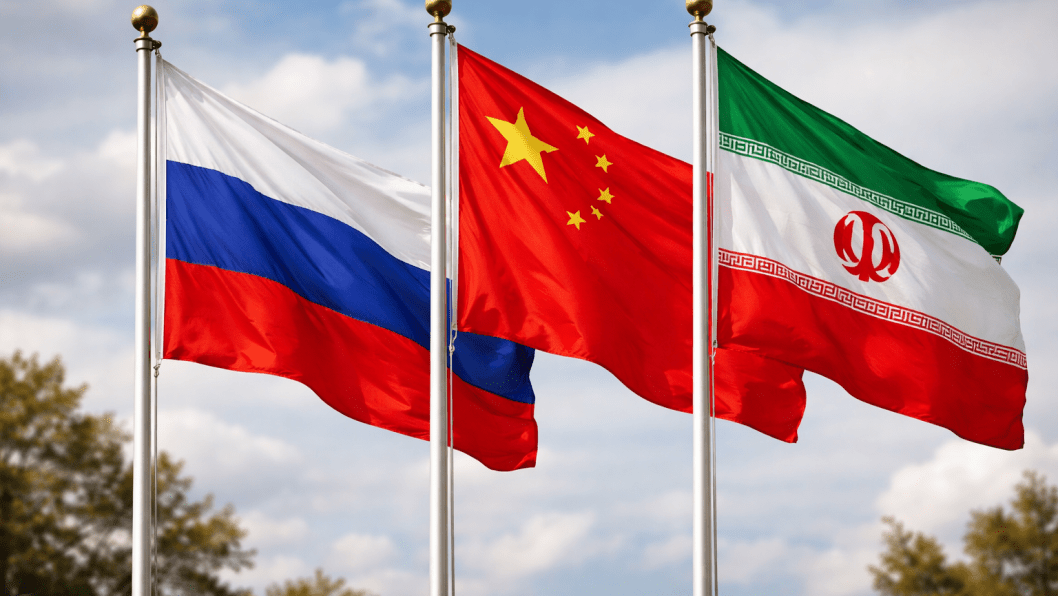
Tajikistan does not share a direct border with Iran, making transit through neighboring countries—primarily Uzbekistan and Turkmenistan—a required component of any overland shipment between the two states.
No publicly available data has been released on the exact route, border crossings, or transit checkpoints used by the current convoy.
Parallels with past logistics practices
The development has prompted comparisons with earlier cases of covert military supply movements.
During the initial phase of Russia’s war against Ukraine in 2014, weapons, ammunition, and military equipment were reported to have entered occupied parts of Donbas through poorly controlled sections of the Ukrainian-Russian border, often outside official checkpoints.
These transfers included small arms, armored vehicles, and advanced systems that appeared in the war zone without transparent supply chains or declared deliveries.
-7a513761219b1c02127aae8154224243.jpg)
In several documented cases, military cargo was believed to have been transported under civilian cover or through logistics routes that lacked effective oversight, making it difficult to trace the origin and movement of the equipment.
These precedents illustrate how dual-use or undeclared cargo can move within civilian, commercial, or humanitarian frameworks when transparency is limited and verification mechanisms are weak.
Discuss this article:
-4a56a6b482ec132402c16ef6fcabf9a2.png)


-b7da0e3033ba5fc9d5f47439cb28c6ad.png "Illustration featuring the logos of AI chatbots Claude (left) and Mistral (right). (Illustration: UNITED24 Media)")
-111f0e5095e02c02446ffed57bfb0ab1.jpeg "Photo of Roman Kohanets")
-72b63a4e0c8c475ad81fe3eed3f63729.jpeg "Photo of Cyril Barabaltchouk")
-939a6aae373f6c76f1b33cce63f6c7e2.png "Ukrainian paratroopers target a gas pipeline used by Russian infantry to conceal their movements in the Sumy direction. (Source: 71st Separate Airmobile Brigade)")
