- Category
- Latest news
Iran Deploys Russian-Built MRAPs on Afghan Border for the First Time
 Prefer U24 Media on Google
- Authors


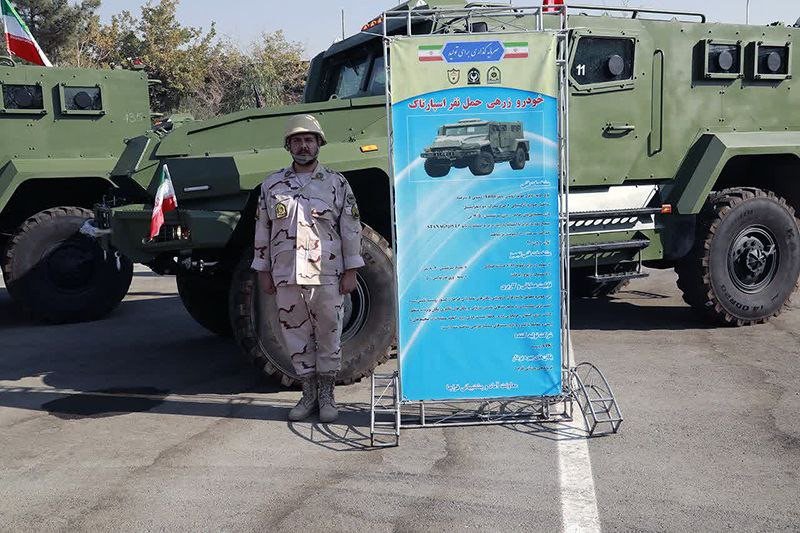
Iran has formally introduced Russian-made Spartak mine-resistant armored vehicles into its border forces, marking the first documented transfer of this model to Tehran.
According to open-source analyst Yuri Lyamin, who shared photos and observations on the social platform X, the vehicles were displayed during a handover ceremony for new equipment assigned to Iran’s law-enforcement border units.
The event represents the first official confirmation that Russia has supplied Spartak MRAPs to Iran.
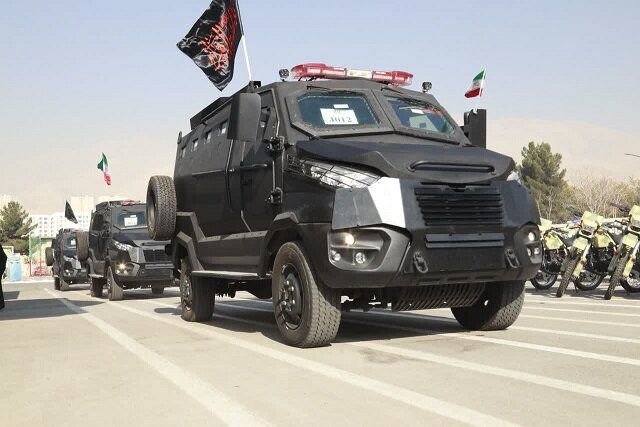
The Russian-built Spartak is a mine-resistant, ambush-protected armored vehicle designed to withstand attacks from improvised explosive devices and small-arms fire.
According to Lyamin, the systems shown in Iran match the same configuration earlier seen in Libya, where dozens of Spartak vehicles were used during a parade in May 2025.
The vehicles supplied to Iran are expected to increase survivability for border personnel operating in high-risk areas. Iranian law-enforcement agencies frequently report security incidents along the Iran–Afghanistan frontier, where smuggling routes and cross-border tensions require heavy armored support.
Available technical data indicates that the Spartak weighs approximately 14.5 tons in its baseline version and measures around 6.5 meters in length, 2.55 meters in width, and 2.8 meters in height.
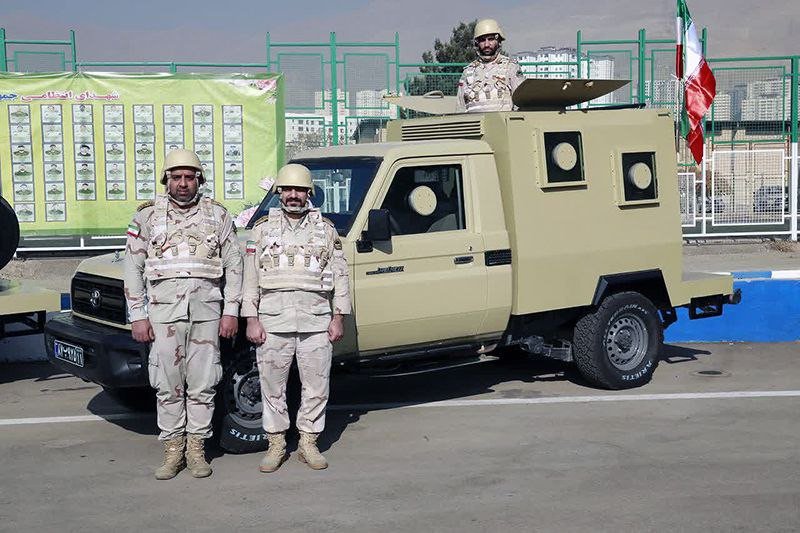
It is equipped with a 312-horsepower turbo-diesel engine and has an estimated road range of up to 1,000 kilometers with a maximum speed near 100 kilometers per hour. In its standard configuration, the hull is designed to resist 12.7-mm armor-piercing rounds, corresponding to protection roughly equivalent to STANAG Level III.
Earlier, Ukrainian military specialists confirmed that Russia had begun deploying Iranian-made Shahed‑107 loitering munitions against logistics hubs and supply lines deep behind the front.
According to electronics expert Serhii Flash, the drones—manufactured in Iran in 2024—carry 8–9 kg fragmentation warheads and are capable of reaching targets up to 800 km away. Flash also warned that Moscow may attempt to localize production of the model, which is also known as “Murad‑5” in Iraq.
Discuss this article:
-4a56a6b482ec132402c16ef6fcabf9a2.png)


-c439b7bd9030ecf9d5a4287dc361ba31.jpg "Photo of Katherina Popilnichenko")