- Category
- Latest news
22 European Nations Demand Russia Be Banned From 61st Venice Biennale
 Prefer U24 Media on Google
- Authors

-72b63a4e0c8c475ad81fe3eed3f63729.jpeg "Photo of Cyril Barabaltchouk")
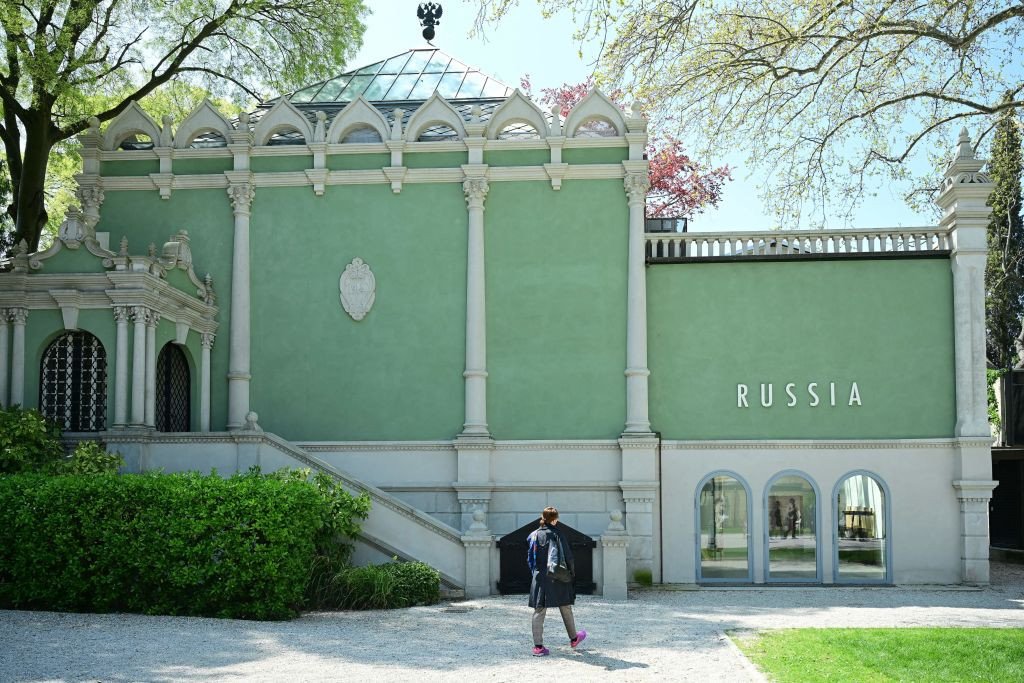
Culture and foreign affairs ministers from 22 European nations are demanding that Russia be banned from the upcoming 61st Venice Biennale, the Latvian Ministry of Culture reported on March 11.
The diplomatic push to isolate Moscow from the prestigious international art exhibition was spearheaded by Latvian Minister of Culture Agnese Lāce. In just a matter of days, the initiative successfully rallied signatures from top officials across the continent, forming a unified coalition that includes representatives from France, Germany, the Netherlands, and Ukraine.
We bring you stories from the ground. Your support keeps our team in the field.
The formal letter was delivered to Pietrangelo Buttafuoco, President of La Biennale di Venezia, and the organization’s Board of Directors, while also being shared with Italian Minister of Culture Alessandro Giuli. In the document, the coalition argued that while the Biennale has served as a premier platform for artistic freedom for over a century, cultural institutions bear a moral responsibility that cannot be separated from geopolitical realities.
“Culture is not separate from the realities societies face. It shapes how people understand the world, what they value, and how they choose to act. Cultural institutions therefore carry not only artistic significance but also moral responsibility,” the statement said.
Ukrainian officials are also directly appealing to the festival’s organizers to block Moscow’s return. In a joint statement, Foreign Minister Andrii Sybiha and Deputy Minister of Economy Tetiana Berezhna called Russia’s potential participation unacceptable, warning that one of the world’s most influential art platforms must not become a space for whitewashing the war crimes committed daily against the Ukrainian people.
The officials emphasized that since the onset of its aggression in 2014, and particularly following the full-scale invasion in 2022, Russia has waged a systematic campaign to erase Ukrainian identity and historical memory.
The Kremlin is actively trying to bypass its cultural isolation by using artists from politically friendly nations and marginalized regions to rebrand its presence at the upcoming exhibition. For Kyiv, allowing the Russian pavilion to reopen under these conditions effectively legitimizes an ongoing, deliberate assault on Ukraine’s cultural heritage.
-826d18aed60da7462dbeeb720b783c26.png)
The ministers emphasized that Russia’s ongoing military aggression has resulted in the widespread destruction of Ukrainian cultural heritage, from museums to historic monuments.
“In this context, granting Russia a prestigious international cultural platform sends a deeply troubling signal,” they stressed.
The signatories warned that granting a prestigious international platform to a heavily sanctioned state sends a deeply troubling signal that risks legitimizing military aggression. To articulate their point, the letter referenced the 2022 Biennale, when Russian artists Kirill Savchenkov and Alexandra Sukhareva, alongside Lithuanian curator Raimundas Malašauskas, voluntarily abandoned the Russian pavilion at the onset of the full-scale invasion of Ukraine.
At the time, Savchenkov publicly stated that there is no place for art when civilians are dying under missile fire and protesters are being silenced.
The coordinated push to isolate Moscow culturally is directly tied to the staggering toll the war has taken on Ukraine’s own heritage. The ministers' joint letter specifically cited the widespread destruction of museums, monuments, and historic sites as a primary reason to bar the Russian Federation from the Biennale.
It was previously reported that Russia has destroyed or damaged 1,685 cultural heritage sites and nearly 2,500 cultural infrastructure facilities since the start of the full-scale invasion. With direct and indirect losses to the Ukrainian cultural sector exceeding $31 billion, European leaders are actively enforcing cultural sanctions to ensure Moscow is not granted a prestigious international platform while simultaneously attempting to erase Ukrainian identity.
Discuss this article:


-c439b7bd9030ecf9d5a4287dc361ba31.jpg "Photo of Katherina Popilnichenko")