- Category
- Latest news
52 Drone Hits Fail to Destroy Ukrainian Leopard Tank During Daylong Assault
 Prefer U24 Media on Google
- Authors

-111f0e5095e02c02446ffed57bfb0ab1.jpeg "Photo of Roman Kohanets")
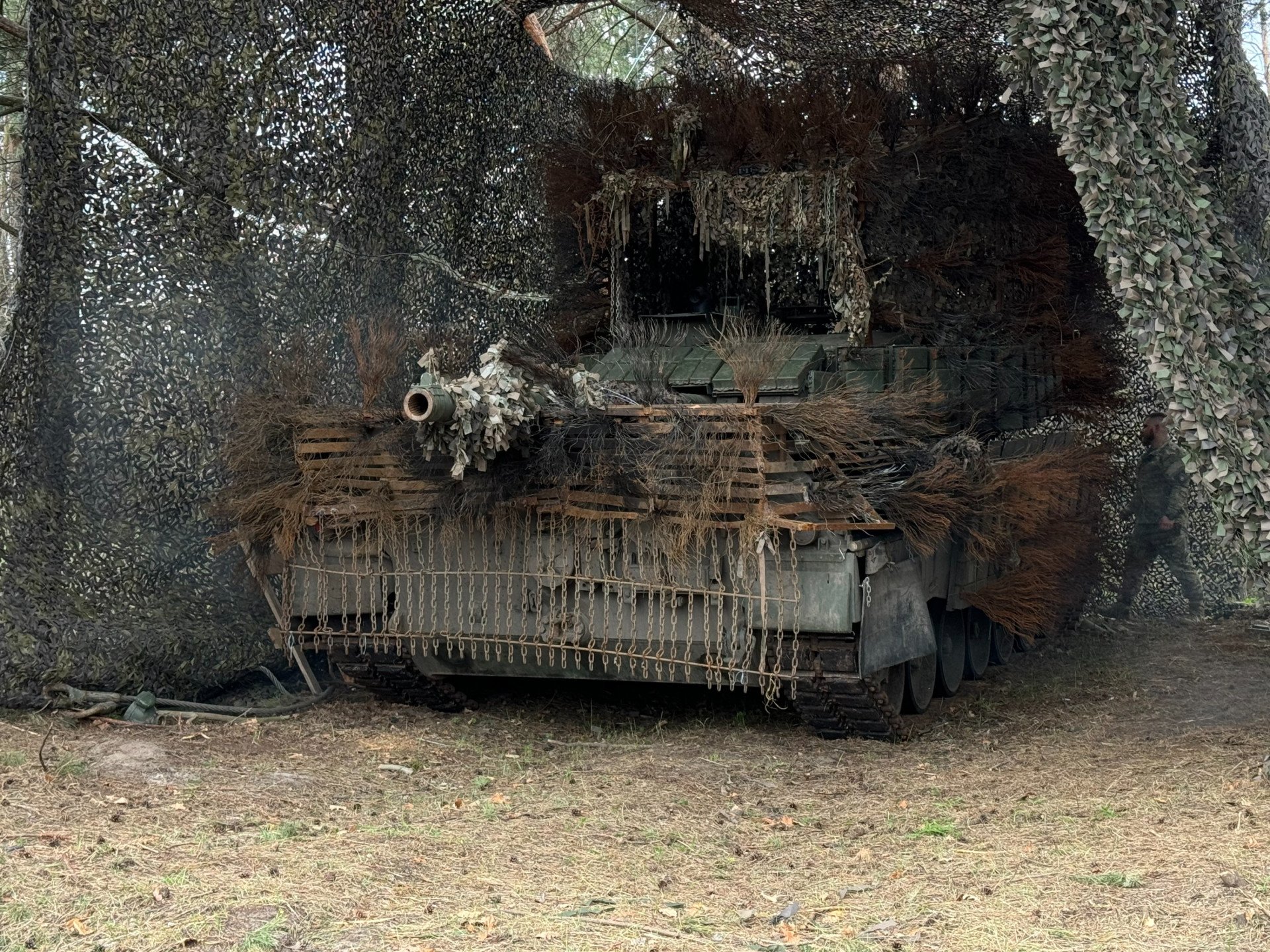
During a nearly daylong attack, a Ukrainian Leopard 1A5 tank withstood 52 strikes from Russian FPV and Molniya drones. The crew had reinforced the vehicle with layered anti-drone protection, according to Oboronka on April 6.
We bring you stories from the ground. Your support keeps our team in the field.
The account came from soldiers in the 1st Tank Battalion of Ukraine’s 5th Separate Heavy Mechanized Brigade, which operates Leopard 1A5 tanks supplied by several European countries.
The unit described how drone warfare has forced crews to abandon traditional maneuver combat and instead fight from concealed, prepared positions.
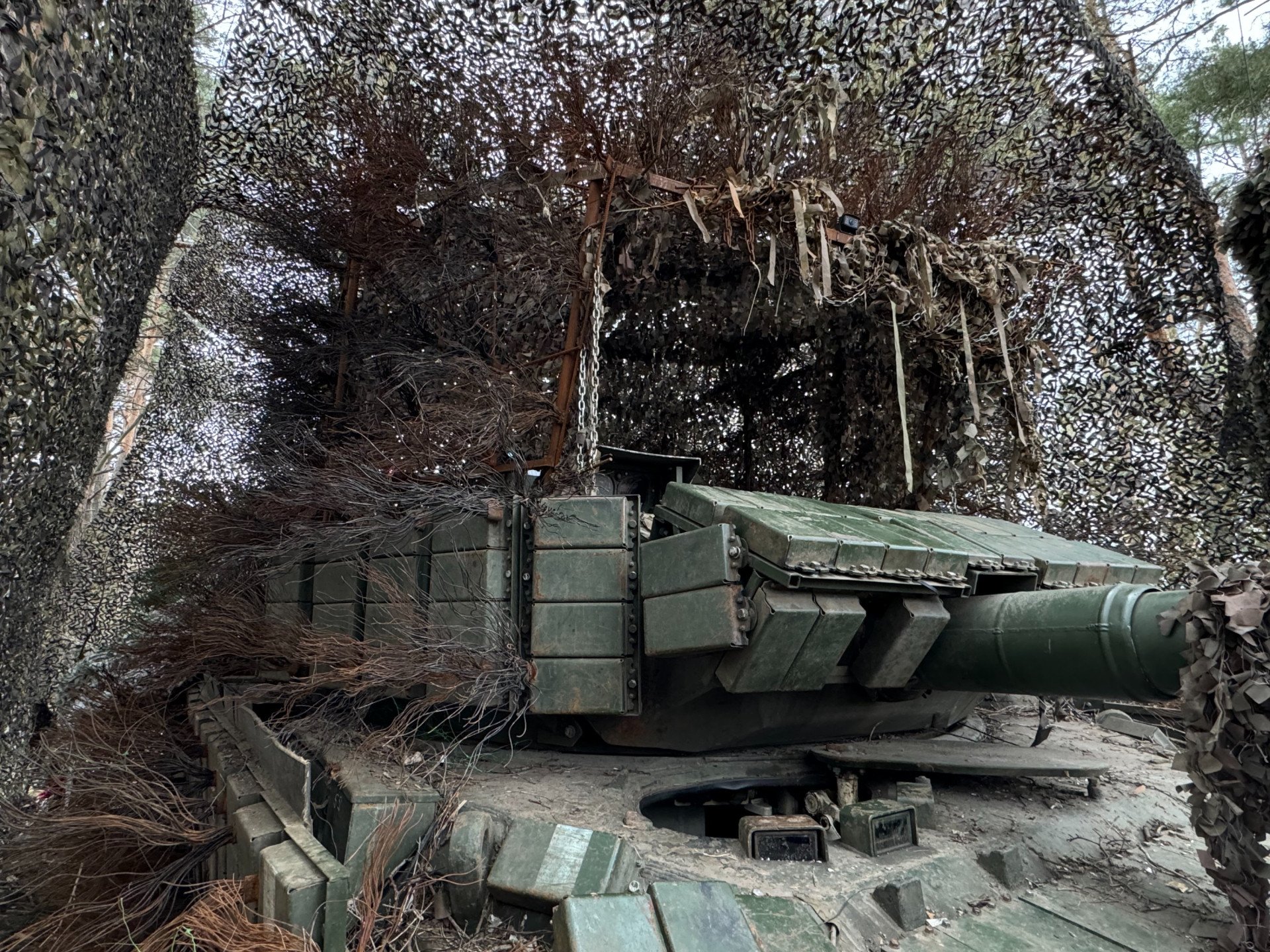
To protect the tanks, crews place them in covered revetments hidden under camouflage nets and add side netting to catch incoming FPV drones.
The vehicles are fitted with a roof cage, grilles and chains over the engine compartment, and Ukrainian-made explosive reactive armor on the hull, sides, and turret, including the rear.
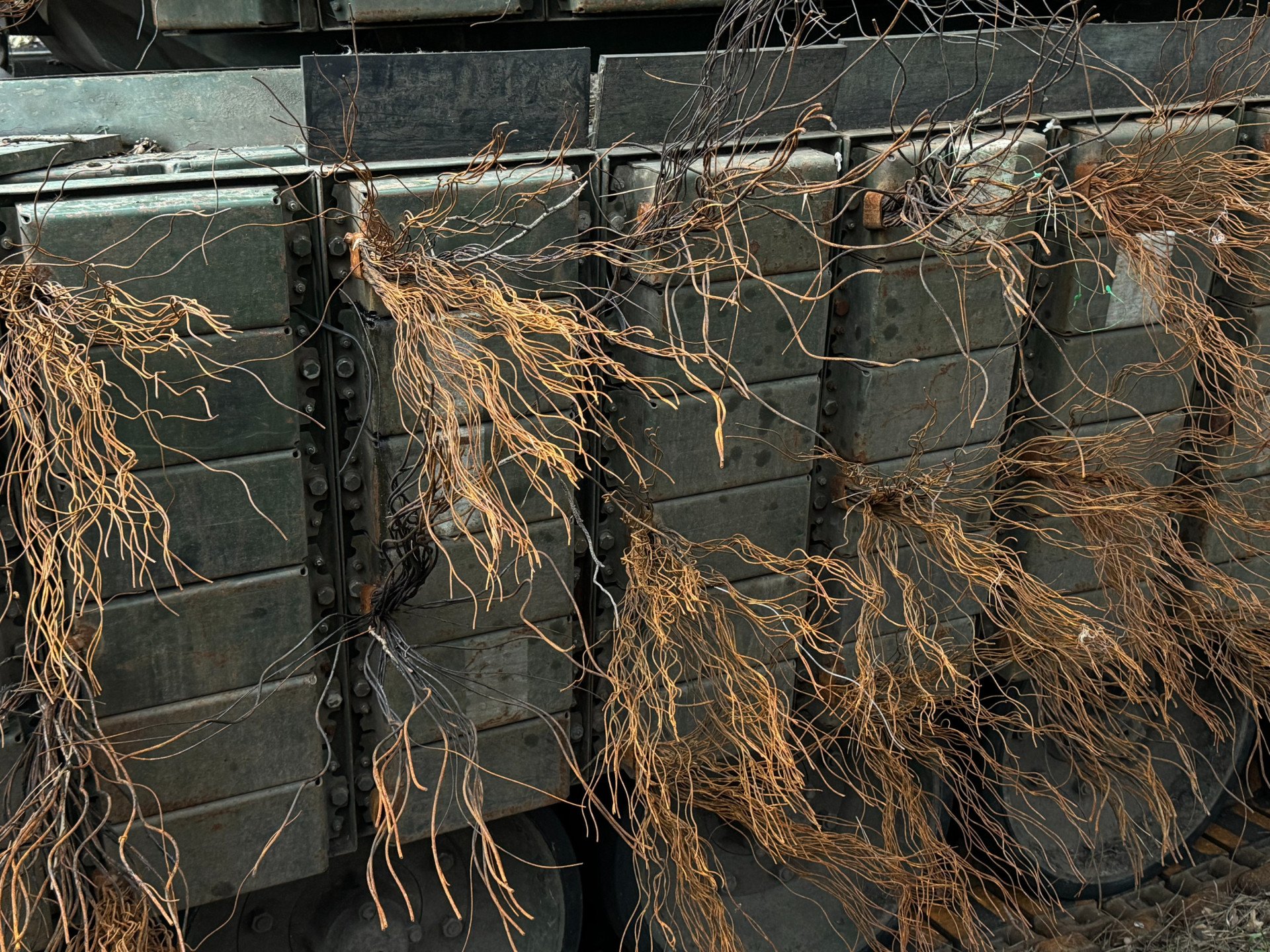
Crews also attach unraveled steel cables, known among tankers as the “Hedgehog” system, to break drone propellers before impact.
“One of our tanks literally withstood 52 hits from Molniya-type drones and regular FPVs in February,” company commander Viacheslav Khodak, call sign “Spartan,” stated.
He added that Russian forces kept striking the tank almost continuously, with one drone attacking, another adjusting fire, and a third following the same cycle while waiting for the crew to emerge from shelter.
Instead, the crew stayed under cover until the strikes stopped, then ran back to the tank in broad daylight, started the engine, and drove it out from under Russian observation, Khodak noted.
He added that his platoon commander had already pulled off the same kind of recovery twice.
The same pressure is also driving similar battlefield adaptations on other Western-supplied tanks in Ukrainian service.
Ukrainian forces were earlier reported to be adapting M1A1 Abrams tanks on the front line with explosive reactive armor and anti-drone cage structures, reflecting efforts to improve protection against FPV drone attacks.
The reported modifications point to a practical redesign shaped by battlefield pressure, with crews adding new protective elements to vehicles originally built for a different combat environment.
The focus, according to the report, was survivability as drone threats continued to reshape frontline tactics.
The changes were presented as part of a broader effort to keep the Abrams viable under current conditions, where low-cost attack drones have become a persistent danger to armored vehicles.
Discuss this article:
-9bd5e1532102621f8fb1c4ba871a3171.png)


-c439b7bd9030ecf9d5a4287dc361ba31.jpg "Photo of Katherina Popilnichenko")