- Category
- Latest news
Britain Adopts Ukraine’s Sea Drone Tactic: FPV Drones Now Riding the Waves
 Prefer U24 Media on Google
- Authors




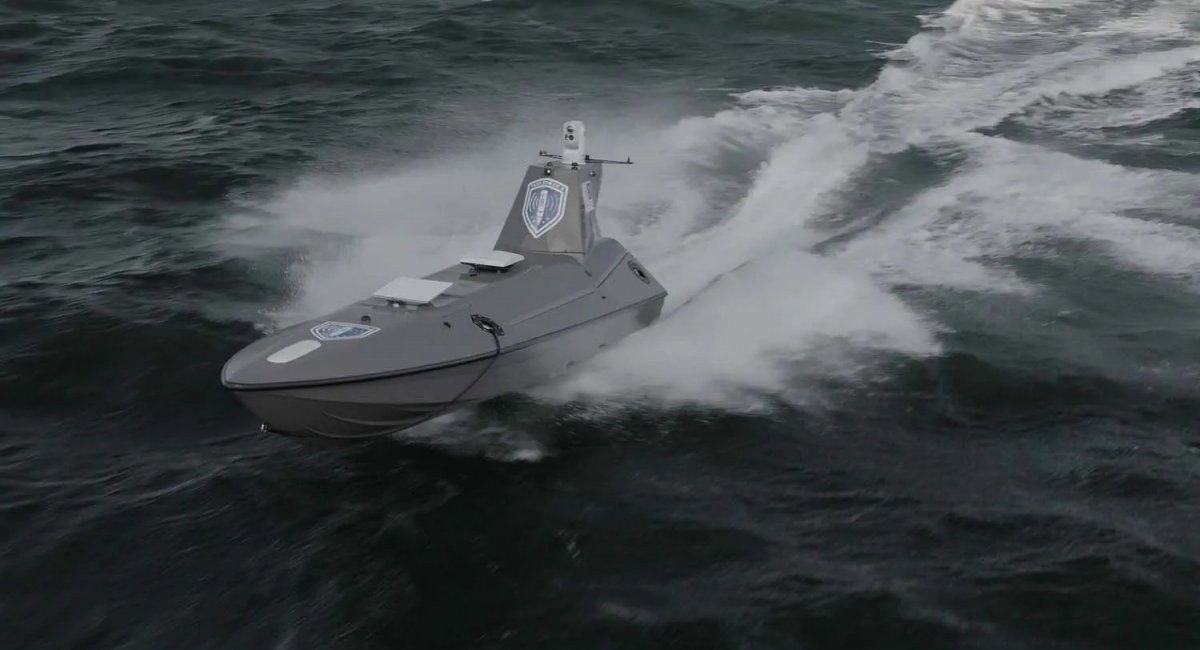
The Royal Navy has begun testing sea drones equipped with FPV (first-person-view) drones mounted on board — a concept first developed and successfully implemented by Ukraine’s Defense Forces, according to Defense Express on October 19.
The trials took place during Trident Sprint 1, a two-week exercise at the Chivenor naval base in Devon.
The drills brought together Royal Navy personnel and defense-industry specialists to demonstrate the integration of autonomous and unmanned technologies aimed at strengthening the United Kingdom’s digital and information warfare capabilities.
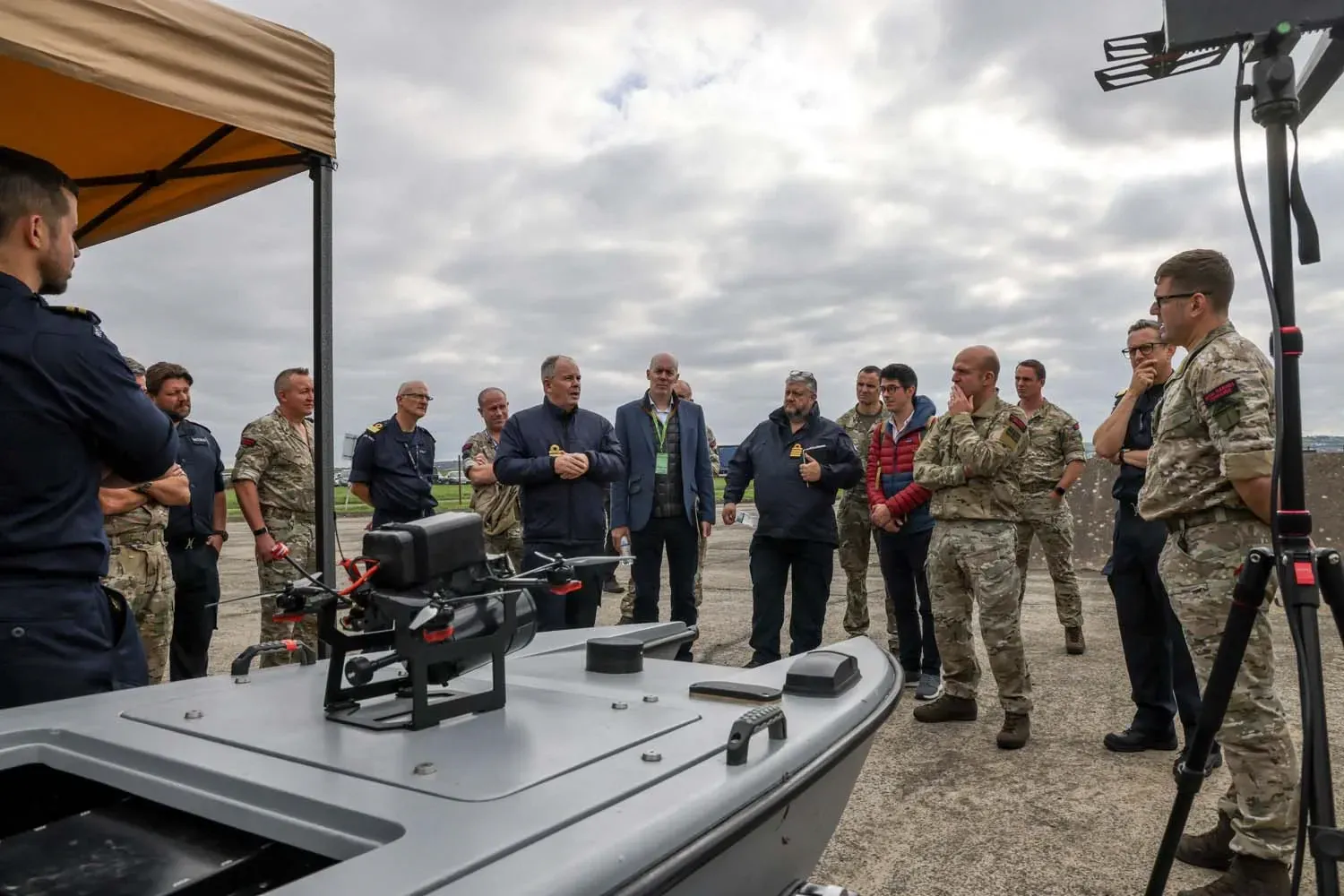
According to the Royal Navy’s press release cited by Defense Express, the exercise marked the first in a planned series focused on enhancing the fleet’s ability to rapidly integrate new technologies into operations.
A significant part of the testing centered on Strike Net, the Royal Navy’s tactical network for coordinating unmanned assets and maintaining communications in environments where satellite links are unavailable.
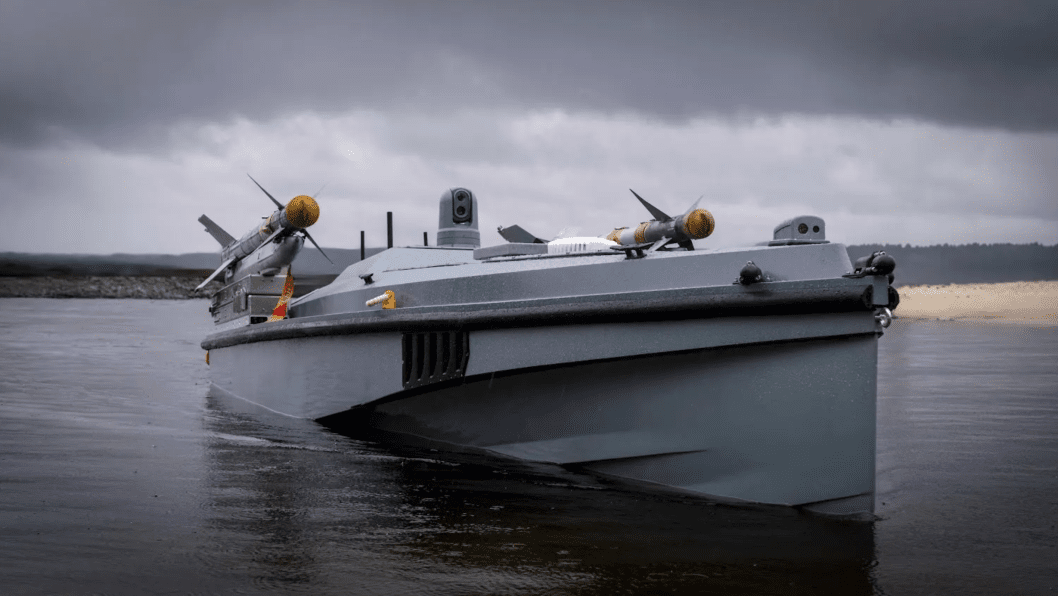
The exercises featured a range of autonomous systems, including robotic dogs, aerial drones, and unmanned surface vessels.
Among them, the Mantas T12, developed by US company MARTAC, was observed carrying an FPV drone connected via a fiber-optic cable — a configuration directly mirroring Ukrainian innovations.
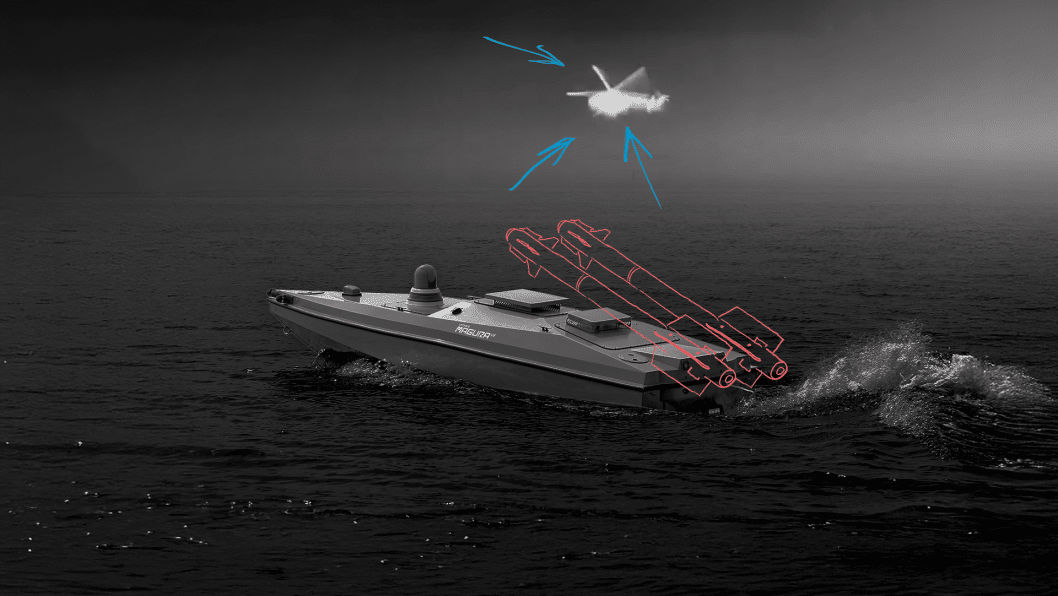
Ukraine was the first country to employ maritime drones as launch platforms for FPV drones, achieving notable success against Russian air defense systems. Recently, Ukrainian naval units have also deployed FPV drones controlled through fiber-optic lines, ensuring greater resistance to electronic jamming.
According to Defense Express, the appearance of such configurations during British exercises demonstrates growing Western interest in adopting Ukrainian battlefield technologies that have proven effective against Russia’s layered defense systems.
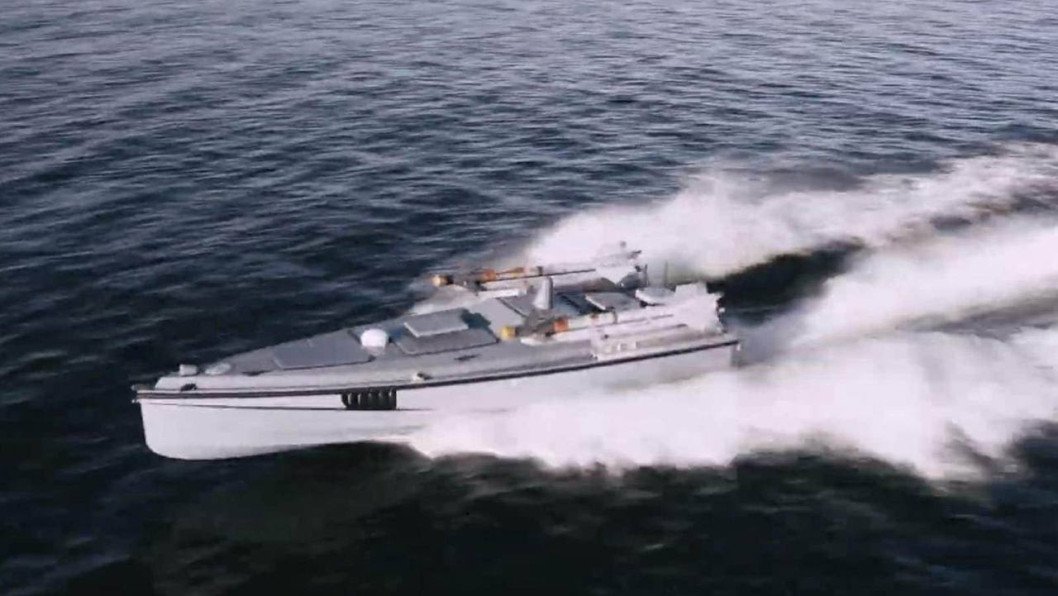
The Trident Sprint 1 exercise is part of a broader Royal Navy effort to test new robotic, communication, and surveillance technologies for future autonomous naval operations.
Earlier on April 26, France conducted a live-fire test of a suicide naval drone modeled after Ukraine’s MAGURA V5, striking a decommissioned landing vessel near Toulon as part of the Navy’s POLARIS initiative, according to Admiral Nicolas Vaujour.
Discuss this article: