- Category
- Latest news
Eight Years Later, Russia Tries to Recover the Dry Dock That Crippled Its Only Aircraft Carrier
 Prefer U24 Media on Google
- Authors


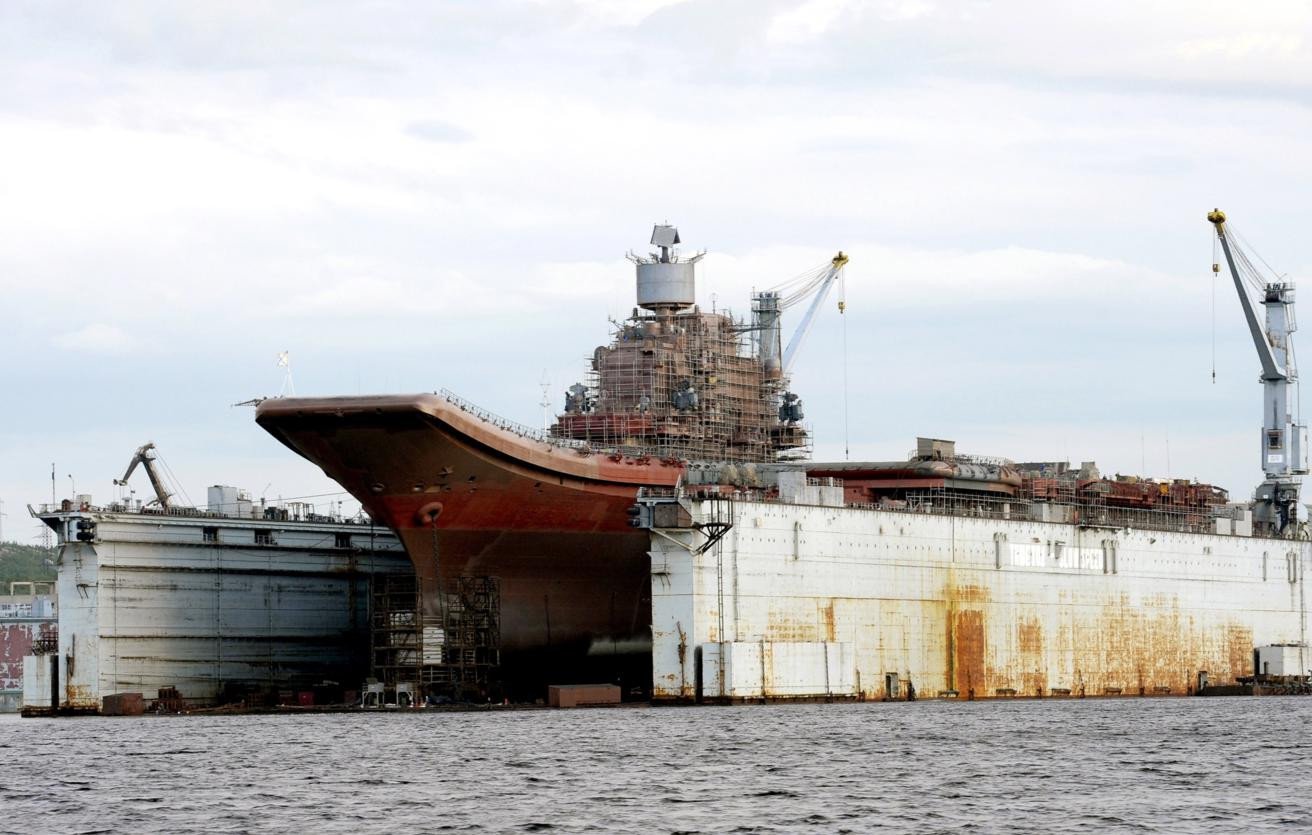
Russia has initiated preparations to recover the PD-50 floating dry dock, which sank in 2018 while servicing the country’s only aircraft carrier, Admiral Kuznetsov.
According to Defense Express on February 10, the Russian firm “Lenmorniiproekt” has signed a contract to conduct an underwater inspection of the submerged structure, marking the first step toward its potential removal.
We bring you stories from the ground. Your support keeps our team in the field.
The contract, valued at 240 million rubles (approximately $2.6 million), includes comprehensive diver-assisted and instrumental inspection of PD-50’s hull and internal compartments. The scope also covers full photographic and video documentation of the dock’s condition.
Defense Express reports that the inspection will assess corrosion damage, the dock’s tilt and submersion angles, and its degree of embedment in the seabed.
Following the inspection, a detailed 3D model of the dock and the surrounding area will be produced to determine how it can be extracted and moved.
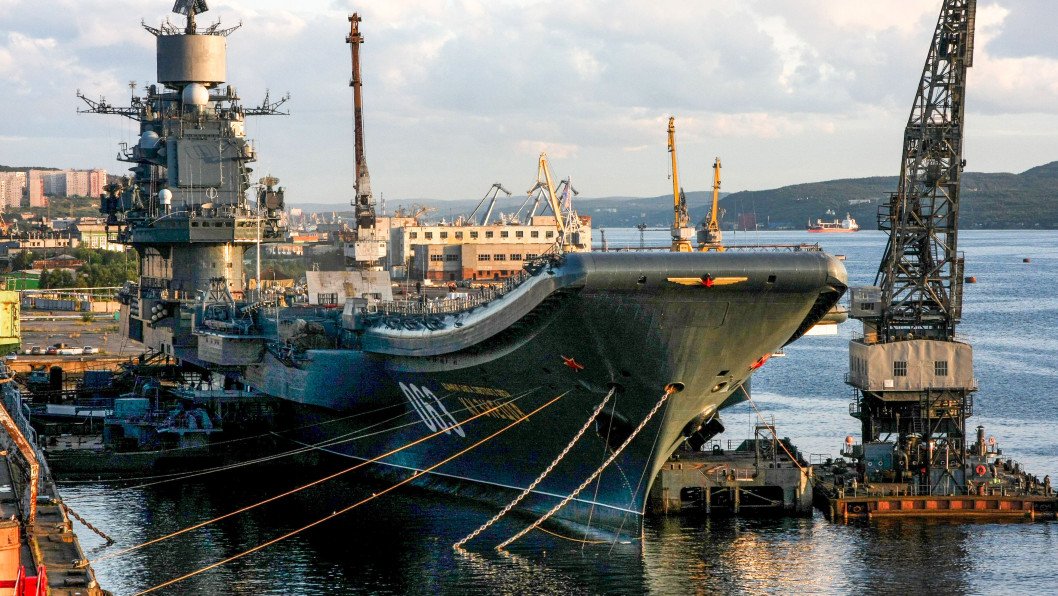
The PD-50 dry dock sank overnight on October 29–30, 2018, at Russia’s 35th Ship Repair Plant in the Kola Bay. At the time, it was holding the Admiral Kuznetsov, which sustained damage during the incident but remained afloat.
The loss of PD-50 created significant logistical challenges for Russia’s naval maintenance operations. As Defense Express notes, only two other Russian dry docks capable of handling large surface vessels remain operational, both located in the country’s Far East.
PD-50 was originally constructed in Sweden in 1979. Its functional equivalents—PD-41, built in Japan in 1978, and the more recent PD-100, built in China in 2022—were also foreign-produced. Defense Express emphasizes that Russia currently lacks the domestic industrial capacity to construct floating docks of comparable size and capability.
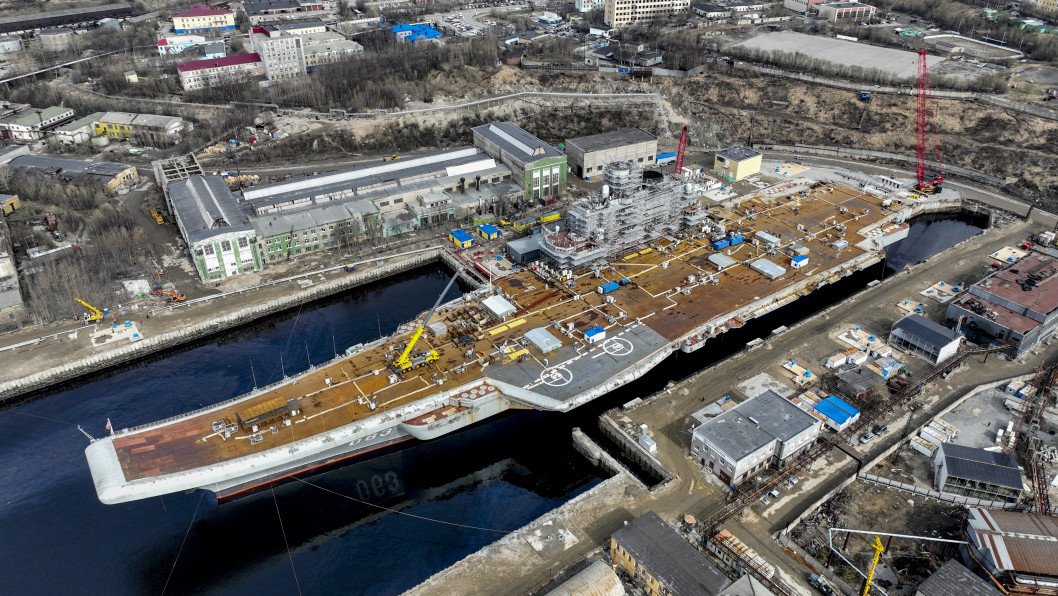
The report suggests that the purpose of raising PD-50 may not be restoration, but rather dismantling and scrapping.
The fate of Admiral Kuznetsov has also drawn renewed attention. As of 2025, Russian media and analysts have indicated that the long-delayed repairs of the vessel may have been quietly canceled. After years of budget overruns, accidents, and repeated delays, the carrier may now be decommissioned and scrapped.
Earlier, Admiral Kuznetsov was reported to be facing possible decommissioning after years of stalled repairs and repeated accidents. Russian naval command and the state-owned United Shipbuilding Corporation were discussing abandoning the overhaul altogether, with all repair work suspended at the time.
Russian officials and military analysts cited escalating costs, structural damage, and shifting wartime priorities as key factors, raising the prospect that the vessel could ultimately be scrapped rather than returned to service.
Discuss this article:
-4a56a6b482ec132402c16ef6fcabf9a2.png)


-c439b7bd9030ecf9d5a4287dc361ba31.jpg "Photo of Katherina Popilnichenko")