- Category
- Latest news
Russia’s Blue-Water Dreams Sinking Fast as Its Lone Carrier Faces the Scrap Heap
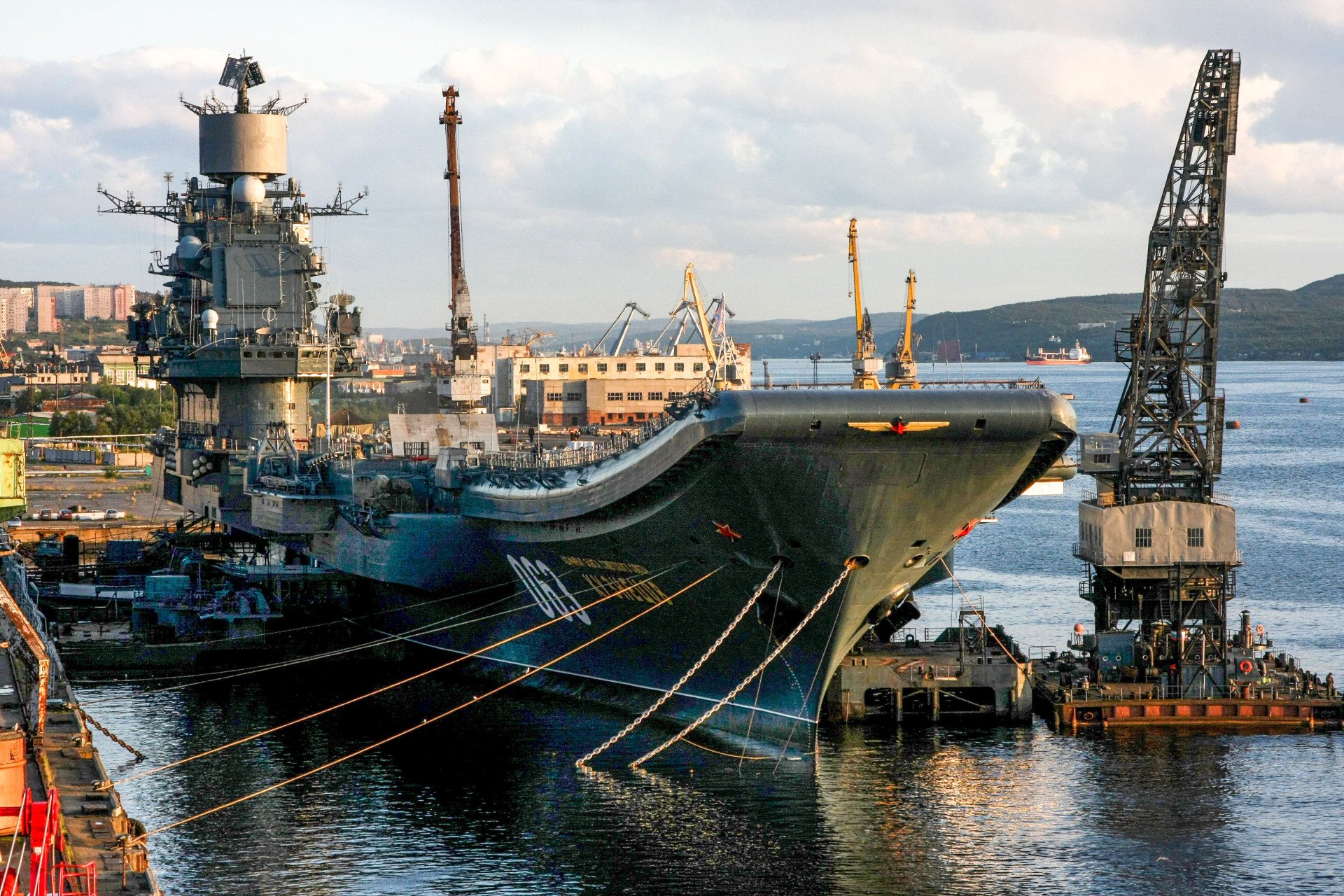
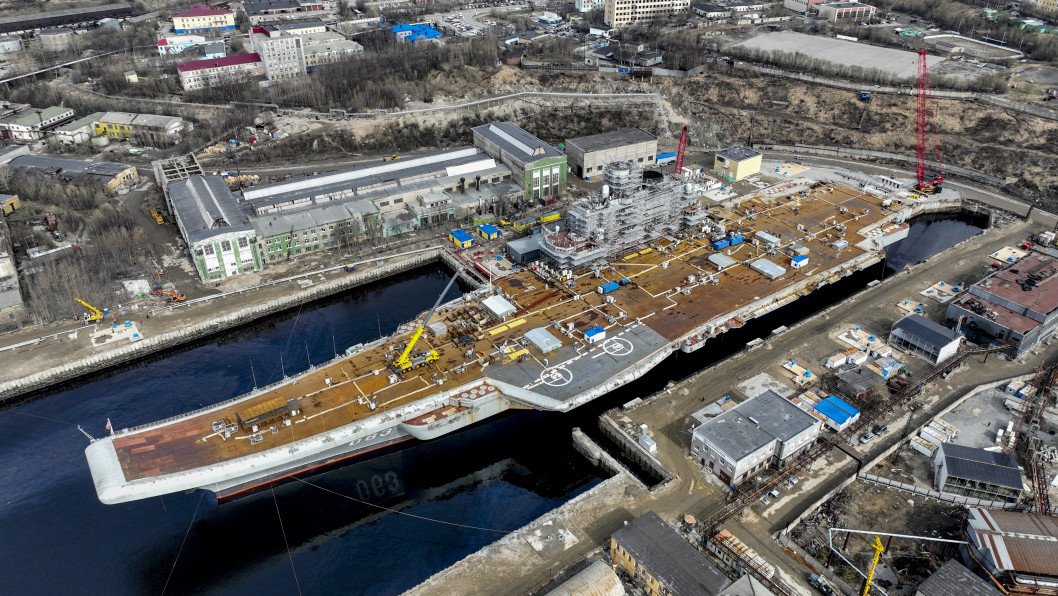
Russia is preparing to retire its only aircraft carrier, Admiral Kuznetsov, effectively shutting down its fixed-wing carrier aviation and raising doubts about whether Moscow can still claim blue-water naval power status.
 Prefer U24 Media on Google
- Authors


Admiral Kuznetsov, a 58,000-ton Project 1143.5 aircraft-carrying cruiser launched in the late Soviet era, has been plagued by mishaps throughout its life, defense media outlet Army Recognition reported on September 18.
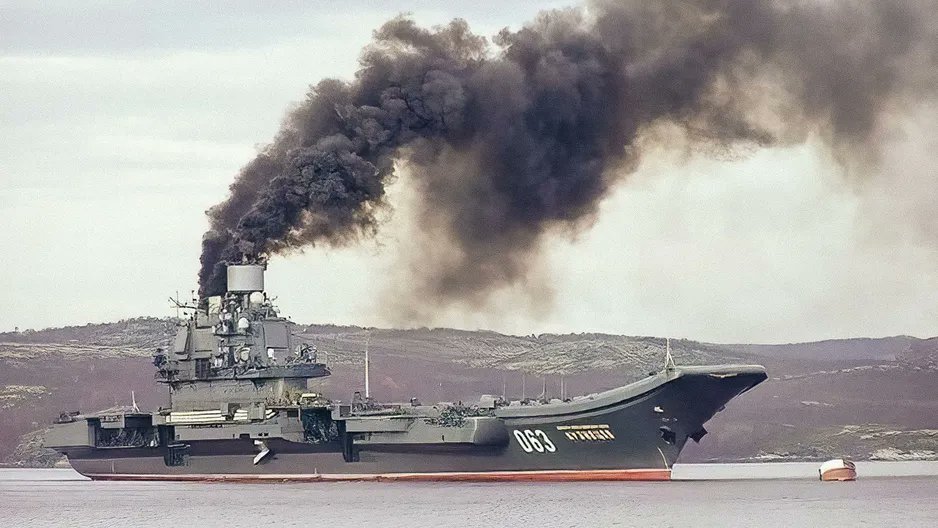
The ship’s latest refit became a saga of dock accidents, on-board fires, and endless delays. Its aging propulsion system—eight boilers feeding four turbines—has long been maintenance-heavy, and sanctions have further complicated access to spare parts. With resources consumed by the war in Ukraine, the Kremlin appears ready to cut its losses.
⚡️Closer footage of Admiral Kuznetsov on the water. pic.twitter.com/vTSK2XzgwB
— War Monitor (@WarMonitors) February 21, 2023
Design limitations
Unlike Western carriers, Kuznetsov was built with a heavy weapons load—P-700 Granit anti-ship missiles, Kinzhal SAMs, and Kashtan close-in defenses—while relying on a ski-jump STOBAR deck instead of catapults, Army Recognition wrote.
That layout capped the launch weight of its Su-33 and MiG-29K fighters and prevented the operation of heavier aircraft like fixed-wing early warning planes. Instead, Russia depended on Ka-31 helicopters for radar coverage, a solution far inferior to the E-2 Hawkeye or similar platforms used by NATO navies.
With Kuznetsov sidelined, Russia’s carrier-capable fighters become land-based squadrons. While still combat-ready, they lose the at-sea launch and recovery cycles that keep pilots trained for carrier operations.
According to Army Recognition, simulators and shore facilities can only do so much; without deck time in real conditions, carrier aviation skills inevitably atrophy.
Stunning footage captures MiG-29K takeoff from INS Vikramaditya. pic.twitter.com/1V8Grlyoju
— durvesh (@BLackgold_5) July 24, 2025
New carrier dreams remain vaporware
For years, Russian design bureaus have floated paper projects like the nuclear-powered Project 23000E “Shtorm” and the conventional “Lamantin.”
On paper, they rival Western supercarriers with catapults and air wings of 70–90 aircraft. But there is no steel cut, no yard slot, no supply chain, and no funding. With Moscow prioritizing missiles, drones, submarines, and artillery for the war in Ukraine, a new carrier remains hypothetical at best, Army Recognition notes.
What Russia loses without a flight deck
Carriers allow fleets to project power beyond the reach of coastal aviation, extend air defense screens, and complicate enemy targeting.
Even with its limitations, Kuznetsov gave Russia a presence at sea, with fighters and helicopters able to push back maritime patrol aircraft and widen anti-submarine coverage.
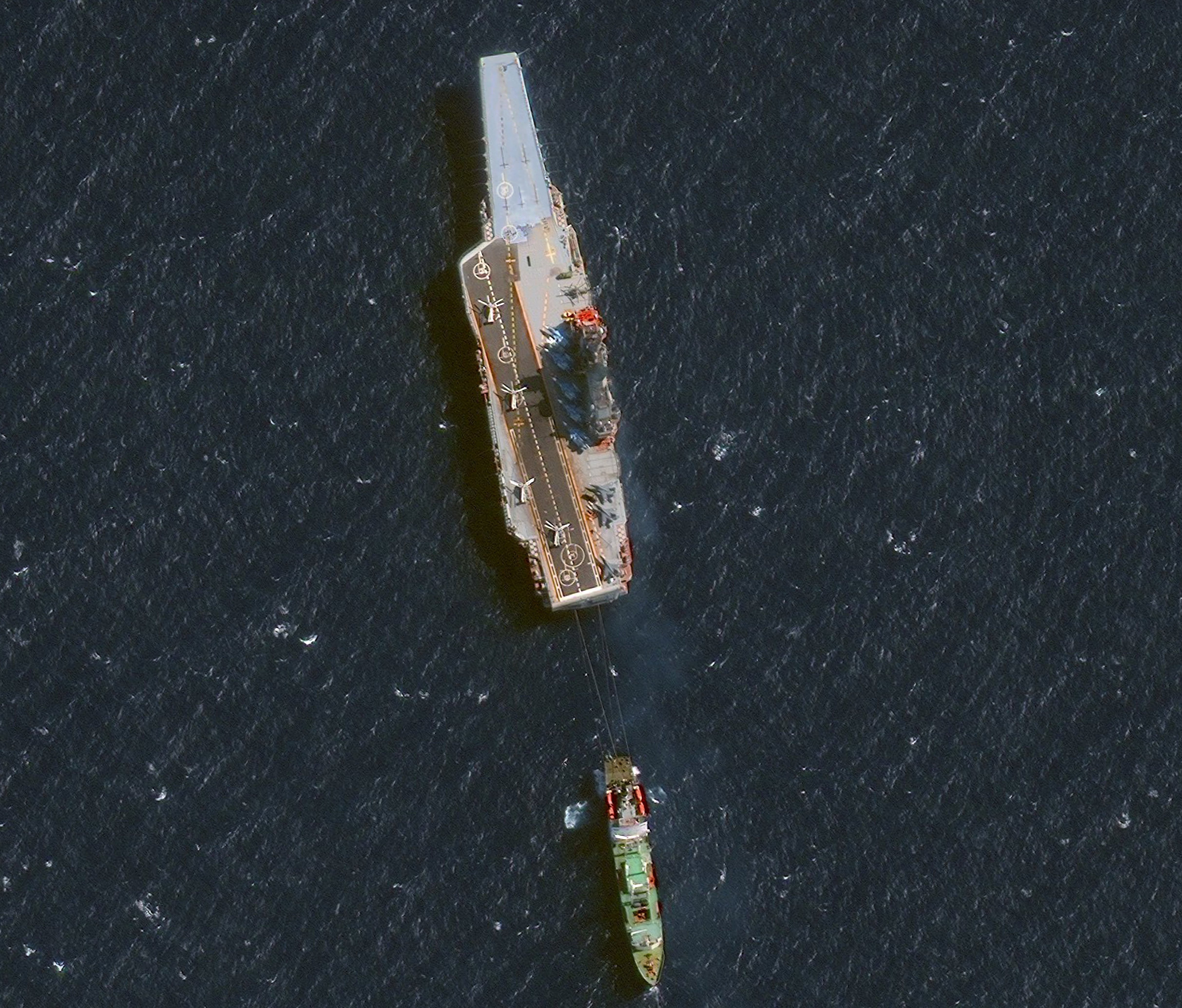
Without it, the Northern and Pacific Fleets must lean more heavily on land-based aircraft—slower to arrive, dependent on tankers, and less credible as a global show of force.
The decision to retire Kuznetsov reflects a shift in Russian naval priorities. Sanctions, a war-driven economy, and the drain of Ukraine combat operations mean Moscow is doubling down on cheaper, more immediately useful systems: submarines, cruise missiles, drones, and air defenses. Retiring the carrier is less about engineering failure and more about allocating scarce resources.
A Navy Without a Deck
Globally, carriers remain the yardstick of great power status, Army Recognition wrote. The US, China, UK, France, India, Italy, and Japan all field them because they tie together strike, air defense, and diplomacy at sea.
Russia will remain a threat with its missile and submarine forces—but without a functioning carrier, it will no longer be viewed by peers as a full-spectrum blue-water navy.
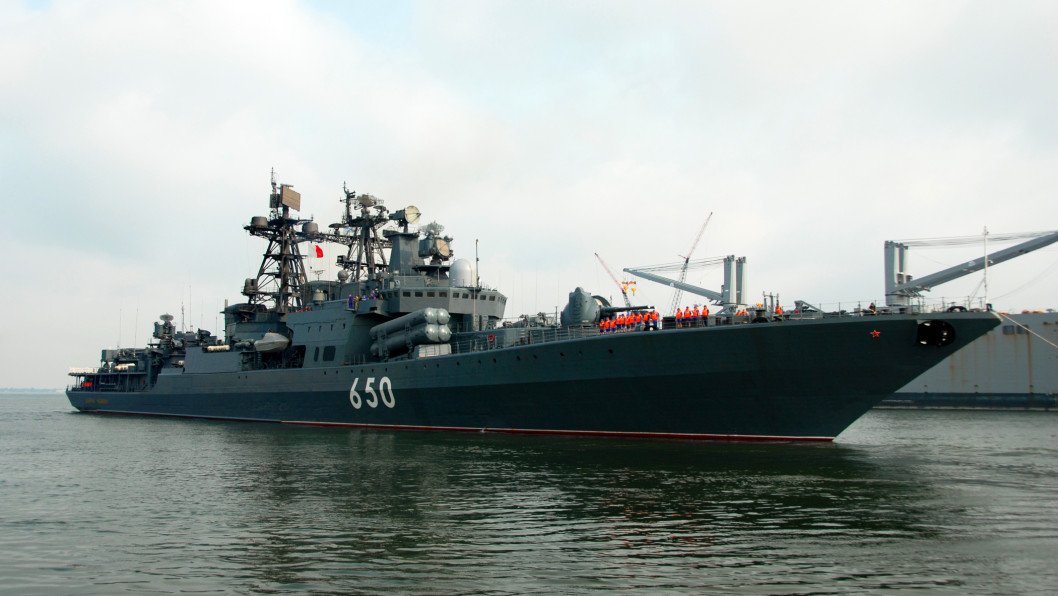
Earlier, reports emerged that Russia faced renewed debate over the future of one of its largest surface combatants, the nuclear-powered battlecruiser Pyotr Velikiy, amid growing concerns about the cost-effectiveness of maintaining such legacy platforms.
Former Pacific Fleet commander Admiral Sergey Avakyants stated in an interview with Izvestia that funding a refit of the vessel would be an inefficient use of state resources.
Discuss this article:



-c439b7bd9030ecf9d5a4287dc361ba31.jpg "Photo of Katherina Popilnichenko")