- Category
- Latest news
Can Russia Save Its Last Big Warships? “Admiral Chabanenko” Teeters on the Brink of Decommissioning
 Prefer U24 Media on Google
- Authors


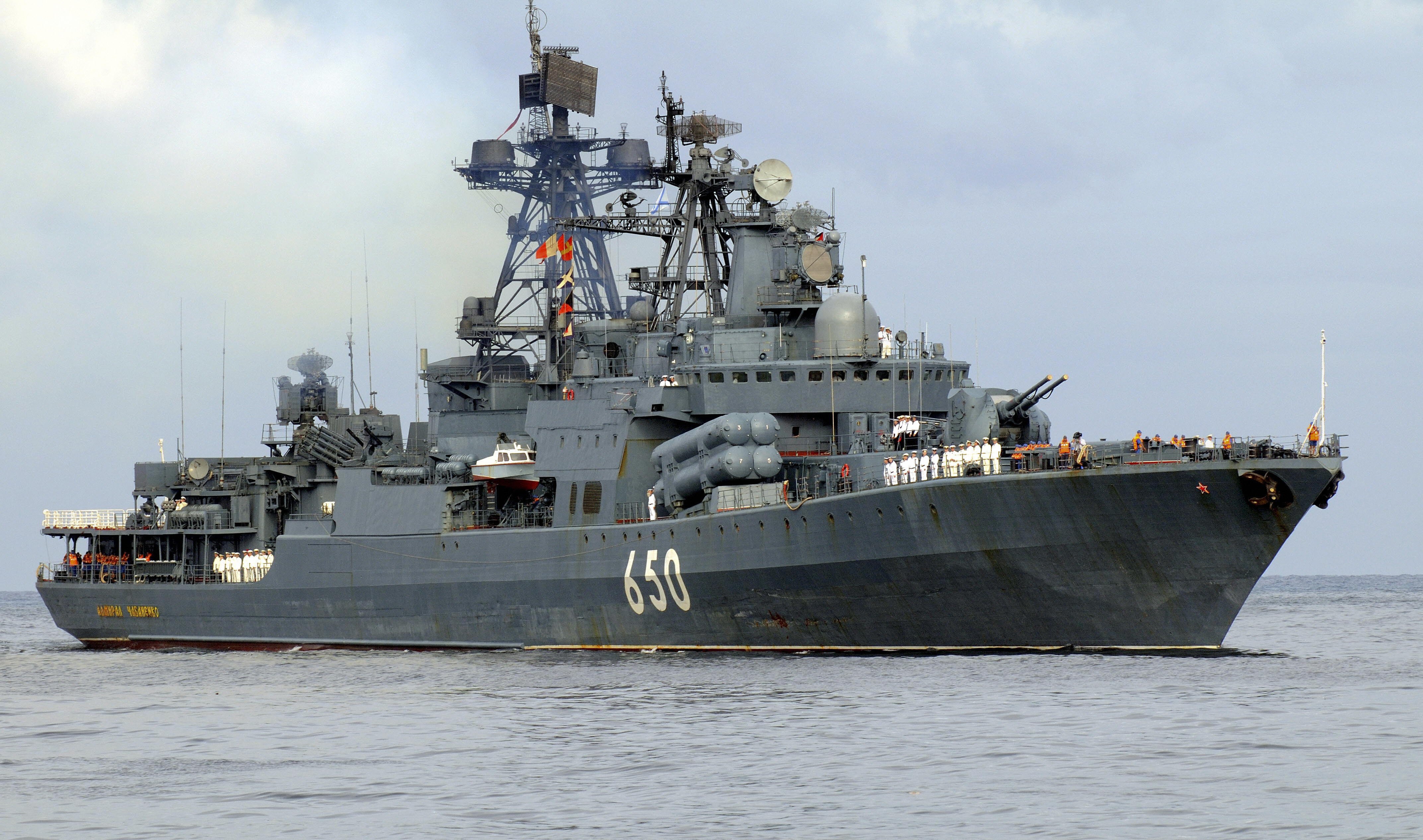
The long-delayed overhaul and modernization of the Russian Navy’s large anti-submarine ship Admiral Chabanenko will not be completed in 2025 as previously planned, sources told Russian media Izvestia on August 6.
The sources were unable to offer a new target date for the completion of work or the vessel’s return to training operations.
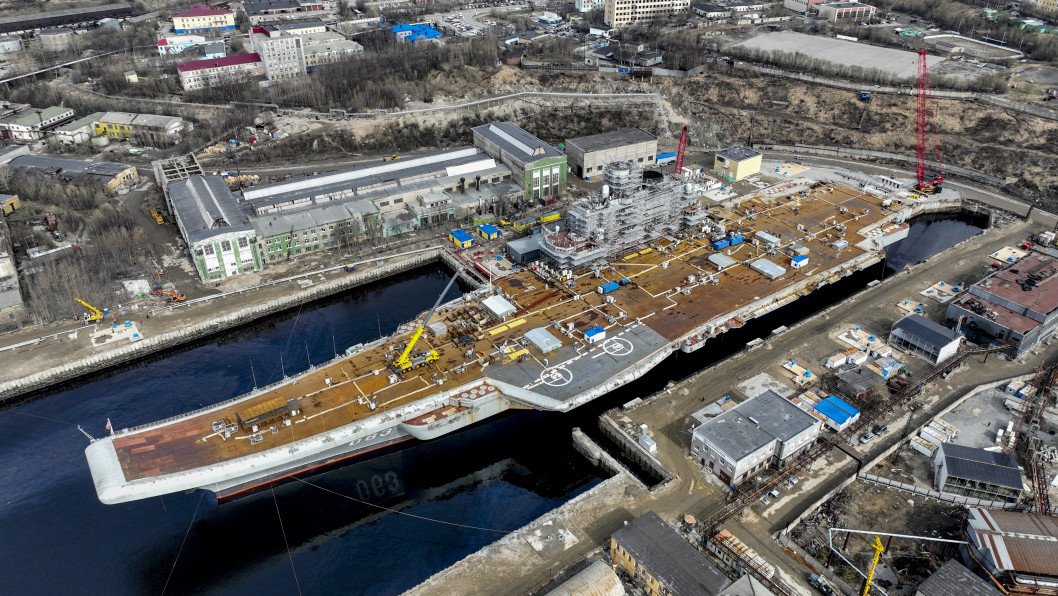
The Admiral Chabanenko, which previously served with Russia’s Northern Fleet, has been undergoing refit since 2014 at the 35th Ship Repair Plant—the same facility that spent seven years unsuccessfully attempting to overhaul Russia’s only aircraft carrier, Admiral Kuznetsov, before the vessel was eventually mothballed.
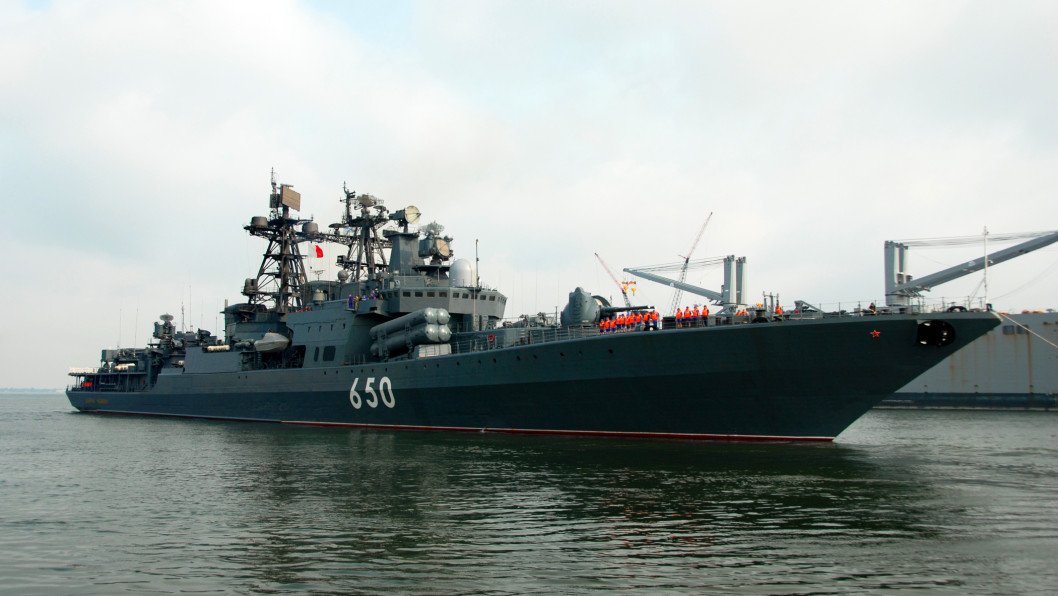
Although the plan was to upgrade Chabanenko with modern missile systems and convert it into a guided missile frigate, the warship could meet the same fate as the Kuznetsov, warned military analyst Dmitry Boltenkov.
“Everything depends on the Navy’s decision. Mothballing essentially means decommissioning in a few years. Once that happens, no one will bother with the ship anymore,” he said.
That concern is echoed by Ilya Kramnik of the Russian Academy of Sciences’ Institute of World Economy and International Relations (IMEMO), who said, “there is a chance” the Admiral Chabanenko will be mothballed.
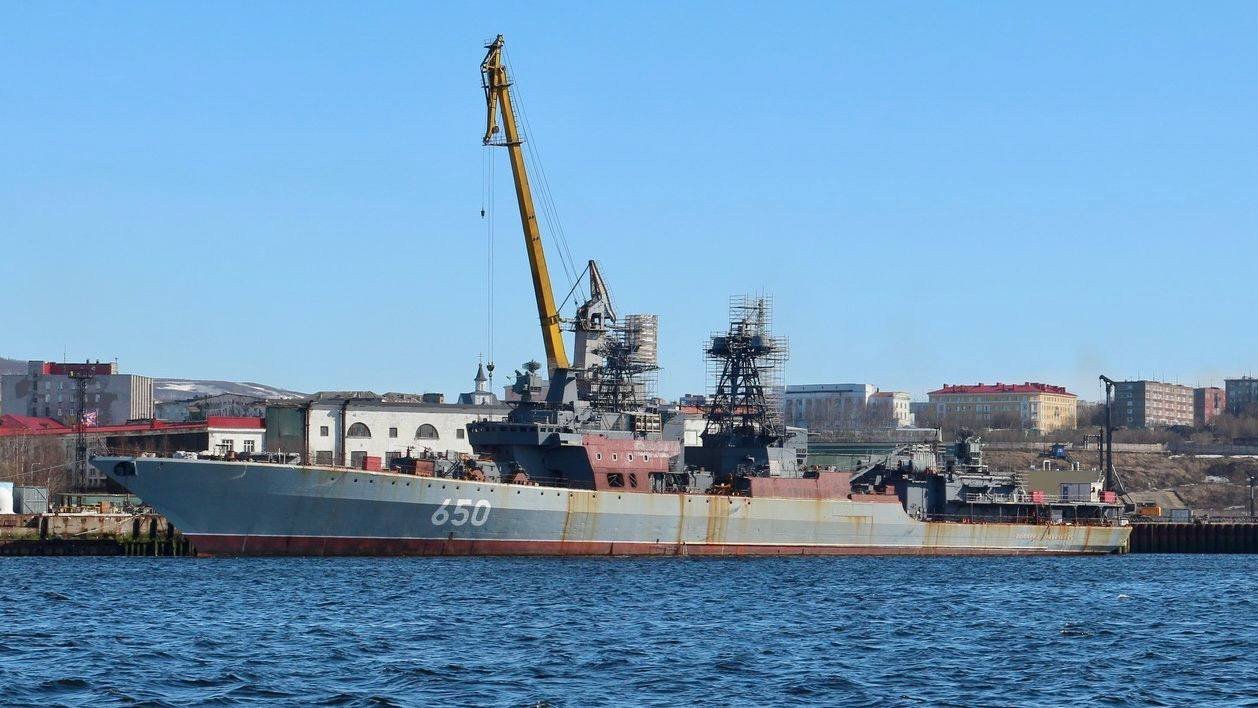
Kramnik described the 35th Shipyard as a “graveyard for ships” where project timelines are routinely missed, sometimes resulting in criminal investigations.
“The facility is in poor shape—both in terms of production capabilities and managerial competence,” Kramnik said. “And there’s an objective external factor: budget cuts across several naval programs.
Underfunding and the shipyard’s condition have caused unacceptable delays, and now the Navy keeps pushing the delivery date further and further.”
The United Shipbuilding Corporation (USC), which oversees the shipyard, did not respond to Izvestia’s request for comment.
Retired Russian Navy Captain First Rank Vasily Dandykin noted that mothballing the Kuznetsov may free up funds to complete the Chabanenko’s refit. He added that Russia is currently facing a shortage of ship repair capacity.
Despite the bleak outlook, Boltenkov said there is still some hope for a successful return to service. He pointed to the example of the Vice-Admiral Kulakov, another Udaloy-class destroyer that was eventually recommissioned after roughly 20 years of repairs.
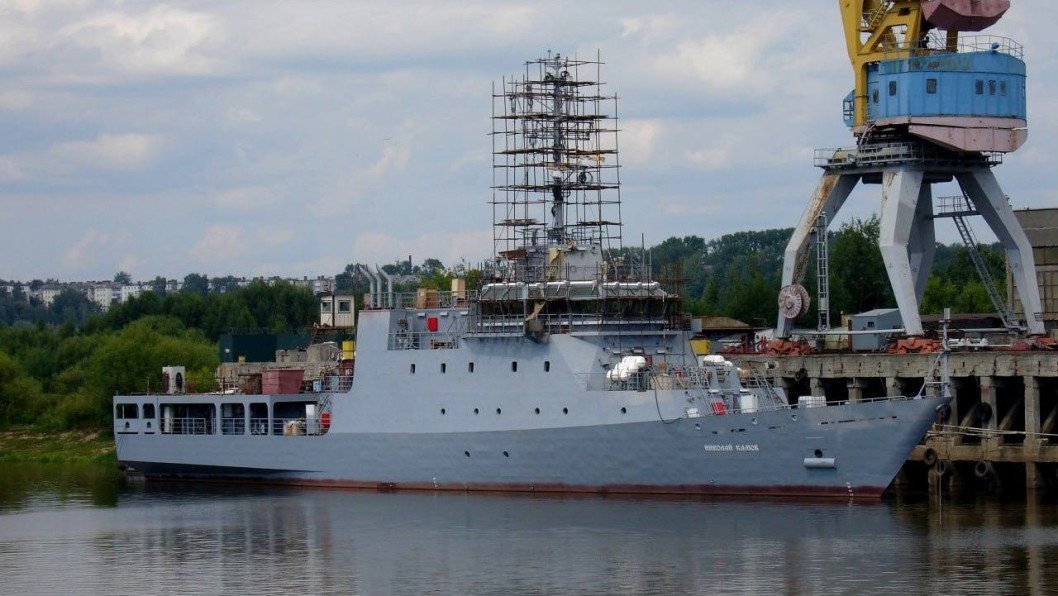
“If they complete the modernization of the Admiral Chabanenko, it could be a decent ship,” Boltenkov said. “There are no large new warships expected for the Northern Fleet in the coming years, so it makes sense to finish what was started.”
The Admiral Chabanenko, a Project 1155.1 vessel, was laid down in 1989 but not launched until the late 1990s due to the collapse of the Soviet Union. In 2009–2010, the ship participated in anti-piracy operations near the Horn of Africa and in the Gulf of Aden.
Before its overhaul, the ship was equipped with eight P-270 Moskit anti-ship missiles. The modernization plan envisioned replacing these with four launchers for a total of 16 Kh-35 anti-ship missiles, along with a universal vertical launch system capable of carrying 16 Kalibr or Zircon missiles.
Earlier, Ukraine’s Defense Intelligence Directorate (HUR) acquired a full set of classified internal documentation concerning the Russian Navy’s newest nuclear-powered ballistic missile submarine, “Knyaz Pozharsky”, part of the Borei-A (Project 955A) class.
Discuss this article:


-dd35be762f08867915b1187d08f5b7cb.jpg "Aftermath of a Ukrainian Neptune missile strike on a Russian Borisoglebsk airfield, October 15, 2026.")
-111f0e5095e02c02446ffed57bfb0ab1.jpeg "Photo of Roman Kohanets")
-f1e0a0eb8dc4159d1ee6f9483ef88571.jpg "Malambahe Sabtar Sabanal, a Philippine national identified by Ukrainian military intelligence as a Russian military recruit who was killed during assault operations in the Donetsk region. (Source: HUR)")


-72b63a4e0c8c475ad81fe3eed3f63729.jpeg "Photo of Cyril Barabaltchouk")