- Category
- Latest news
Executed Renaissance: Ukrainian Poetry Anthology Released in Swedish for the First Time
 Prefer U24 Media on Google
- Authors


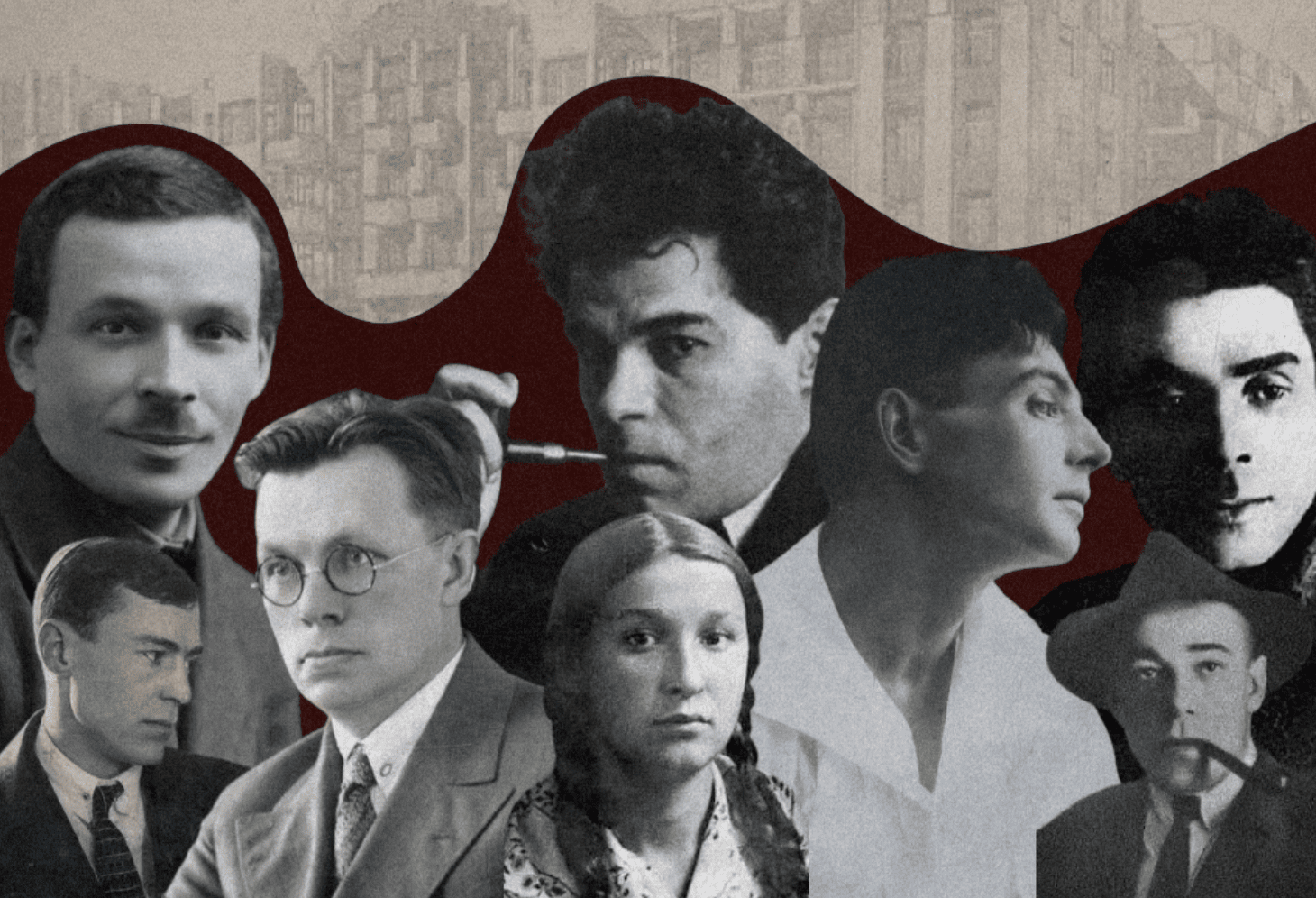
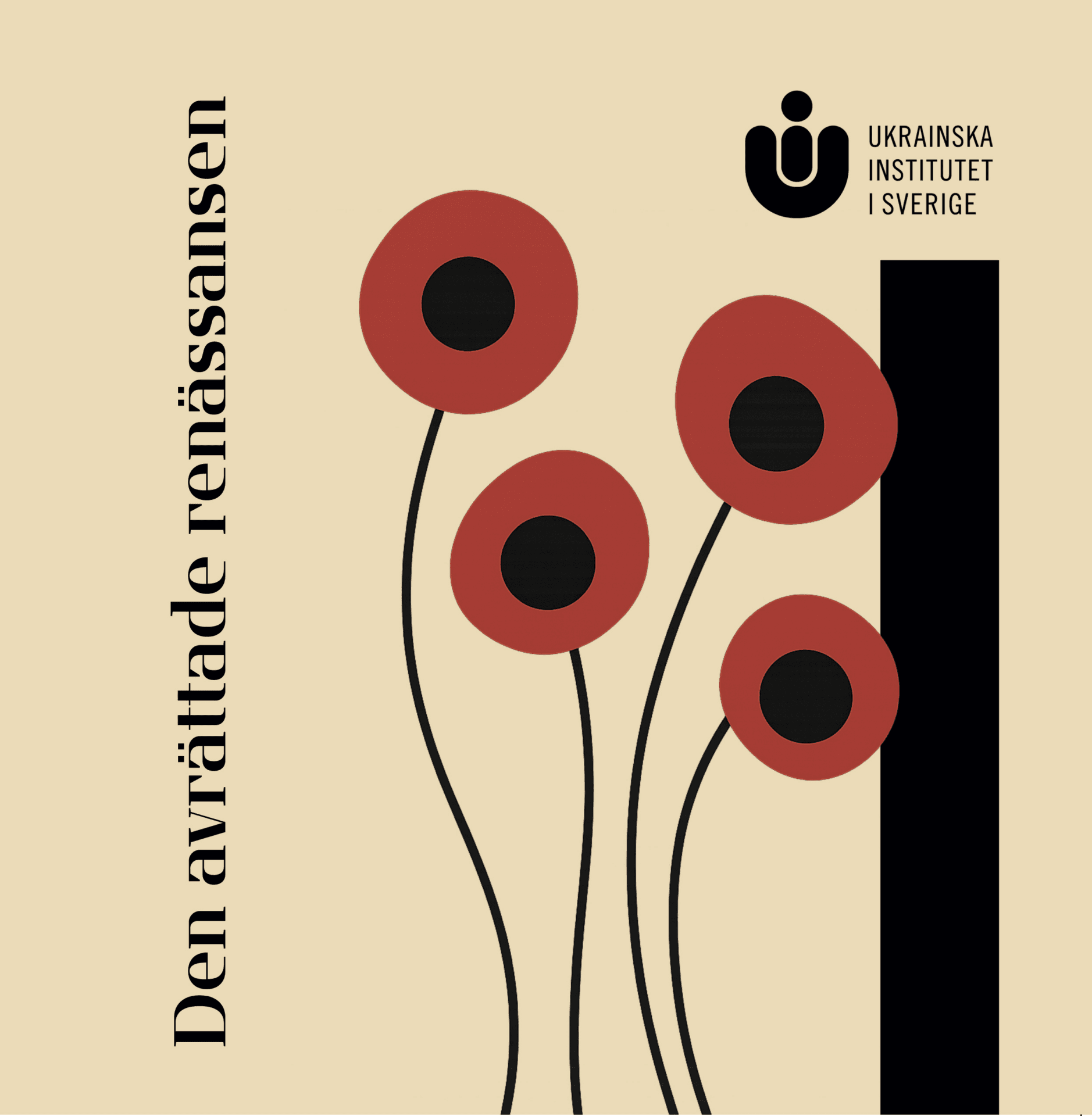
For the first time, an anthology of poetry from the Executed Renaissance—a generation of Ukrainian writers silenced by Soviet repression—has been published in Swedish under the title Den avrättade renässansen.
This was reported by representatives of the Ukrainian Institute (UI) in Sweden to Chytomo on November 9.
According to Chytomo on November 9, citing representatives of the Ukrainian Institute in Sweden, the collection features translated works from eleven prominent poets, including Mykola Khvylovy, Mykhailo Dray-Khmara, Maik Yohansen, Ladi Mohylianska, Yevhen Pluzhnyk, Mykhail Semenko, Volodymyr Sosiura, Volodymyr Svidzinsky, Raisa Troyanker, Pavlo Tychyna, and Mykola Zerov.
Beyond the poetry itself, the publication provides brief biographical narratives for each featured author and includes a dedicated preface authored by Nataliya Pasichnyk, a pianist, Doctor of Art History, and the Director of the Ukrainian Institute in Sweden.
The UI emphasized that the book “unveils a chapter of history largely unfamiliar in Sweden, while simultaneously presenting Ukraine as a nation possessing deep European cultural heritage.”
“The translation of these poets is more than just a literary endeavor; it is a means of restoring their rightful place in history, a place they were denied. It is also an integral component of Ukraine’s ongoing cultural decolonization and a path toward a more profound comprehension of the struggle for freedom that continues to this day,” Pasichnyk stated.
The Institute further noted that this anthology marks the first large-scale publication of Ukrainian literary classics in Swedish, observing that while “translations of contemporary Ukrainian literature into Swedish are steadily increasing, classic works remain largely unknown.”
What is Executed Renaissance?
The term Executed Renaissance refers to the cohort of Ukrainian literary and artistic figures active primarily in the 1920s and the early 1930s who were systematically eliminated by the Soviet regime.
A key symbol of this wave of Soviet repression and arrests is the “Slovo” House in Kharkiv. This six-story residential complex, completed in the late 1920s and designed by architect Mykhailo Dashkevych in the shape of the Cyrillic letter "S," was home to many of these intellectuals.
From 1933 to 1938, the Soviet authorities persecuted more than 70 artists residing in the building; tragically, 11 of them were executed in the Sandarmokh mass execution site. Over time, the collective group of cultural figures who perished during this period of terror became historically designated as the Executed Renaissance.
The unexpected cultural opening
In the early 1920s, the Ukrainian intelligence suddenly gained access to opportunities that were unimaginable during the era of the Russian Empire: a Ukrainian state where the development of Ukrainian language and culture was officially permitted. Although not all historical territories were integrated into the Ukrainian Soviet Socialist Republic, even this degree of statehood offered more certainty than the disenfranchisement previously endured under the imperial structure.
The environment of the 1920s was exceptionally conducive, even creatively stimulating, for artists. Following decades of severe suppression and formal bans—such as the Valuev Circular and the Ems Ukaz—a space for free creation in the Ukrainian language finally materialized. This freedom encouraged the pursuit of novel forms of self-expression and intensive artistic experimentation. Literary figures organized themselves into various associations based on shared aesthetic preferences and thematic interests, including “Pluh”, “Hart” which later became “VAPLITE” , and “Aspanfut” .
Concurrently, the readership expanded significantly as mass illiteracy eradication programs empowered workers and peasants to acquire literacy. This heightened demand spurred a diverse output, explaining the multifaceted nature of 1920s Ukrainian art.
The spectrum ranged from the accessible and precise humor of the highly popular Ostap Vyshnya, and the refined lyrical poetry of Volodymyr Sosiura, to the intellectual novels of Valerian Pidmohylny, the “vitalism romance” championed by Mykola Khvylovy, the avant-garde Futurist verse of Mykhail Semenko, and the Neoclassicism led by Mykola Zerov and his colleagues.
Ideological dictate and cultural colonization
The policy of Ukrainization was discontinued as abruptly as it began, giving way to an intense process of russification. Any expression of national consciousness was instantly branded as “bourgeois nationalism.”
The imposition of ideological control reached its culmination with the Central Committee of the All-Union Communist Party (Bolsheviks) resolution of April 23, 1932, “On the restructuring of literary and artistic organizations.” This directive dissolved all autonomous creative unions, including key structures like “VAPLITE” and “Pluh.”
Socialist Realism functioned not as an artistic movement, but as a set of rigid ideological dogmas designed to ensure the Party’s total control over artists. Its core requirements included Partisanship (mandatory expression of the Communist Party’s political line), a distorted Folksiness (meaning accessibility to the least educated masses and conformity to Party interests), and Historical Optimism (depicting reality exclusively “in its revolutionary development,” where conflict was artificially reduced to the “struggle between the good and the better”).
This pseudo-method served as a potent tool for cultural colonization, unifying and russifying national cultures. It supplanted national markers with generic Soviet ones, enforcing the imperial narrative of the “elder brother” (the Russian people) and reducing vibrant Ukrainian literature, which was oriented toward European traditions, to a provincial appendix.
Artists who resisted this new canon faced existential peril. Many were forced into silence or compelled to adapt. The tragedy of Symbolist poet Pavlo Tychyna, who transformed from the genius author of The Clarinets of the Sun into an official Soviet ode-writer, remains the most poignant symbol of talent destroyed by the totalitarian system.
Waves of physical terror and Sandarmokh
The curtailment of creative freedom was accompanied by direct physical terror, which unfolded across the territory of Ukraine in several devastating waves.
The First Wave (1929–1931) began with the orchestrated show trial of the fictional “Union for the Liberation of Ukraine” (SVU) in 1930. This process, involving 45 prominent cultural figures, signaled the start of mass arrests throughout the republic. Over 470 individuals were ultimately repressed in the SVU case.
The Second Wave (1932–1934) tragically coincided with the Holodomor of 1932–1933. In desperate protest against the genocide and the arrests of fellow writers, Mykola Khvylovy committed suicide in the Kharkiv "Slovo" House on May 13, 1933, an act that became a searing symbol of shattered hopes.
The Third Wave (“The Great Terror,” 1936–1938) was the apex of Stalinist purges. The mass extermination of the Ukrainian elite culminated in the Sandarmokh tract in Karelia. On November 3, 1937, over 100 representatives of the Ukrainian intelligentsia were executed there, including Les Kurbas, Mykola Kulish, Valerian Pidmohylny, and Mykola Zerov.
The Kharkiv “Slovo” House” became a tragic symbol: 33 out of 66 of its resident families were repressed (executed, sent to camps, or driven to suicide). Arrests were conducted by the NKVD based on fabricated charges, and confessions were extracted through brutal torture.
The chronology of these repressions is intrinsically linked to the Holodomor: the destruction of the intelligentsia, starting with the SVU trial, was strategically aimed at decapitating the Ukrainian nation and neutralizing potential resistance leaders ahead of the organized genocide.
Victims of the terror
Behind every repressed name stood a unique creative individual whose contribution to Ukrainian culture was priceless. Mykola Khvylovy (1893–1933), a prose writer, poet, publicist, and the primary ideologue of his generation, coined the rallying cry "Away from Moscow!", founded VAPLITE, and was a master of impressionistic short stories and profound psychological prose, exemplified by his work I (Romance). He committed suicide in protest against the escalating terror. Les Kurbas (1887–1937), a world-class director, actor, playwright, and theatre theorist, was the founder of the avant-garde “Berezil” theatre; he was executed at Sandarmokh.
In partnership with Kurbas, Mykola Kulish (1892–1937), the leading playwright of the era, created masterpieces of modern Ukrainian drama such as People's Malakhiy and Myna Mazailo, before being executed at Sandarmokh. Another figure executed there was Valerian Pidmohylny (1901–1937), a pre-eminent intellectual prose writer and translator. He authored The City, the first Ukrainian urban novel, which deeply explored the psychology of the individual in a metropolis and contained themes closely related to European existentialism. Mykola Zerov (1890–1937), the leader of the Kyiv Neoclassicists, was a poet, a brilliant translator of classical poetry (including Virgil's Aeneid), and a literary critic; he was also executed at Sandarmokh.
The terror extended to the visual arts, claiming Mykhailo Boichuk (1882–1937), a world-renowned monumental artist. He was executed in Kyiv alongside his wife, the artist Sofiia Nalepynska-Boichuk, and the majority of his monumental works were barbarically destroyed.
This vast martyrology includes hundreds of other names, such as Yevhen Pluzhnyk, Hryhoriy Kosynka, Mykhailo Dray-Kmara, and Ostap Vyshnya.
What the Executed Renaissance means for Ukraine’s cultural identity
This era symbolizes both creative rebirth and brutal loss. These were artists who sought to express a modern, European, and distinctly Ukrainian worldview—often blending experimental form with national themes.
In contemporary Ukraine, the Executed Renaissance stands as a symbol of cultural resistance, a reminder of how deeply rooted Ukraine’s European and humanist traditions are, and an essential part of reclaiming historical memory after decades of Soviet erasure.
Earlier, for the first time ever, a Ukrainian language textbook specifically designed for Finnish-speaking audiences was released in Finland. This new publication was co-authored by Svitlana Lyniva, a Ukrainian language instructor based in Tampere, and Laura Jurvakainen, an expert in Slavic languages.
Discuss this article: