- Category
- Latest news
First Documented US Anti-Air FPV Drone Test Successfully Intercepts Target
 Prefer U24 Media on Google
- Authors

-111f0e5095e02c02446ffed57bfb0ab1.jpeg "Photo of Roman Kohanets")
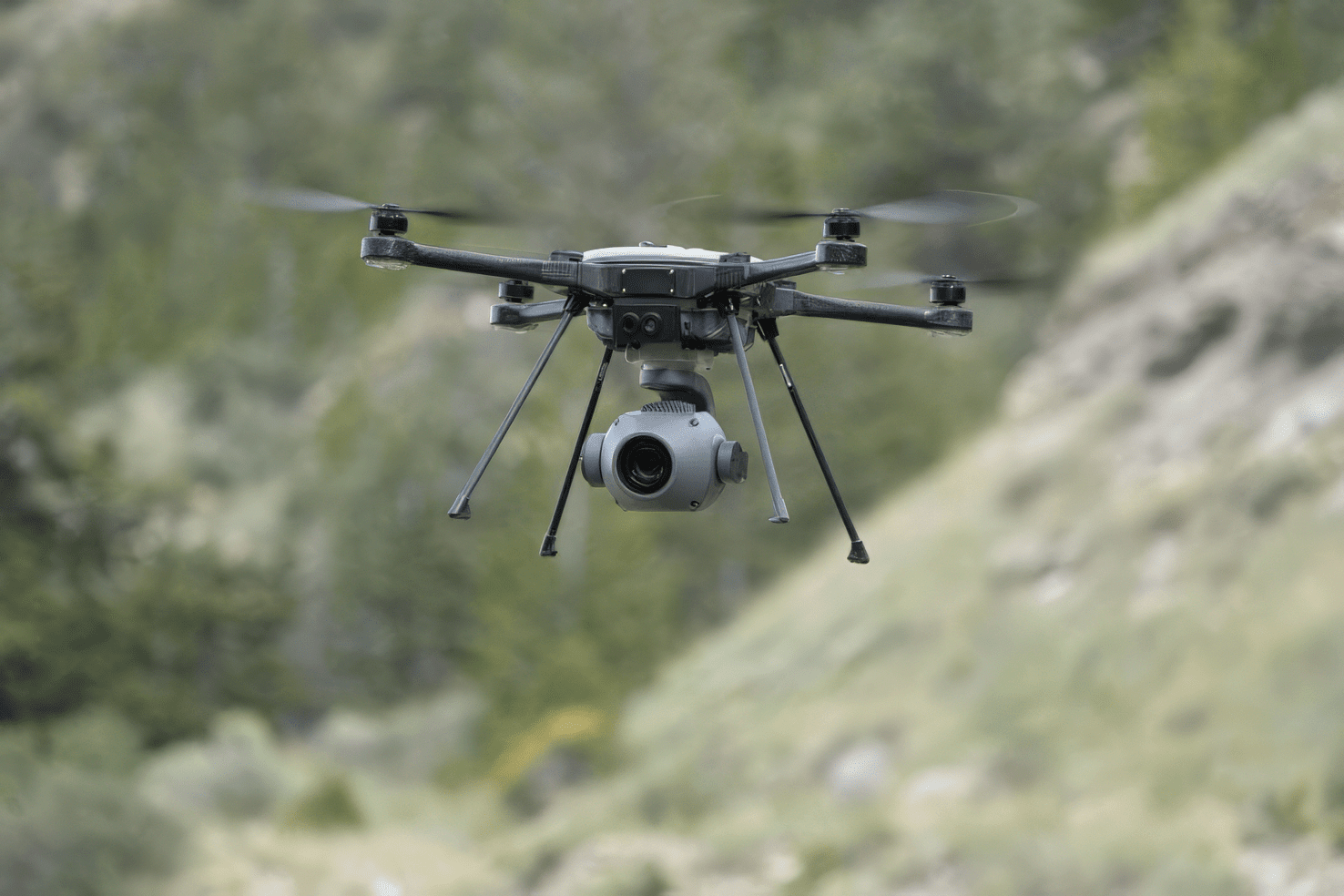
The US Army has conducted its first documented test of an anti-air FPV drone, achieving a UAV interception but revealing performance gaps compared to Ukrainian battlefield-proven systems. The trial, reported by Defense Express on August 13, 2025, was carried out by the 173rd Airborne Brigade in cooperation with the Pennsylvania National Guard and the Army Combat Capabilities Development Command.
The drone used in the test was the FLIR SkyRaider, a quadcopter platform primarily designed for aerial reconnaissance and payload delivery. The SkyRaider, produced by Teledyne FLIR Defense, is capable of carrying up to 2 kg of payload and can remain airborne for approximately 50 minutes under optimal conditions and is typically deployed for intelligence, surveillance, and reconnaissance tasks (ISR), rather than direct combat engagement.
For the interception test, the SkyRaider was adapted into a suicide-style anti-aircraft system by attaching a US-made M18A1 Claymore directional fragmentation mine.
The device was mounted to face forward, enabling a frontal blast pattern intended to destroy enemy UAVs upon approach.
The test successfully brought down a target drone, marking the first such recorded instance for the US military.
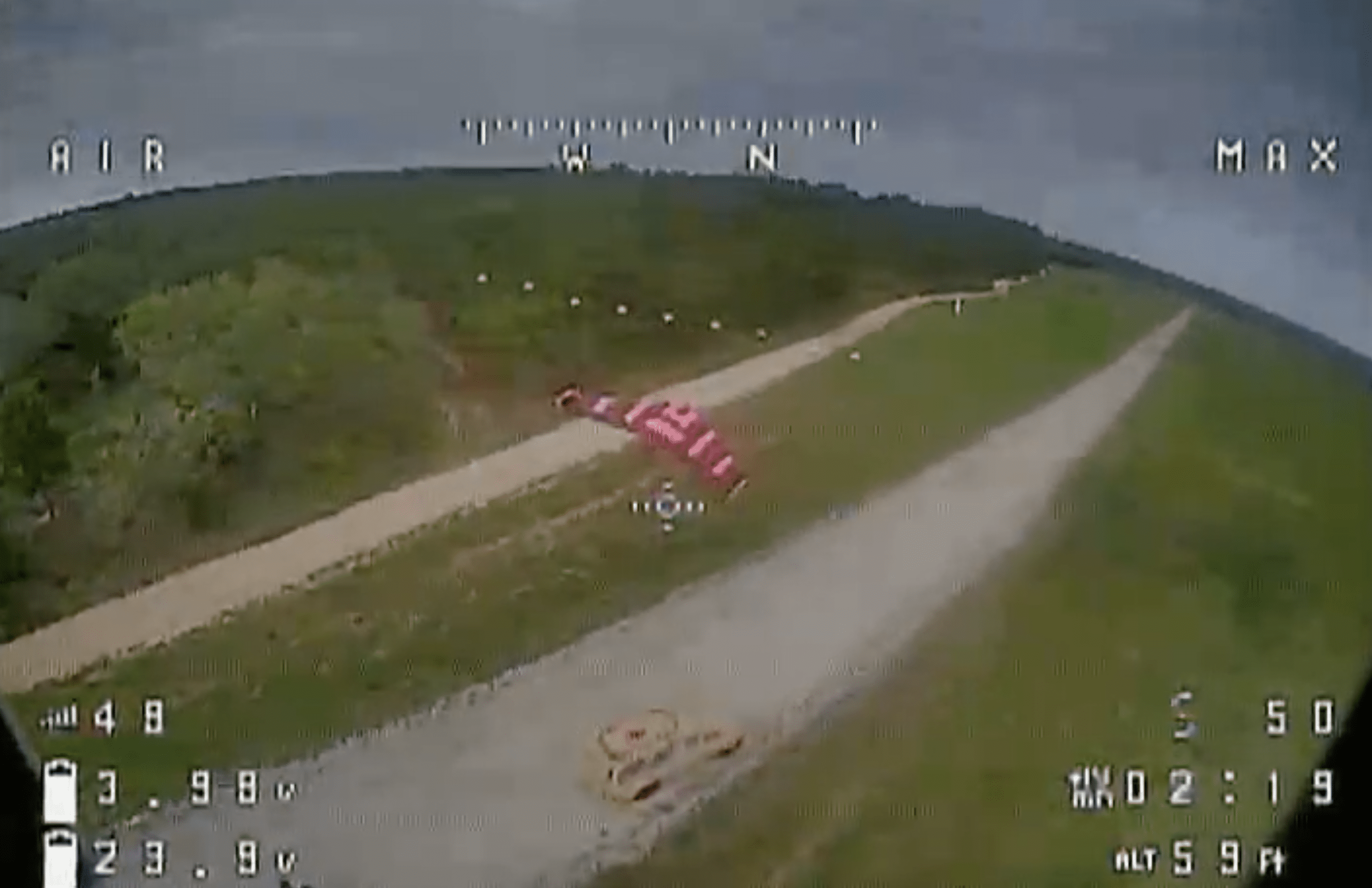
However, the adaptation exposed several shortcomings. The SkyRaider’s size, slower acceleration, and reduced maneuverability when carrying the Claymore made it less agile than smaller, combat-specialized Ukrainian FPV interceptors.
It also remains more vulnerable to electronic warfare disruption, given that its original design prioritized ISR mission profiles rather than contested-spectrum engagements.
It should be noted that these conclusions are based on a single low-quality video and a statement, making it impossible at this stage to accurately assess the drone’s characteristics.
While the US test demonstrates growing interest in low-cost, rapidly deployable counter-UAV options, analysts note that Ukrainian experience offers a ready-made blueprint for refining such capabilities. As Defense Express emphasizes, the challenge for the US will be integrating lessons from Ukraine’s extensive operational use into its own doctrine and procurement processes.
Earlier, it was reported that Ukraine deployed the Win_Hit FPV interceptor drone—capable of cruising at 200-220 km/h and accelerating up to 300 km/h—which proved effective in live-fire trials by neutralizing Shahed-type UAVs before they reached populated areas.
Discuss this article:



-c439b7bd9030ecf9d5a4287dc361ba31.jpg "Photo of Katherina Popilnichenko")