- Category
- Latest news
France to Pair V-MAX Hypersonic Glider with New 2,500 km Missile in Nuclear Expansion Push
 Prefer U24 Media on Google
- Authors

-c439b7bd9030ecf9d5a4287dc361ba31.jpg "Photo of Katherina Popilnichenko")
French President Emmanuel Macron has announced a new stage in the development of the country's nuclear deterrence strategy.
During a recent speech, he stated that France is working with Germany and Great Britain to develop a long-range, ground-based ballistic missile, according to Defense Express on April 17.
We bring you stories from the ground. Your support keeps our team in the field.
This project is part of the European Long-Range Strike Approach (ELSA) and aims to create a missile with a range of 2,500 kilometers.
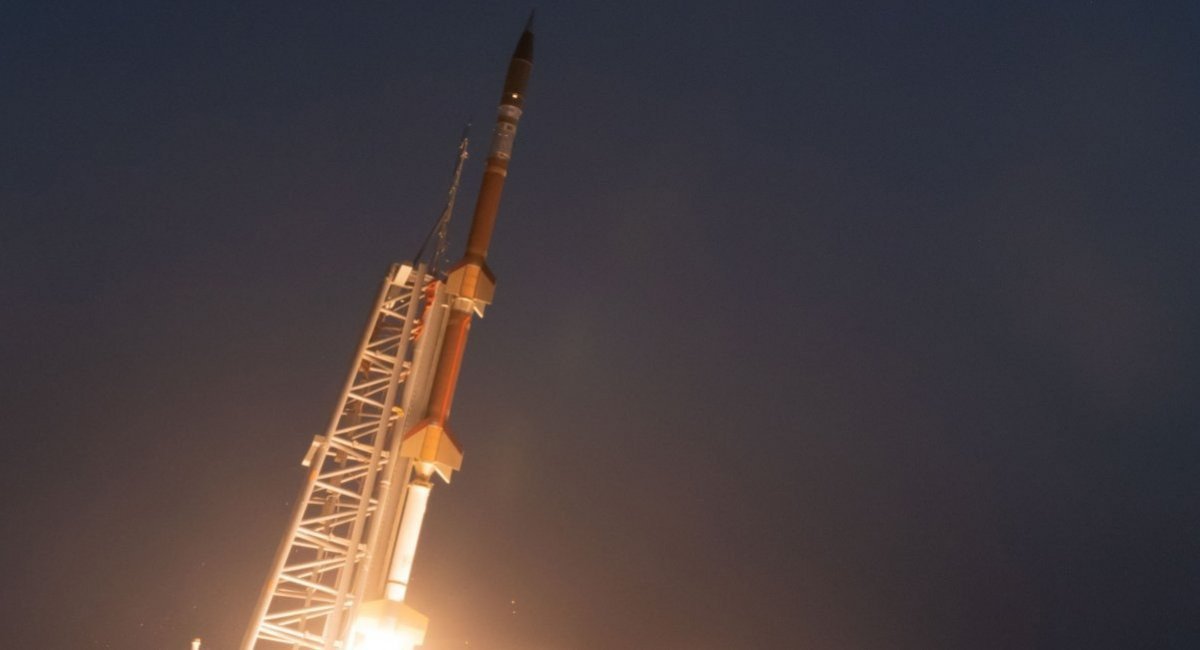
France also plans to combine its V-MAX hypersonic glider with this upcoming ballistic missile. The Ariane Group is currently developing the V-MAX glider, which will eventually be mounted on the missile to create a long-range hypersonic weapon.
Although the initial design for the 2,500-kilometer missile focuses on carrying conventional warheads, the integration of the V-MAX glider indicates a shift toward nuclear capabilities.
The V-MAX hypersonic glider is being designed as a tool to deliver thermonuclear charges over long distances. Its primary purpose is to bypass multi-layered air defense systems. By placing the V-MAX on the new ballistic missile, France could establish a ground-based nuclear strike capability.
Development of the V-MAX began in 2019, and the first test flight occurred in 2023 using an American launch vehicle. During that test, the glider demonstrated high maneuverability at hypersonic speeds.
Last year, France decided to move forward without further American assistance for testing and development. Future tests are expected to use French-made launch vehicles.
Despite the progress made with the V-MAX glider, the new ballistic missile is not expected to be ready soon. Research for the missile program is scheduled to begin this year with a budget of approximately $1.3 billion.
-3873ac369bf1de5a48a9208e6568548e.png)
Current estimates suggest the missile system will not be completed until the late 2030s. This timeline means that while the technology for the glider is advancing, the primary delivery system remains in the early stages of development.
In March 2026, French President Emmanuel Macron announced a strategic increase in the country's nuclear warhead count during a speech at the Île Longue naval base. He framed this buildup as a necessary response to a deteriorating international security environment, marking a significant shift from decades of post-Cold War reductions.
Alongside this expansion, Macron introduced a policy of strategic ambiguity, stating that France would no longer disclose specific figures regarding its nuclear holdings to bolster the credibility of its deterrent.
During the same period, German Chancellor Friedrich Merz confirmed that preliminary talks had begun with France to develop a joint European nuclear deterrence framework integrated within NATO structures.
Discuss this article:
-9bd5e1532102621f8fb1c4ba871a3171.png)