- Category
- Latest news
German Chancellor Urges EU to Bypass Hungary and Release Stalled 90 Billion Euro Ukraine Loan
 Prefer U24 Media on Google
- Authors

-72b63a4e0c8c475ad81fe3eed3f63729.jpeg "Photo of Cyril Barabaltchouk")
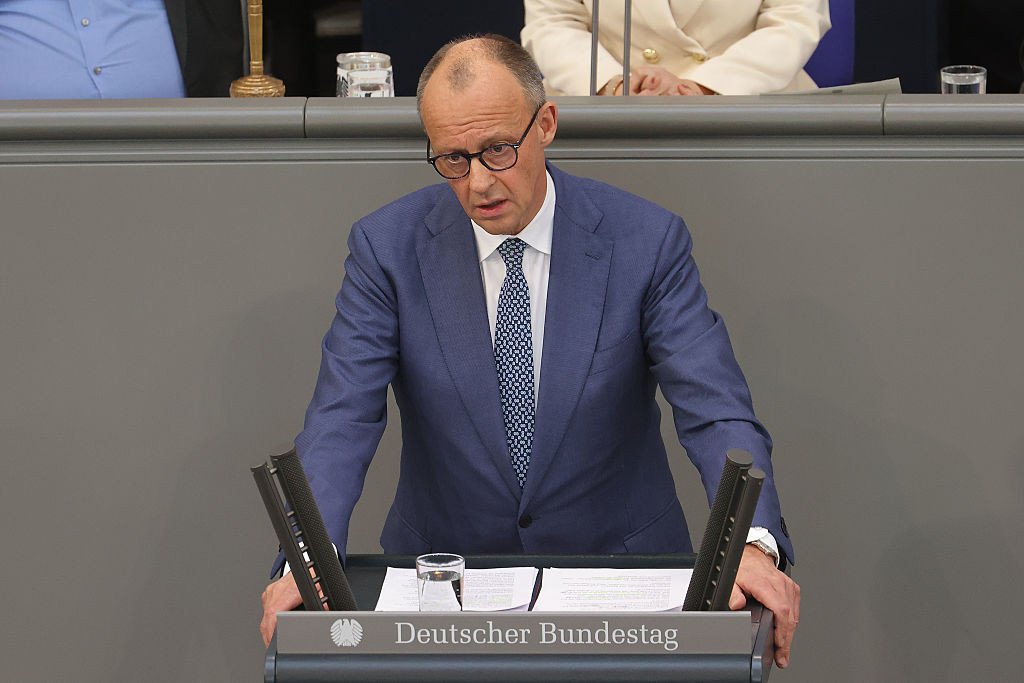
German Chancellor Friedrich Merz has called for the immediate release of a stalled €90 billion ($106 billion) EU loan for Ukraine, DW reported on March 18.
Speaking to the Bundestag ahead of a critical European Council summit, Merz urged member states to stop delaying the long-term financial package and the proposed 20th round of sanctions against Russia. He specifically took aim at internal political maneuvers within the bloc that have allowed a single nation to hold the continent’s security interests hostage.
We bring you stories from the ground. Your support keeps our team in the field.
“We must not pay attention even to a single country of the European Union, which now, for internal political reasons and because of the election campaign being conducted there, is creating this blockade in Europe,” Merz stated, in a clear reference to Hungary’s upcoming April elections, DW wrote.
Hungary’s blockade of the €90 billion EU loan is tied directly to the halt of Russian oil transit through the Druzhba pipeline, a crisis Hungarian Prime Minister Viktor Orbán has weaponized right before the Hungarian parliamentary elections in April. While Orbán publicly accuses President Zelenskyy of “political blackmail” and claims Kyiv deliberately cut off the flow to punish Budapest, the reality on the ground is purely a result of Russian aggression.
A Russian missile strike on January 27, 2026, near the Ukrainian town of Brody severely damaged critical pumping equipment, rendering the pipeline physically inoperable despite the Kremlin’s attempts to shift the blame. Nevertheless, Orbán continues to ignore these technical facts, using the energy shortage to fuel his campaign narrative that Ukraine is an “unreliable partner.”
-c4db41f234b5aff9081c95f106f0ac1f.jpg)
The €90 billion loan, intended to sustain Ukraine through 2027, has already been approved by both EU heads of state and the European Parliament but remains stuck in the European Council. Merz emphasized that now is the time to escalate pressure on Russia alongside US and European partners, rather than allowing domestic populist agendas to fracture Western unity.
European Commission President Ursula von der Leyen has previously assured that Kyiv will receive the funds “one way or another,” as the EU explores legal mechanisms to bypass national vetoes.
EU leaders have already agreed on the loan support package in December to ensure Ukraine’s financial stability through 2027, yet implementation was repeatedly delayed.
Currently, as the 20th sanctions package targets Russia’s shadow fleet and energy exports, Germany and France are clashing with Orbán over his continued use of the veto. To maintain the flow of aid, Brussels is increasingly considering “enhanced cooperation” procedures that would allow a majority of member states to move forward with military and economic support without unanimous consent.
Discuss this article: