- Category
- Latest news
German Olympic Chief Urges Ukraine’s Heraskevych to Drop Memorial Helmet at 2026 Games
 Prefer U24 Media on Google
- Authors


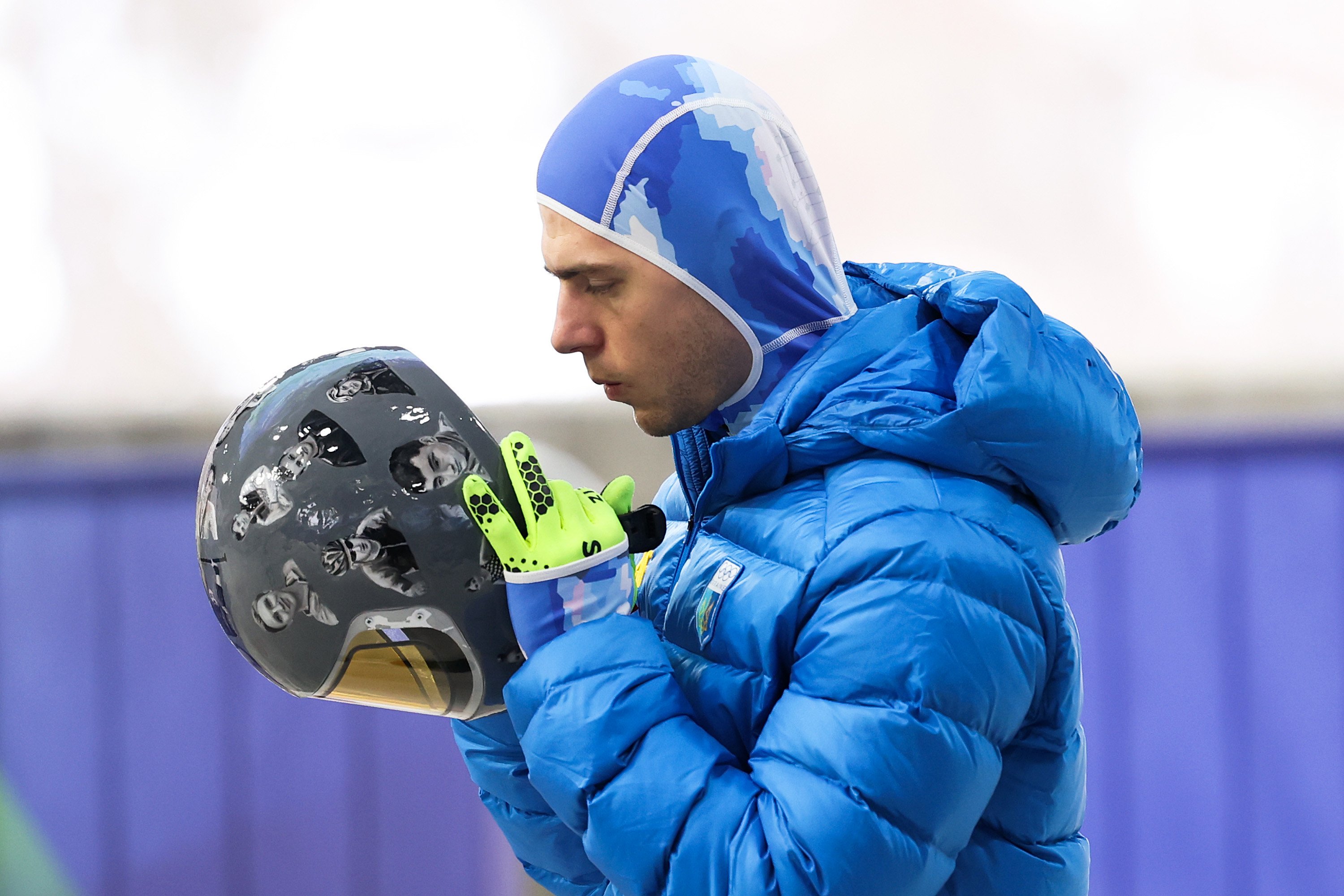
The head of the German Olympic Sports Confederation (DOSB), Thomas Weikert, urged Ukrainian skeleton racer Vladyslav Heraskevych to comply with Olympic regulations and refrain from competing at the 2026 Winter Games in Milan–Cortina wearing his “memory helmet,” dedicated to Ukrainian athletes killed in Russia’s war against Ukraine.
This was reported by Deutsche Welle, citing dpa on February 11.
We bring you stories from the ground. Your support keeps our team in the field.
Weikert said that athletes who choose to compete under established rules must ultimately respect them, and indicated that he would advise Heraskevych not to violate the existing guidelines.
At the same time, the DOSB president acknowledged the emotional and symbolic importance of the gesture. He noted that he understands the desire of an athlete to draw global attention to the fact that Russia launched an aggression against Ukraine, but emphasized that political statements should be made outside the field of play.
Heraskevych, who is serving as Ukraine’s flag bearer, has previously stated that he received a formal warning from the International Olympic Committee (IOC), instructing him to avoid public protests related to Russian aggression during the Games.
According to Detsche Welle, speaking at a press conference earlier, Heraskevych made clear that he does not intend to abandon the helmet featuring photographs of Ukrainian athletes killed during the war.
He also rejected the IOC’s suggestion that he wear a black armband instead.
“I see the faces on my helmet, and I will not betray these athletes. My plan is to compete in this helmet at all training sessions and on competition day. I do not agree with the IOC’s decision because we have not violated any rules. Political propaganda, discrimination or racism… This is definitely not about this helmet. As you can see, all these athletes were killed. But their voices are so loud that I can hear them. Black armbands? The IOC does not have enough black armbands to honor everyone killed in this war,” Heraskevych said.
The images on his helmet depict athletes from a broad spectrum of sports — including biathlon, boxing, athletics, figure skating, hockey, fencing, cycling, combat disciplines, and dance—alongside coaches and young competitors.
Those portrayed include biathlete Yevhen Malyshev, figure skater Dmytro Sharpar, strongman Pavlo Ishchenko; boxer Maksym Halinichev, cyclist Andrii Kutsenko, hockey player Oleksii Lohinov, kickboxer Karina Bakhur; diver Mykyta Kozubenko, track and field athletes Roman Polishchuk, Kateryna Troian, and Volodymyr Androshchuk, Greco-Roman wrestler Andrii Yaremenko, Invictus Games team coach Taras Shpuk and others.
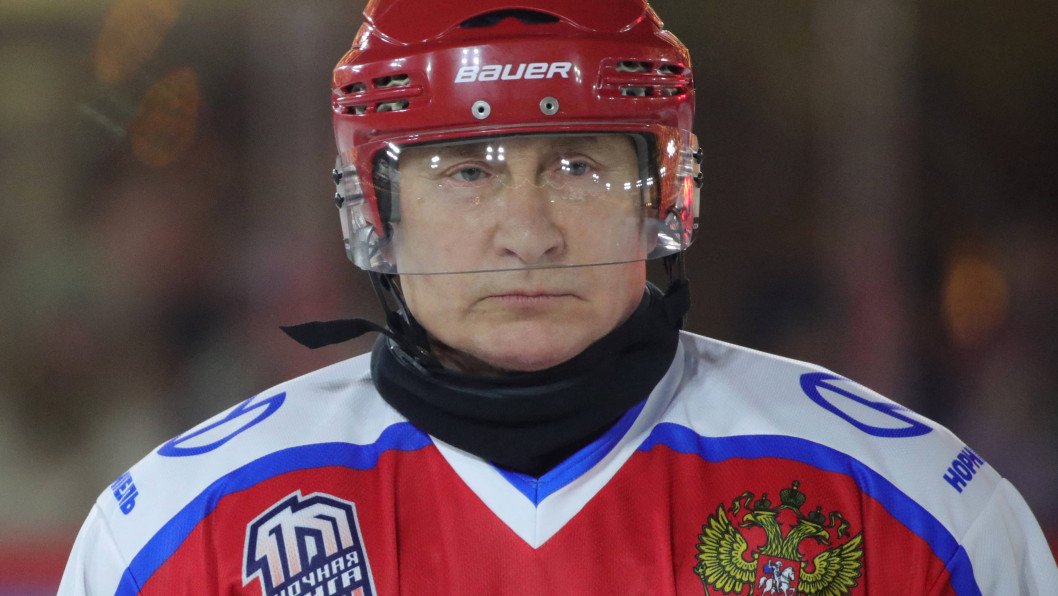
The debate over Heraskevych’s helmet is unfolding against a broader backdrop in international sport, where Russia’s possible reintegration remains deeply controversial.
Although some global sports organizations have recently signaled greater openness to allowing Russian athletes back into competition, unresolved concerns over state-sponsored doping continue to cast a long shadow over any full return.
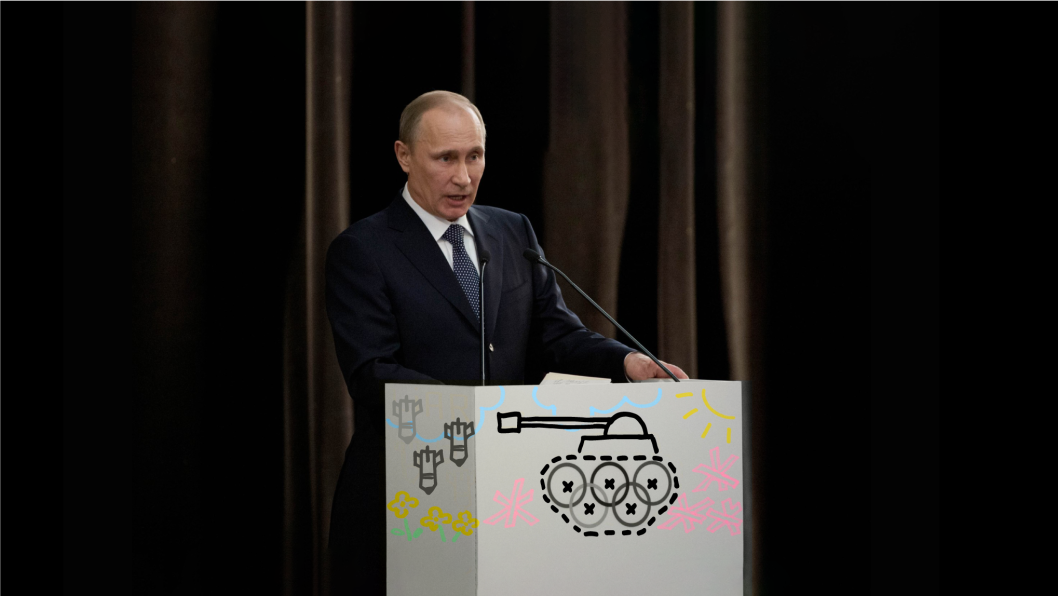
According to The New York Times, discussions during a recent two-day meeting of the International Olympic Committee in Milan reflected a growing willingness among some officials to consider easing restrictions, even as Russia’s full-scale invasion of Ukraine approaches its fourth anniversary.
Russia’s exclusion from much of international sport began years before the war in Ukraine. In 2016, a report commissioned by the World Anti-Doping Agency concluded that Russia had operated a “state-dictated” doping system between 2011 and 2015, allowing more than 1,000 athletes to use banned performance-enhancing substances, according to The New York Times.
Earlier, several international biathletes at the 2026 Winter Olympics in Italy voiced solidarity with Ukrainians facing large-scale power outages caused by Russian attacks after Ukraine’s mixed relay team finished in the top eight.
Athletes from France, Norway, Sweden, Finland and Italy equally expressed concern over the situation.
Discuss this article:

-72b63a4e0c8c475ad81fe3eed3f63729.jpeg "Photo of Cyril Barabaltchouk")

-111f0e5095e02c02446ffed57bfb0ab1.jpeg "Photo of Roman Kohanets")