- Category
- Latest news
Hungary Turns to Shell in $2B Gas Deal, First Major Step to Ease Russian Dependence
 Prefer U24 Media on Google
- Authors


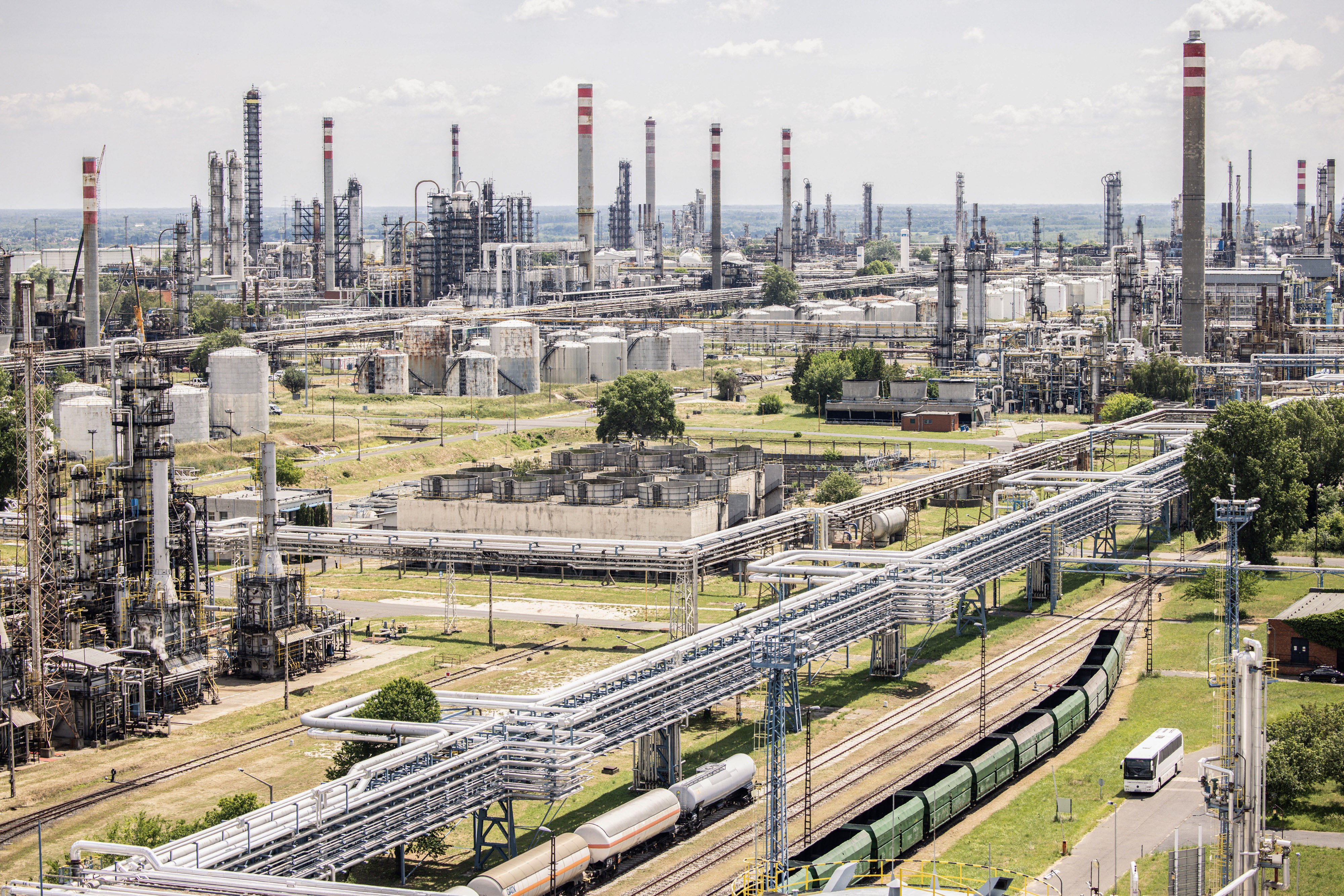
Hungary has signed a decade-long gas supply contract with Shell Plc, signaling one of its first tangible steps toward diversifying away from Russian energy as the European Union pushes to phase out Moscow’s fossil fuel exports, according to Bloomberg on September 9.
Foreign Minister Peter Szijjarto confirmed that the agreement covers 2 billion cubic meters of natural gas to be delivered over ten years starting in 2026.
Supplies will flow through Czech and German pipelines, he said in an interview at the Gastech conference in Milan.
The deal comes as the EU prepares to ban Russian fossil fuel imports by the end of 2027, a policy Budapest has resisted. Hungary has deepened its energy partnership with Russia since the invasion of Ukraine and has repeatedly urged Brussels to compensate member states for the costs of diversification.

“We have been negotiating some other contracts with other Western suppliers, but we are not there yet to announce,” Szijjarto said.
Despite the new Shell contract, Hungary remains heavily dependent on Russian gas. It maintains a long-term deal with Gazprom for 4.5 billion cubic meters annually through 2036, a supply arrangement that has been topped up with additional purchases since 2022.
Szijjarto warned that the EU’s transition plan still poses a “major risk” to Hungarian energy security, pointing to the lack of sufficient pipeline connections to other markets.
Hungary is also looking to nuclear power to cut its gas reliance. The government plans to double its atomic energy capacity by adding two new reactors, which Szijjarto said would allow the country to halve its gas imports and cover up to 70% of electricity needs domestically.
“That’s a dimensionally different situation,” he said. “We hope that we can move forward in a way that the two new reactors can be connected to the grid the first half of the next decade.”
Earlier, Szijjártó commented on energy imports during a press conference on Friday following the meeting of the joint Hungarian-Azerbaijani Economic Committee.
“Let us not be fooled by the hypocrites, because a significant number of those who are the most vocal in criticizing Hungary and Slovakia for their oil purchases are also buying Russian oil, only indirectly, through certain Asian countries. (…) They do this so that they can buy the oil more cheaply,” Szijjártó said.
Discuss this article:



-72b63a4e0c8c475ad81fe3eed3f63729.jpeg "Photo of Cyril Barabaltchouk")

-111f0e5095e02c02446ffed57bfb0ab1.jpeg "Photo of Roman Kohanets")