- Category
- Latest news
How Ukrainian Athletes Are Quietly Reminding the World About Russia’s War
Ukrainian athletes have emerged as powerful symbols of resilience and dignity, even as the ongoing war has forced them to shift their focus from the sport they love to the greater struggle for their country’s freedom.
 Prefer U24 Media on Google
- Authors


Whether it was Vladyslav Heraskevych displaying a “No War in Ukraine” banner at the 2022 Beijing Winter Olympics or the Ukrainian team’s strategic boycott of the 2026 Winter Paralympic Games’ opening ceremony, these acts of protest have become as much a part of the athletes’ identities as their sports. With the world watching, Ukrainian athletes continue to raise their voices, not just for medals, but for the very survival of their country and its values.
2022 — Beijing, China

The Winter Olympics in Beijing saw the first protest gesture from a Ukrainian athlete. Two weeks before Russia’s full-scale invasion, Ukrainian Olympic skeleton athlete Vladyslav Heraskevych, after completing his third run at the Beijing Olympics, silently displayed a banner reading “No War in Ukraine” against a blue and yellow background. At 23 years old, the athlete seemed to draw attention to the tense situation along Ukraine's border with Russia.
Geraskevych avoided any punishment after officials stated that his action did not violate the Olympic Games' rules prohibiting political protests.
“This is my position, like any normal person, I don’t want war. I want peace in my country, and I want peace in the world; no one wants this (war). This is my stance, I fight for this, I fight for peace,” Heraskevych told journalists.
He added that people in Ukraine were extremely "nervous," with much of the news focusing on weapons and military activity around Ukraine.
“It’s abnormal, not in the 21st century. Before all of this starts, I wanted to show the world my position,” the athlete said.
2024 — Paris, France
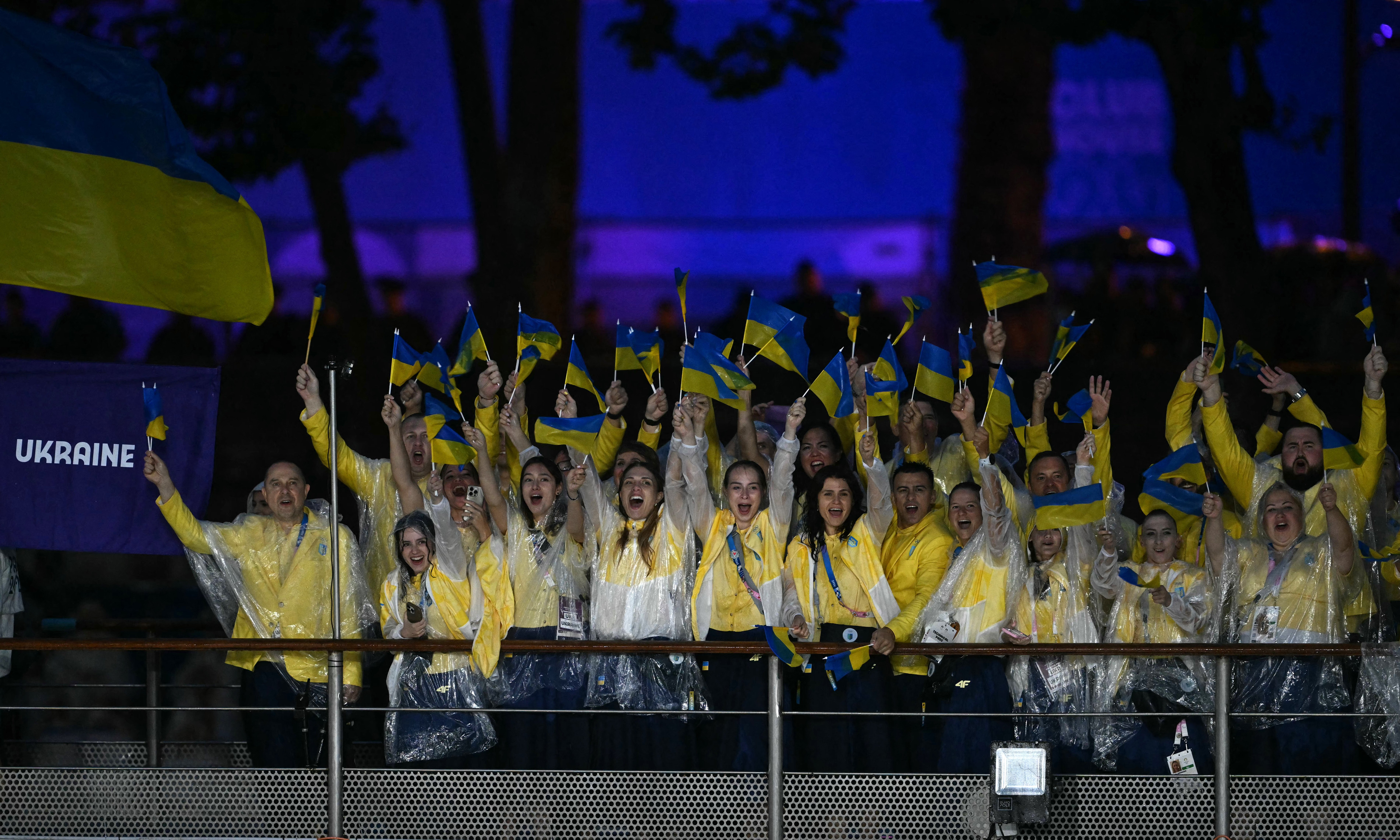
In 2024, two years after the onset of Russia's war against Ukraine, the National Olympic Committee and the Ministry of Youth and Sports of Ukraine approved guidelines for Ukrainian athletes regarding their interactions with Russian and Belarusian competitors ahead of the Summer Olympics.
These recommendations were developed to protect Ukrainian athletes from provocative situations and ensure the safety of members of the official Ukrainian delegation at the Games in the French capital. The document outlines several key guidelines that Ukrainian athletes, coaches, official delegation members, and others present in France during the 2024 Olympics are advised to follow.
Athletes were advised to refrain from direct contact with representatives of aggressor countries, as such contact could provoke actions both inside and outside the Olympic Village. Any provocative actions from Russians or Belarusians should have been reported to the delegation leadership or a higher-ranking official. Athletes were also advised to avoid communication on social media with Russians and Belarusians, refrain from engaging in discussions, avoid reacting to their content, and not post joint photos or videos.
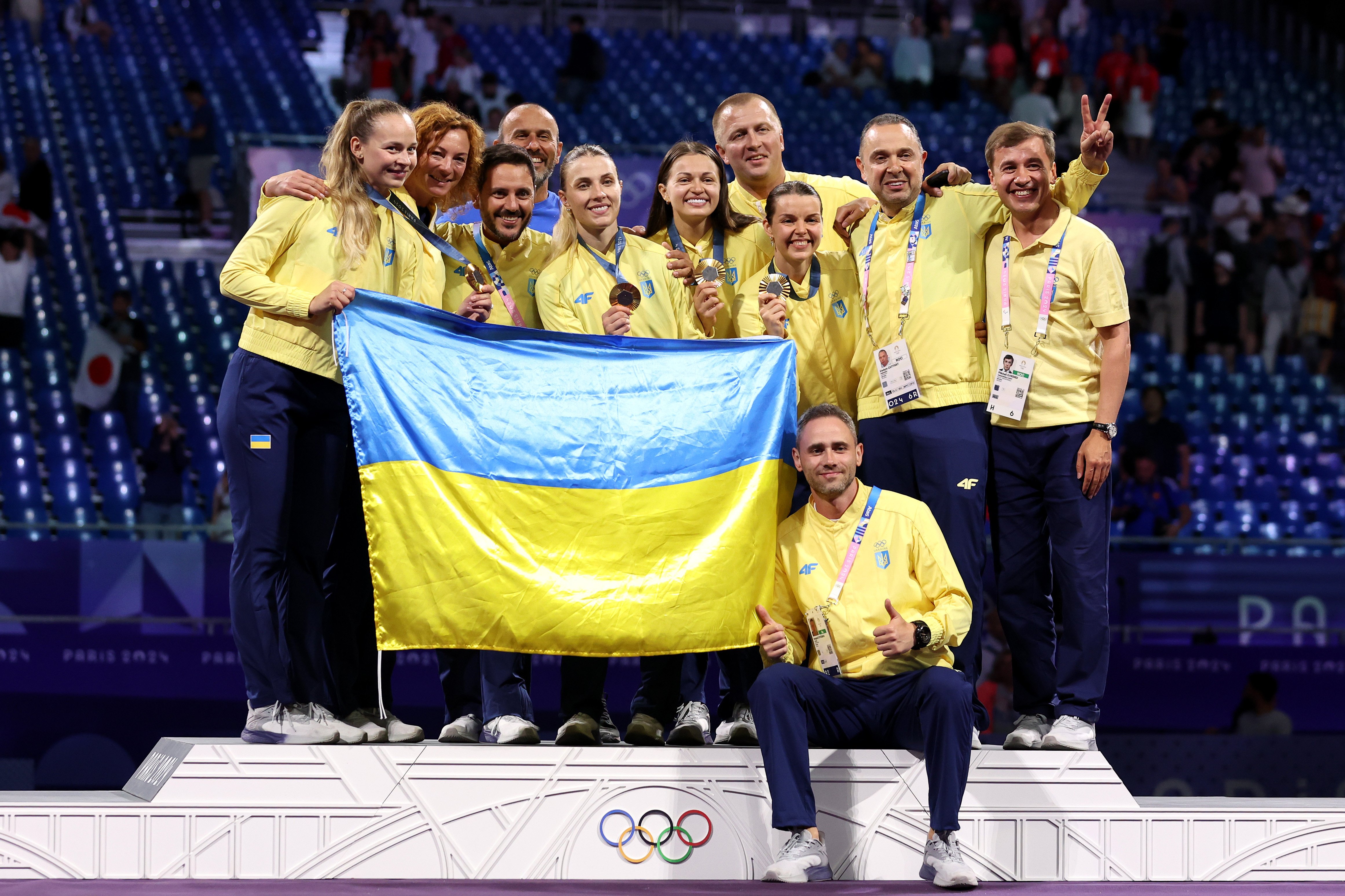
During and outside award ceremonies, athletes should maintain distance from Russian and Belarusian representatives, and refrain from taking joint photos or videos. Participation in joint press conferences, live broadcasts, interviews, and other promotional events should also be avoided.
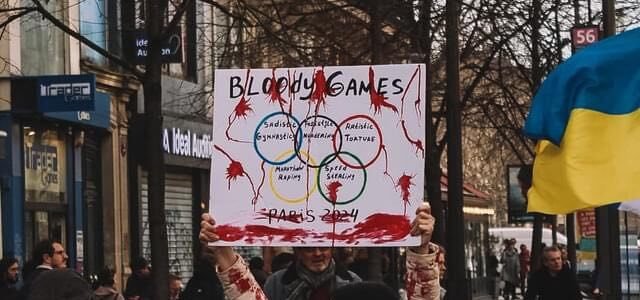
In addition, the Ukrainian community in France had prepared to protest the participation of “neutral” Russian and Belarusian athletes at the 2024 Olympic Games in Paris, as revealed by Volodymyr Kogutyak, UWC Vice President for Western Europe.
Kogutyak mentioned that the Ukrainian community had been exploring various ways to keep the world aware of the actions of Russians and Belarusians, noting that the Olympic Games had provided a perfect opportunity for this.
Anastasia Rybachok, Ukrainian canoist, wanted to compete with her canoe, which had the inscription “I am Ukrainian” at the Paris 2024 Olympic Games. However, before the start of the Olympics, the inscription on the canoe had to be modified. A part of it was covered due to the requirements of the International Canoe Federation.
According to the head coach of the Ukrainian national team, Ihor Nagayev, when the full-scale war began, there were no such demands from the International Canoe Federation. However, this year, the situation changed.
“If we put any slogan on the canoe, they make us cover it. This surprises and annoys us,” said the coach.
He also added that even the phrase “Glory to Ukraine—Glory to the Heroes,” which had been placed on some canoes at international competitions, was also forced to be covered. For the coach, this has become the norm, though for Europeans, such inscriptions are seen as political.
⚡ Ukrainian canoeist Anastasia Rybachok was forced to paint over the "I am Ukrainian" inscription on her boat at the #Olympics.
— UNITED24 Media (@United24media) August 7, 2024
According to her sponsor, the BGV Group, the International Canoe Federation claims the phrase to be 'propaganda'.
📷: BGV Group, Hromadske pic.twitter.com/bHrF4K750S
Ukrainian fencer Yuliia Bakastova also played a significant role in the Ukrainian team's actions regarding the participation of Russian and Belarusian athletes in the 2024 Olympics. Bakastova reflected on the Ukrainian approach to the Games and the stance they had taken against the presence of Russian athletes in the interview with Svidomi..
“We tried to show through the boycott that we did not want to see Russians at the Olympics. The IOC, of course, did not react very well. For them, if you don't want to take part in the competition, so be it. Then our country changed its tactics. It showed that it was ready to fight and that we were not going to give up. But we will not shake hands with the Russians and show our respect for them as athletes,” she stated.
2026 — Milano Cortina, Italy. Winter Olympic Games
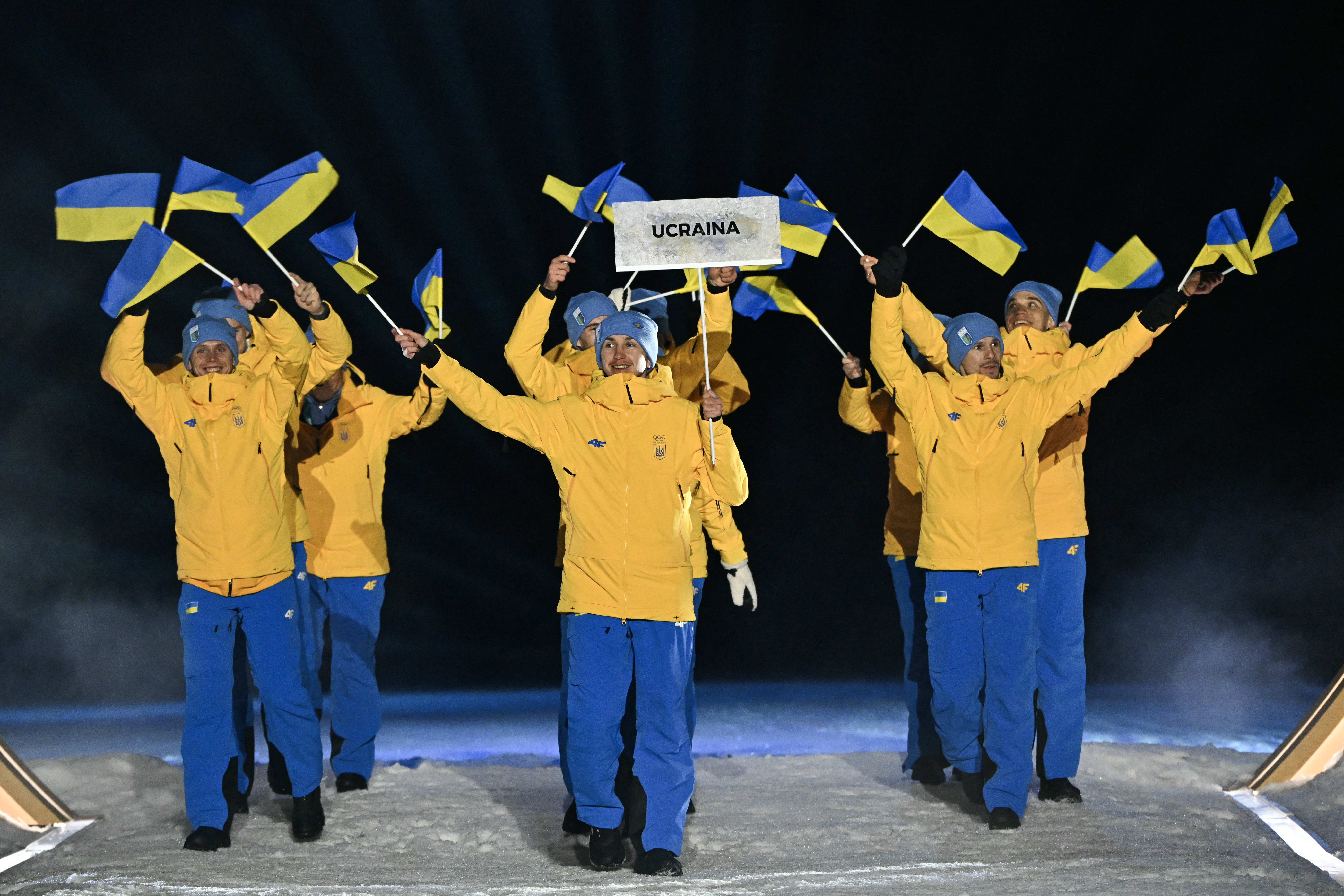
During the Winter Olympics, Vladyslav Heraskevych, the Ukrainian skeleton racer, wore a helmet honoring Ukrainian athletes who had been killed as a result of Russia's invasion. However, the International Olympic Committee (IOC) prohibited him from using it during official training sessions and competitions ahead of the event.
The athlete explained that the helmet was intended to send a powerful message to the international community and serve as a tribute to Ukrainian athletes who were once part of the Olympic movement but would “never again be able to step onto a sporting arena.”
Heraskevych was later disqualified from the competition due to his decision to compete in the helmet.
⚡️ Ukrainian skeleton racer @heraskevych honors fallen Ukrainian athletes at 2026 Games
— UNITED24 Media (@United24media) February 9, 2026
The Olympian unveiled a powerful tribute during his first training sessions, wearing a helmet featuring the portraits of Ukrainian athletes killed by Russia, Suspilne reports.
"Some of… pic.twitter.com/rUqT20RLn6
Ukrainian lugers held a demonstration in support of Ukrainian skeleton athlete Vladyslav Heraskevych at the 2026 Winter Olympics.
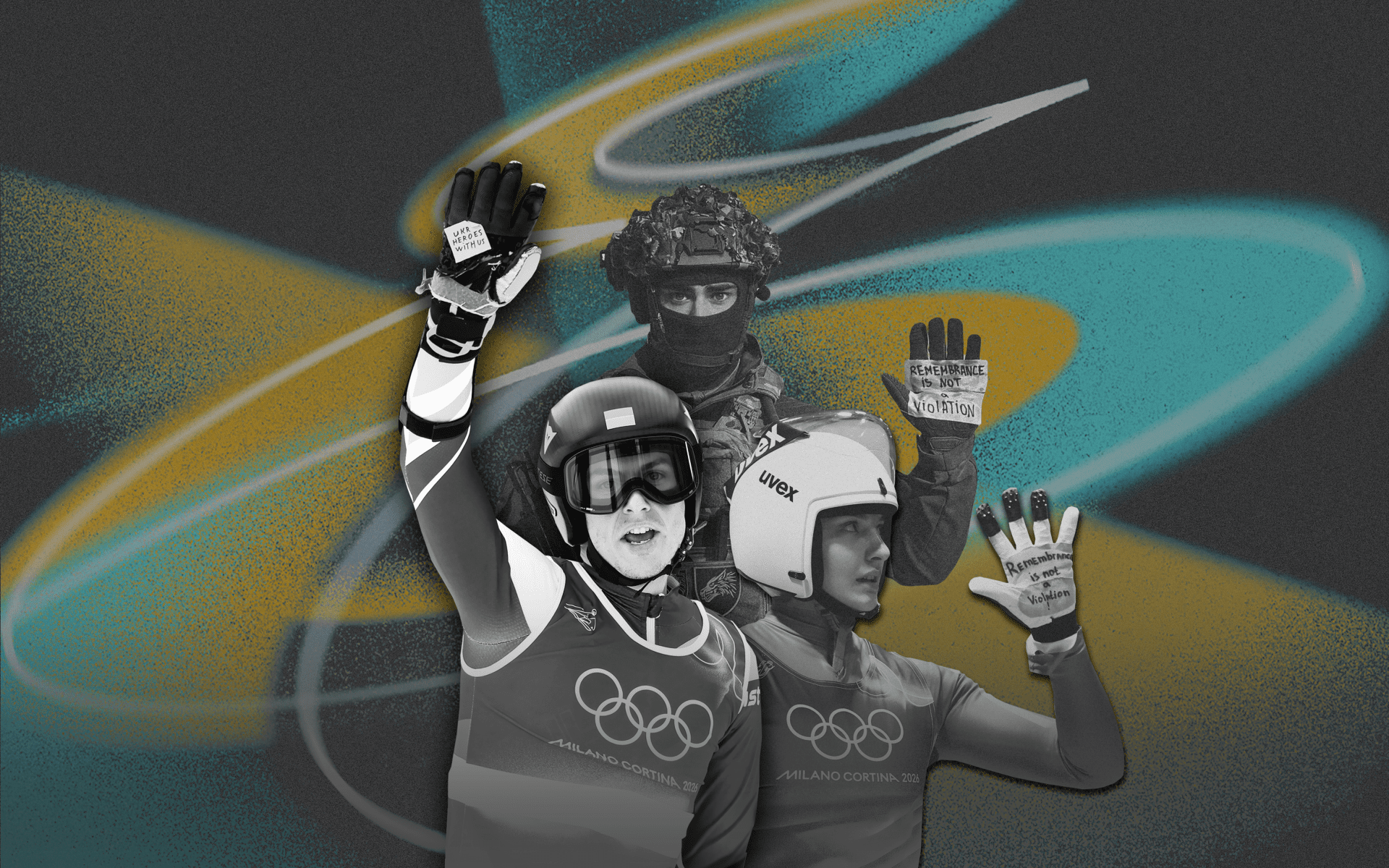
On February 10, the singles luge competition took place, featuring two members of the Ukrainian team—Olena Smaga and Yulianna Tunitska. During her third run at the 2026 Olympics, Olena Smaga wore gloves with the inscription: “Remembrance is not a violation.”
“It was a message saying that memory cannot be banned. Memory is not politics; it cannot be forbidden or taken away,” Smaga explained.
"Remembrance is not a violation."
— UNITED24 Media (@United24media) February 10, 2026
Ukrainian luge athlete Olena Smaha shows support for Olympic teammate Vladyslav Heraskevych. pic.twitter.com/tAxPcMRPOt
Ukrainian skier Dmytro Shepyuk showed his support for his fellow countryman Vladyslav Heraskevych during the super-G event at the 2026 Winter Olympics, where the IOC had prohibited Heraskevych from competing with his “memory helmet.”
After finishing his run in the super-G competition, the 20-year-old athlete displayed a message on his glove that read, “Ukr heroes with us.”
Ukrainian freestyle skier Kateryna Kotsar wanted to compete in a helmet featuring the phrase “Be brave like Ukrainians,” but the International Olympic Committee banned her from using her patriotic helmet at the 2026 Winter Olympics.
Kotsar explained that she had a signature helmet she competed in. About a week before the Olympics, she received an email informing her that the IOC had classified her helmet as “propaganda,” which meant she could not wear it during the Games.
After the IOC banned Ukrainian skeleton racer Vladyslav Heraskevych’s memorial helmet, freeskier Kateryna Kotsar shared a similar experience.
— UNITED24 Media (@United24media) February 11, 2026
Her signature “Be Brave Like Ukrainians” helmet was considered “propaganda” by the IOC. pic.twitter.com/FGxC3pj4Sk
Ukrainian short-track speed skater Oleh Handei says he was forced to cover a phrase about “heroism"“on his helmet because it was interpreted as a reference to the war.
The inscription was a quote from Ukrainian poet Lina Kostenko: “Where there is heroism, there can be no final defeat.” For the athlete, it was a personal motivation before his 1500-meter race. However, for Olympic officials, it was considered a violation of the rules regarding political statements on the Olympic stage.
⚡️ BREAKING: Third Ukrainian athlete banned from wearing custom helmet at 2026 Olympics.
— UNITED24 Media (@United24media) February 11, 2026
The International Skating Union has barred short-track speed skater Oleh Handei from competing in a helmet featuring a quote by poet Lina Kostenko, according to Suspilne Sport.
Officials… pic.twitter.com/LZkGAlKZo1
2026 — Milano Cortina, Italy. Winter Paralympic Games

Before the beginning of the 2026 Winter Paralympic Games, the IOC allowed Russian and Belarusian athletes to compete, and their national flags were permitted to be displayed during the event.
In response to this, Ukraine and Estonia announced their decision to boycott the opening ceremonies in protest of the participation of Russian and Belarusian athletes under their national flags.
On February 20, the Ukrainian Paralympic team, alongside the National Paralympic Committee of Ukraine, publicly declared their boycott of the ceremonies. This came after the International Paralympic Committee (IPC) granted Russia the largest number of participation slots, allowing them to compete without going through the usual qualification process. Estonia’s Paralympic Committee (EPC) also confirmed their decision to support the boycott. The EPC expressed their opposition to the IPC and the International Ski Federation’s decision to allow athletes from "aggressor countries—Russia and Belarus"—to compete under their national flags.
In addition, three other countries—Austria, the United Kingdom, and Romania—joined the boycott and confirmed that their official representatives would not participate in the opening ceremony of the 2026 Paralympic Games.
Australia and France have confirmed that their officials will not attend the 2026 Paralympic Games' opening ceremony – a principled decision in disagreement with Russian and Belarusian participation under their national flags.
— Andrii Sybiha 🇺🇦 (@andrii_sybiha) March 6, 2026
Already, 16 countries and the EU have refused to…
On top of Austria, Romania, and the United Kingdom, Australia and France have now joined other countries in refusing to participate in the opening ceremony due to the participation of Russian and Belarusian athletes.
As of now, 16 countries and the European Union have refused to attend the event, citing the participation of Russia and Belarus under their national flags.
Meanwhile, Ukrainian para-biathlete Oleksandra Kononova faced a reprimand from the International Paralympic Committee (IPC) for wearing earrings with the slogan "Stop War" during her competition. Kononova, who won two medals at the 2026 Winter Paralympics—gold in the biathlon sprint and bronze in the individual race—shared the details of the warning in an exclusive comment to Suspilne Sport on March 8.
The athlete wore the earrings on the opening day of the Games, but soon after, she was informed that they violated the IPC's strict rules regarding political messaging. Despite this, Kononova remained steadfast, wearing different patriotic earrings the following day and reflecting on her personal connection to her country.
🤯 Ukrainian biathlete warned over "Stop War" earrings at 2026 @Paralympics.
— UNITED24 Media (@United24media) March 8, 2026
Oleksandra Kononova received a warning from organizers for wearing patriotic jewelry after winning bronze in the individual race.
Kononova told Suspilne Sport she expected the move, stating her flag… pic.twitter.com/cYxmDsMUlM
“After the sprint, they made a remark, saying that according to the regulations, the ‘Stop War’ inscription on the earrings is not allowed, although I ran in them. I feel comfortable because I was ready for them to make a remark. This is my state of mind when I put on patriotic earrings, clothes, uniform, flag. It means a lot to me, I live for this, I work for this. This is what inspires me in sport: my state, anthem, flag. Everything that concerns all of this is with me,” Kononova said.
While the Olympics have traditionally aimed to keep politics out, the war has made it difficult for Ukrainian athletes to separate their country’s struggle for freedom from their sporting pursuits. At the same time, aggressor states, like Russia and Belarus, are still permitted to compete under their national flags, raising a key question: how can we balance political expression with the integrity of the Games, while allowing countries responsible for such actions to participate?
Discuss this article:
-9a7b3a98ed5c506e0b77a6663f5727c5.png)



-111f0e5095e02c02446ffed57bfb0ab1.jpeg "Photo of Roman Kohanets")