- Category
- Latest news
Inside Putin’s New Road to North Korea: A Sanctions-Proof Lifeline
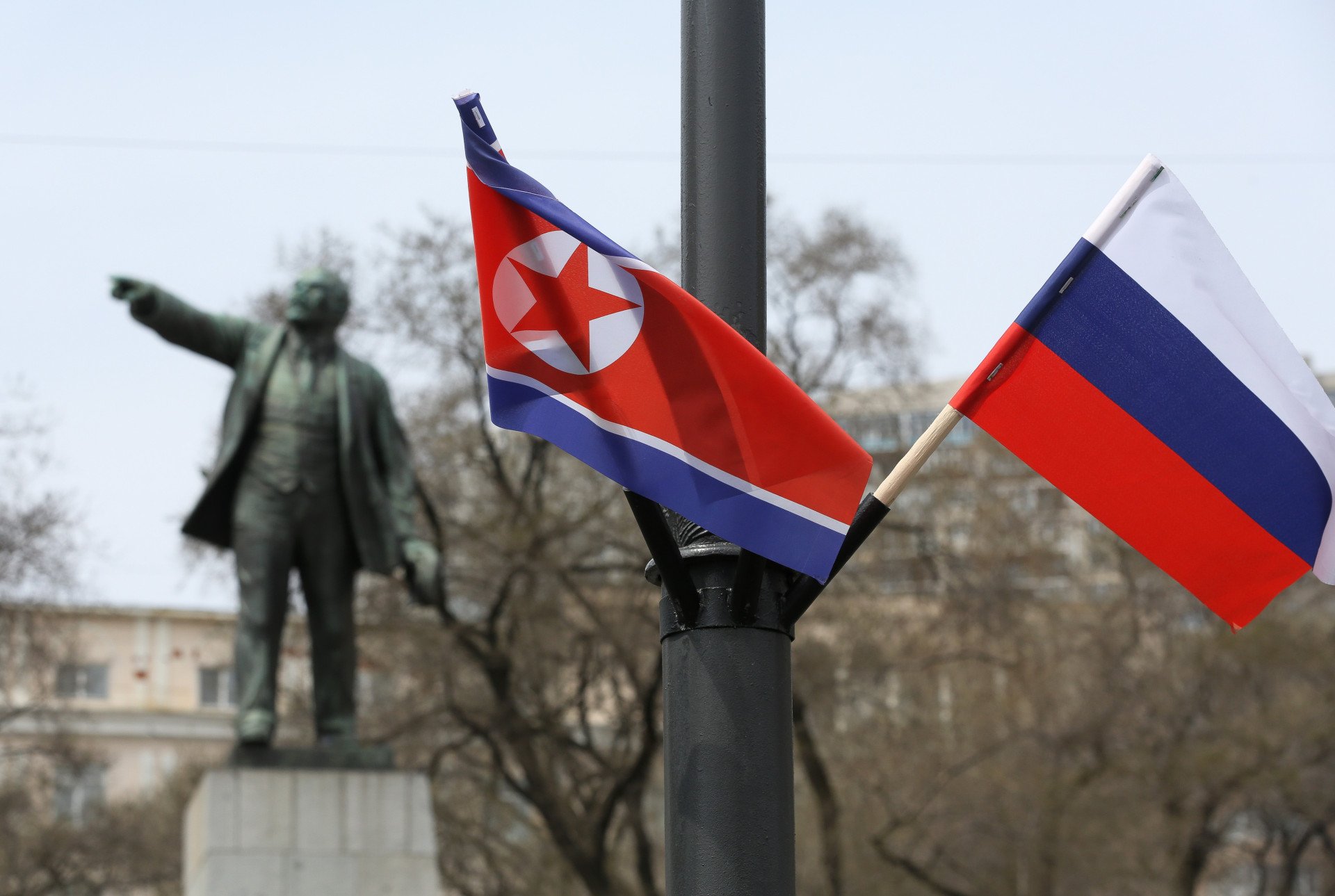
As global sanctions push Russia to the fringes of international trade, a new bridge over a remote river in the Far East signals more than just infrastructure—it marks the quiet creation of a land corridor between two increasingly isolated regimes.
 Prefer U24 Media on Google
- Authors


Russia and North Korea are advancing construction of their first road bridge across the Tumen River, a strategic infrastructure project that aims to strengthen bilateral logistics and economic cooperation amid mounting international sanctions on both countries.
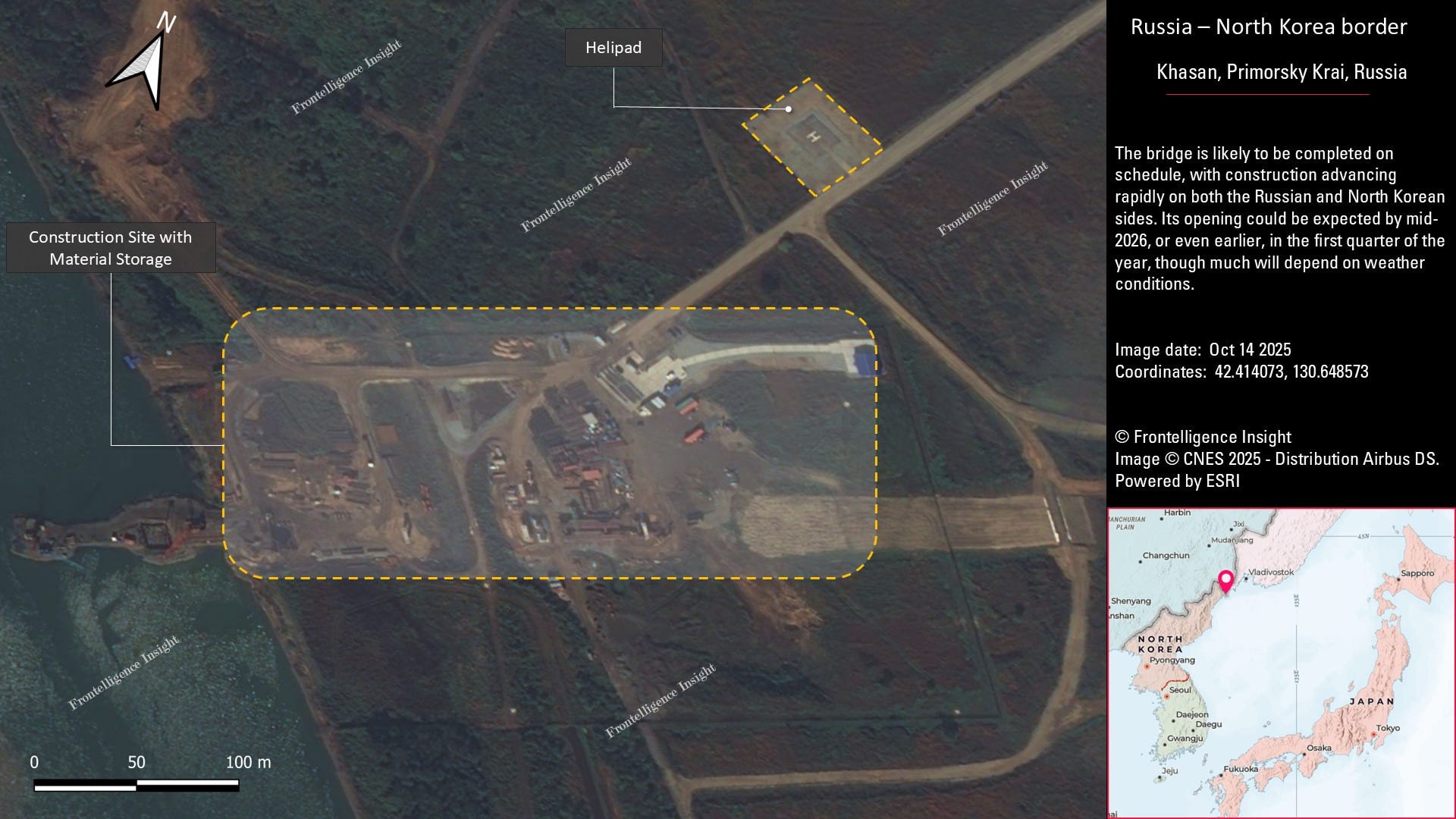
According to Frontelligence Insight, the bridge is on track for completion by mid-2026 and is expected to become a key route for overland trade between the two isolated states.
A new road link through the Tumen river
The bridge—officially known as the Khasan–Tumangang road crossing—is Russia’s first automobile link to North Korea and the only such fixed connection outside the existing Korea–Russia Friendship Railroad Bridge built in the 1950s.
Construction is led by the Russian firm TunnelYuzhStroy and funded through Moscow’s federal budget, with an estimated cost of 9 billion rubles (around $110 million).
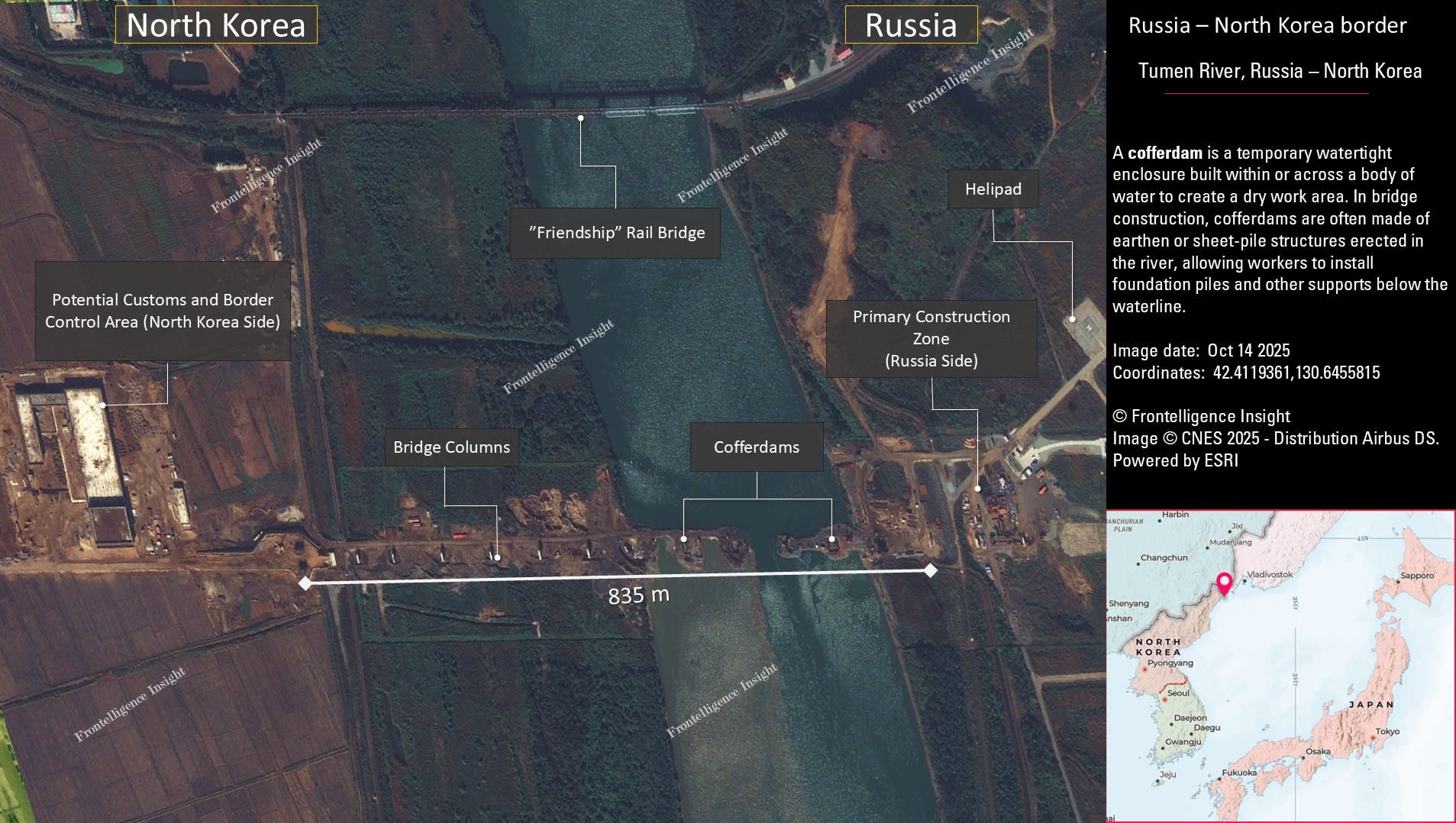
According to Frontelligence Insight, the structure will span approximately 1 kilometer across the river, with the full infrastructure project—access roads included—measuring 4.7 kilometers in length.
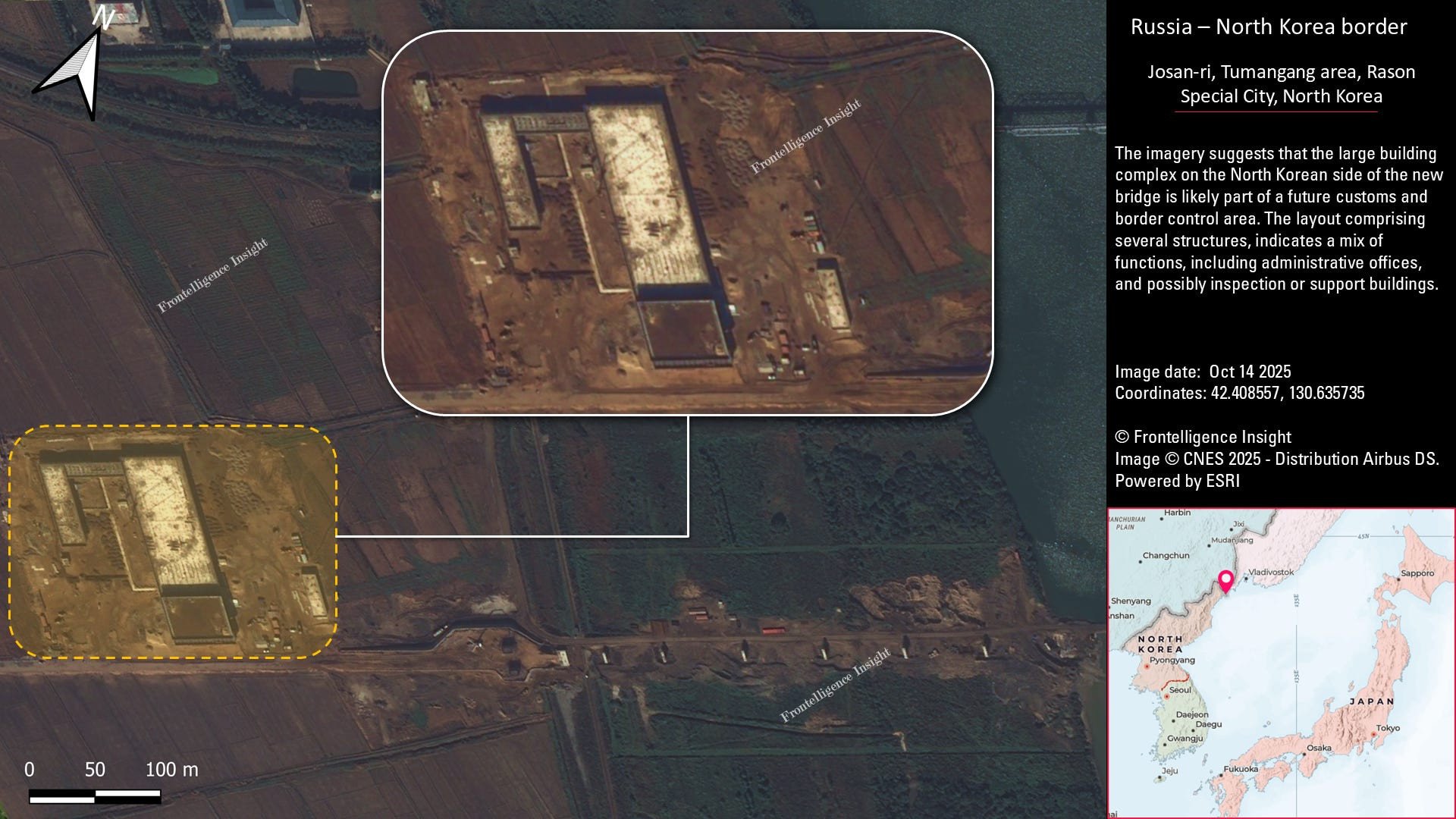
By October 14, 2025, satellite imagery reviewed by the outlet showed active work on both riverbanks, including earthen cofferdams used to lay support foundations.
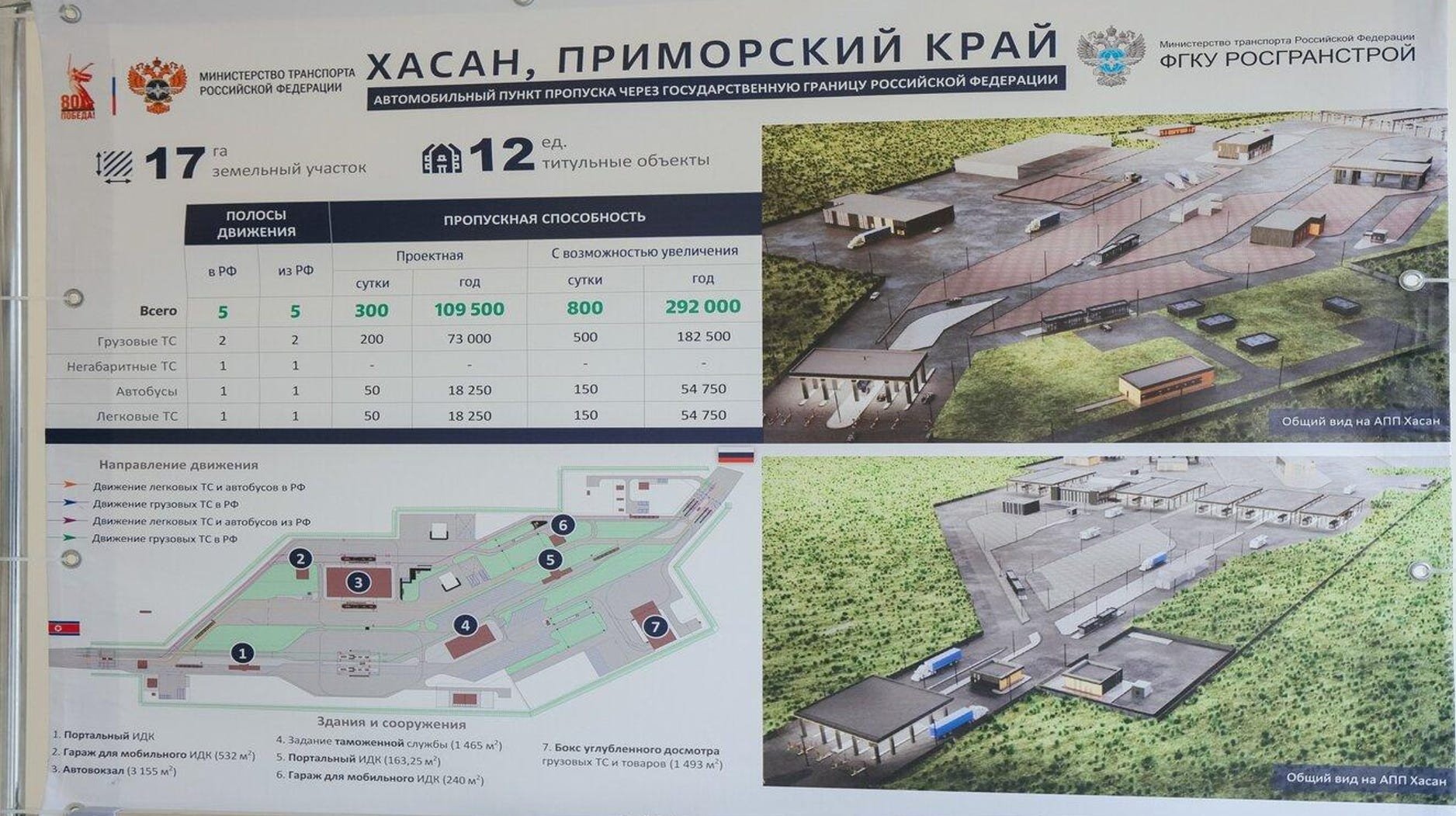
Customs and border control facilities are being constructed simultaneously on both sides of the crossing.
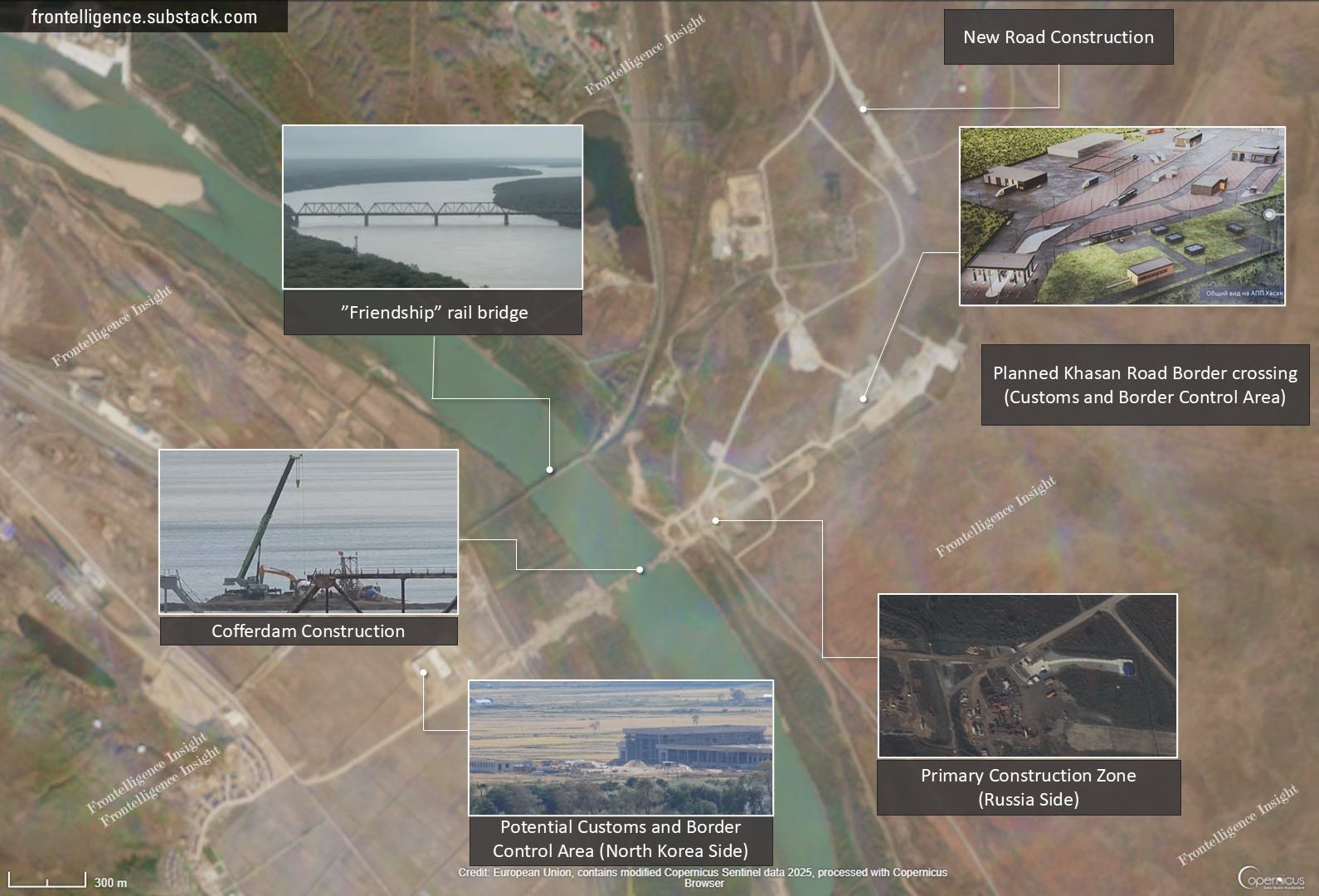
On the North Korean side, a large multi-building complex appears to include administrative and inspection zones. In Russia, the Khasan checkpoint will feature five vehicle lanes, prioritizing cargo traffic.
Trade capacity and strategic objectives
Once operational, the Khasan checkpoint is expected to process up to 300 vehicles per day—200 of them cargo trucks. Annual capacity is projected at 109,500 vehicles, with potential to scale to 800 vehicles daily.
For comparison, Frontelligence Insight notes that Zabaikalsk, the major road crossing between Russia and China, handled about 440 vehicles per day in 2024.
The road link is designed to circumvent logistical inefficiencies in the rail system, where differing track gauges between Russia and North Korea require slower, dual-gauge infrastructure.
A direct road route will lower per-unit transportation costs and reduce reliance on maritime or air shipments through third countries such as China.
Goods expected to move across the bridge include grain, fuel, machinery, chemicals, timber, and construction materials. The North Korean port of Rajin, already used for Russian shipments of artillery and ammunition, is likely to gain further relevance as a logistical hub.
Strategic goals beyond trade volume
Although much attention has focused on military collaboration between Moscow and Pyongyang, the bridge project reflects a broader effort to enhance economic and infrastructure ties.
Frontelligence Insight reports that Russia has agreed to host North Korean laborers and engineers in regions such as Kursk and Vladivostok as part of a wider cooperation framework.
The decision to build the bridge follows decades of deferrals, in part due to past Chinese objections.
According to Frontelligence Insight, the project also supports North Korea’s long-standing strategy of balancing ties with Beijing by engaging other partners, especially during periods of economic hardship or political pressure.
Despite the new infrastructure, analysts cited in the report caution against overestimating its immediate impact.
North Korea’s limited purchasing power and narrow export base mean that total trade volumes are unlikely to rise dramatically in the short term. China is expected to remain Pyongyang’s dominant economic partner.
By creating a direct overland route to a willing trade partner, Moscow is building new logistical options that could help it reduce dependency on traditional routes constrained by international oversight.
Earlier, Ukraine’s Foreign Intelligence Service reported that North Korea now supplies up to 50% of Russia’s ammunition needs—amounting to as many as 260,000 artillery shells per month—and has transferred ballistic missiles and other weapon systems for use against Ukraine.
Discuss this article:
-331a1b401e9a9c0419b8a2db83317979.png)


-c439b7bd9030ecf9d5a4287dc361ba31.jpg "Photo of Katherina Popilnichenko")