- Category
- Latest news
“It’s a Direction We Should Follow”: Nawrocki Weighs Polish Nuclear Capability as Security Risks Grow
 Prefer U24 Media on Google
- Authors




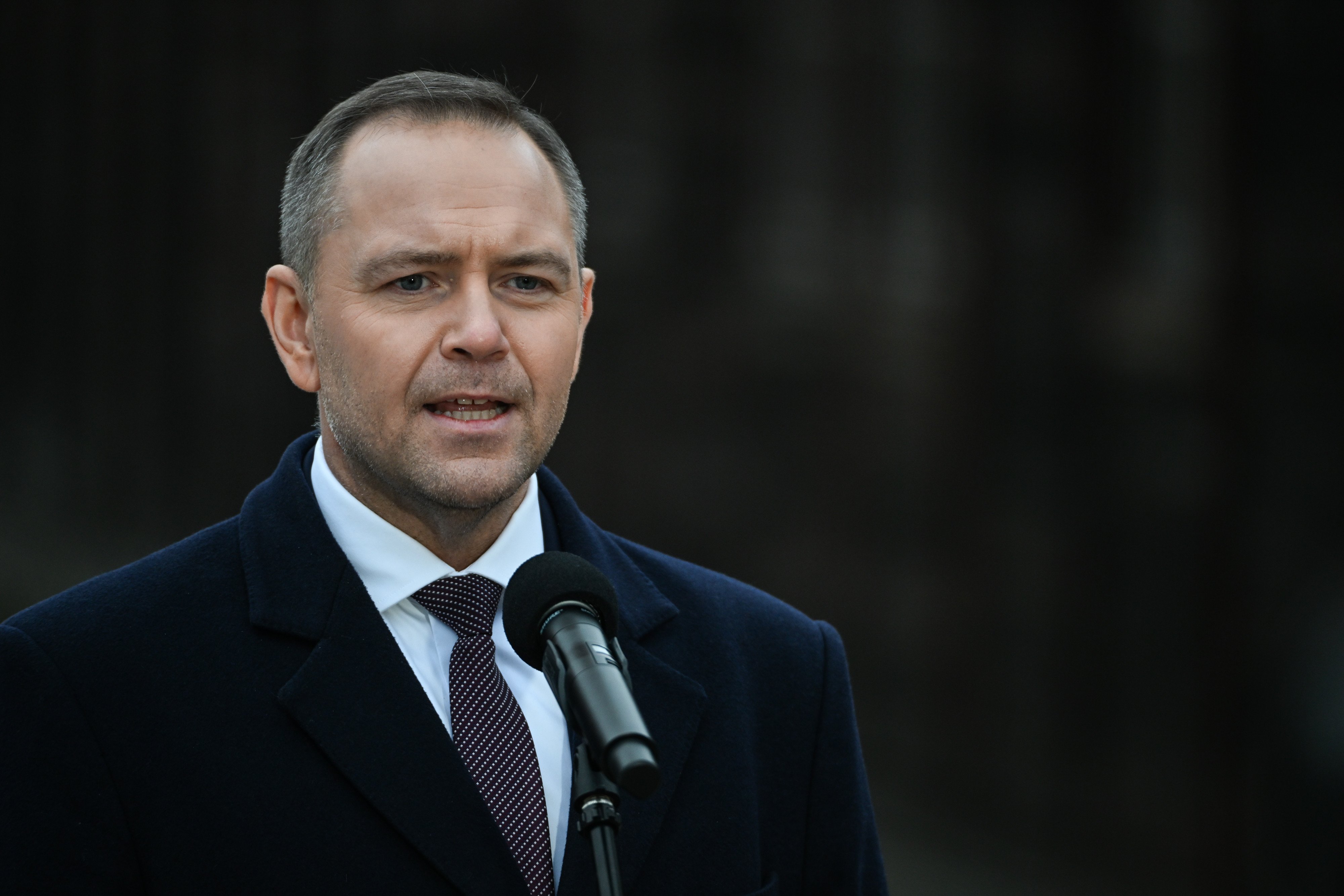
Polish President Karol Nawrocki has expressed support for Poland joining a “nuclear project,” stating that the country should pursue the development of its own nuclear potential in line with international law.
In an interview with Polsat News on February 15, Nawrocki said he backs efforts to strengthen Poland’s strategic capabilities amid growing security concerns in the region.
We bring you stories from the ground. Your support keeps our team in the field.
“I am a strong supporter of Poland joining a nuclear project. I mean that the path toward building a Polish nuclear potential, in full compliance with all international norms, is a direction we should follow,” Nawrocki said.
When asked how such ambitions could be reconciled with the Nuclear Non-Proliferation Treaty, the Polish president acknowledged that he does not yet have a clear answer. However, he emphasized that preparatory work should begin.
“We need to act in this direction so that we can start working. We are a country located directly next to the border of an armed conflict. We know the attitude of the aggressive, imperial Russian Federation toward Poland,” Nawrocki added.
Nawrocki stressed that he does not know whether it will happen at all, but he supports strengthening Poland’s security “even based on nuclear potential.”
-3873ac369bf1de5a48a9208e6568548e.png)
“Russia may react aggressively to anything,” the president addedd when asked about possible actions by Moscow in response to the launch of work on a Polish nuclear program.
Meanwhile, Germany has opened dialogue with France on establishing a joint European nuclear deterrence framework embedded within NATO, Chancellor Friedrich Merz said at the Munich Security Conference.
Speaking at the forum, Merz confirmed that Berlin and Paris have launched early-stage discussions on what he described as a coordinated European approach to nuclear deterrence.
“I have already begun initial talks with French President Emmanuel Macron regarding European nuclear deterrence,” Merz said.
-cf7ea83264cff80a19cf65962cdd61f9.png)
He stressed that the initiative is not meant to supplant NATO’s current defense architecture but rather to reinforce it. “We are not doing this by writing NATO off. We are doing this by creating a strong, self-sufficient European pillar within the Alliance,” he stated.
Merz further underscored that any future mechanism would operate within NATO’s existing nuclear-sharing arrangements.
“This will be fully integrated into NATO’s nuclear sharing system. There will be no zones of different levels of security in Europe,” the German chancellor added.
Satellite imagery published by Radio Free Europe/Radio Liberty on February 9 shows Belarus expanding a military site at the former Soviet-era Krychau-6 airfield in eastern Belarus. Analysts say the site could be intended for Russia’s Oreshnik intermediate-range ballistic missile system, a nuclear-capable platform, adding to concerns over rising nuclear escalation in the region.
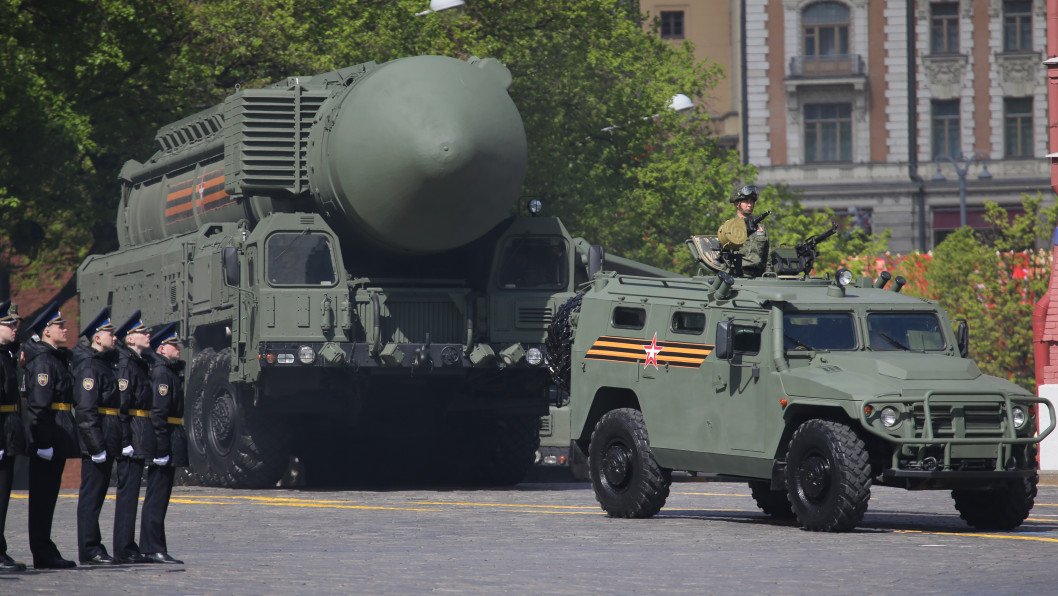
Planet Labs imagery shows six vehicles whose size and proportions appear consistent with known Oreshnik support equipment, though analysts cautioned the resolution is not sufficient to confirm the equipment type.
The site also shows roughly 25 additional military vehicles, newly built earthen revetments, a structure of unclear purpose, and ongoing construction of hangars for equipment storage, which RFE/RL said points to preparations for longer-term positioning and readiness.
RFE/RL noted that US researchers at Middlebury College had previously identified Krychau-6 as a potential location for Oreshnik operations, and that the same area may have been used as the filming site for a Russian and Belarusian Defense Ministry video that claimed to show the system on active duty.
Earlier, it was reported that France and Germany are reviewing a new ground-launched ballistic missile concept introduced by aerospace company ArianeGroup, as part of wider European efforts to strengthen deep-strike capabilities in response to growing security threats.
Discuss this article:

-c439b7bd9030ecf9d5a4287dc361ba31.jpg "Photo of Katherina Popilnichenko")