- Category
- Latest news
Last Russian Oil Route to EU Severed After Strike on Druzhba Pipeline
 Prefer U24 Media on Google
- Authors

-72b63a4e0c8c475ad81fe3eed3f63729.jpeg "Photo of Cyril Barabaltchouk")
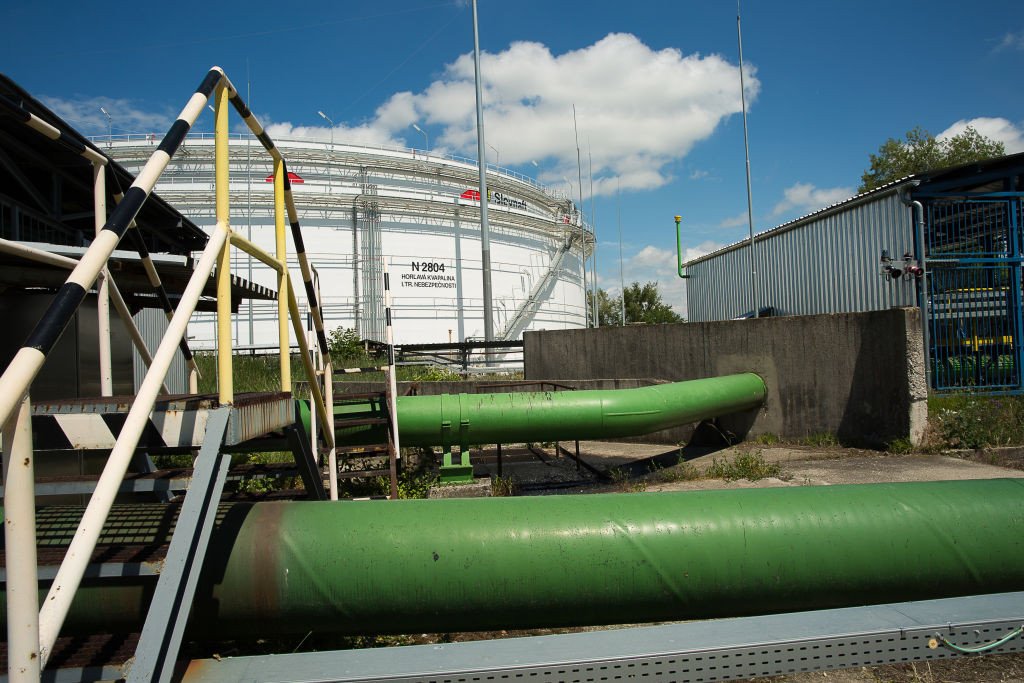
A Russian air strike in late January damaged Ukraine’s section of the Druzhba oil pipeline, temporarily halting crude supplies to Hungary and Slovakia, Bloomberg reported on February 12, citing Ukrainian Foreign Minister Andrii Sybiha and Slovakia’s Economy Ministry.
We bring you stories from the ground. Your support keeps our team in the field.
Noting that the January 27 attack had set pipeline infrastructure on fire, Sybiha published photos of the damage to preempt expected criticism. “We know that the Hungarian side is preparing to complain again about problems with Russian oil transit through the Druzhba pipeline,” he wrote on X.
We know that the Hungarian side is preparing to complain again about problems with Russian oil transit through the Druzhba pipeline.
— Andrii Sybiha 🇺🇦 (@andrii_sybiha) February 12, 2026
We can only advise them to approach their “friends” in Moscow with these photos. This is the Druzhba pipeline infrastructure burning after the… pic.twitter.com/Xbn3DGCRkl
Slovakia confirmed on February 12 that deliveries via Druzhba had been suspended, though officials said the country’s energy security was not at risk due to strategic reserves sufficient for roughly 90 days. The economy ministry said it expects flows to resume in the coming days, Bloomberg wrote.
The Druzhba system, a Soviet-era pipeline network, carries Russian crude across western Ukraine and remains a vital route for landlocked countries in central and eastern Europe, particularly Hungary and Slovakia. Bloomberg reported that combined flows to the two countries dropped to nearly 150,000 barrels per day last month, compared with a historic average of around 200,000 barrels per day in January–February 2022–2025.
The disruption comes amid heightened political tensions, with Hungarian Prime Minister Viktor Orbán, one of Russia’s most outspoken supporters inside the EU, increasingly framing Ukraine as a threat to Hungary’s energy security.
Orbán has consistently opposed stronger sanctions on Moscow and criticized EU financial support for Kyiv, justifying his position by citing Hungary’s heavy reliance on Russian oil and gas.
However, this political narrative appears to contradict the technical assessment of MOL, Hungary’s main oil and gas conglomerate.
-1a5fcbcc996c3558ed26e0f3739360a9.jpg)
In a recent earnings report, MOL stated that it could cover the vast majority of its crude oil needs without relying on Russia—a notable divergence from Orbán’s claims of dependency. The company indicated that supplies via the Adriatic pipeline from Croatia could replace approximately 80% of its crude intake if Russian deliveries through the Druzhba pipeline were cut.
While acknowledging that this alternative carries “higher technical risks and logistics costs,” MOL insisted that a shift away from Russian crude remains a viable option.
Bloomberg noted that Russia has repeatedly targeted Ukrainian energy infrastructure as part of its strategy in it’s invasion of Ukraine, forcing Kyiv to balance transparency about strikes with concerns about revealing sensitive information that could aid further attacks.
Earlier, Viktor Orbán had stated that Hungary would not vote in favor of Ukraine’s European Union membership for the next 100 years.
The comment comes amid growing discussions on Ukraine’s potential EU accession, with Orbán emphasizing that Hungary will continue to block the process.
Discuss this article:


-c439b7bd9030ecf9d5a4287dc361ba31.jpg "Photo of Katherina Popilnichenko")