- Category
- Latest news
Moscow Builds $1.2B Warship in Crimea Within Reach of Ukrainian Strikes
 Prefer U24 Media on Google
- Authors


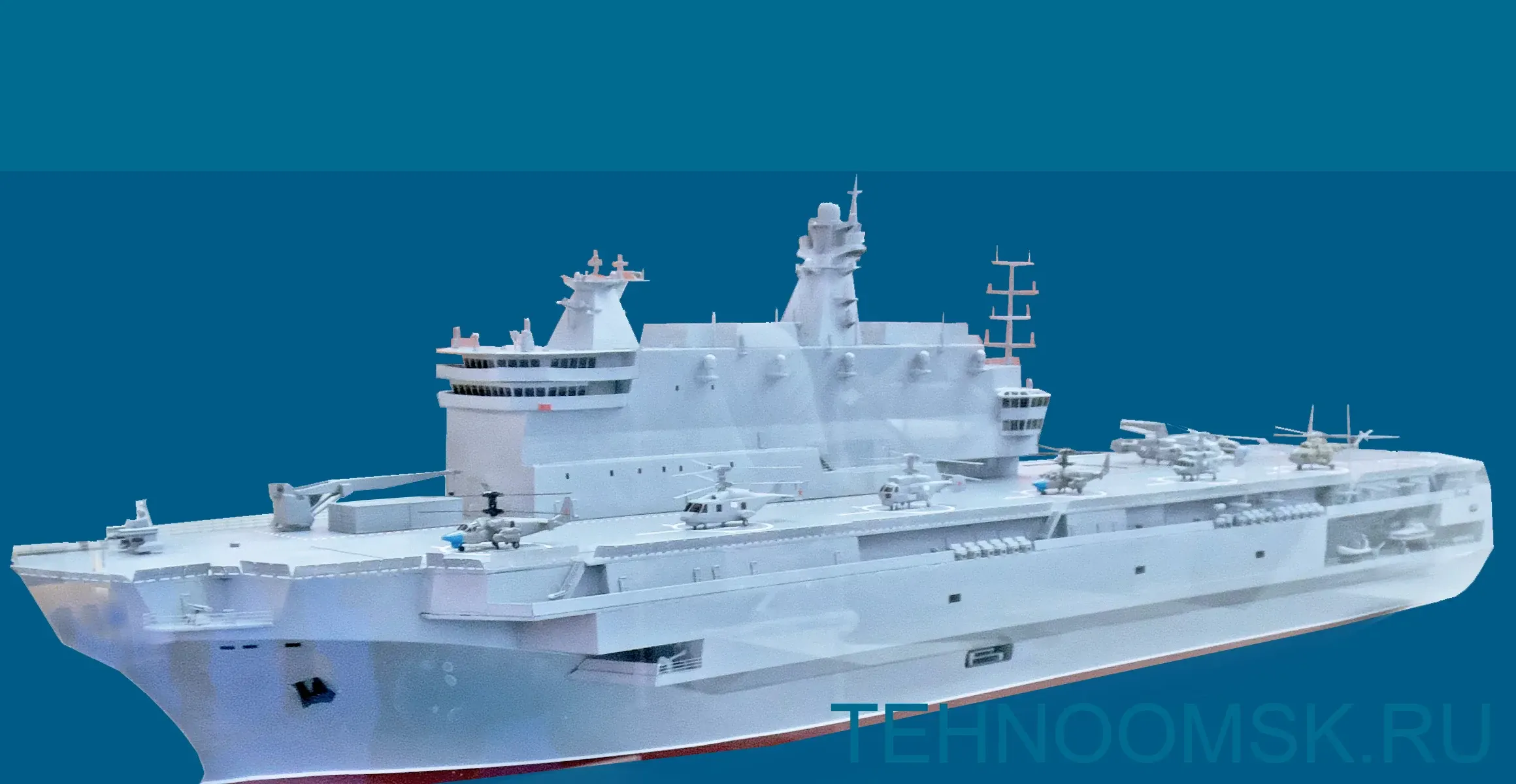
Russia is continuing construction of its largest planned amphibious assault ship, Ivan Rogov, at the Zaliv shipyard in temporarily occupied Kerch, with visible progress confirmed as of March 2026.
We bring you stories from the ground. Your support keeps our team in the field.
According to Defense Express on March 23, satellite imagery indicates that the vessel—part of Project 23900 “Priboy”—has reached an advanced stage of assembly, with its flight deck and superstructure largely formed. However, parts of the hull, particularly the bow section, remain incomplete.
The ship is designed to carry up to 15 helicopters, including Ka-52 attack helicopters and Ka-29 transport variants, alongside a contingent of up to 900 naval infantry personnel.
March 2026 imagery shows significant progress on Russia’s amphibious assault vessel currently under construction at the Zaliv Shipyard in Crimea. https://t.co/epfzHD4aZI
— AllSource Analysis (@AllSourceA) March 20, 2026
Spotlight Report - Critical intelligence delivered to your inbox. https://t.co/n0XDPQNx8A#GEOINT #Russia pic.twitter.com/i3yG2zq3Ue
The vessel is also expected to transport up to 75 units of military equipment and several landing craft, placing it in the category of large amphibious assault ships comparable in concept to Western landing helicopter docks.
The report notes that the ship measures approximately 220 meters in length and 40 meters in width, which would make it the largest surface combatant in Russia’s Black Sea Fleet if completed. Construction began in July 2020, with sea trials currently projected for 2027, although Defense Express emphasizes that meeting this timeline remains uncertain.
🗓️2024-26
— Massimo Frantarelli (@MrFrantarelli) March 21, 2026
Project 23900 Amphibious Assault Ship "Ivan Rogov".
🗺️Zaliv Shipyard - Kerch/Crimea.
📷MT_Anderson/AllSourceA pic.twitter.com/DD721qnyhQ
Russia’s current shipbuilding capacity at the Zaliv yard is limited to a single dry dock capable of handling vessels of this size, which is now fully occupied by the Ivan Rogov. This constraint has delayed work on a second planned vessel of the same class. The estimated cost of the lead ship is approximately 100 billion rubles, equivalent to roughly $1.2 billion.
The outlet reports that Russian authorities continue to prioritize the project despite operational constraints, framing it as a matter of strategic and symbolic importance. At the same time, the shipyard’s location in occupied Crimea places it within range of Ukrainian long-range strike capabilities.
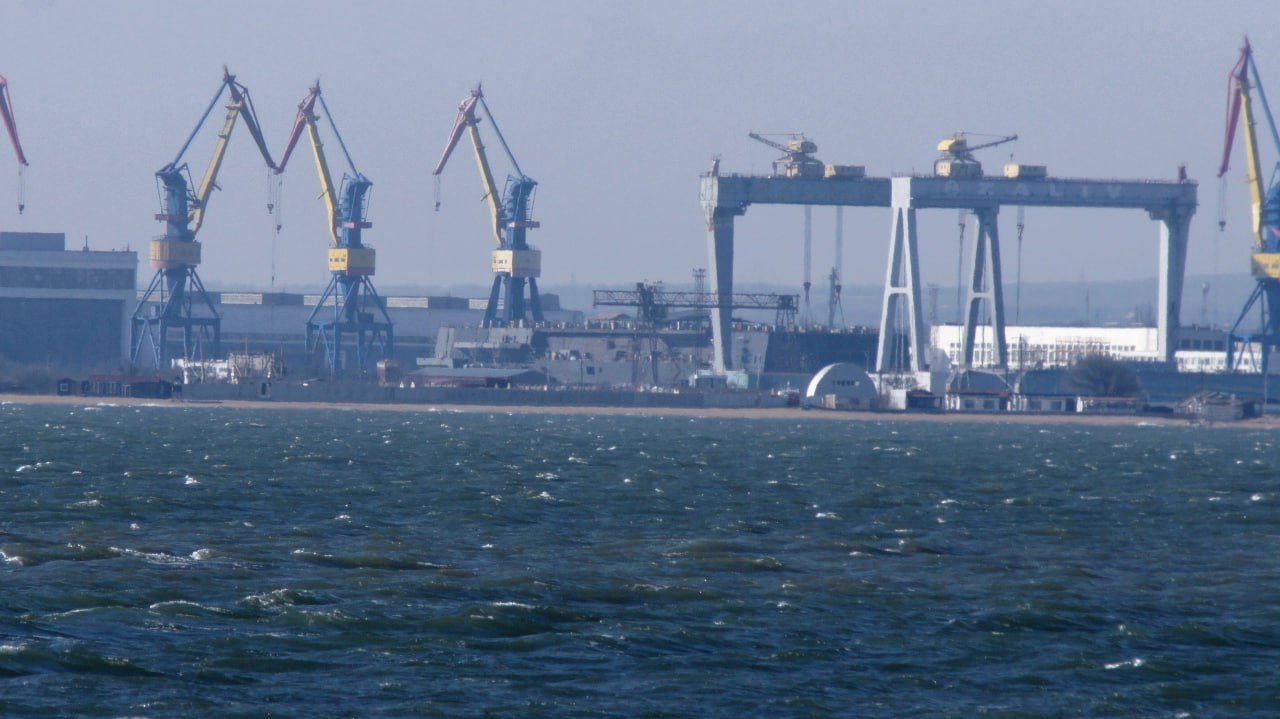
According to Defense Express, analysts suggest that direct strikes on the vessel or the dry dock remain one possible option. However, the report highlights that indirect approaches—such as targeting energy infrastructure supporting defense production in Crimea—could also disrupt the program.
The timeline for the completion and operational deployment of the Ivan Rogov remains unclear, as construction progress continues under wartime conditions and logistical constraints.
Earlier, Ukraine’s Defense Ministry intelligence (HUR) reported that Russian shipbuilding and naval repair facilities continue to rely on foreign-made equipment, publishing a list of 50 imported systems used at key enterprises, including Sevmash, the Baltic Shipyard, and the Kronstadt Marine Plant. According to HUR, restricting access to such technologies is critical to limiting Russia’s ability to sustain and expand its naval capabilities.
Discuss this article:
-4a56a6b482ec132402c16ef6fcabf9a2.png)


-c439b7bd9030ecf9d5a4287dc361ba31.jpg "Photo of Katherina Popilnichenko")