- Category
- Latest news
Neo-Nazi Groups in Russia Target the Memory of Journalist Who Exposed War Crimes
- Authors




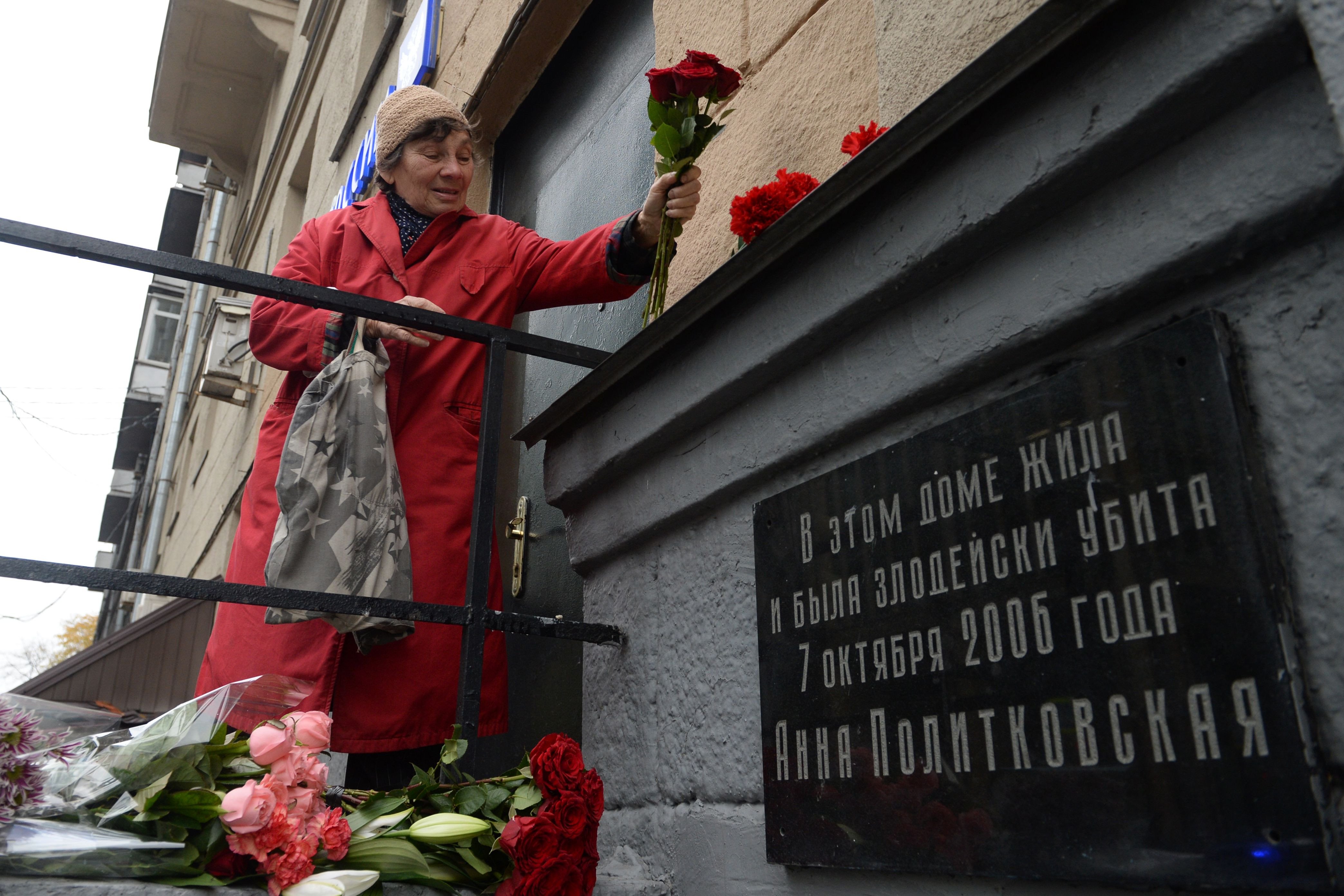
A campaign of repeated vandalism against a memorial honoring journalist Anna Politkovskaya has reignited concerns about the persistence of neo-Nazi networks in Russia—and the state’s failure to protect the memory of a reporter who documented war crimes and challenged a Russian leader’s rule.
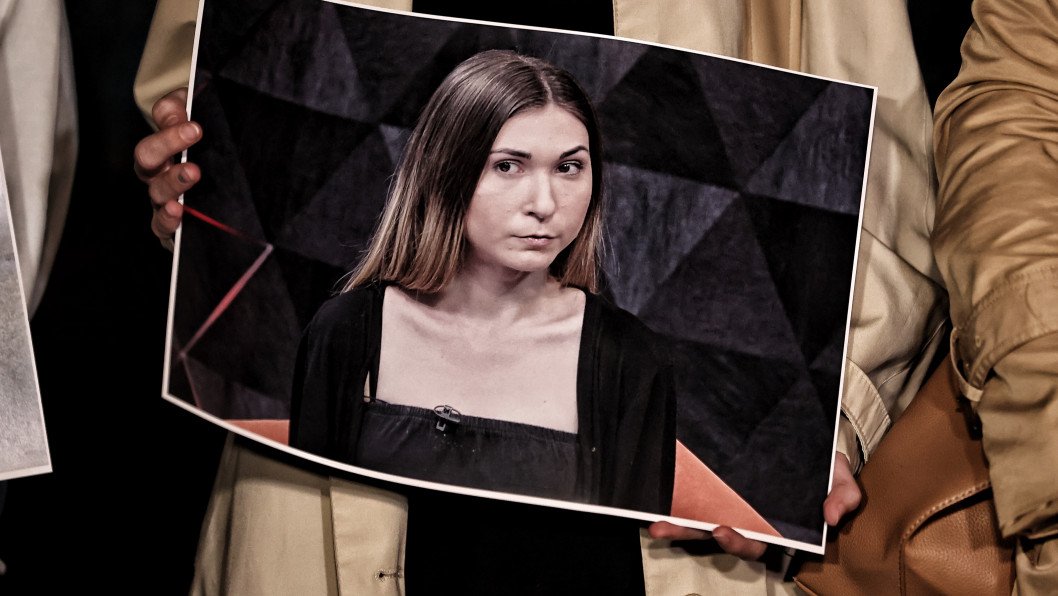
Anna Politkovskaya was a Russian investigative journalist of Ukrainian origin whose reporting exposed abuses committed by Russian forces during the wars in Chechnya. She was assassinated in Moscow in 2006 in what has widely been described as a contract killing aimed at silencing critical journalism.
We bring you stories from the ground. Your support keeps our team in the field.
Nearly two decades later, her legacy has once again come under attack, according to Russian outlet Meduza on January 25.
In January, a memorial plaque marking the building where Politkovskaya was killed was repeatedly destroyed in a series of incidents that Russian media and activists say point to organized neo-Nazi groups operating openly inside Russia.
A day after Moscovites put up a plaque to honor the female journalist that Putin had murdered in 2006 as a birthday present to himself, it has already been torn down.
— Jay in Kyiv (@JayinKyiv) January 19, 2026
A temporary memorial plaque honoring journalist Anna Politkovskaya, who was murdered in 2006, was torn down less… pic.twitter.com/Kg6RETStLJ
Journalist who challenged power
Born in New York in 1958 to a Ukrainian family, Politkovskaya built her career at Novaya Gazeta, where she became one of the most prominent reporters covering Chechnya. She authored several documentary books, including “A Journey to Hell: Chechnya Diary” and “The Second Chechen War”.
Beyond journalism, she organized humanitarian evacuations during the bombing of Grozny and helped displaced civilians secure food, medicine, and shelter. She also assisted families of fallen soldiers in court cases and investigated corruption within Russia’s military command.
During one reporting trip in 2001, Politkovskaya was detained by Russian airborne troops, held for two days, and subjected to mock executions and psychological torture, according to accounts she later documented.
Still fighting over Anna Politkovskaya’s memory pic.twitter.com/VLLVmGW2Ez
— Memorial in English (@EnMemorial) January 24, 2026
She was unsparing in her criticism of a Russian leader and the system he represented.
“Why did I come to despise Putin? For this. For simplicity worse than theft. For cynicism. For racism. For endless war. For lies. For the gas at Nord-Ost. For the corpses of innocent people that accompanied his entire first term. Corpses that did not have to exist,” she wrote in “Putin’s Russia.”
Responding in 2000 to a reader who accused her of ignoring the suffering of ethnic Russians in Chechnya, she wrote:
“I did not have the physical ability to study the issue of the genocide of the Russian people in Chechnya in 1991–1994. But the genocide of Chechens in the current period is obvious. It is carried out by part of the military and by Chechens themselves. I tried many times to explain what I witnessed as accidents or incompetence, but each time I failed. A system of extermination is operating against Chechens in Russia. There is no other explanation.”
Memorial attacks and neo-nazi claims
The first attack on Politkovskaya’s memorial plaque occurred on January 18, according to former municipal deputy Alexander Zamyatin. The timing coincided with the anniversary of the murders of lawyer Stanislav Markelov and journalist Anastasia Baburova, who were killed by neo-Nazis in Moscow in 2009.
Hours after the plaque was destroyed, a closed Telegram channel linked to the neo-Nazi group National Socialism / White Power (NS/WP) published a post claiming responsibility. The authors described the act as:
“A tribute from the Four Letters formation [NS/WP] to our glorious predecessors from another four-letter structure—BORN.”
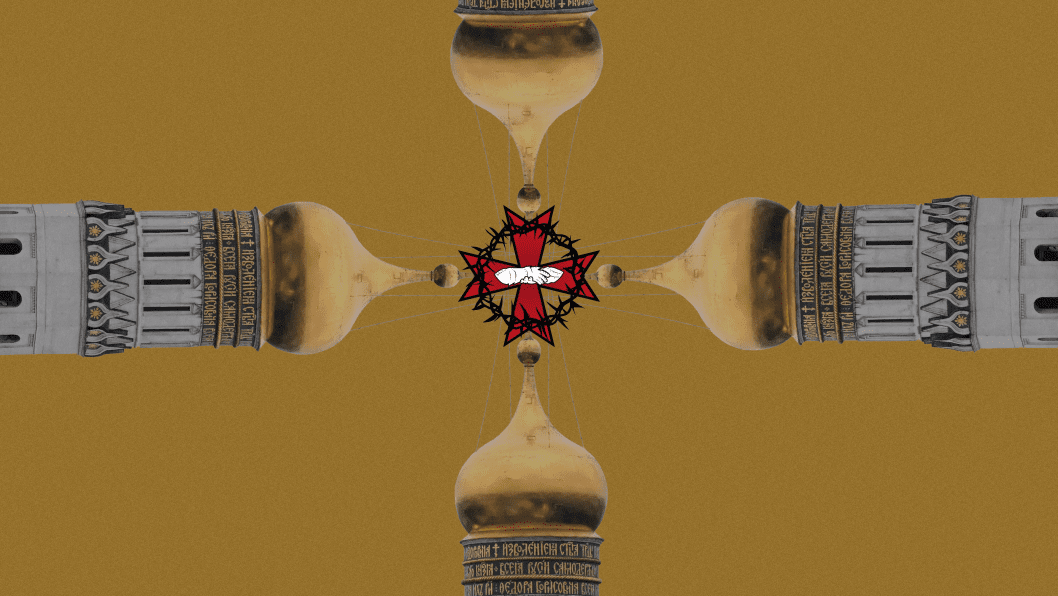
BORN refers to the Combat Organization of Russian Nationalists, a violent extremist group linked to multiple murders.
Activists from the Civic Initiative quickly installed a temporary replacement plaque, but it was destroyed the same day. Over the following week, at least four additional temporary memorials—some placed high above street level—were repeatedly torn down, along with flowers left by residents.
Official response raises questions
On January 21, a Moscow court ruled that a man named Alexander Filippov was responsible for damaging the original plaque, issuing him a fine of just 1,000 rubles ($13) under a minor hooliganism charge. Filippov claimed the plaque broke accidentally while he was clearing flowers.
Novaya Gazeta rejected that explanation, stating that:
“These and similar crimes involve not one person, but a group with clearly neo-Nazi views.”
Despite the repeated incidents and public claims by extremist groups, no broader investigation has been announced.
-588ae190d45987800620301cc34e2cf8.png)
Broader pattern
For observers, the attacks underscore a deeper contradiction inside Russia: while officials frequently accuse others of extremism, neo-Nazi groups continue to operate with relative impunity—particularly when their targets are journalists, human rights defenders, or critics of the state.
Politkovskaya’s case remains emblematic. Her murder has never been fully solved at the level of those who ordered it.
-5746403867799959735b56b29d6d5350.jpg)
And now, even her memory is being contested—by extremists who openly celebrate violence, and by a system that appears unwilling to confront them.
Earlier, the war crimes case against the infamous Russian neo-nazi paramilitary “Rusich” group leader Voislav Torden began in the Helsinki Court of Appeal.