- Category
- Latest news
North Korea to Double Bulsae-4 Missile Output After Combat Use Against Ukraine
 Prefer U24 Media on Google
- Authors



North Korea has begun serial production of a new variant of its Bulsae-4 electro-optical guided long-range anti-tank missile, with deliveries expected to begin in the first half of 2026, according to Military Watch Magazine on January 5.
Authorities in Pyongyang claim production capacity will increase by roughly 2.5 times, a move that comes amid the system’s reported appearance in Russia’s war against Ukraine.
We bring you stories from the ground. Your support keeps our team in the field.
While North Korean outlets have portrayed the missile as a major upgrade for frontline forces, analysts caution that the Bulsae-4—though modern by regional standards—is not a breakthrough weapon and does not fundamentally alter battlefield dynamics on its own.
The Bulsae-4 shares design features with Western and Chinese anti-tank guided missiles, such as the US Javelin and China’s HJ-10, including non-line-of-sight targeting, electro-optical guidance, and “fire-and-forget” engagement. The missile is designed to strike armored vehicles from above, targeting thinner top armor.
Declared as the first video of 🇺🇦 destroying a North Korean Bulsae-4 ATGM system 👀 pic.twitter.com/f8kMPw2VRS
— Kvist (@kvistp) November 30, 2024
Its reported maximum range—estimated at up to 10 kilometers—is more than double that of the Javelin. However, range alone does not guarantee effectiveness, particularly in contested airspace and dense electronic warfare environments like those seen in Ukraine.
The system was first observed in the Ukrainian theater in August 2024, either after being transferred to Russia or fielded by North Korean personnel involved in the war—an intervention Kyiv and its partners have condemned as illegitimate.
During a January visit to a missile production facility, North Korean leader Kim Jong Un suggested that the Bulsae-4 could partially replace certain rocket artillery missions, arguing that its precision could compensate for lower firing volumes.
A North Korean Bulsae-4 ATGM fired from a Mi-2 helicopter at an inflatable Chonma tank target, October 2020. pic.twitter.com/mIiTmRgOYI
— Iron Heart (@saturn74954) December 12, 2025
Such claims reflect a broader trend seen in recent conflicts, where guided anti-tank missiles are increasingly used against targets beyond armored vehicles. According to open-source reporting, Bulsae-4 systems have been used against Ukrainian mobile artillery units well behind the front line.
Similar tactics have appeared elsewhere: Hezbollah employed Almas missiles with comparable guidance features—though at far shorter ranges—against Israeli air-defense systems in 2024, while Spike missiles were used in Iran in 2025 to target radar and air-defense assets.
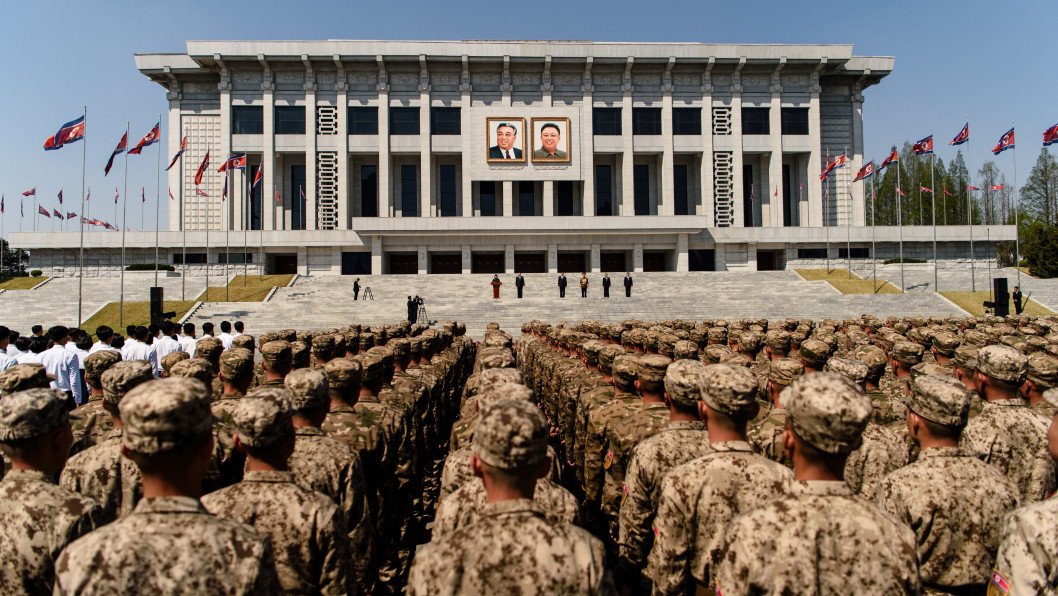
Orders to increase Bulsae-4 output are part of a wider expansion of North Korea’s missile production infrastructure, which has included the construction of new factories and assembly lines. Analysts link this surge directly to arms exports to Russia, which has become increasingly dependent on foreign suppliers as its own production struggles under sanctions and battlefield losses.
Imagery from production facilities shows a standardized missile and launcher architecture compatible with multiple platforms. While earlier versions were mounted on 6×6 armored vehicles, North Korea has recently unveiled lighter pickup-based launchers carrying multiple missiles, as well as indications that a man-portable version may follow.

Factory photos show missiles housed in sealed transport-launch containers that can be bolted onto vehicle mounts, highlighting a modular and flexible deployment concept.
The expansion of Bulsae-4 production is widely believed to be financed—at least in part—by tens of billions of dollars in annual revenue North Korea is estimated to earn from weapons sales to Russia. Those funds are now being reinvested into scaling production across multiple missile categories.
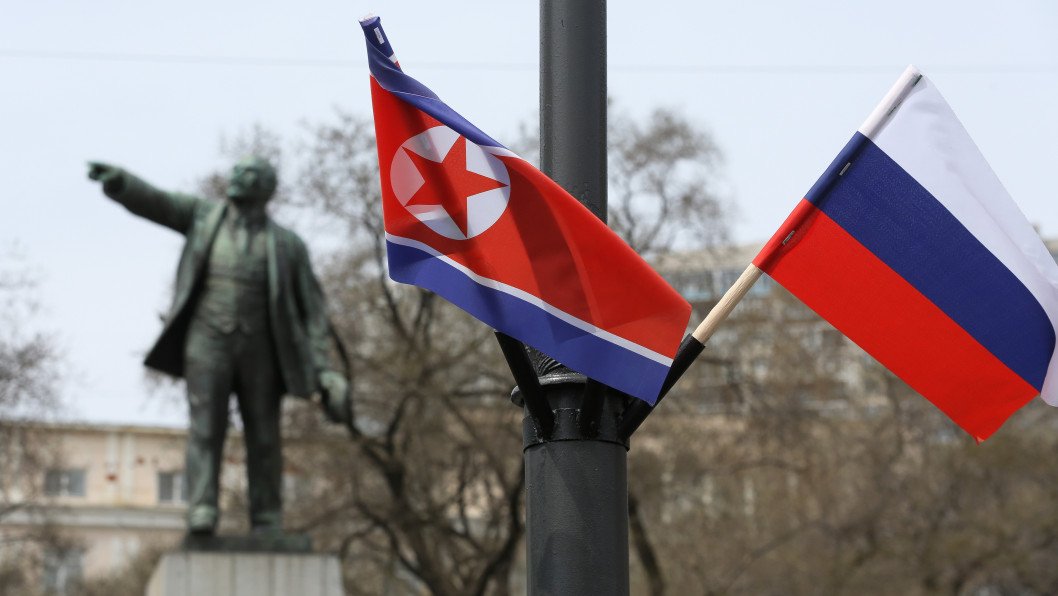
Despite North Korean claims, military analysts stress that the Bulsae-4 is not a wonder weapon. Its effectiveness depends heavily on training, targeting intelligence, survivability of launch platforms, and the broader battlefield environment—factors that have repeatedly limited the impact of even advanced weapons in Ukraine.
Earlier, a Russian defense analyst suggested leasing Su-25 ground-attack aircraft from North Korea to bolster Russian combat capabilities in Ukraine, citing potential upgrades in weapons systems and operational effectiveness.
Discuss this article: