- Category
- Latest news
Poland and Estonia Develop New Missile to Counter Russian Shahed-Type Attacks
 Prefer U24 Media on Google
- Authors

-111f0e5095e02c02446ffed57bfb0ab1.jpeg "Photo of Roman Kohanets")
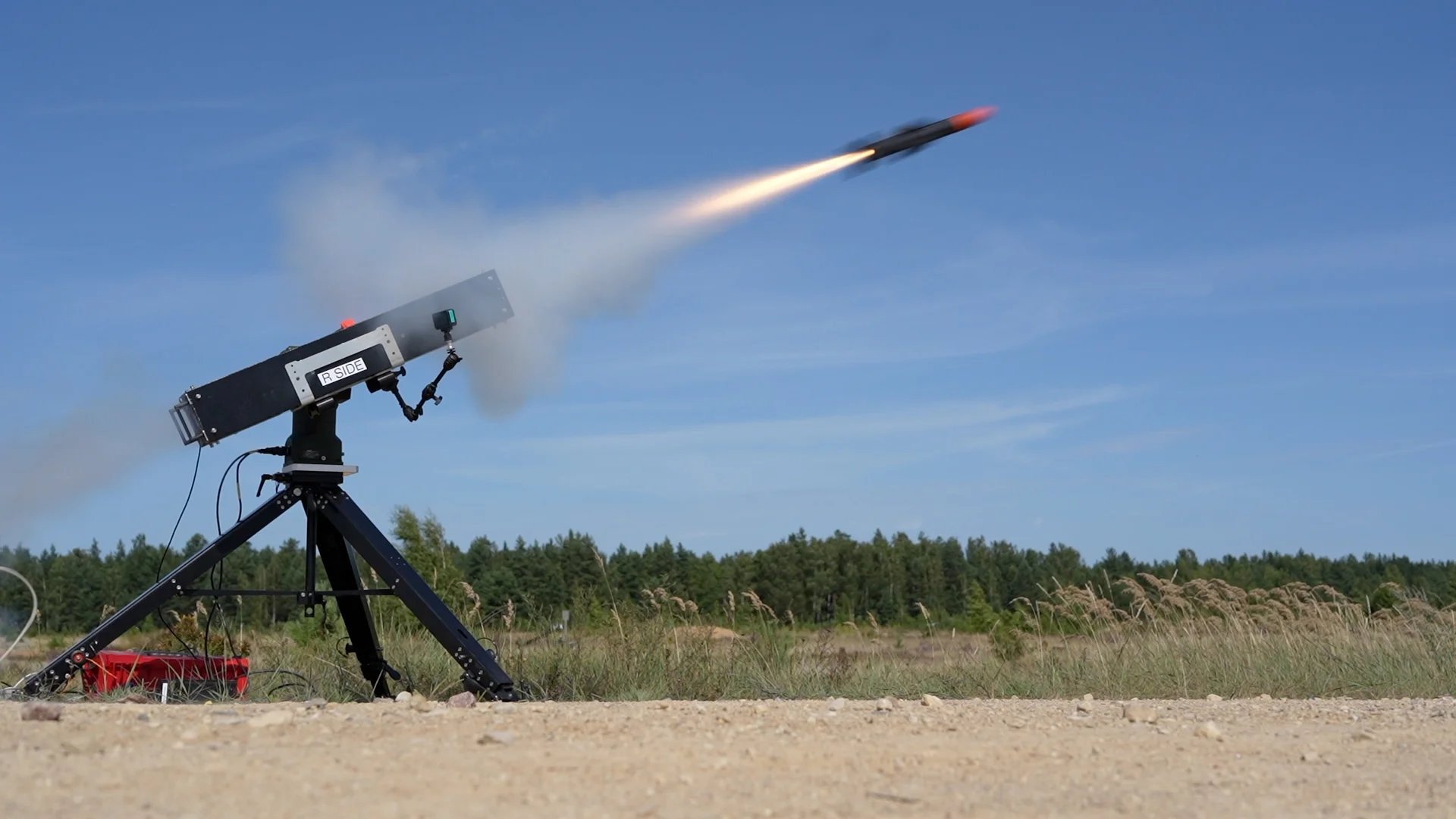
Poland and Estonia are preparing to launch serial production of up to 10,000 Mark 1 anti-drone missiles a year in a new push to counter Shahed-type threats, according to RBC-Ukraine on March 28.
The project centers on a framework agreement between Poland’s state-owned defense group PGZ and Estonia’s Frankenburg Technologies to localize production of the very short-range interceptor in Poland.
We bring you stories from the ground. Your support keeps our team in the field.
The system is designed to engage low-flying drones and is being positioned as a cheaper response to the expanding use of mass-produced loitering munitions in Ukraine and along NATO’s eastern flank.
Mark 1 is intended to hit targets at ranges of up to 2 kilometers and altitudes of up to 1.5 kilometers.
The missile uses an electro-optical seeker and a fire-and-forget principle, allowing it to track a target without further operator input.
The report also noted that the interceptor carries a 500-gram warhead using glass fragments, which the outlet described as more effective against light drone structures such as Shahed-type aircraft.
𝗔 𝘀𝗺𝗮𝗹𝗹 𝗰𝗹𝗶𝗽, 𝗮 𝗯𝗶𝗴 𝘀𝘁𝗲𝗽.
— Frankenburg Technologies (@FrankenburgTech) June 17, 2025
𝗘𝗮𝗿𝗹𝘆 𝗽𝗿𝗼𝗼𝗳 𝘁𝗵𝗮𝘁 𝗮𝗳𝗳𝗼𝗿𝗱𝗮𝗯𝗹𝗲 𝗱𝗿𝗼𝗻𝗲 𝗱𝗲𝗳𝗲𝗻𝗰𝗲 𝗶𝘀 𝗱𝗼𝗮𝗯𝗹𝗲: our European-built Mark I is a fast, lightweight, solid rocket-fuelled missile designed specifically to counter drones. Mass-producible,… pic.twitter.com/k3vM6AR1Eq
“This is a significant development because, given the ongoing wars in the Middle East and in Ukraine, Poland will have the capability to produce low-cost missiles capable of countering slow-flying drones,” PGZ board member Marcin Idzik told a news conference, as reported by Reuters on March 27.
The agreement summarizes work on a longer-range Mark II interceptor with an expected reach of 5 to 8 kilometers, a step aimed at strengthening layered air defense against the drone saturation attacks Russia has used throughout the war.
The project also points toward Ukraine’s role as the first real-world test environment for the interceptor.
Testing of the Mark 1 in Ukraine could begin in the second quarter of 2026 as Estonia’s Frankenburg continues developing the short-range missile.
Discuss this article: