- Category
- Latest news
Ukraine to Test World’s First Affordable Fire-and-Forget Anti-Drone Missile—The Mark 1
 Prefer U24 Media on Google
- Authors




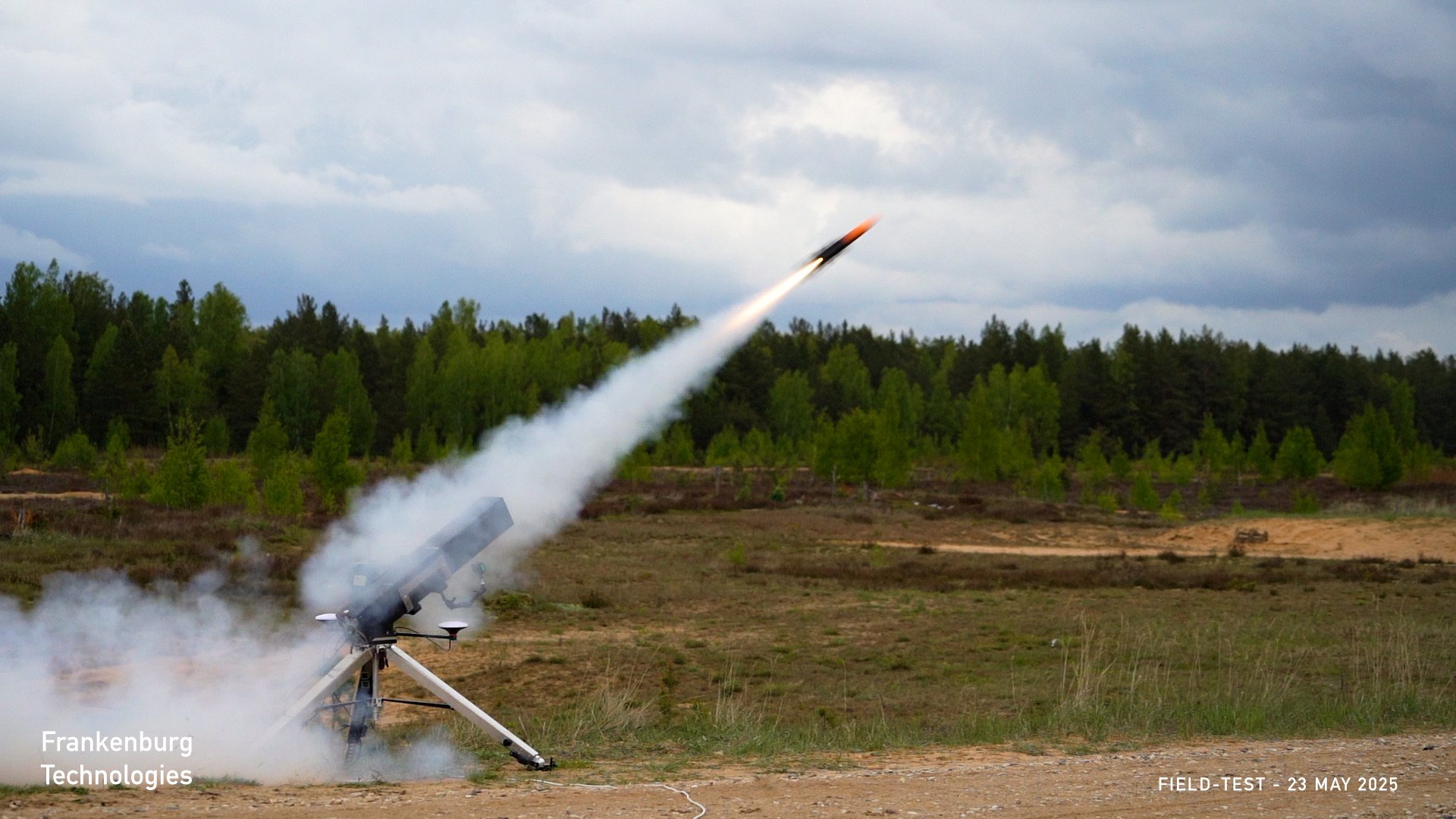
An Estonian defense company is preparing to test a new short-range anti-drone missile system in Ukraine as early as the second quarter of 2026, according to information shared with Militarnyi at the World Defense Show 2026 in Riyadh, Saudi Arabia.
A representative of the company, Frankenburg, told Militarnyi that development of the system is being accelerated, with field demonstrations in Ukraine tentatively planned for April through June.
We bring you stories from the ground. Your support keeps our team in the field.
“We are developing the system as quickly as possible and hope to conduct tests in Ukraine in the near future. My expectation is to be ready for a demonstration in the second quarter. I don’t want to release the product too early before it is fully refined,” the representative said, as cited by Militarnyi.
According to details reported by Militarnyi, the system is designed to become one of the first affordable counter-drone solutions built around a true “fire-and-forget” concept—an approach typically associated with far more expensive air-defense interceptors.
𝗔 𝘀𝗺𝗮𝗹𝗹 𝗰𝗹𝗶𝗽, 𝗮 𝗯𝗶𝗴 𝘀𝘁𝗲𝗽.
— Frankenburg Technologies (@FrankenburgTech) June 17, 2025
𝗘𝗮𝗿𝗹𝘆 𝗽𝗿𝗼𝗼𝗳 𝘁𝗵𝗮𝘁 𝗮𝗳𝗳𝗼𝗿𝗱𝗮𝗯𝗹𝗲 𝗱𝗿𝗼𝗻𝗲 𝗱𝗲𝗳𝗲𝗻𝗰𝗲 𝗶𝘀 𝗱𝗼𝗮𝗯𝗹𝗲: our European-built Mark I is a fast, lightweight, solid rocket-fuelled missile designed specifically to counter drones. Mass-producible,… pic.twitter.com/k3vM6AR1Eq
At the core of the system is the Mark 1 short-range interceptor missile. As described to Militarnyi, it is capable of engaging aerial targets at distances of up to roughly 2 kilometers and at altitudes of up to 1.5 kilometers.
The missile uses a modern electro-optical seeker paired with a closed-loop guidance architecture. Instead of conventional metal fragments, the warhead employs glass fragmentation elements weighing about 500 grams—an unconventional design choice highlighted in coverage by Militarnyi.
Propulsion is provided by a composite solid-fuel rocket motor that allows the interceptor to rapidly reach its attack trajectory.
At the Ādaži NATO base in Latvia, Frankenburg Technologies executed the first full kill-chain hard-kill intercept against a fast-moving aerial target.
— Frankenburg Technologies (@FrankenburgTech) December 18, 2025
This is a breakthrough for European defence innovation – a true “SpaceX moment” for the missile industry, bringing affordability… pic.twitter.com/7m2UseWIIL
Company representatives emphasized to Militarnyi that the system is specifically optimized to defeat Class III and smaller drones, prioritizing threats such as Shahed-type loitering munitions and other slow-moving aerial targets.
At the defense exhibition, Frankenburg displayed a test launcher that had already undergone trials in Latvia in December, according to Militarnyi.
The finalized configuration is expected to carry four missiles per launcher, while a complete battery could integrate up to four stationary launch units, providing immediate readiness of 16 interceptors.
The architecture is intentionally open, allowing integration with a customer’s existing ground-based detection assets—including radar and electro-optical sensors—an approach repeatedly underscored in reporting by Militarnyi.
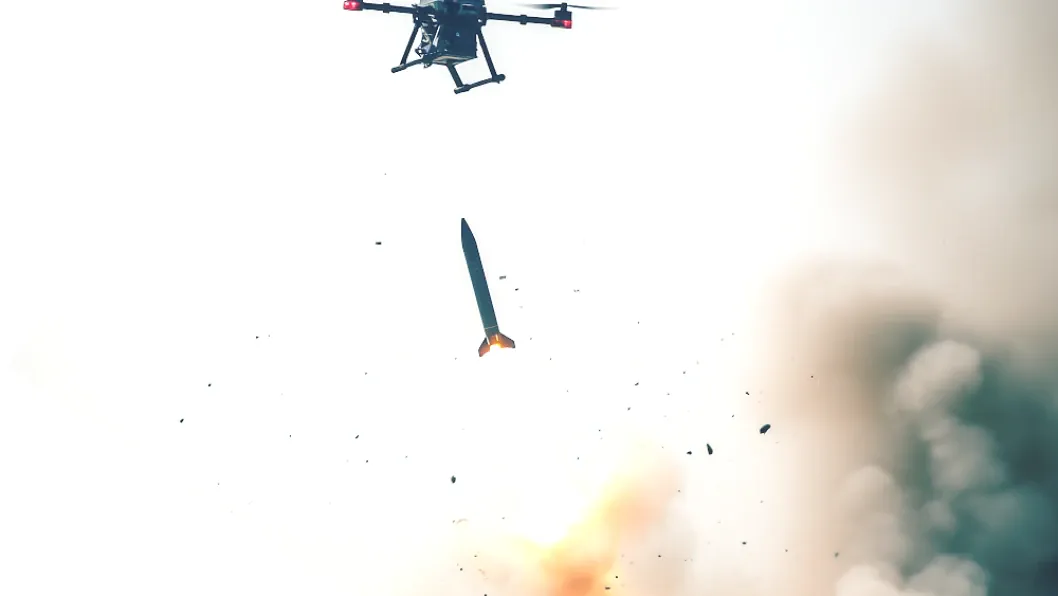
Looking ahead, Frankenburg plans to adapt the system for additional platforms. As noted in Militarnyi’s coverage, this could include deployment on naval drones, expanding the interceptor’s operational flexibility.
The company is also developing an air-to-air version in cooperation with a major defense partner. This configuration would use a two-missile rail launcher mounted under an aircraft wing, enabling airborne counter-drone engagements, according to information shared with Militarnyi.
Initial production capacity is currently based in Latvia. However, Frankenburg is pursuing a modular “field foundry” manufacturing concept that would allow rapid missile production directly inside the user country—an approach that Militarnyi notes could significantly shorten supply chains during wartime conditions.
Earlier, Ukraine began fielding a new artificial-intelligence-powered anti-drone weapon capable of intercepting more than 100 drones without reloading, a system designed to counter the growing threat posed by small, fast, and highly maneuverable FPV drones.
Discuss this article:
-4a56a6b482ec132402c16ef6fcabf9a2.png)





-111f0e5095e02c02446ffed57bfb0ab1.jpeg "Photo of Roman Kohanets")

-72b63a4e0c8c475ad81fe3eed3f63729.jpeg "Photo of Cyril Barabaltchouk")