- Category
- War in Ukraine
Adapt or Fall: Innovation as the Key to Win the War in Ukraine
When drones defeat tanks, innovation becomes the new weapon. Ukraine’s battlefield has upended traditional military thinking. Success now favors those who can improvise faster and scale smarter.
 Prefer U24 Media on Google
- Authors

-19428fefbe2e33044463541807f3be57.jpeg "Photo of George Nazarchuk")
Combining the latest war technology with simple, time-tested solutions is what defines the Russian full-scale invasion of Ukraine. The extreme disparity in the “cost-effectiveness” ratio creates an economically unsustainable situation for any side that relies solely on expensive, modern tech.
The economic logic of the war in Ukraine
Modern military conflicts are increasingly shaped by unconventional tactics that allow a weaker side to resist a stronger adversary. Post–Cold War military doctrine—shaped by previous conflicts—relied on concepts such as precision strikes, air dominance, and complex networked systems.
We bring you stories from the ground. Your support keeps our team in the field.
However, Russia’s war in Ukraine has revived the brutal logic of large-scale attritional warfare, using and combining every available means. Today’s battles—on land, in the air, and in the information domain—are driven less by technological superiority and more by rapid adaptation, scalable production of low-cost systems, and engineering ingenuity.
The key objective has shifted to exhausting the enemy’s resource base. Technological simplicity, low cost, resistance to electronic warfare, and mass production often outweigh being first in the tech race.
The cost inversion that changed the battlefield
This inversion of value is most evident in three critical domains: air defense, ground combat, and naval operations.
Air defense vs cheap attack drones
Russia employs mass-produced, low-cost Shahed-136 attack drones to strategically overwhelm and deplete Ukraine’s air defense systems. To intercept these inexpensive threats, Ukraine would need to deploy extremely costly Western missiles. This economic imbalance means that even a 100% interception success rate could result in a strategic win for the attacker, by draining precious defensive stockpiles that are difficult to replenish. Ukraine has thus had to implement fast and efficient countermeasures, including the mass deployment of mobile fire teams armed with machine guns, drone interceptors, or AI-integrated turrets.
Ukrainian interceptor drone downs jet-powered Shahed kamikaze drone.
— Defense of Ukraine (@DefenceU) December 2, 2025
📹: 1129th Anti-Aircraft Missile Regiment pic.twitter.com/oCSKb7ffs2
FPV drones vs main battle tanks
On the ground, the cost-value inversion has challenged the supremacy of the main battle tank. According to visually verified data from the independent analytics group Oryx, Russia has lost over 4,000 tanks. As Foreign Policy reports, citing a senior NATO official, more than two-thirds of recently destroyed Russian tanks were taken out by inexpensive FPV drones—making them a key driver of Russia’s armored losses. These drones, which typically cost between $500 and $2,000 and are used to strike vulnerable parts of tanks worth $2.5 to $4.5 million. This extreme asymmetry doesn’t signal the end of the tank era, but it radically alters how tanks are used, sparking a new race for counter-asymmetric systems centered on electronic warfare and adaptive protection. Moreover, the emergence of fiber-optic drones—immune to EW systems—further complicates this equation.
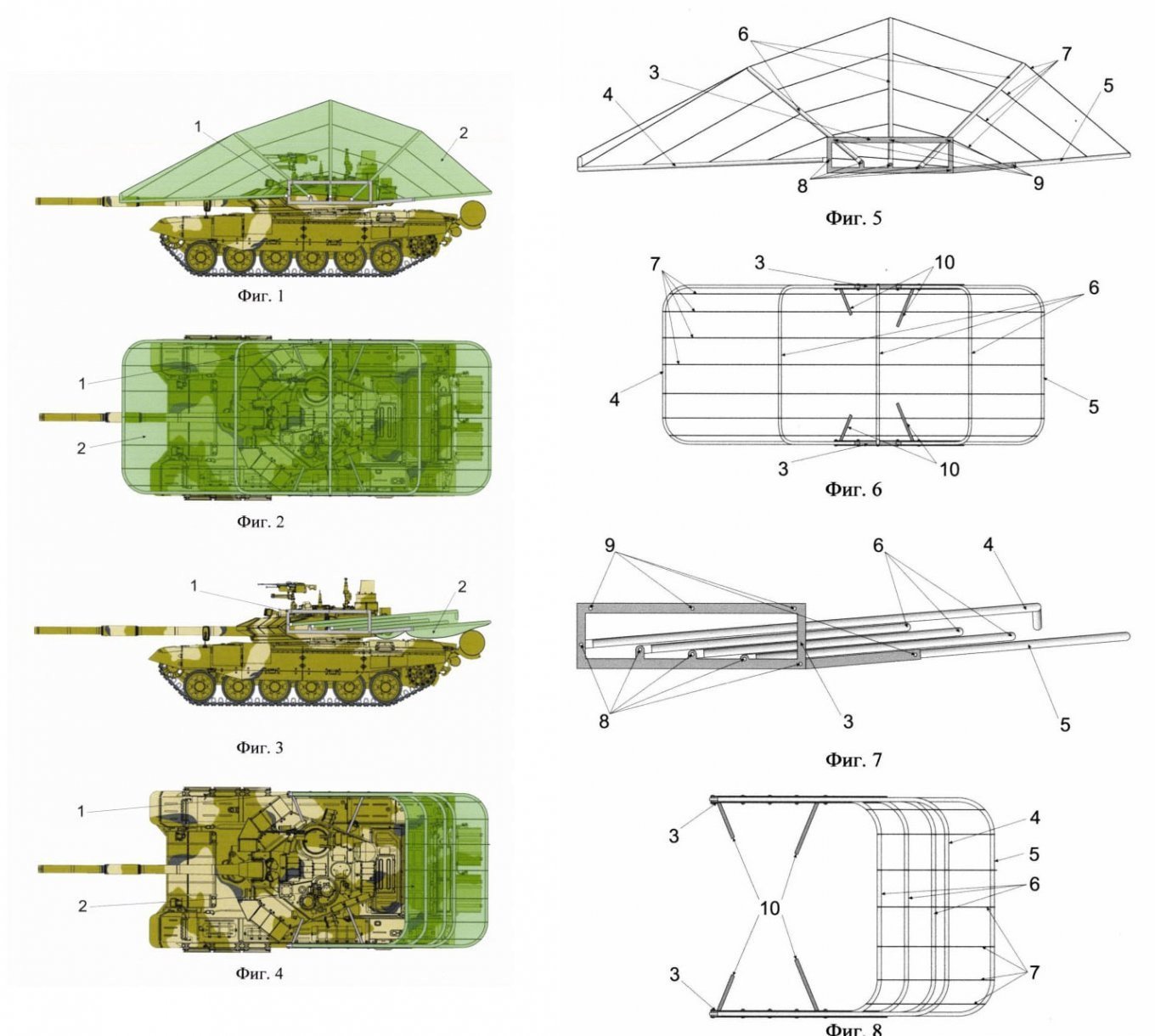
In response to this widespread threat, both Ukraine and Russia have resorted to improvised defenses, such as metal grates and mesh “grills”. Although their effectiveness is debated, their widespread use, even on advanced Western tanks like the M1 Abrams, highlights the vulnerability of high-tech platforms to $500 threats and the need for crude adaptations to survive.
Naval drones and the collapse of traditional sea power
Without a large traditional navy, Ukraine has pioneered the use of low-cost naval drones to target Russia’s Black Sea Fleet. These relatively small and inexpensive drones carry hundreds of kilograms of explosives and are difficult to detect by radar. Their deployment has forced the Russian Navy to drastically revise its operational doctrine and limit activity in the region.
More robots mean fewer losses. More technology means fewer killed.
Minister of Defense of Ukraine
In a documented historic precedent, Ukraine’s Magura-7 sea drones—equipped with infrared-guided missiles—successfully downed two Russian Su-30 fighter jets. This singular event underscores the radical transformation of naval capabilities, proving that dominance at sea is now driven by technological asymmetry and innovation, not just fleet size.
🔴 BREAKING: Ukrainian Magura maritime drone shot down a Russian Su-30 fighter jet near the city of Novorossiysk in Russia's Krasnodar Krai, Defense Intelligence of Ukraine confirmed. pic.twitter.com/1dsR5k1hdL
— UNITED24 Media (@United24media) May 3, 2025
Starlink, AI, and the digital backbone
The success of low-tech solutions lies in their simplicity, speed of deployment, and relatively low cost. An unconventional example of hybrid tech use is Russia’s deployment of Ukrainian SIM cards in Shahed-136 drones. This approach enables the conversion of commercially available components into military tools, bypassing standard EW systems calibrated for military frequencies.
The Ukrainian army, for example, has introduced the FrankenSAM program, which integrates American AIM-7 Sparrow missiles into Soviet Buk-M1 air defense launchers, creating a hybrid system that addresses ammunition shortages while maintaining operational effectiveness with Western munitions. This upgrade allows Ukraine to launch American-made missiles capable of hitting targets up to 20 kilometers away from existing Soviet platforms, demonstrating the rapid adaptation of Western weapons to outdated systems.
Ultimately, the effectiveness lies in the synergy of combining different approaches. High-tech systems serve as critical enablers that unlock the full potential of mass low-tech operations.
The Starlink satellite network, for instance, provides resilient, high-speed, decentralized communication vital for drone operations, artillery coordination, and command and control—especially when terrestrial infrastructure is destroyed. Starlink acts as the digital backbone that “unlocks” the capabilities of improvised systems.
-829cae5d50d81c8c61e60320e54c5f0b.jpg)
Moreover, artificial intelligence is increasing the lethality of cheap, disposable systems. AI also enhances intelligence gathering, target recommendation, and even counters disinformation.
Lessons from the battlefield in Ukraine offer a clear roadmap for future military planning and a strong warning against over-reliance on either traditional weaponry or cutting-edge technology. This war is fundamentally a war of adaptation—where tactical advantages can be copied or neutralized almost instantly.
Future military doctrine is shifting its focus away from prohibitively expensive technological solutions toward agility, innovation, and the ability to rapidly test, produce, and deploy new systems at scale.
Employing simple, cheap tech faster is giving people a tactical edge.
General Randy George
US Army Chief of Staff
Key lessons from Ukraine’s adaptive warfare
Scalability and smart solutions: Mass production of low-cost but effective drones and technologies to counter them.
Hybrid defense development: Building a multi-layered air defense architecture in which high-cost systems are reserved exclusively for critical targets like ballistic and cruise missiles, while inexpensive drone interceptors—now being produced by Ukraine at a rate of 1,500 units per day—and mobile fire teams handle the bulk of low-cost threats such as drones.
Rapid innovation ecosystems: Establishing R&D centers in Ukraine. Global tech giants and defense contractors can localize their research efforts, validating technology under real combat conditions.
Evolving intelligence & data use: Other nations can adopt Ukraine’s OSINT approach for rapid data verification and target acquisition. Integrating commercial satellite data into unified situational awareness systems—like the Delta platform—is another key takeaway.
Information security: Verification tech and deepfake resistance. The need to invest in AI-fake detection tools is critical, as Ukraine’s experience shows how quickly Russia can weaponize generative AI to destabilize society.
Incentivizing effectiveness: Tracking real-world results and rewarding successful drone strikes through a bonus-based system. Ukraine has launched a new military initiative known as “ePoints”, designed to award drone operators with points for confirmed hits on Russian targets.
The war in Ukraine serves as a profound lesson in the enduring power of simplicity, resilience, and mass production. Victory in the hybrid battlespace of the future will depend on integrating all available tools. A successful military force will be able to swiftly combine low-tech and high-tech—using cheap systems to apply economic pressure while leveraging advanced communications and technologies to amplify the effectiveness of each low-cost asset. The ability to adapt quickly and in a decentralized way—to learn and innovate faster than the enemy—may prove to be the new decisive factor in warfare.
Discuss this article: