- Category
- Latest news
This Ukrainian AI Weapon Can Shoot Down Over 100 Drones in One Go
 Prefer U24 Media on Google
- Authors


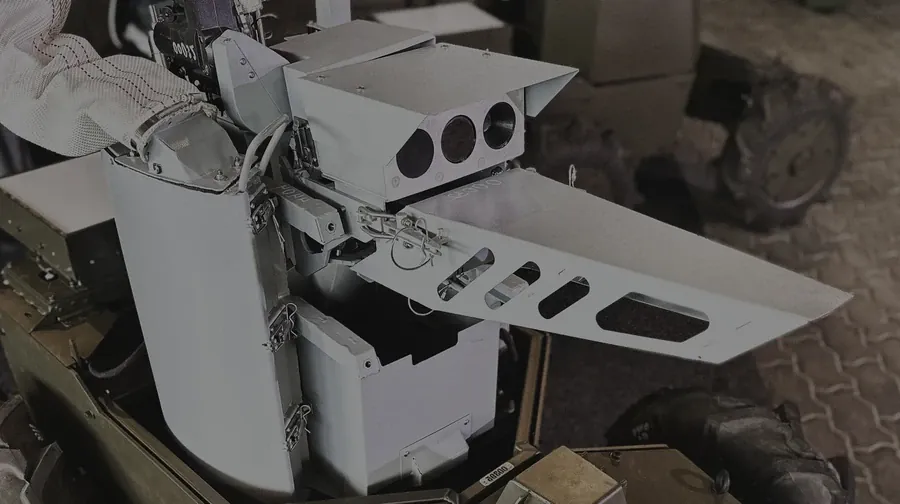
Ukraine has begun fielding a new artificial-intelligence-powered anti-drone weapon capable of intercepting more than 100 drones without reloading, a system designed to counter the growing threat posed by small, fast, and highly maneuverable FPV drones, Ukrainian defense outlet Defense Express reported on December 23.
The system, developed by Ukrainian company UGV Robotics, is a remotely operated combat module known as Predator.
We bring you stories from the ground. Your support keeps our team in the field.
Its defining feature is versatility: the module can be mounted on a wide range of platforms, including unmanned surface vessels, helicopters, ground robotic systems, and pickup trucks.
The primary mission of Predator is to destroy FPV drones before they reach their targets. To do so, the system is armed with a 7.62-mm machine gun, with operators able to choose between PKT, M240, or FN MAG variants. Effective firing range is reported at up to 800 meters.
Predator — Ukrainian Anti-Drone Combat Module
— Special Kherson Cat 🐈🇺🇦 (@bayraktar_1love) December 22, 2025
Predator is a remotely operated combat module developed by UGV Robotics. It is designed for flexible integration on stationary positions and mobile platforms, including armored vehicles, trucks, helicopters, and unmanned surface… pic.twitter.com/FOuYuHdx0I
Artificial intelligence plays a central role in the system’s operation. The AI is responsible for detecting, tracking, and continuously engaging aerial targets, while automatically guiding the weapon onto the drone. A laser rangefinder and ballistic computer assist with precise fire control, enabling accurate engagements even at several hundred meters.
The module carries an ammunition load of 700 rounds. According to the developer, this is theoretically sufficient to intercept more than 100 FPV drones, as Predator operates using short firing bursts—either one to two rounds, or three to four rounds per burst.
Новий український робот "Хижак" із вбудованим ШІ може вести вогонь по супротивнику, що рухається, причому навіть самому перебуваючи в русі.
— Serg (@NHunter007) August 14, 2024
Цей дистанційно-керований бойовий модуль інтегрований з машинним зором та обладнаний системою гіростабілізації. Модуль ⬇️ pic.twitter.com/Mbz8AKSXI3
In practice, real combat conditions are likely to increase ammunition expenditure, reducing the total number of possible intercepts, but even then, the system represents a substantial leap in efficiency, according to Defense Express.
Perhaps the most striking aspect of Predator is the breadth of platforms it can support. Video released by the company shows the module mounted on unmanned surface vessels, ground robotic platforms, and even helicopters. In one example, the system is installed on an Airbus H125 helicopter operated by Ukraine’s border service.
-9220540186162ee79463169b5478a8d5.jpg)
While such helicopters are unlikely to operate close to the front line against FPV drones, this configuration suggests that Predator is also intended to engage larger targets, including long-range attack drones such as Shahed-type systems and reconnaissance UAVs. Engaging those targets would require significantly more ammunition per intercept, but it further reinforces the system’s universal role.
The system has also been demonstrated on unmanned surface vessels such as the Magura V5, as well as ground robotic platforms including TERMIT and “Liut,” the latter developed in-house by UGV Robotics. These platforms are particularly vulnerable to FPV and loitering munition attacks, as electronic warfare systems are often ineffective—especially against fiber-optic-guided drones.
Even a single robotic platform equipped with Predator could provide protective coverage for an entire group, escorting other unmanned systems carrying weapons or supplies during missions.
The combat module is equipped with two thermal imaging cameras: a wide-angle sensor with a 48-degree field of view for target detection, and a narrow 15-degree camera for precision aiming. This configuration, however, introduces a limitation—without radar or additional sensors, the relatively narrow detection angle creates blind spots that could allow fast-approaching drones to evade detection unless the module is constantly rotating. The turret’s rotation speed is estimated at around 10 degrees per second.
Despite these limitations, analysts say Predator represents a notable step forward in Ukraine’s layered drone defense approach. The system has already been officially codified for service, a process completed in July, clearing the way for wider deployment.
In an increasingly drone-saturated battlefield, Predator appears designed to do one thing above all else: hunt drones relentlessly—no matter where they come from or what platform it’s mounted on.
Earlier, Ukrainian assault troops used a ground-based robotic combat platform to stop a Russian armored personnel carrier and derail an attempted night assault.
Discuss this article: