- Category
- Latest news
How a Low-Cost Ukrainian Drone Became Russia’s Worst Long-Range Nightmare
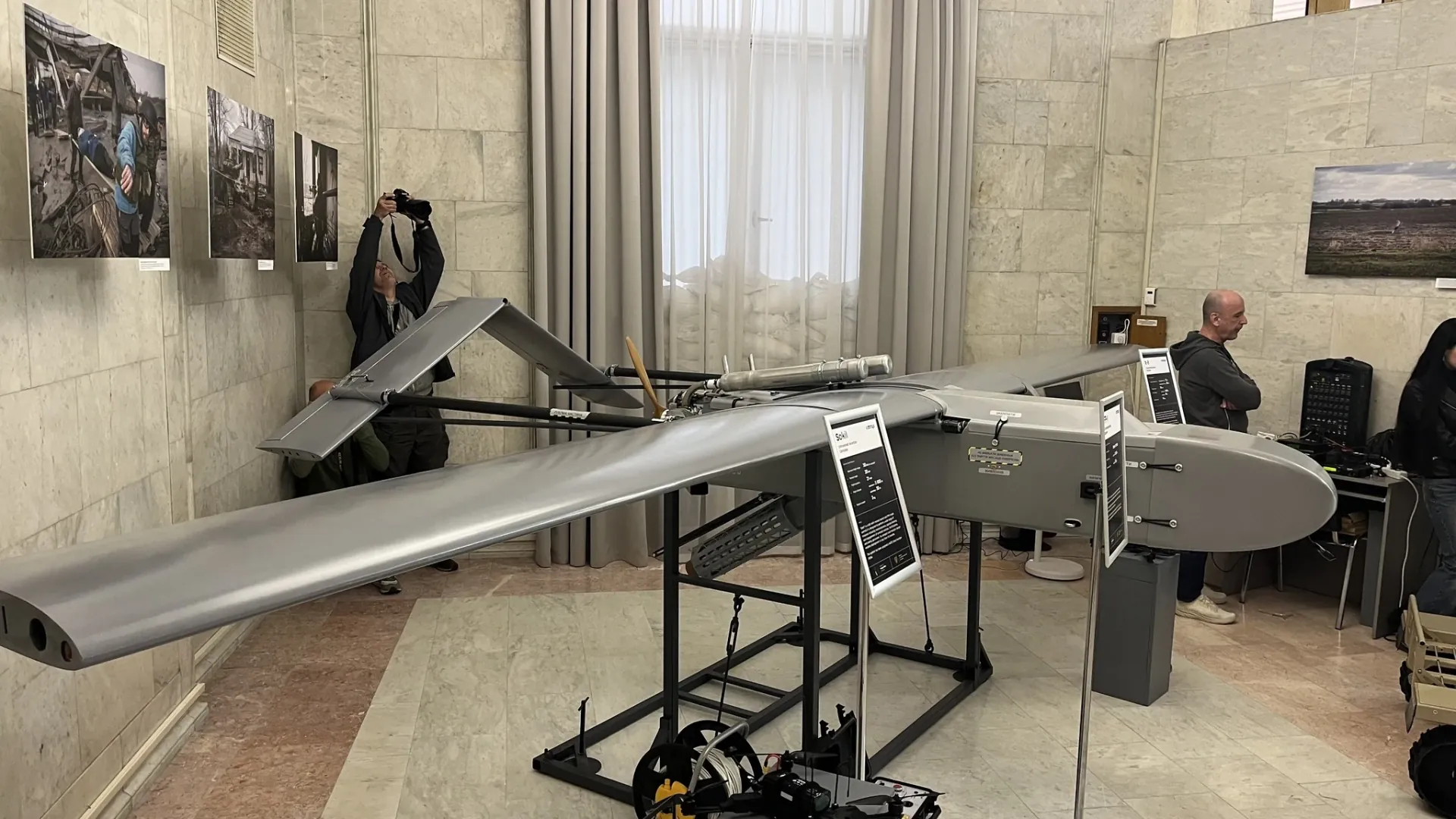
Ukraine’s FP-1 long-range drone can be built in just three days and costs a fraction of comparable systems—now accounts for more than half of all deep-strike hits on Russian territory, emerging as one of Kyiv’s most effective precision weapons.
 Prefer U24 Media on Google
- Authors


Ukraine’s long-range FP-1 drone now accounts for more than half of all successful deep-strike hits inside Russia, according to new reporting by Defense Express. The outlet visited Fire Point’s production line on December 11 to understand how the company built a drone that costs one-third of competing Ukrainian systems yet has become the backbone of Ukraine’s strategic strike capability.
We bring you stories from the ground. Your support keeps our team in the field.
Official data from Ukraine’s General Staff, cited by Defense Express, shows FP-1 is responsible for 59% of long-range strike missions and 54% of confirmed target hits.
It also reportedly demonstrates “the best route-completion rate from launch to target” and “the highest overall effectiveness” among Ukraine’s deep-strike unmanned aerial vehicles.
Yet FP-1’s unit cost is three times lower than Liutyi, despite similar range and warhead parameters—a discrepancy that prompted Defense Express to investigate what design and production choices explain the difference.
🛩️A New Ukrainian Long-Range Drone, the FP-1, Has Been Unveiled
— Special Kherson Cat 🐈🇺🇦 (@bayraktar_1love) May 6, 2025
The newly presented, FP-1, is a Ukrainian long-range kamikaze drone with a claimed range of up to 1,600 km and a warhead capacity of up to 120 kg.
What makes it especially notable is the absence of landing gear and… pic.twitter.com/9QbOpAtpeU
A drone built around a single concept
As Defense Express notes, the Liutyi was initially pitched by a Ukroboronprom representative as a “multi-functional platform”—intended to serve both as a suicide drone and as a reusable reconnaissance UAV. Fire Point’s FP-1, by contrast, was designed from the start as a single-use strike weapon.
Defense Express explains the consequences of this divergence: one drone must survive hundreds of flight hours; the other only needs to complete one mission. This fundamentally changes structural demands, materials, and cost. One system resembles “a disposable cup,” as the outlet put it, while the other must be built like a durable mug.
Mass production through radical simplification
Fire Point embraced mass-manufacturing principles, Defense Express reports—prioritizing simplicity, low cost, and extremely fast production. The result: the FP-1 can be built in three days.
Defense Express observed a production line built around:
vacuum-formed plastic instead of composite-cured fuselages;
a laser-cut plywood avionics bay;
a plastic fuel tank;
a small moped engine;
a wing and tail mounted on six carbon rods;
tie-straps, clamps, and rubber bands for connections.
🔥The Special Operations Forces of Ukraine shot down a Russian Mi-8 helicopter with an FP-1 "deep-strike" drone in the Rostov region pic.twitter.com/ZEQGbU7Peu
— Cloooud |🇺🇦 (@GloOouD) November 22, 2025
This approach makes FP-1 manufacturing highly distributable and easy to scale — an “old but forgotten principle of wartime production,” as Defense Express describes it.
The hardest part: making ‘simple’ actually work
Fire Point told Defense Express that simplifying production was the easy part — making FP-1 navigate complex routes, resist electronic warfare, and reliably hit distant targets was far harder.
Out of the company’s 3,500 employees, about 300 are engineers, including demobilized veterans specializing in electronic warfare (EW) resistance and strike-mission planning. Defense Express notes the company spends roughly $4.75 million per week across all R&D programs.
NYT: Today, Fire Point is Ukraine’s biggest private drone maker, with $1B in defense contracts and 30 secret hidden plants.
— Tymofiy Mylovanov (@Mylovanov) October 27, 2025
NYT says its FP-1 kamikaze drones hit oil refineries 1350 km inside Russia at $58K each, not $1M+ per missile, the Western cost.
1/ pic.twitter.com/Mofmm2wtno
Because FP-1 is produced in such large numbers, Fire Point can test multiple drones every day, intentionally destroying them to refine navigation algorithms, EW countermeasures, flight controls, and aerodynamic adjustments—a process Defense Express describes as impossible for most other Ukrainian developers.
Efficiency and cost create a new deep-strike doctrine
Defense Express confirms FP-1’s current price of $55,000 per drone and a production rate of 200 units per day—unprecedented numbers for a Ukrainian long-range system.
Alongside FP-1, the company is also producing FP-2, a similar platform designed for 200+ km strikes with a 105-kg warhead.
-383df2dd6ac96690cfe0472f7742b490.png)
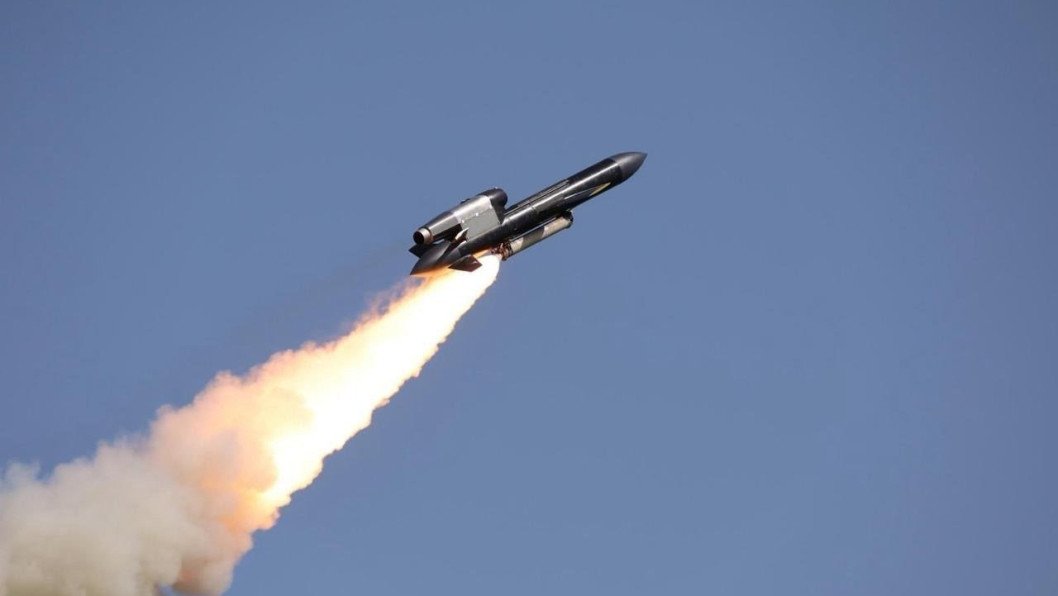
One of Fire Point’s most consequential decisions, according to Defense Express, was adopting solid-fuel booster launches, which forced the company to develop its own solid propellant.
That breakthrough has now enabled Fire Point to start designing ballistic missiles, Defense Express reports.
Earlier, Ukrainian Special Operations Forces conducted overnight precision FP-2 drone strikes on multiple Russian military targets in the occupied Donetsk and Luhansk regions, destroying stockpiles of fuel and unmanned aircraft.
Discuss this article:



-c439b7bd9030ecf9d5a4287dc361ba31.jpg "Photo of Katherina Popilnichenko")