- Category
- Latest news
US Air Force Expands Counter-Drone Training in Germany Using Lessons From Ukraine
 Prefer U24 Media on Google
- Authors

-72b63a4e0c8c475ad81fe3eed3f63729.jpeg "Photo of Cyril Barabaltchouk")
The US Air Force has ramped up its counter-drone training in Germany to enhance airbase defense capabilities across Europe, Army Recognition Group reported on March 4.
This initiative, focused on providing air defense for air bases and logistics hubs, integrates detection systems, electronic warfare tools, and kinetic intercept capabilities to combat the growing threat of drones, which have increasingly been used in conflicts around the world.
We bring you stories from the ground. Your support keeps our team in the field.
The training, held at Grafenwoehr Training Area and overseen by US Air Forces in Europe, incorporates real-world lessons learned from recent wars, such as the Russian full-scale invasion of Ukraine, which began in 2022, where small unmanned aerial systems (UAS) have become a significant threat to fixed military installations.
The three-week course, called the Joint Multidomain Counter UAS course, equips military personnel with skills to detect, track, and defeat unmanned aerial threats. Trainees use radio-frequency detection systems to identify drone control links, electro-optical and infrared sensors for tracking low-signature targets, and electronic attack tools to disrupt drone navigation and communication.
In live scenarios, personnel practice using handheld counter-drone systems such as Dronebuster devices, as well as the SMASH 2000 fire control system and FIM-92 Stinger missiles for kinetic engagements. This comprehensive training approach ensures readiness for both soft-kill and hard-kill countermeasures, Army Recognition Group wrote.
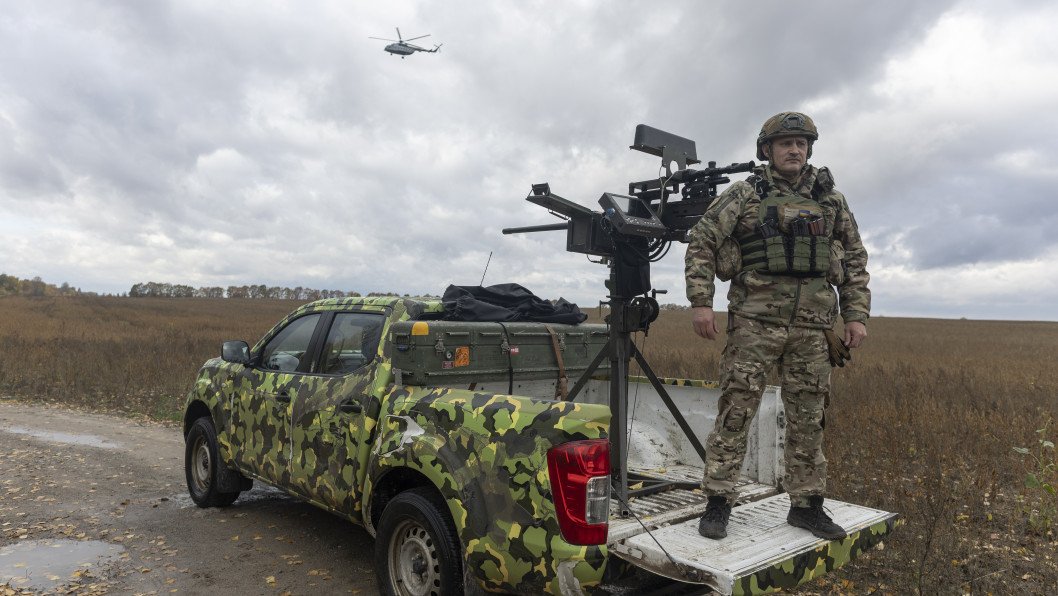
The training directly addresses lessons learned from Ukraine, where drones have been used for reconnaissance, precision targeting of airbases, and even direct strikes on infrastructure. These low-cost drones, often launched from several kilometers away, present a unique and immediate threat, as airbases, which concentrate high-value assets like aircraft and fuel storage, remain vulnerable to small, fast-moving targets.
For example, Ukrainian defense forces had recently carried out a large-scale overnight drone operation against the Russian Black Sea Fleet’s primary base in Novorossiysk, using aerial and maritime drones to strike the naval port. The attack reportedly damaged five vessels and critical energy infrastructure.
The operation resulted in confirmed hits on several vessels currently stationed at the base, which has become the primary refuge for the Russian Black Sea Fleet. According to Dosye Shpiona, the casualties among Russian military personnel include three dead and 16 wounded.
The threat from drones is particularly significant due to their ability to strike with minimal warning time, making it essential for airbase defense forces to be equipped with advanced counter-UAS capabilities.
The US Air Force’s increased focus on counter-drone measures is part of its strategic development toward Agile Combat Employment, which distributes aircraft across multiple smaller, more dispersed locations to reduce the risk of enemy targeting. This approach, however, increases the need for small, independent defense teams capable of identifying and neutralizing drone threats, according to Army Recognition Group.

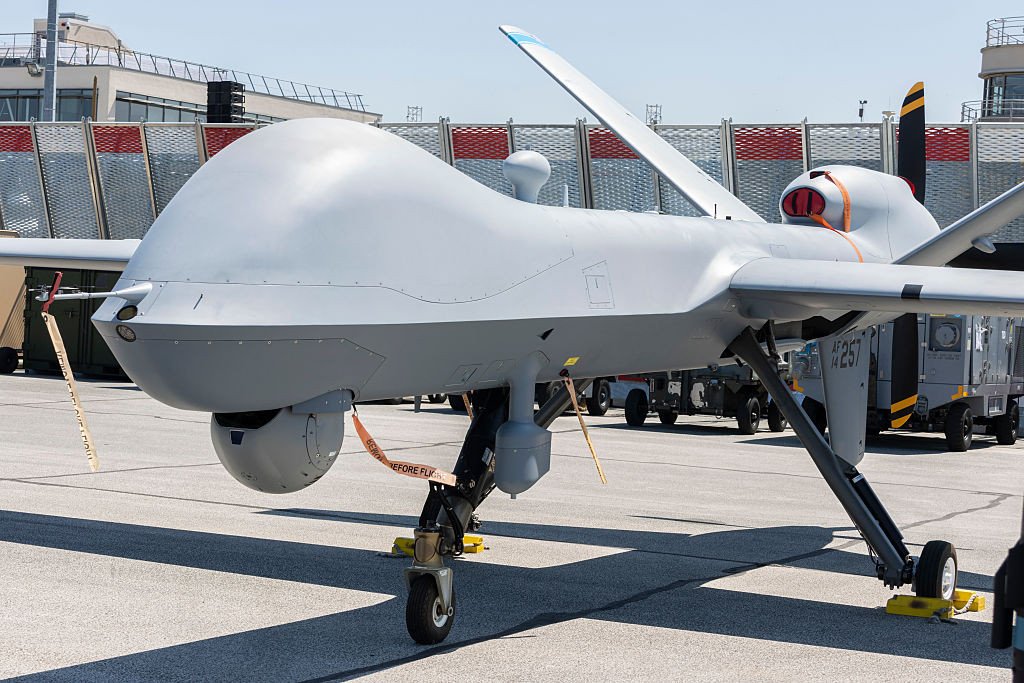
The training in Europe ensures that airbase defense units are prepared to defend critical assets on their own without relying solely on host-nation air defenses. The US Air Force is also increasingly using drones in its operations, including unmanned platforms like the MQ-9 Reaper. These systems provide persistent intelligence, surveillance, and reconnaissance (ISR) capabilities, as well as precision strike options.
The service is expanding its use of smaller, autonomous drones capable of operating alongside manned aircraft to extend sensor reach, conduct electronic warfare, and deliver cost-effective precision effects. Understanding drone tactics and vulnerabilities, as well as effective countermeasures, has thus become an essential operational necessity, not only for defense but also for future airpower strategies.
Earlier, it was reported that the United States may be four to six years away from deploying a truly effective battlefield laser, but Ukraine could achieve it within one to two years, retired US Rear Admiral Mark Montgomery said in an interview.
Montgomery, who served 32 years in the US Navy and later worked at the White House National Security Council and the Senate Armed Services Committee, has been regularly visiting Ukraine since 2023. He now works at the Washington-based Foundation for Defense of Democracies and helps train Ukrainian officers in operational planning in coordination with Ukraine’s Armed Forces General Staff.
“In the US Navy or Army, I would say we are four to six years from a truly effective laser,” he said. “In Ukraine—one to two. You are willing to take risks. Sometimes you fail—and that’s normal.”
Discuss this article:



-111f0e5095e02c02446ffed57bfb0ab1.jpeg "Photo of Roman Kohanets")

-e88c01988249cd60b6f04f79d29156b7.jpeg "Damage to “Cosmogony,” the largest painting in Ukraine, following a Russian drone attack on Lutsk on October 13, 2026. (Source: @sashyyna/Instagram)")