- Category
- Latest news
Putin Admits Russia Is Struggling to Produce Enough Uniforms for Its Army
 Prefer U24 Media on Google
- Authors

-72b63a4e0c8c475ad81fe3eed3f63729.jpeg "Photo of Cyril Barabaltchouk")
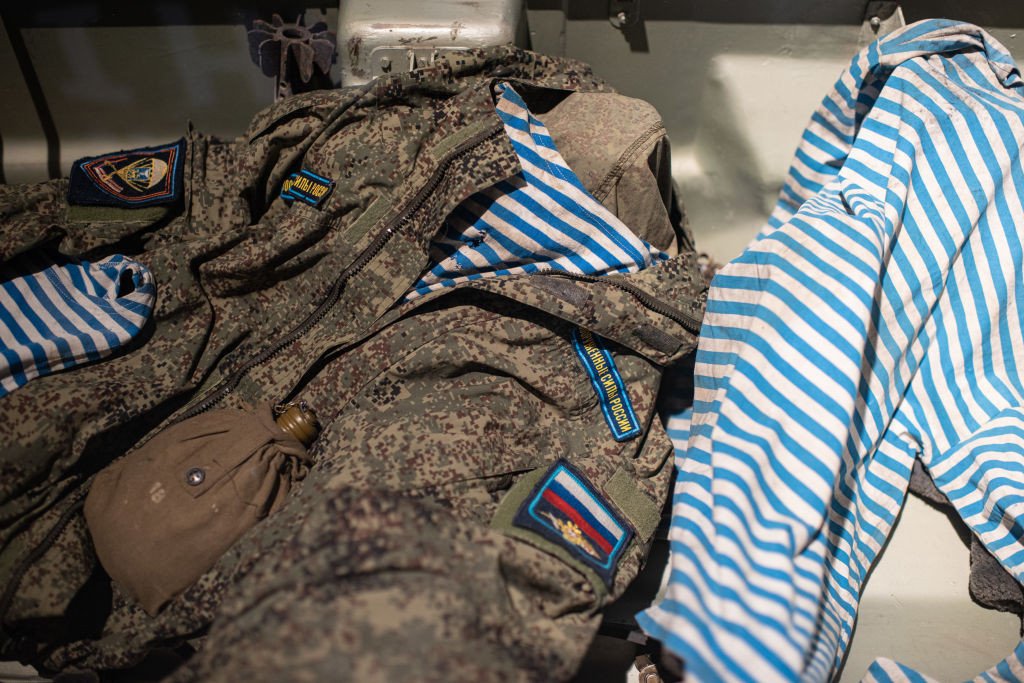
Russian leader Vladimir Putin has admitted that the country is struggling to fully supply its armed forces with domestically produced uniforms and textiles, The Moscow Times reported on April 8.
Speaking at a meeting with Ivanovo Region Governor Stanislav Voskresensky, Putin acknowledged significant shortfalls despite a recent decree banning the purchase of foreign gear and conceded that “not everything that needs to be done has been done in this direction.”
We bring you stories from the ground. Your support keeps our team in the field.
Voskresensky was attempting to report on the positive effects of a presidential decree that came into force on January 1, 2026, which strictly forbids the Russian military from procuring foreign textiles. The ban covers everything from combat uniforms to basic household items like bedding, mandating that all production facilities be located within Russia.
Furthermore, Putin has demanded that by 2027, the fabrics used for uniform tailoring must also be 100% Russian-made. However, government data reveals the massive gap the Kremlin is trying to close: as recently as 2024, up to 30% of textiles for the army were purchased from foreign manufacturers, The Moscow Times wrote.
To meet the surging military demand and comply with the new domestic mandates, Russia’s wartime economy is rapidly cannibalizing its civilian textile sector. Throughout 2025, several major civilian clothing factories were repurposed exclusively for military uniform production. For example, a textile enterprise in the Ivanovo region previously owned by the cosmetics giant Faberlic was taken over by Voentekstilprom, a structure of the military supplier Voentorg.
Similarly, Russia’s largest clothing manufacturer, Gloria Jeans, sold its factories in the Rostov region to Bulava, a military equipment company co-owned by the Kalashnikov concern.
The shift is being driven not just by state mandates, but by a severe labor crisis exacerbated by the Russian full-scale invasion of Ukraine. Vladimir Melnikov, the founder and CEO of Gloria Jeans, explained that the reduction of his civilian business was heavily influenced by a massive outflow of personnel. “Some go to the Special Military Operation (both men and women), and others go to sew monotonous clothes with large orders and higher salaries,” Melnikov stated, highlighting how lucrative military contracts are draining the civilian workforce.
-5a8bd55bb11f6f8a7f68714365b98e2f.png)
Olga Sumishevskaya, a partner at the OneStore consulting company, noted that in the current economic climate, domestic clothing production is incredibly expensive, making it far more profitable for brands to simply sell their assets to military contractors than to attempt to compete for labor, according to The Moscow Times.
The collapse of the civilian textile sector mirrors a much larger crisis sweeping across Russia’s war-driven economy, which is currently facing severe pressure from Western sanctions and falling revenue.
In the Nizhny Novgorod region—a major hub for both defense and automotive manufacturing—local industrial groups have pleaded with the government for urgent financial rescue. According to a recent report, state-owned defense and aerospace giants like Rostec and Roscosmos are chronically failing to pay their bills, leaving local enterprises saddled with over $1.3 billion in unpaid invoices and forcing them to take out survival loans with interest rates exceeding 20%.
While facilities strictly dedicated to the invasion of Ukraine remain active, the broader civilian sector is crumbling: companies report that profits have halved, automakers like the GAZ Group saw sales plummet by 33%, and the region is bracing for up to 20,000 job losses by the end of the year as the Kremlin bleeds local budgets dry to fund the war against Ukraine.
Discuss this article:


-111f0e5095e02c02446ffed57bfb0ab1.jpeg "Photo of Roman Kohanets")