- Category
- World
Russia Adds 10 New Launch Sites at Cymbulova Drone Port to Boost Geran-5 Strike UAV Capacity
 Prefer U24 Media on Google
- Authors


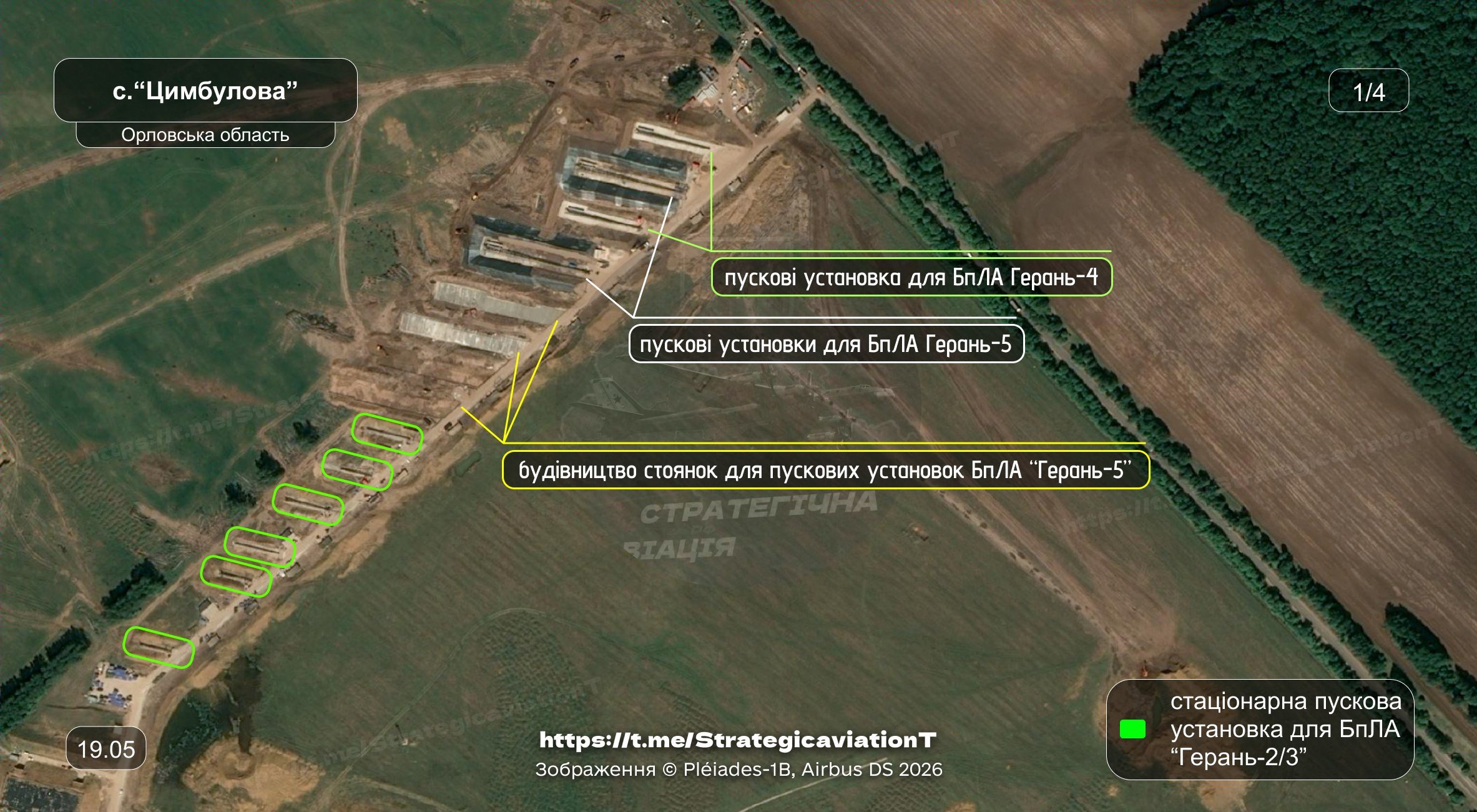
Russia is rapidly expanding the “Cymbulova” drone port, adding 10 additional launch installations for jet-powered “Geran-5” strike unmanned aerial vehicles in less than a month after construction activity at the site began.
The development is evidenced by new satellite observations published by the Telegram channel “Strategic Aviation of the Russian Federation” on May 20, which has been monitoring the site since April 22, when active expansion of infrastructure was first detected.
We bring you stories from the ground. Your support keeps our team in the field.
According to the available imagery, four new parking positions for launch systems are currently being constructed near existing “Geran-5” launch sites. In addition, six more positions are under development in the southern part of the facility, intended for additional launch complexes.
In total, the ongoing works suggest the addition of 10 new launch installations in a relatively short period, potentially significantly increasing the site’s capacity for simultaneous drone launches.
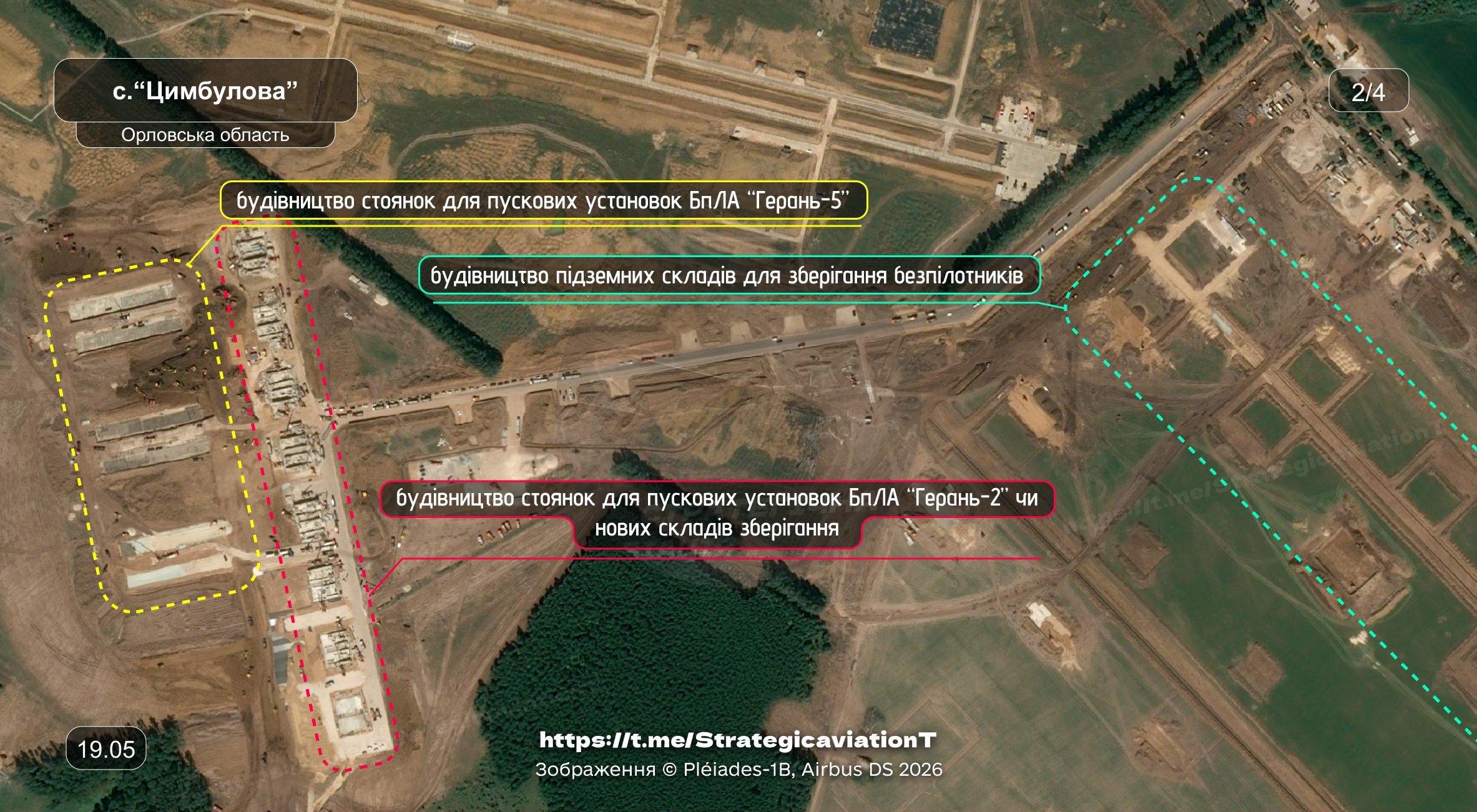
Parallel construction activity at the Cymbulova drone port also includes at least eight new reinforced concrete structures, which are likely intended for the storage of unmanned aerial vehicles and related equipment.
According to Militarnyi, arlier satellite data indicated that the site already hosted launch systems for jet-powered “Geran-3/4” and “Geran-5” UAVs. Each of these systems is reportedly up to 80 meters in length—approximately three times larger than standard launch platforms used for conventional strike drones.
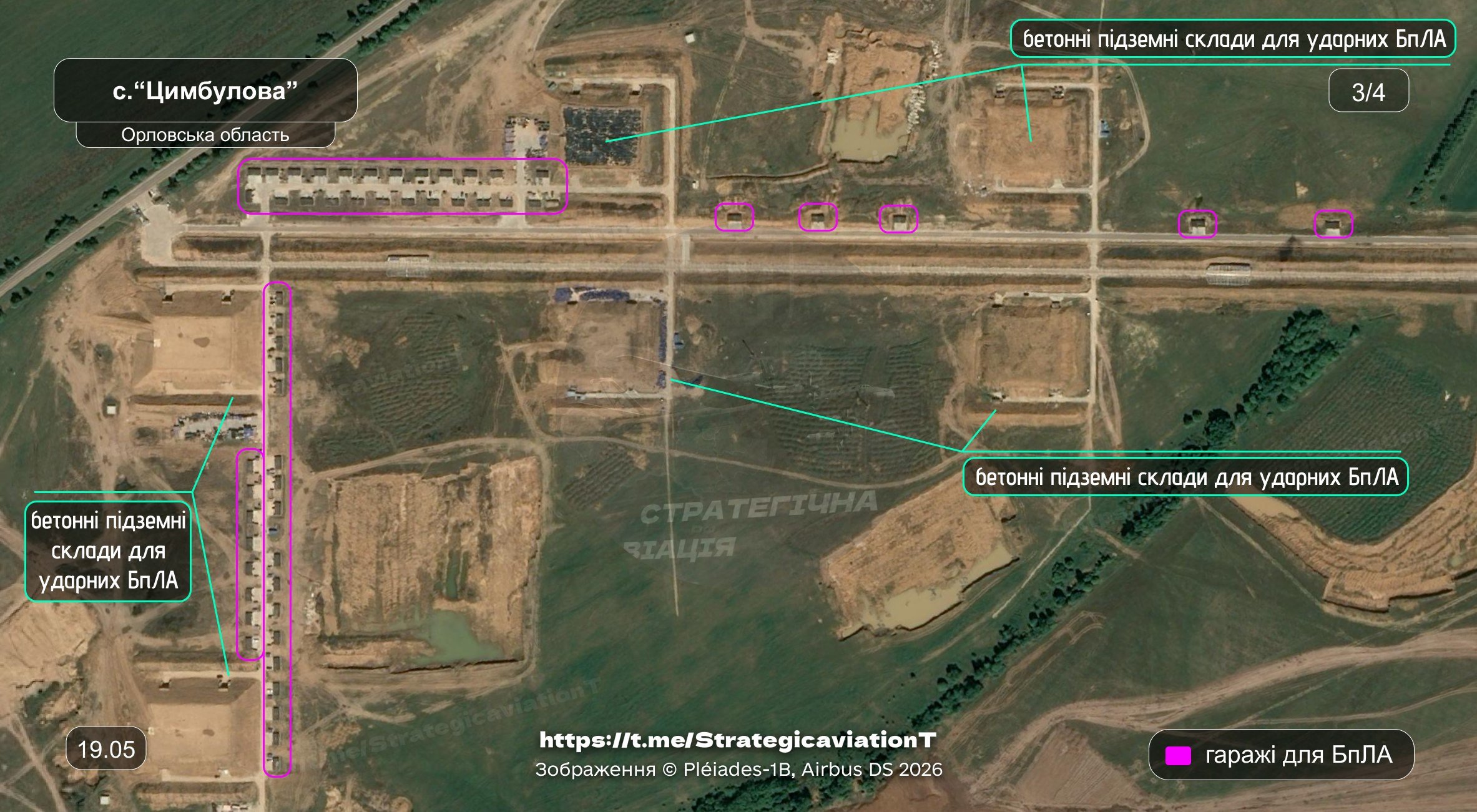
At present, the Cymbulova training range and the area near temporarily occupied Donetsk remain the only known locations where such jet-powered unmanned systems are deployed.
Previous satellite imagery also showed large numbers of UAVs positioned in the open near launch areas, as well as civilian vehicles, which Russian forces may use as mobile launch platforms, Militarnyi reported.
The pace and scale of expansion at the site indicate a broader effort by Russia to systematically build up infrastructure for mass deployment of jet-powered strike drones against Ukraine.
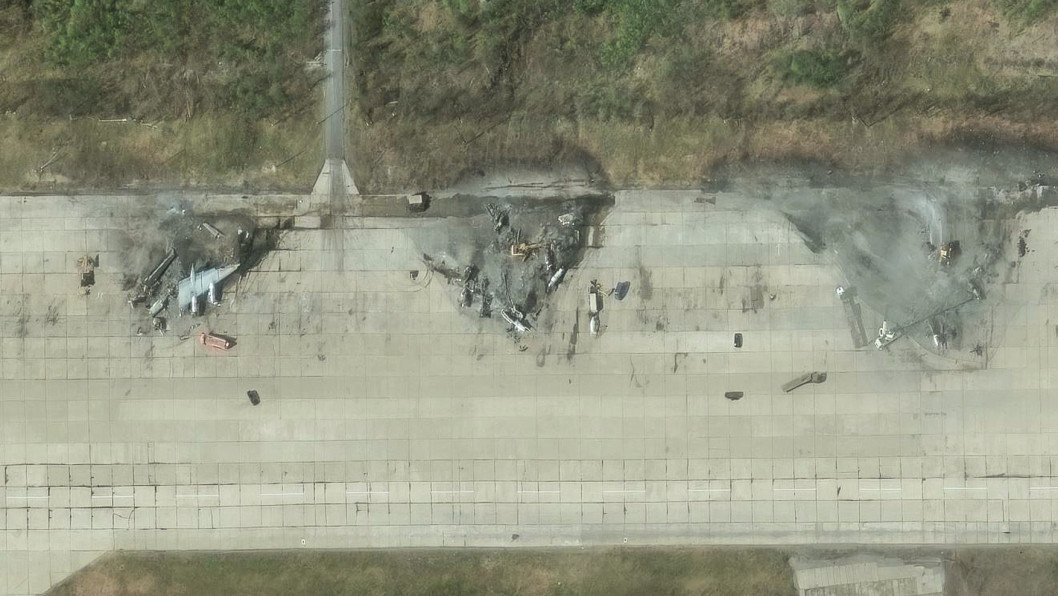
Meanwhile, satellite imagery published by the open-source intelligence account AviVector on X indicates that Russia is developing new protective infrastructure at a military airfield in the Kaliningrad region, reportedly intended to shield aircraft from potential strikes.
The images show that construction of four aviation hangars began in late April 2026 at the Chkalovsk naval aviation base. The structures are described as having an arched internal framework with squared end walls, a design consistent with aircraft shelters previously constructed at other Russian military airfields.
Discuss this article:






-c439b7bd9030ecf9d5a4287dc361ba31.jpg "Photo of Katherina Popilnichenko")