- Category
- Latest news
Putin Behind Europe’s Migration Pressure, EU Commissioner Says
 Prefer U24 Media on Google
- Authors


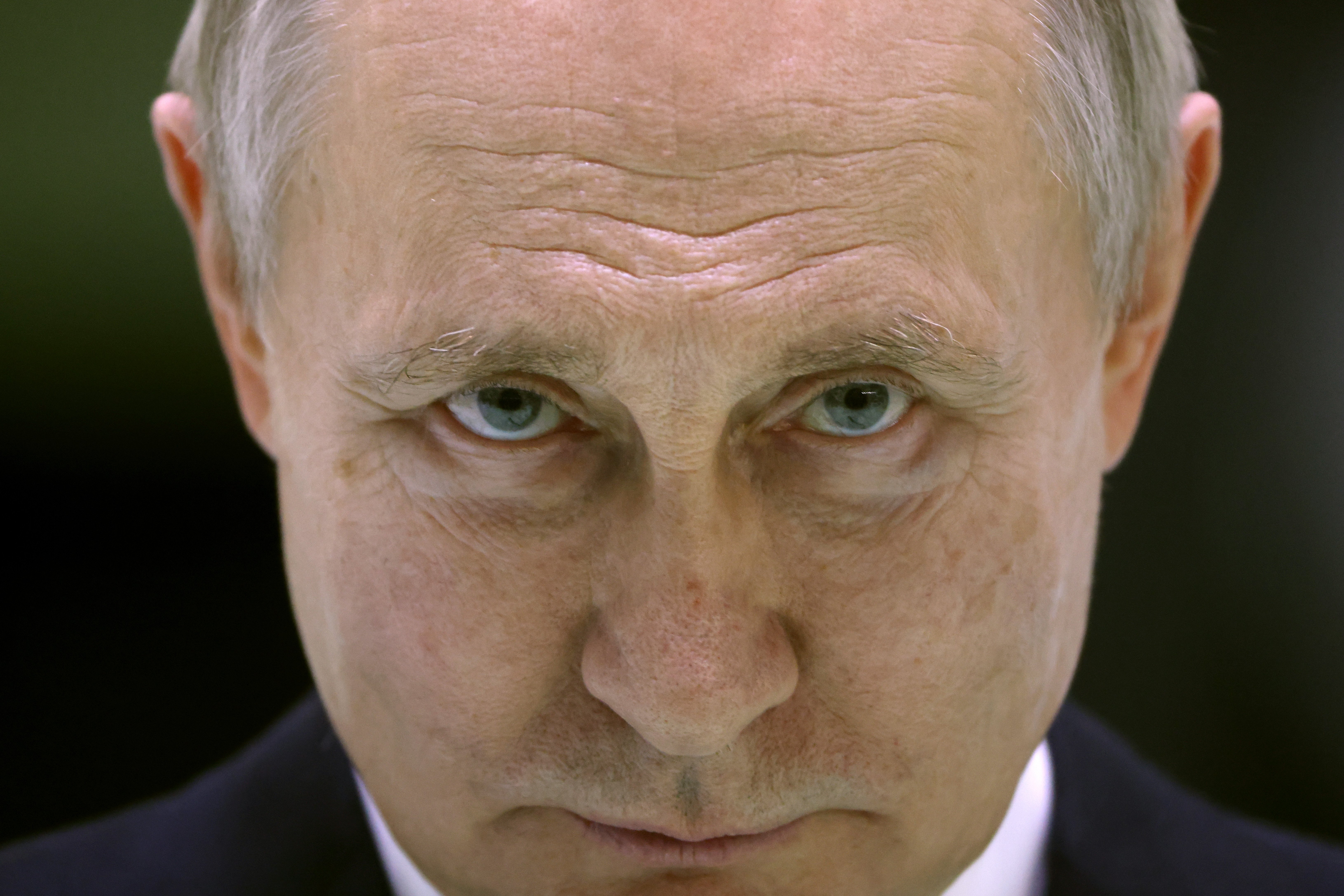
European officials have long warned that Russia uses migration as a tool to destabilize the continent. Now, a senior EU official has made that accusation more explicit, EU Commissioner for Migration Magnus Brunner said, speaking to the Financial Times on March 23.
The Russian leader has effectively become the “driving force” behind migration flows into Europe due to his role in fueling conflicts over the past decade.
We bring you stories from the ground. Your support keeps our team in the field.
“In such large migration flows, Putin is always involved. It is always Vladimir Putin,” Brunner said.
The comments come as European policymakers grow increasingly concerned about the potential for a new wave of migration linked to the war in Iran. While Russia did not initiate that conflict, Brunner noted that Moscow has long supported the Iranian regime.
Over the past decade, Europe has already faced two major migration waves. The first followed the Syrian civil war, which triggered a crisis in 2015–2016 as more than two million people sought asylum in Europe.
Russia’s military intervention in Syria helped sustain the regime of Bashar al-Assad, including through widespread bombing campaigns that targeted urban areas.
This is how illegal migrants enter the EU by storming the Belarusian-Polish border. pic.twitter.com/5sHLJXbRwg
— Clash Report (@clashreport) July 21, 2024
A second major wave followed the start of Russia’s full-scale invasion of Ukraine in 2022. According to Brunner, that crisis also had direct links to Moscow’s actions.
“The second wave consisted of Ukrainians arriving in the European Union—and once again, Vladimir Putin was involved,” he said.
Approximately 4.3 million Ukrainians have received temporary protection status across the EU.
Russia and Belarus are sending Poland illegal migrants via the eastern border as part of a hybrid warfare operation.
— Visegrád 24 (@visegrad24) July 7, 2025
The aim is to destabilise Poland and to keep the military busy securing the border instead of training,
explains Frontline Foundation expert Artur Chodziński. pic.twitter.com/smhoAz18J2
European officials have also accused Russia and Belarus of deliberately channeling migrants from the Middle East and Africa toward EU borders in recent years, effectively pushing them into neighboring countries.
That pattern emerged even before the full-scale invasion of Ukraine. In February, an Estonian court sentenced a resident of Narva to prison on charges including espionage for Russia, sabotage, and involvement in facilitating illegal migrant crossings.
During previous migration pressure along the Poland-Belarus border, EU countries responded by tightening border controls. A similar approach could be used again if the situation escalates, an EU diplomat told the Financial Times.
-ab26fdee551dadf40fa373afffd1d0f2.jpg)
For now, Brunner said there is no clear sign of a migration surge from Iran.
“But we must remain vigilant, as the situation can change day by day,” he said.
Several EU countries, led by Italy and Denmark, are pushing for stricter measures—including potential border closures—to prevent a repeat of the 2015 migration crisis.
Brunner said he takes those concerns “very seriously.”
Earlier, Polish border authorities identified a new escalation in the hybrid warfare tactics employed by the Belarusian regime: the use of sophisticated, reinforced tunnels to smuggle migrants into European Union territory.
Discuss this article:
-9bd5e1532102621f8fb1c4ba871a3171.png)