- Category
- Anti-Fake
Welcome to Russia, Foreigner. Your “Voluntary” Military Contract is Ready to Sign
 Prefer U24 Media on Google
- Authors

-46f6afa2f66d31ff3df8ea1a8f5524ec.jpg "Photo of Jess Daly")
First, the Kremlin-backed channels bait foreigners to move to Russia, promising a “peaceful life.” Next, those who glorify life in Russia face the harsh reality of the very regime they help promote.
“Russian Road” is a relatively new Russian organisation launched in 2025. Its sole purpose is to use foreign nationals as propaganda tools—glorifying life in Russia while portraying the West as dangerous and immoral.
“England is a dangerous country,” “We did it for our kids,” “Chasing family values”—these are among the professionally produced video titles featured on the “Russian Road” YouTube channel.
Despite having just 11,000 subscribers across 177 long-form videos, the channel’s slick production quality raises questions about its funding. The answer: its producers are linked directly to the Kremlin’s state media.

Russia’s use of social media is central to its modern-day information warfare tactics. By amplifying foreign voices, the Kremlin cloaks its messaging in authenticity, pushing false narratives and propaganda designed to influence audiences abroad through subtle, sustained aggression.
We previously reported on Kremlin-backed influencers such as “Sasha Meets Russia,” who claims to have relocated to Russia to escape “Western Russophobia” and embrace its so-called “traditional values.”
She’s part of a wider network of foreign bloggers funded by the Russian state through an organisation called “Limitless.” These influencers have, collectively, millions of followers and play a key role in Russia’s information campaign.
While the foreigners in “Russian Road” videos promote the regime, what they might fail to see is how they are becoming victims of their own propaganda. The Kremlin encouraged foreigners to move to Russia, and has since quietly signed a new decree, requiring foreigners to swap residency for a ticket onto the battlefield.
“Russian Road” to propaganda
“Russian Road” is a remake of a former channel called “Russian Code,” which had 70,000 subscribers before it was blocked in 2024. Every single video across the “Russian Road” social media channels shares the story of a foreigner who moved to Russia.
Whitewashing Russia
Interviews with these foreigners routinely push familiar Kremlin propaganda—blaming Ukraine for Russia’s war while promoting a supposedly “peaceful” new life in Russia, often framed through disdain for the West.
Many of them highlight how their move has created friction and strained family relations back home. Much of the content appears deliberately mundane. One video, for example, is devoted entirely to the story of a Peruvian woman who cried at a ballet performance.
Other videos actively dilute the severity of Russia’s aggression. A Swiss family running an ostrich farm in Russian-occupied Crimea describes the hardest part of what they call “this thing with Ukraine” as the inconvenience of restricted travel.
Some content, however, is far more disturbing. American blogger Tofurious Crane appears repeatedly on the “Russian Road” YouTube channel promoting life in Russia. Russian state media outlet RT took Crane to Russian-occupied Ukrainian cities, including Donetsk and Mariupol, as well as other parts of the temporarily occupied territories, to film a documentary titled “Notes from an American in Donbass .”
🇺🇸American's Uncensored Look at Russia🇷🇺
— Russian Road (@RussianRoad_) May 27, 2025
Tofurious Maximus Crane is an independent American journalist who shares insights on the realities of life in Russia. He traveled to Russia after the events of February 2022, hoping to see the situation for himself. However, when he began… pic.twitter.com/xC39vEWF9E
Breeding propagandists
RT—formerly Russia Today—has played an active role in Moscow’s global disinformation and influence campaigns. The US State Department has linked the network to covert intelligence operations and even to weapons procurement for the Russian military. Since Russia’s full-scale invasion of Ukraine, RT has been removed from television broadcasts and sanctioned across Europe, the US, and Ukraine.
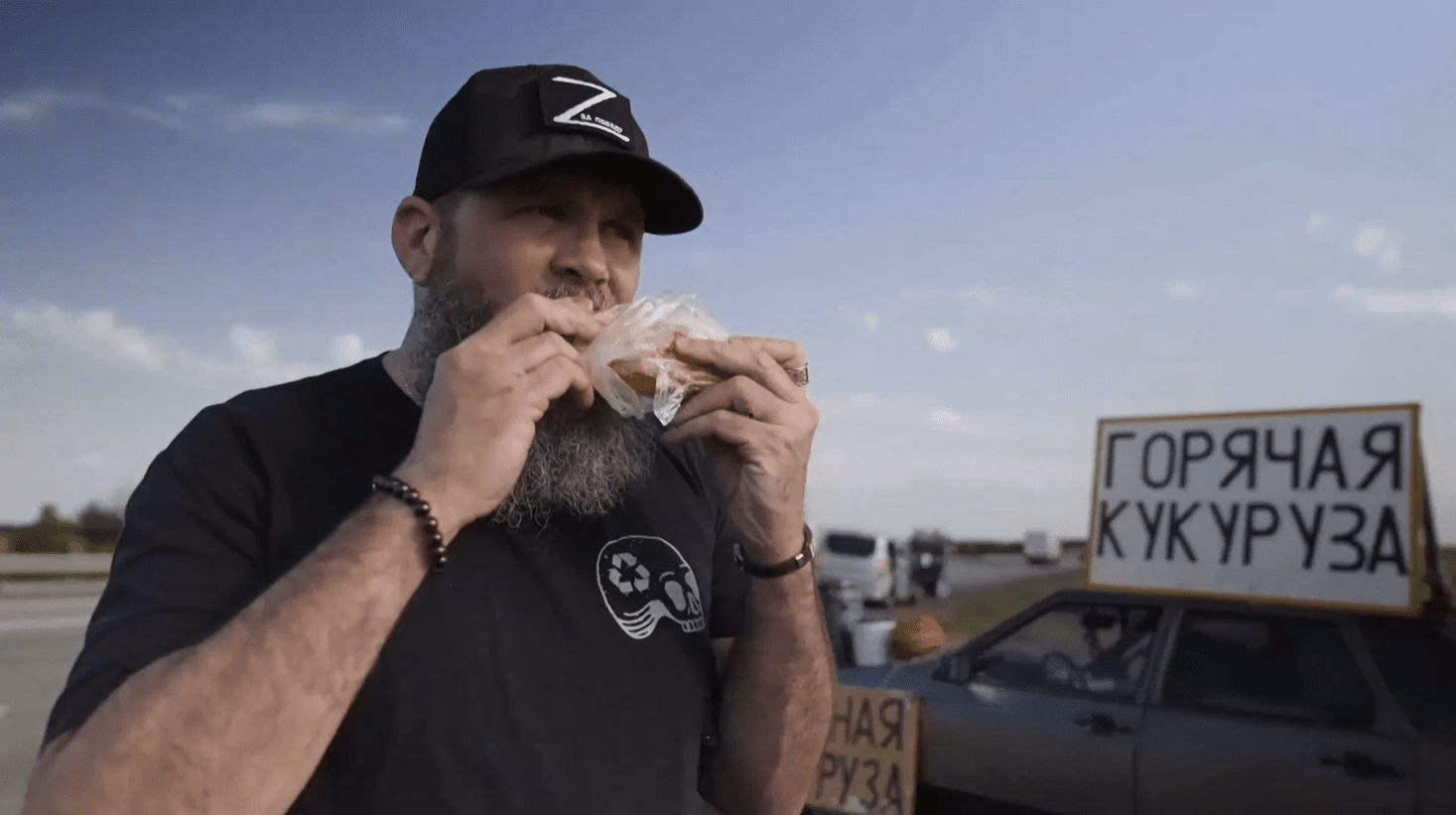
Throughout the documentary, Crane is seen wearing clothing marked with the pro-war “Z” symbol while repeatedly referring to Ukrainians as neo-Nazis and terrorists. He interviews two Ukrainian prisoners of war from the Azov battalion—one captured in Zaporizhzhia, the other at Azovstal—telling one of them, “Russia wins, God wins.”
Crane also pushes false claims that Ukrainians killed civilians in Mariupol and used residents as human shields. In reality, Russian forces carried out mass killings of civilians in the city. At least 10,284 people are estimated to have died in Mariupol during the first year of Russia’s full-scale invasion, with extensive documentation of human rights abuses by Russian forces published by international rights organizations.
Many of the foreign contributors to “Russian Road” promote anti-LGBTQ+ views, claim strong Christian values, which they say align with Russia’s so-called “traditional values.”
'Wild Democratic Policies in the U.S.'🇺🇸
— Russian Road (@RussianRoad_) December 30, 2025
Eddie Gonzalez is an American former police officer who served for many years on the border with Mexico. He now lives in Moscow. @EddieGonzales pic.twitter.com/yurUte9bJ7
Who’s behind the Russian Road?
Despite having very few subscribers, “Russian Road” is highly polished. Investigations by the Organised Crime and Corruption Reporting Project (OCCRP) reveal why: several RT employees are directly involved in producing the channel’s content.
While “Russian Road” does not disclose any formal ties to RT, OCCRP contacted one of its contributors and requested to speak with a producer. They were connected to Artem Vorobey, who has worked for RT for several years and is credited as the producer on multiple RT films.

A second producer, Pavel Baidikov, has also been identified—another RT film producer with 19 years of experience. The professional quality of these videos reflects the time, effort, and Kremlin backing invested in them.
What the channel deliberately omits is the harsher reality for foreigners living in Russia: a new Kremlin decree forces foreign men to either join the army or lose their legal right to stay in the country.
The Kremlin’s new decree explained
In August 2024, Putin signed a decree offering “humanitarian support” to foreigners who embraced Russia’s so-called “traditional values” and wanted to move there. The announcement drew people from across the globe, all seeking a promised “better life.”
She left the U.S. to prove how great life in Russia is, but things didn’t go as planned. pic.twitter.com/tEk7YkG3MW
— UNITED24 Media (@United24media) July 13, 2025
However, the promise quickly turned into a catch: under a new requirement that took effect on November 5, 2025, foreign men can now only obtain a permanent residence permit if they sign a contract with the Russian military, enlist for service with the Emergency Situations Ministry, or obtain a certificate from an enlistment office confirming they are unfit for military service.
Even those with a temporary residence visa, and who have already built a life in Russia, are affected—they cannot receive a full permit without enlisting.
Men who are seeking Russian citizenship must also either provide a certificate proving that they’re unfit for duty or an order of dismissal from the Russian Armed Forces before Russia’s full-scale invasion began on February 24, 2022.
Those applying for residency due to studies are exempt, as well as applicants from Belarus, Russia’s military ally; most of the “Russian Road” contributors are not students, and none are from Belarus.
The decree comes as Russia faces mounting losses in Ukraine. Over the past 10 months, Russian casualties have risen faster than at any point since the start of the full-scale invasion, the BBC reported. Russia does not publish full casualty lists, and according to independent outlet Mediazona, court records for missing or deceased soldiers are disappearing—more than 70,000 cases have been removed.
At least 153,171 Russian soldiers have been confirmed dead since the start of the invasion, though the BBC reports that the true number is likely much higher, representing only 45–65% of actual losses—between 243,000 and 352,000.
Coercing foreigners into military service
The decree appears to already be in effect. Akif , a 48-year-old from Azerbaijan, has lived in Russia for four years, is married to a Russian citizen, and runs a farm with his family in the Nizhny Novgorod region. Despite already holding a temporary residence permit and passing the Russian language exam, his wife says that when he applied for permanent residency in late 2025, migration officials told him he was eligible only if he signed a contract for military service under a new presidential decree, RFL/RL reported.
According to his wife, Akif’s cousin was also in a similar situation, convinced he had to undergo a medical examination at the military registration and enlistment office to obtain a Russian passport. His passport was confiscated, on the promise he’d be given a Russian one later, but instead, he was sent to war and killed, according to RFL/RL. The report could not verify his death.
Burkhon , 24, faced the same situation. He moved from Tajikistan to Russia a year ago and works in the Khanty-Mansi Autonomous Okrug. After receiving a temporary residence permit in February 2025, he was later told by officials that applying for permanent residency would require signing a military contract, RFL/RL added.
We don't know what to do. We are pawns in the meat grinder.
Wife of Akif
RFL/RL
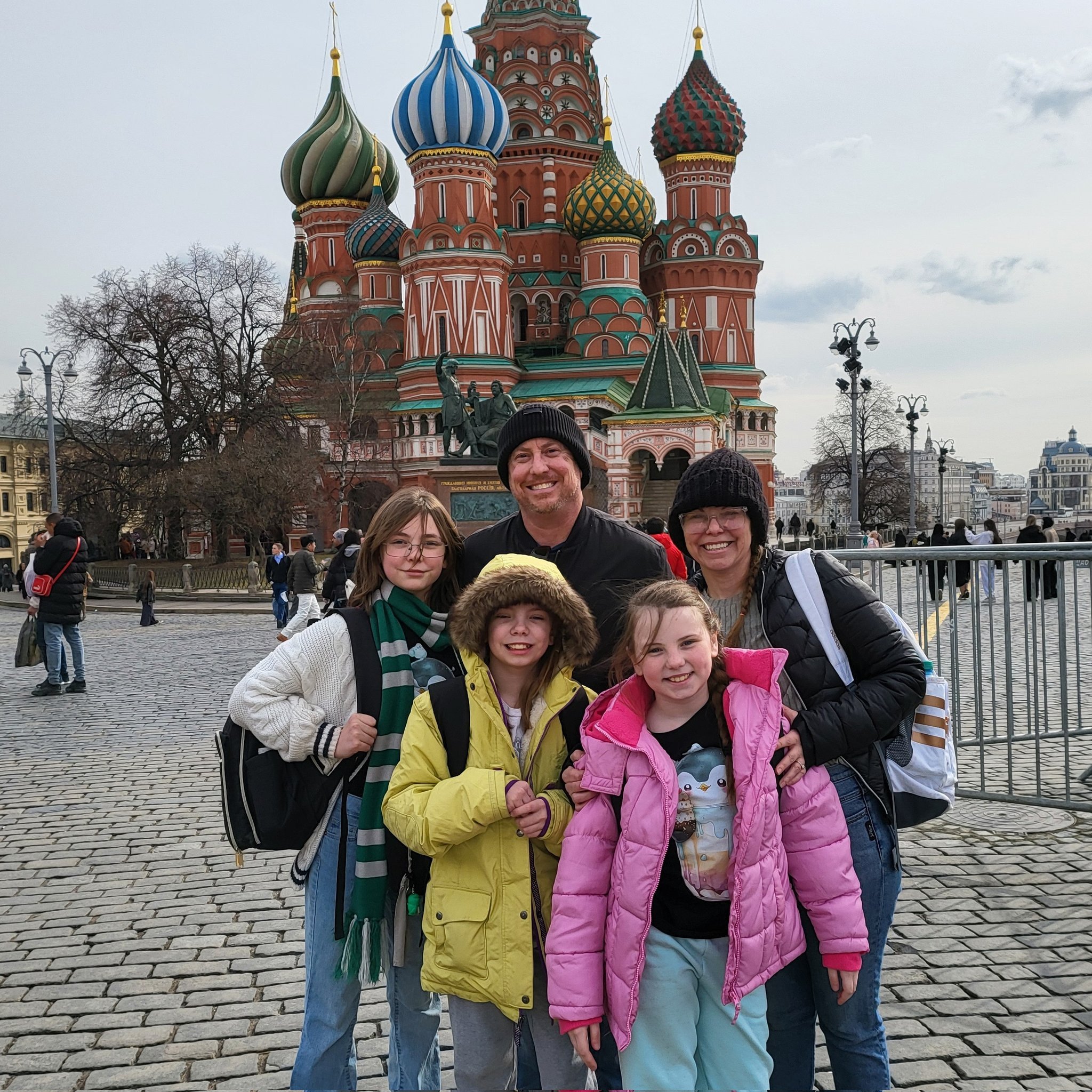
Residency-for-service demands are not just confined to migrant workers; the American Huffman family illustrates the potential fate of many “Russian Road” contributors.
They say they left Texas due to “concerns over LGBT indoctrination in the American schools, unhealthy food, and a desire for a safer environment that is aligned with our Christian values.”
Derek Huffman, his wife Deanna, and their three daughters are regularly featured on the “Russian Road” channel. Derek frequently posts racist content on X, claiming a so-called “cultural genocide being waged against White people.” The family also runs a YouTube channel documenting their supposedly happy life in Russia.
Derek Huffman, a 46-year-old American who ran away from the American “gender agenda”, could not run away from the Russian army.
— UNITED24 Media (@United24media) July 22, 2025
🧵 1/6 pic.twitter.com/J1xnSmQ0W7
When Derek applied for Russian citizenship, he was told that signing a military contract would fast-track his permit, with roles promised as a mechanic or war correspondent. But despite having no military experience, Derek was sent directly to the frontlines.
Deanna posted several videos expressing her concerns on social media. While the posts have since been deleted and replaced with videos claiming to support the military move, they remain accessible through other channels. Notably, the aforementioned Kremlin-backed influencer, “Sasha Meets Russia,” supports Derek Huffman.
A few months ago DeAnna Huffman announced that her husband Derek is joining the Russian Army.
— Natalia Antonova 🇺🇸🇺🇦 (@NataliaAntonova) July 13, 2025
They said they wouldn’t send him to the front lines. They lied.
What you get when you’re an American who moves to Russia for “Christian values.” pic.twitter.com/nyP06J9XRl
With domestic recruitment faltering, Russia is increasingly turning to foreigners to bolster its military. Those who were once welcomed as propaganda tools—promoting life in Russia through channels like Limitless and Russian Road—are now becoming victims of the very system they helped glorify.
Discuss this article:
-4a56a6b482ec132402c16ef6fcabf9a2.png)

-72b63a4e0c8c475ad81fe3eed3f63729.jpeg "Photo of Cyril Barabaltchouk")