- Category
- Anti-Fake
How the Kremlin Buys Foreign Love Using Its Western Influencers Like "Sasha Meets Russia"

How much is the Kremlin willing to pay foreign-facing influencers to praise Russia? The bloggers claim nothing. The data says otherwise. Sasha Meets Russia, for instance, is just one among a network of “loyal foreign bloggers” managed by a stablemaster with direct Kremlin ties.
 Prefer U24 Media on Google
- Authors

-46f6afa2f66d31ff3df8ea1a8f5524ec.jpg "Photo of Jess Daly")
Alexandra Jost is a prominent internet blogger known online as “Sasha Meets Russia,” who praises Russia, its land, and its culture. Some describe her content as “exciting as a plate of soggy pelmeni. ” According to Jost, her mission is to inspire her 46,000 X followers to fall in love with Russia.
if you think calling me a “Russian propagandist” is an insult, think again 🇷🇺
— Sasha Meets Russia (@sashameetsrus) September 25, 2025
Jost claims to have moved to Russia to escape “Western Russophobia” and seek its “traditional values.” In August 2024, Putin signed a decree offering “humanitarian support” to foreigners who embrace these “values” and want to move to Russia.
Due to Jost's social media activity, such as celebrating Russian leader Vladimir Putin's birthday, replying to Ukrainians to tell them they'll soon be conquered, and blaming Russia’s war on the West, she has come under repeated scrutiny.
Do you really think I need to be paid to talk about my love for Russia? I’ve been doing it for free since I could talk. I’ll never stop. #sashaganda https://t.co/p0j3tVqIcq
— Sasha Meets Russia (@sashameetsrus) April 6, 2025
In March 2025, she was exposed for earning up to $2,000 a month from the sanctioned Russian news agency RT. She repeatedly denies “ever being paid to speak of her love for Russia.” However, behind her “love for Russia” sits a grant from Putin’s Presidential fund, propping up Russia’s “loyal foreign bloggers.”
TUA Research —an independent OSINT group—together with UNITED24 Media, exposes the real story behind Jost and her husband, Mexican entrepreneur Domingo Garcia, a pair at the centre of a growing network of foreign bloggers promoting life in Russia. That network is backed and funded by the Kremlin-linked PR agency Bezgranichnye, meaning “Limitless” in Russian.
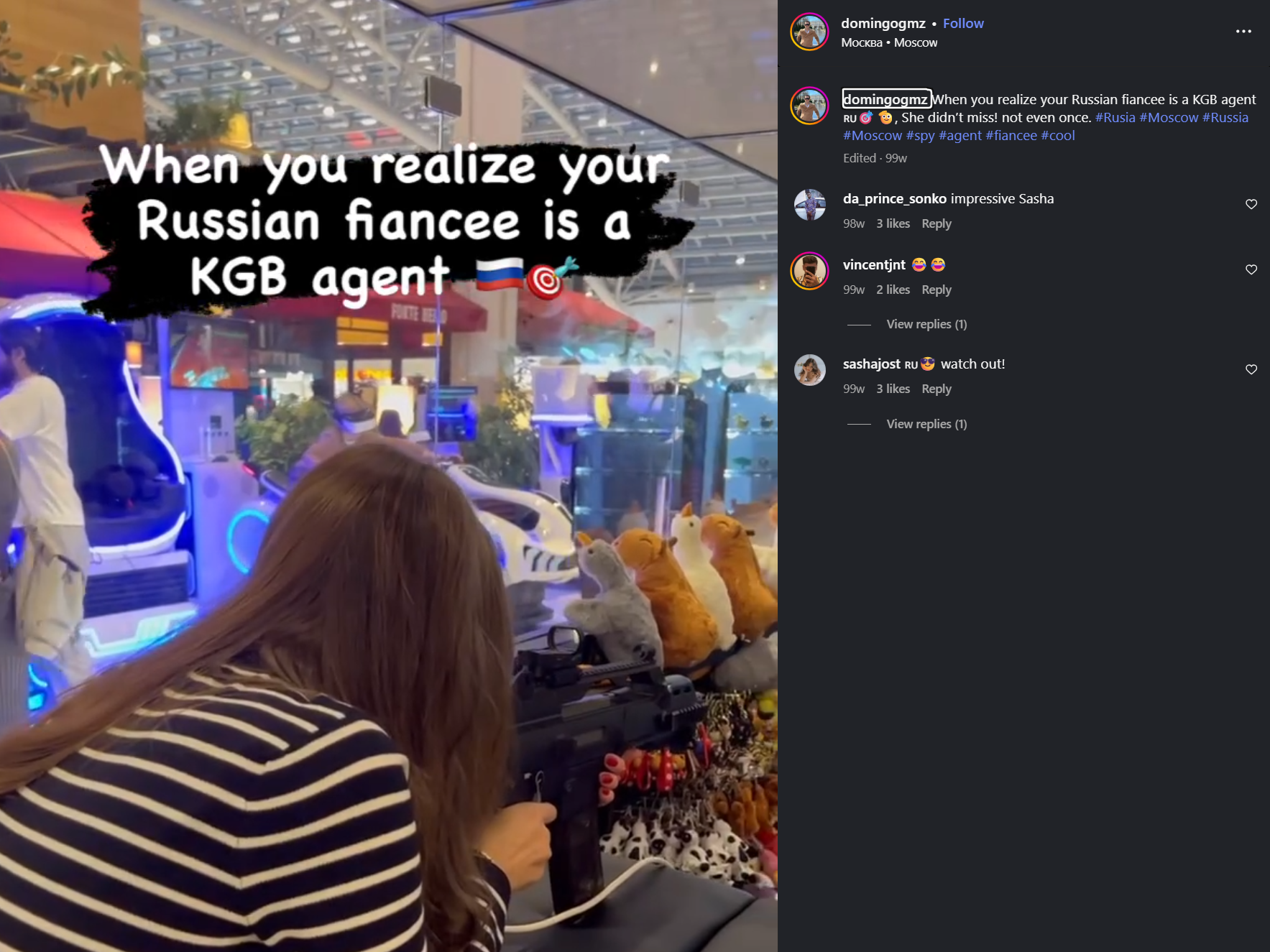
Putin’s cultural fund for the promotion of war
On May 17, 2021, Putin signed an Executive Order to create the PFKI, the “Presidential Foundation for Cultural Initiatives.” PFKI states the initiative was set up to support cultural and creative projects, offering grants to nonprofit organizations, commercial organizations, and entrepreneurs.
Yet, the promotion of Russia’s war propaganda and the cultural genocide of temporarily occupied parts of Ukraine have been the true goals of the PFKI funding.
В спортзале вуза в Самарской области провели реконструкцию Курской битвы. Она выглядела так.
— Холод (@holodmedia) January 25, 2023
На «историко-патриотический фестиваль», в рамках которого организовано представление, президентский Фонд культурных инициатив выделил более 2 миллионов рублей pic.twitter.com/bqhfPoVgJa
According to PFKI, it seeks to fund “projects that reveal Russia's image as a country that builds relations with other states on the principles of partnership, good-neighborliness, and justice, facilitating conflict resolution through peaceful settlement, and preserving and promoting traditional values.”
Projects must comply with one of the nine thematic areas such as: “The Place of Power” and “The Great Russian Word”. PFKI’s “We Are Together” theme, according to its own website, includes “the development of twinning ties of Donbas and liberated territories with regions and cities of Russia,” in reality, what they mean here is integrating Russian-occupied cities and regions of Ukraine into the Russian world .

During the second round of contests in 2022, the fund reportedly had already allocated more than 293.8 million rubles ($3.6 million) to 29 projects glorifying Russia’s so-called “special military operation” and its self-proclaimed puppet entities, the Donetsk People’s Republic (DNR) and the Luhansk People’s Republic (LNR).
Some projects included: “True to their Vows”—an exhibition about the claimed “feats” of Russian soldiers invading Ukraine. The project “Experts club of the Russian Donbas” involved opening a club in the temporarily Russian-occupied regions of Kherson and Zaporizhzhia to seek out “the historical prerequisites for the revival of neo-nazism in modern Ukraine.”

The awarded project “Children of the Donbas” was for an online publication, which at the time of the report in 2022, was hosting more than 300 propaganda videos with titles such as “Why Russia’s victory is inevitable.”
The project creator, Ruslan Ostashko, is a Russian propagandist running several pro-Kremlin Telegram channels and taking part in numerous rallies in Russia and Russian-occupied regions in support of Putin’s war. In 2023, Ostashko became the guardian of a Ukrainian child who was illegally deported from an orphanage in Ukraine’s Russian-occupied Luhansk region, War Sanctions reported.
These examples are just a small fraction of the projects funded by PFKI, yet they give an unmistakable flavor of the true purpose of the Foundation’s funding: to whitewash the invasion for a foreign audience and to begin the Russian assimilation of occupied parts of Ukraine.
Russian propaganda is “Limitless”
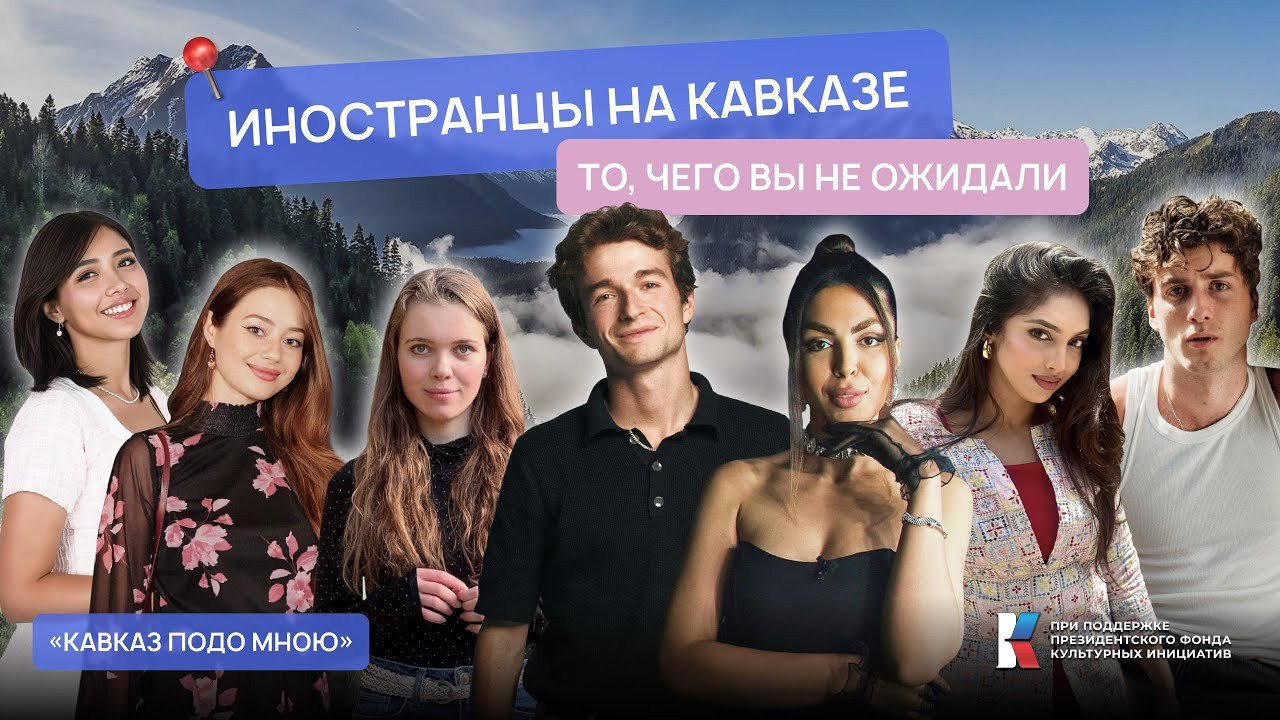
In 2024, alongside such nakedly pro-war propaganda projects, another submission quietly received a PFKI grant, with an unassuming title, “The Caucasus Below Me. A video series about the North Caucasus from an unexpected perspective.”
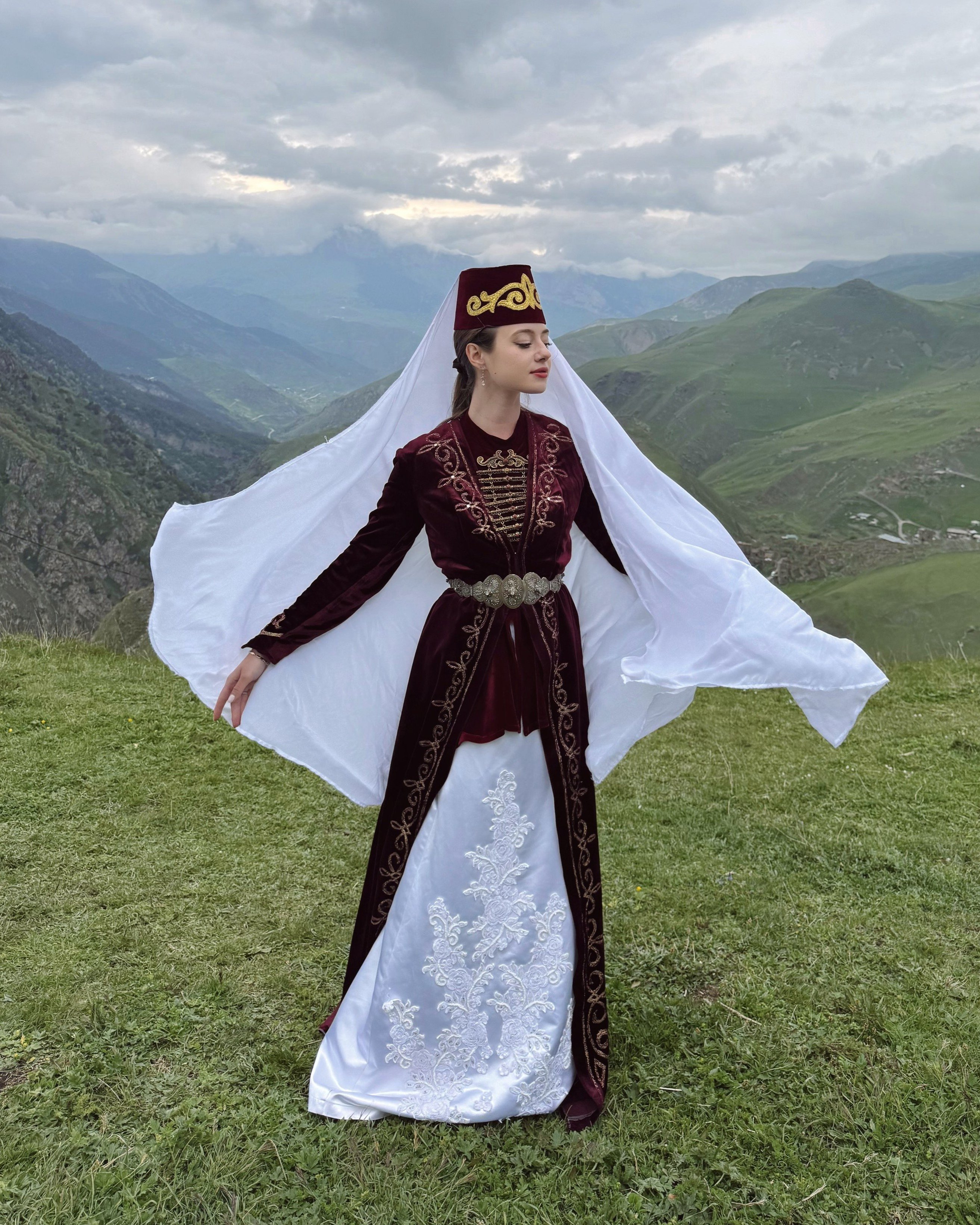
At a cost of 26 million rubles (about $325,000 USD) the submission describes a project employing various bloggers to explore different aspects of Russia, resulting in the production of seven “cultural and educational” documentaries and 140 short videos in an effort to promote Russian culture and history, both within Russia and to the world.
These “travel documentaries” would make heavy use of social media and would be targeted predominantly at a youth audience.
In the 21st century, the influence on public opinion and decision-making, especially among young people, has shifted from traditional media to social media.
The Caucasus Below Me project submission
The submission also goes on to describe how the bloggers having an international and Russian audience “will not only help preserve and strengthen the traditional values of Russian citizens but also positively position Russia as “Russia—a Land of Opportunity.”
If this sounds like the Sasha Meets Russia’s “foreign travel blogger exploring Russia’s gimmick,” that’s because it is. Limitless—the agency behind the PFKI submission—lists Jost among its 35 bloggers, with her husband Domingo also on the roster, even though he rarely appears in content.
In fact, most of the other bloggers on the Limitless roster share very similar “foreigner who moved to Russia” narratives with Jost and Domingo. Their social media channels are filled with images, stories, and captions that will feel eerily familiar to anyone who has come across “Sasha Meets Russia” content.
The Limitless roster
Limitless describes itself as the first agency in Russia working with “loyal foreign bloggers.” Its operation is directly enabled by the Russian state's PFKI grants; in turn, whether it be directly or indirectly, the Kremlin funds propagandists like Sasha Meets Russia to flood social media.
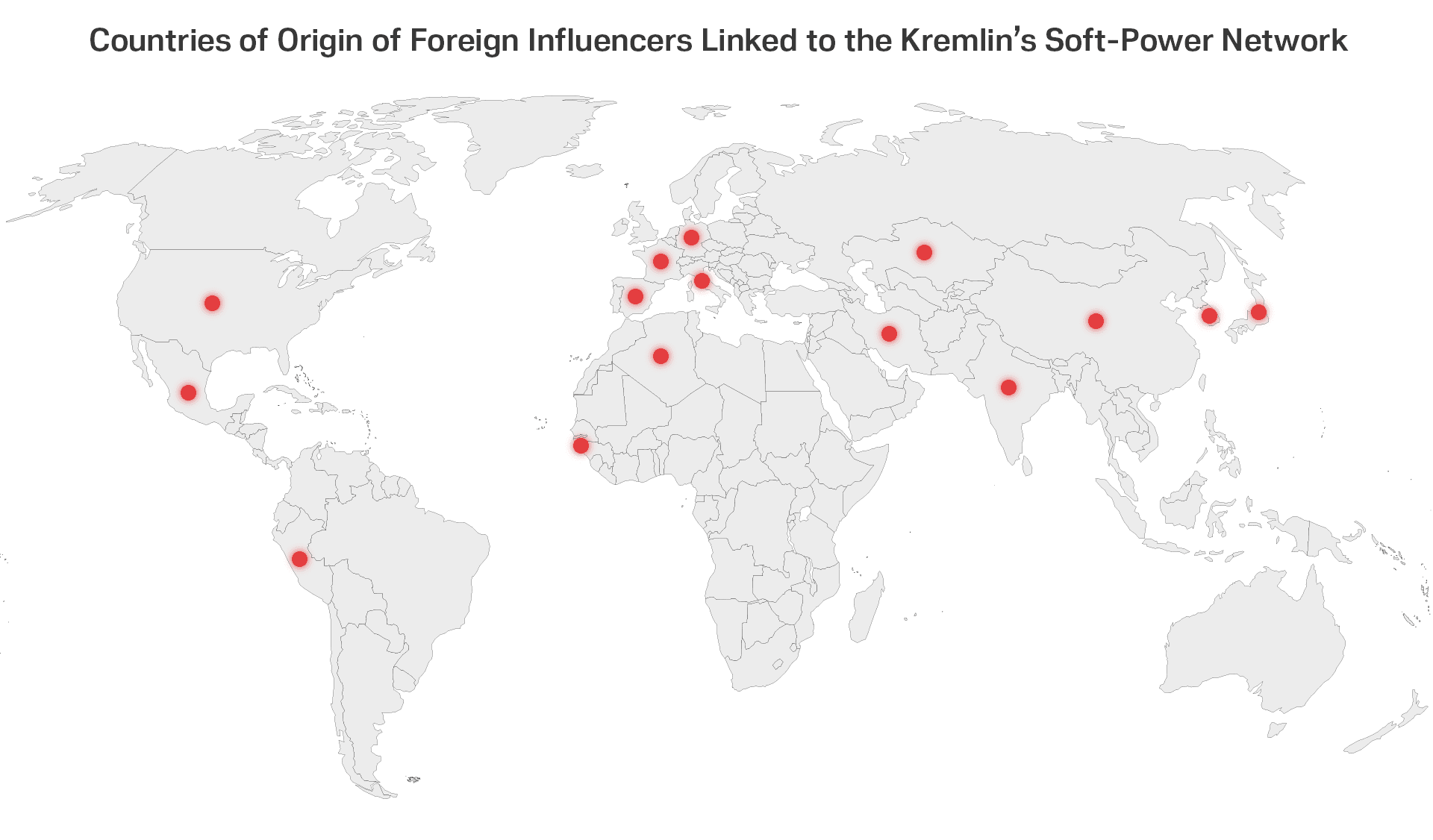
The prototype for the Limitless model of pro-Russian propaganda seems likely to be Italian musician Lorenzo Bagnati, who studied in Russia till 2021. Lorenzo, with 2.12 million YouTube followers, 391k Instagram followers, and 2.6 million TikTok followers, looks as if he is the agency’s leading star, with a reach that far exceeds Jost’s current subscribers.
The Limitless website even prompts an invitation to attend a social media masterclass with Lorenzo, and it is he who appears to have set the template that Sasha and others now follow.
Others include Iranian-born food blogger Romina Bagheri (3.3m TikTok followers), American Carlos Lopez (850k YouTube followers), Shera Attar from France (517k TikTok followers), and German member of Russia’s far-right biker gang the Night Wolves, Sven Svenson (145k TikTok followers)—all appear to be based in Russia.
Several other smaller accounts are listed, such as American-in-Russia blogger Marisa Wood, whose Instagram shows photos of her posing alongside Jost.
A Peruvian blogger, known by the name Crystal Greek, is featured in a case study describing how Limitless took her from 4,000 YouTube subscribers to 83,000 by organizing filming and production of a blog about her life in Russia, as well as how they “facilitated participation in various events with subsequent media coverage.”
The Limitless stablemaster
If Limitless has a stable of bloggers, then 30-year-old Maria Dudko is the stablemaster. She is managing propagandists with millions of followers while funnelling Russian government money to support their efforts, arranging media appearances for them, and raising their profiles.
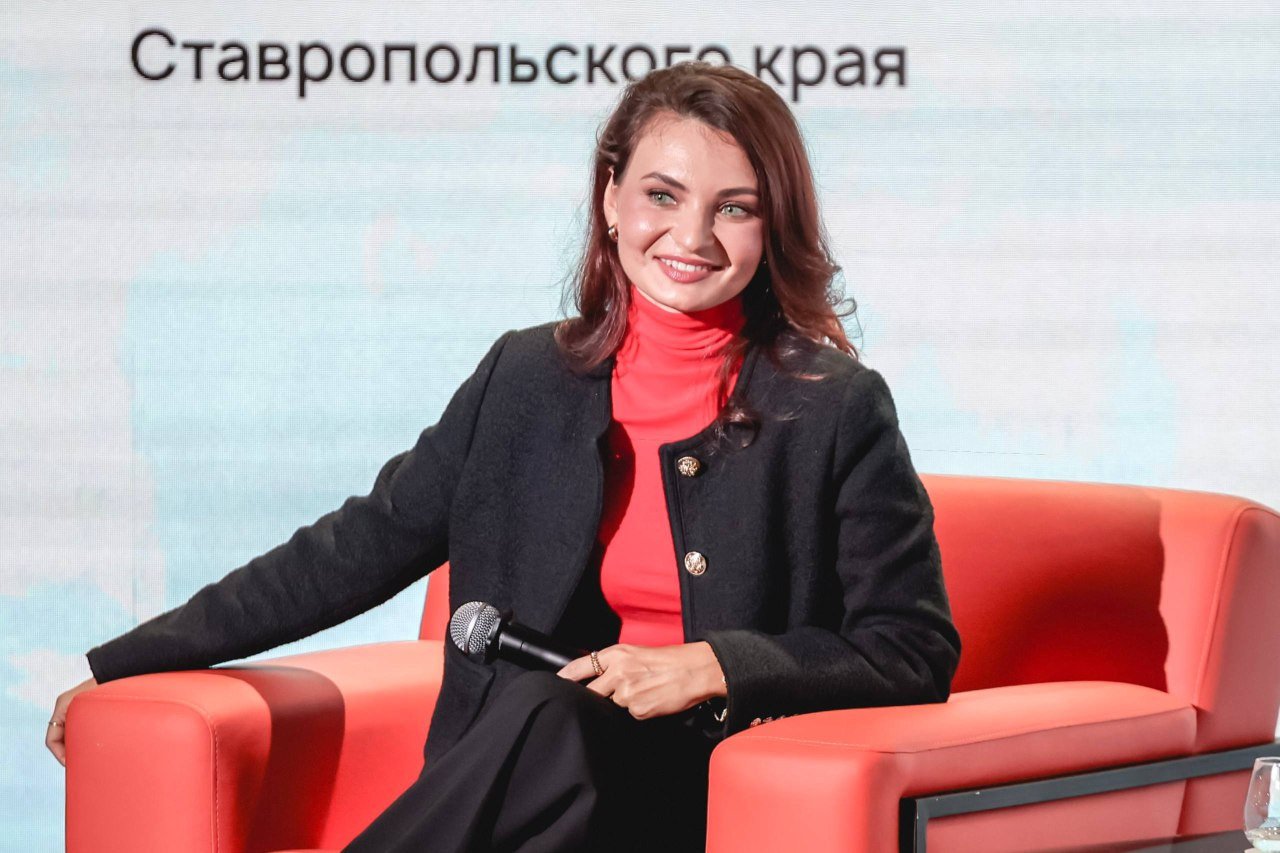
In contrast to the people she manages, Dudko herself is almost invisible online. She’s listed as the founder of Limitless and named on the PFKI grant application, but her own following is tiny—1,000 subscribers on Telegram, 465 on Instagram, and no significant mentions outside Russian media. That’s not to say she is trying to hide, either.
She’s appeared in Russian media multiple times alongside “loyal foreign bloggers." Her social media gives us a glimpse at what is happening behind the scenes—filming sessions, posing at events, and selfies with multiple of her “stars,” including Jost.
There are videos on her Instagram that show the process of filming for “The Caucasus Below Me” alongside several of her Limitless bloggers, including Jost. Notably, all of the named bloggers are either half-Russian or foreign nationals who have spent significant time in Russia, and each fits the “foreigners discovering Russia” propaganda model.
Who is Maria Dudko?
Dudko is a law graduate from Moscow State University; her social media is full of praise for Putin. She appears to have worked in government with strong connections to the Russian state.
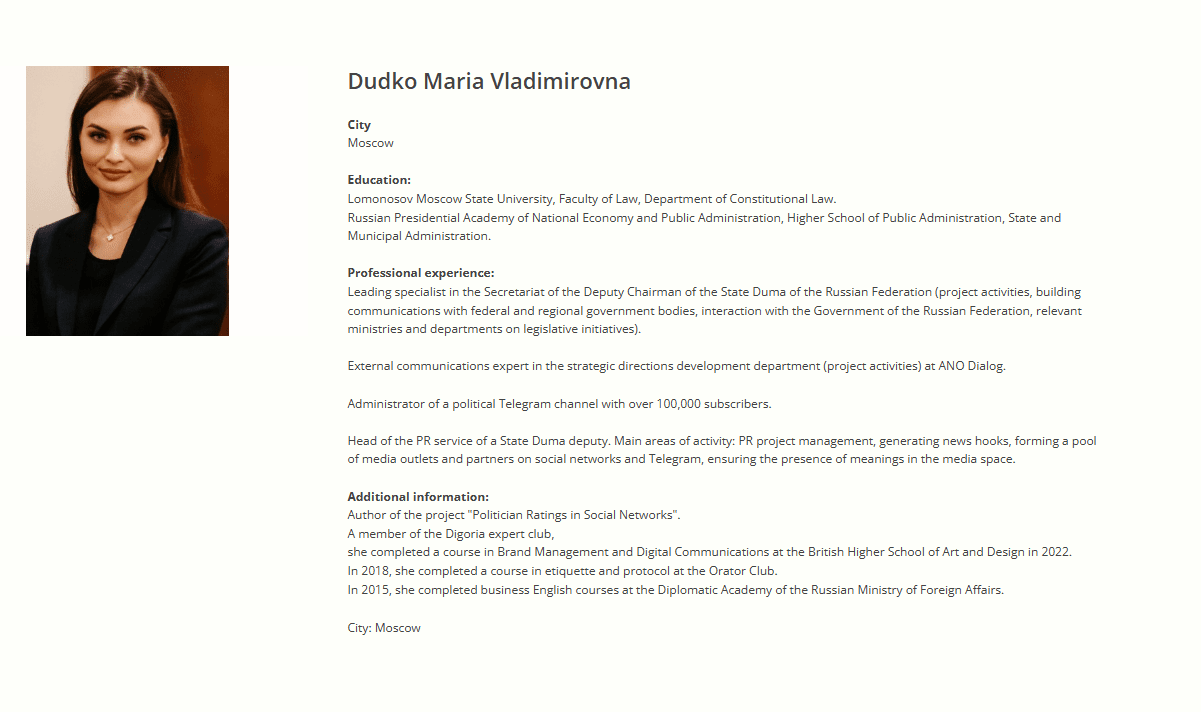
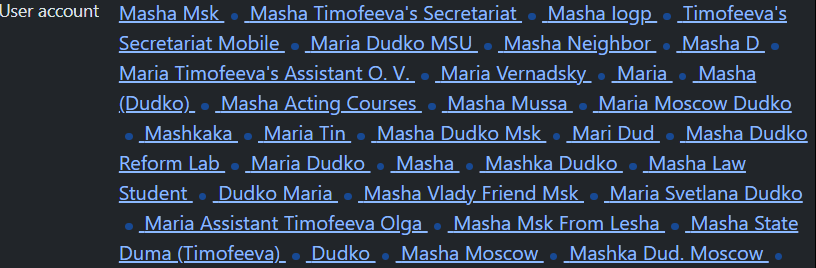
Her own CV states she worked for the Deputy Chairman of the State Duma , and “Head of the PR Service for a State Duma deputy.” Using OSINT tools, we found that Dudko’s mobile phone number has been saved as the assistant to Olga Timofeeva on several different mobile phones.
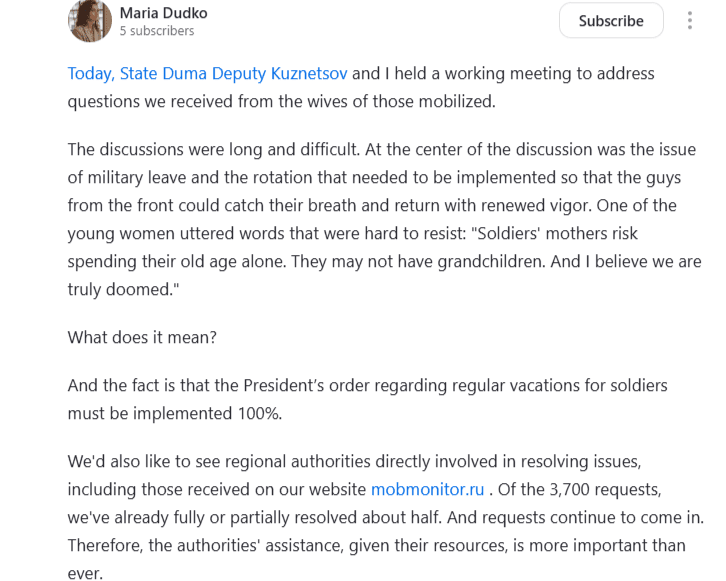
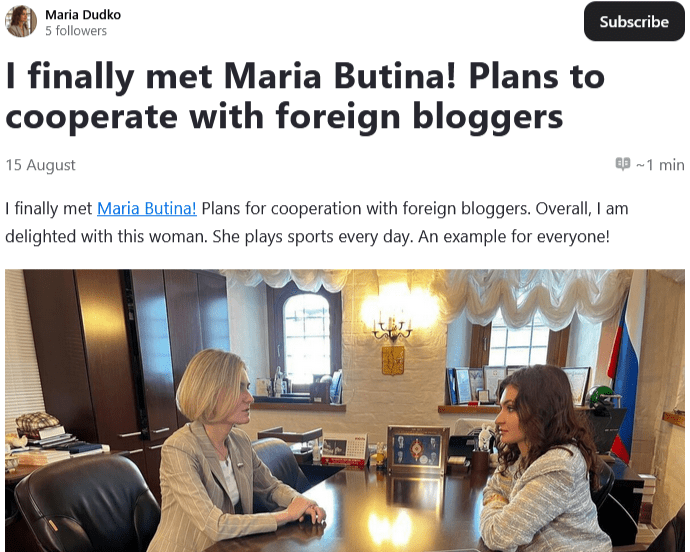
Dudko also posted on social media that she was involved with working for State Duma Deputy Dmitry Kuznetsov . Dudko has even met with Maria Butina, a Russian politician who was convicted in 2018 of acting as a foreign agent of Russia within the US, to discuss, according to Dudko, “plans for cooperation with foreign bloggers.”
The exact process by which Dudko ended up playing this role of stablemaster to these propagandists isn’t completely clear, but the transition from PR into running a state-funded propaganda network seems an entirely feasible next step.
A blogger’s state-funded hybrid war
Russia’s war in Ukraine is not only fought on the battlefield. Through flooding the information space with disinformation, Russia tries to destabilize Ukraine and its allies in the West.
For Example, Storm-1516—a Kremlin-backed disinformation group—was found to steal journalists' identities, while another pro-Kremlin “Pravda” network has deliberately infiltrated leading AI chatbots with disinformation about Ukraine, meaning that propaganda is flooding the information space. Promotion and the justification of war crimes in Ukraine are even built into the Russian computer games.
The Kremlin’s meddling knows no bounds, funding American TENET Media @watchTENETnow with $10 million to push pro-Russian narratives through its commentators @Timcast @RubinReport @bennyjohnson and their vast follower base. TENET Media founders @TheLaurenChen allegedly knew… pic.twitter.com/x36DC66uXw
— UNITED24 Media (@United24media) September 7, 2024
The Limitless roster is just part of this extensive Russian cyber and media hybrid operation it's been conducting since its full-scale invasion began. Bloggers, like “Sasha Meets Russia,” are not the only cases of “influencer” propagandists who have been paid by the Russian state.
Some moved to Russia and were promised a better life, only to be faced with Russia’s reality. Like Francine Villa, an American teacher who moved in 2019, only to come under racist and violent attacks by her neighbors.
She left the U.S. to prove how great life in Russia is, but things didn’t go as planned. pic.twitter.com/tEk7YkG3MW
— UNITED24 Media (@United24media) July 13, 2025
What all of this demonstrates, beyond showing another way that Jost and her husband are funded by the Russian government, is that neither is a unique case. They’re part of a broader state-backed influencer network—tools in Dudko’s kit for manufacturing soft-power propaganda under the guise of travel vlogs.
While we may never know what exact commercial arrangements Maria has with her bloggers, we can still confidently say that all of the bloggers involved are pushing state-sanctioned messaging and are at least second-hand beneficiaries of the PFKI funding that Maria has received.
Filming and content production are incredibly similar across channels, indicating that Limitless takes care of a lot of the production work. The bloggers themselves have their pursuit for fame and status supported in exchange for content that seeks to soften Russia’s image and frame it as a benevolent, mischaracterized nation painted in an unfair light by “Western propaganda.”
Dudko’s propaganda initiative seems to be exactly what Putin had in mind when he signed the PFKI into existence in 2021.
Discuss this article:

-c439b7bd9030ecf9d5a4287dc361ba31.jpg "Photo of Katherina Popilnichenko")


-206008aed5f329e86c52788e3e423f23.jpg "Photo of Oleksandr Moiseienko")
-72b63a4e0c8c475ad81fe3eed3f63729.jpeg "Photo of Cyril Barabaltchouk")